Fort de la Conchée
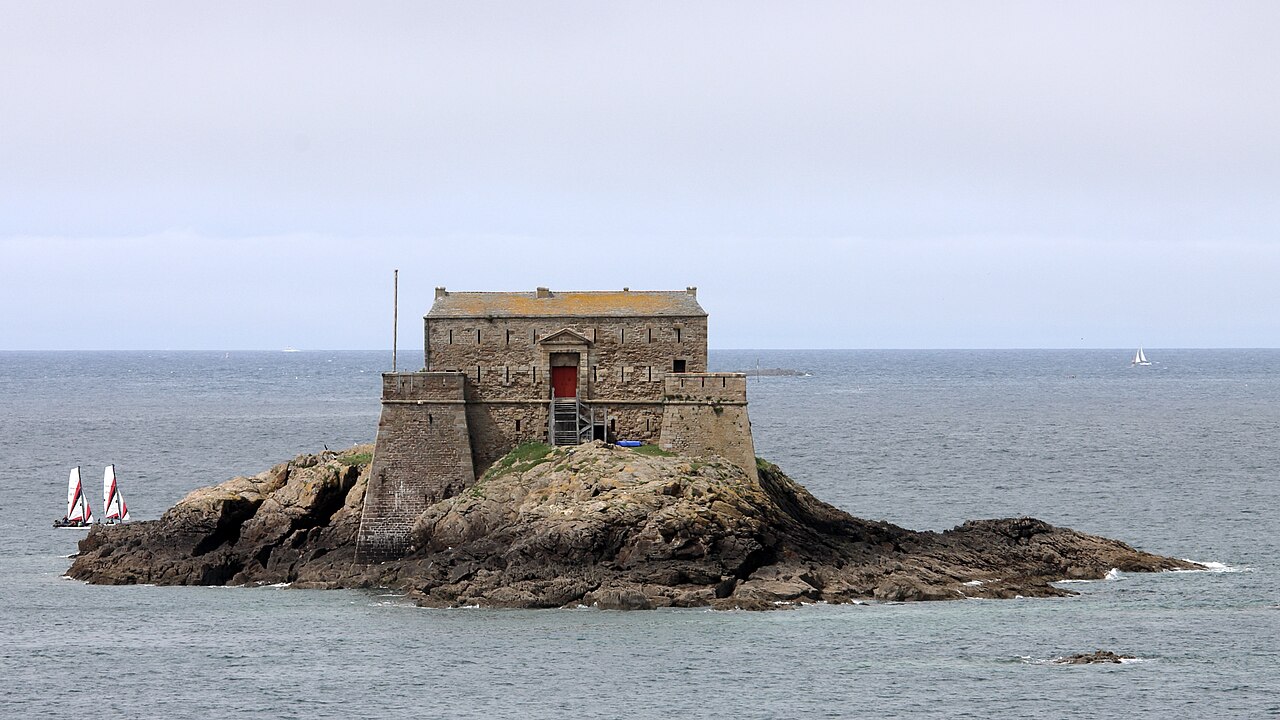
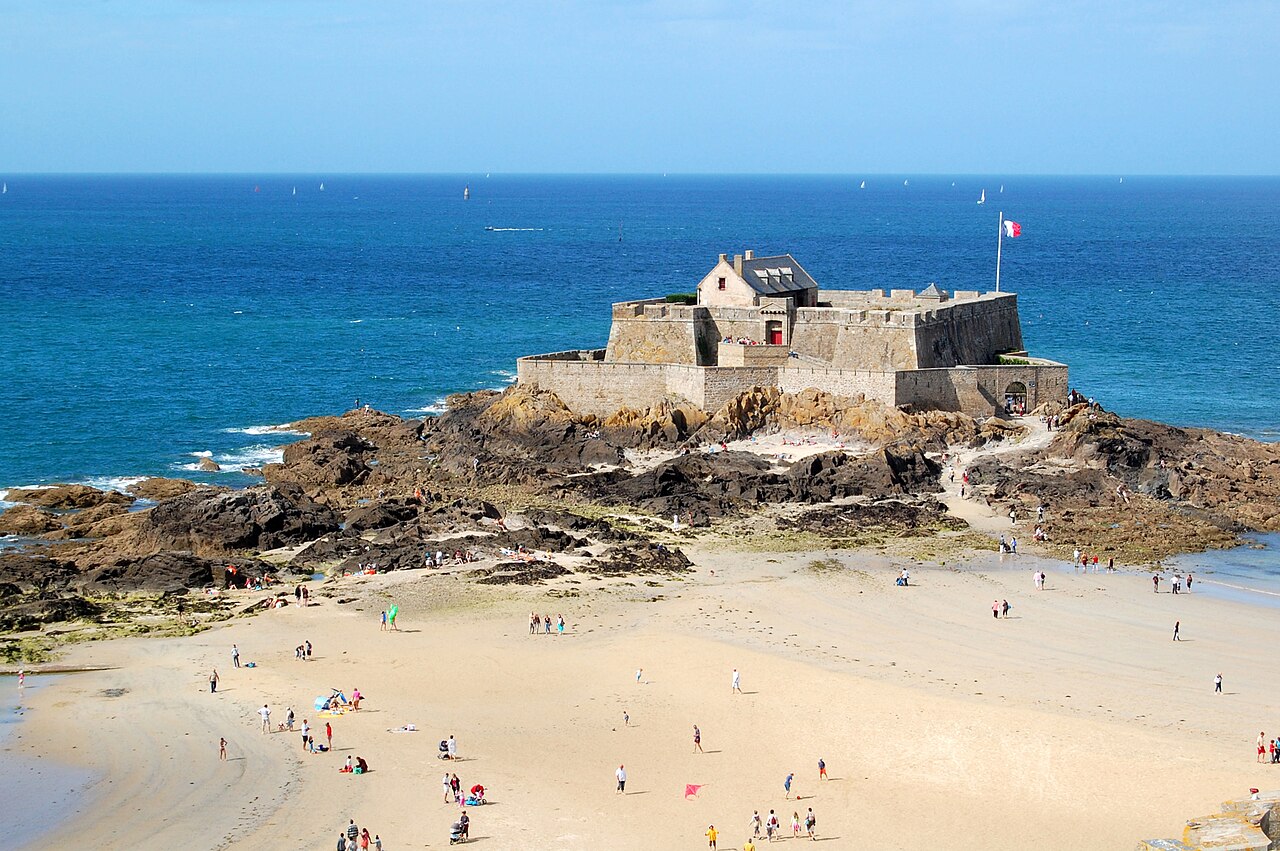
Fort de la Conchée is a remarkable Renaissance island fortress located off the coast of Saint-Malo, France. Constructed between 1689 and 1705, it was designed by the eminent military engineer Sébastien Vauban as part of King Louis XIV's extensive coastal defense program. This granite fortification occupies nearly the entire island, serving as a strategic stronghold to protect the vital port city of Saint-Malo from naval attacks.
Design and architectural features
The fort is characterized by its robust granite two-storey structure with an expansive upper terrace designed to mount heavy artillery. The fortress's layout maximizes the island’s natural defensive advantages, with thick walls and limited access points to withstand naval bombardment and amphibious assaults. Its compact design reflects Vauban’s military architectural principles, emphasizing functionality and resilience. The fort's guns were positioned to cover the approaches to Saint-Malo, creating a formidable coastal battery.
Historical context and construction
In 1689, Vauban inspected French coastal fortifications under the orders of King Louis XIV, who sought to strengthen France's maritime defenses during a period of frequent conflict with England and the Dutch Republic. Construction of Fort de la Conchée began shortly thereafter. Despite being unfinished, by 1693 the fort had already installed ten guns, enabling it to play an active role in defense.
English and Dutch attacks
During the Nine Years' War, the fort and the town of Saint-Malo were targeted by English and Dutch forces. In 1693, English troops raided Saint-Malo and landed on Conchée, where they damaged the fortifications and captured workers. Two years later, in 1695, a combined English and Dutch fleet launched an assault on the fortress. Despite its incomplete state, the fort's artillery successfully repelled the attackers and inflicted damage on the enemy fleet, demonstrating its strategic value even before completion.
Later history and military use
Fort de la Conchée was completed in 1705 and remained an active military installation for nearly two centuries. It was officially demilitarized in 1901, reflecting changes in military technology and coastal defense strategies. During the Second World War, the fort was abandoned but used by German forces for target practice, further damaging the structure. The Allies attacked the fort during the liberation of Saint-Malo, underscoring its continued military significance even in the 20th century.
Architectural significance and preservation
The fort is an exemplary representation of Vauban's military engineering, showcasing his ability to adapt fortifications to challenging island environments. Its granite construction has helped preserve much of the structure despite centuries of warfare and weathering. Although no longer in military use, Fort de la Conchée remains an important cultural and historical landmark, illustrating the evolution of coastal defense in France.
Visiting Fort de la Conchée
Access to the fort is limited due to its island location and preservation status. It is primarily of interest to historians, military architecture enthusiasts, and visitors to Saint-Malo who wish to understand the region's defensive heritage. The fort's commanding position and sturdy construction make it a striking example of 17th-century coastal fortifications.
Frequently asked questions (FAQ)
- How do I visit Fort de la Conchée?
- Fort de la Conchée is located on an island off Saint-Malo's coast and is accessible only by boat. Visitors should arrange for boat tours or private charters, especially during the summer months when weather conditions are favorable.
- What is the historical significance of Fort de la Conchée?
- The fort was designed by Sébastien Vauban during the reign of Louis XIV to strengthen France's coastal defenses. It played a key role in repelling English and Dutch attacks in the late 17th century and remained a military site until the early 20th century.
- When was Fort de la Conchée built?
- Construction began in 1689 and was completed in 1705, during the Renaissance period, reflecting the military architectural style of that era.
- Can I explore the interior of the fort?
- Access to the interior is limited due to preservation concerns and the fort's island location. Most visits focus on viewing the exterior and understanding its strategic position from the water or nearby shores.
- Why is Fort de la Conchée important architecturally?
- It exemplifies Vauban's innovative approach to coastal fortifications, combining robust granite construction with strategic artillery placement on a small island environment.
Information
Architect
Sébastien Vauban
Loading map...
Visitor reviews
No reviews yet. Been here? Write the first review and help other travelers!
Write the first reviewVisited this castle? Share your experience
Your review helps other travelers and adds first-hand knowledge to our encyclopedia.