Fort de Bellegarde
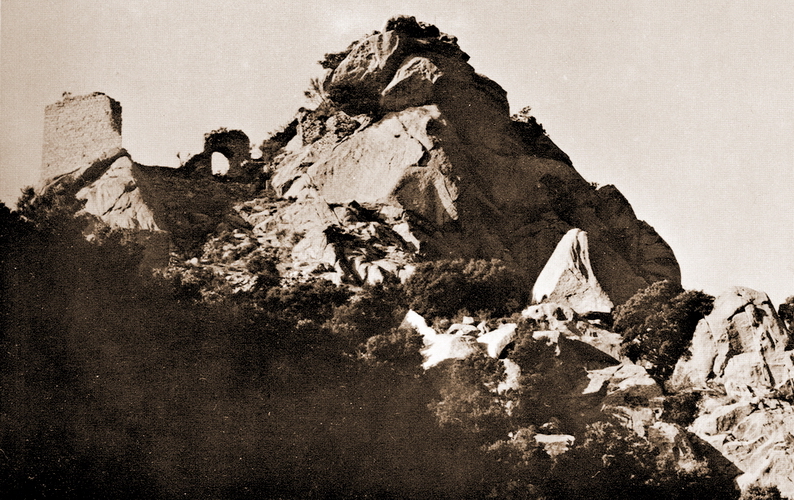
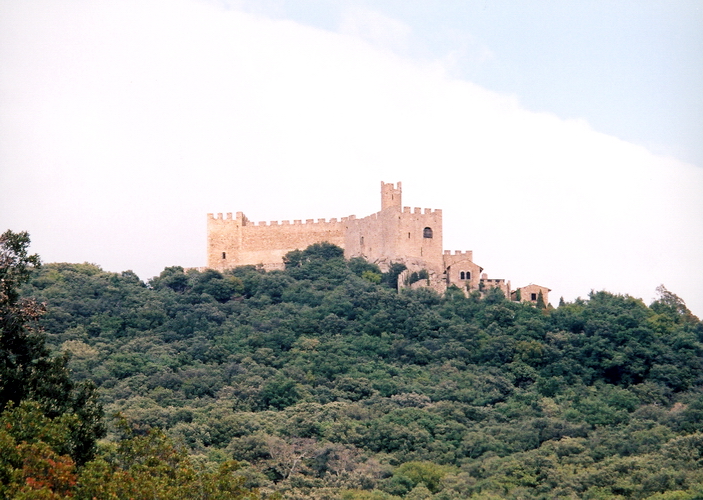
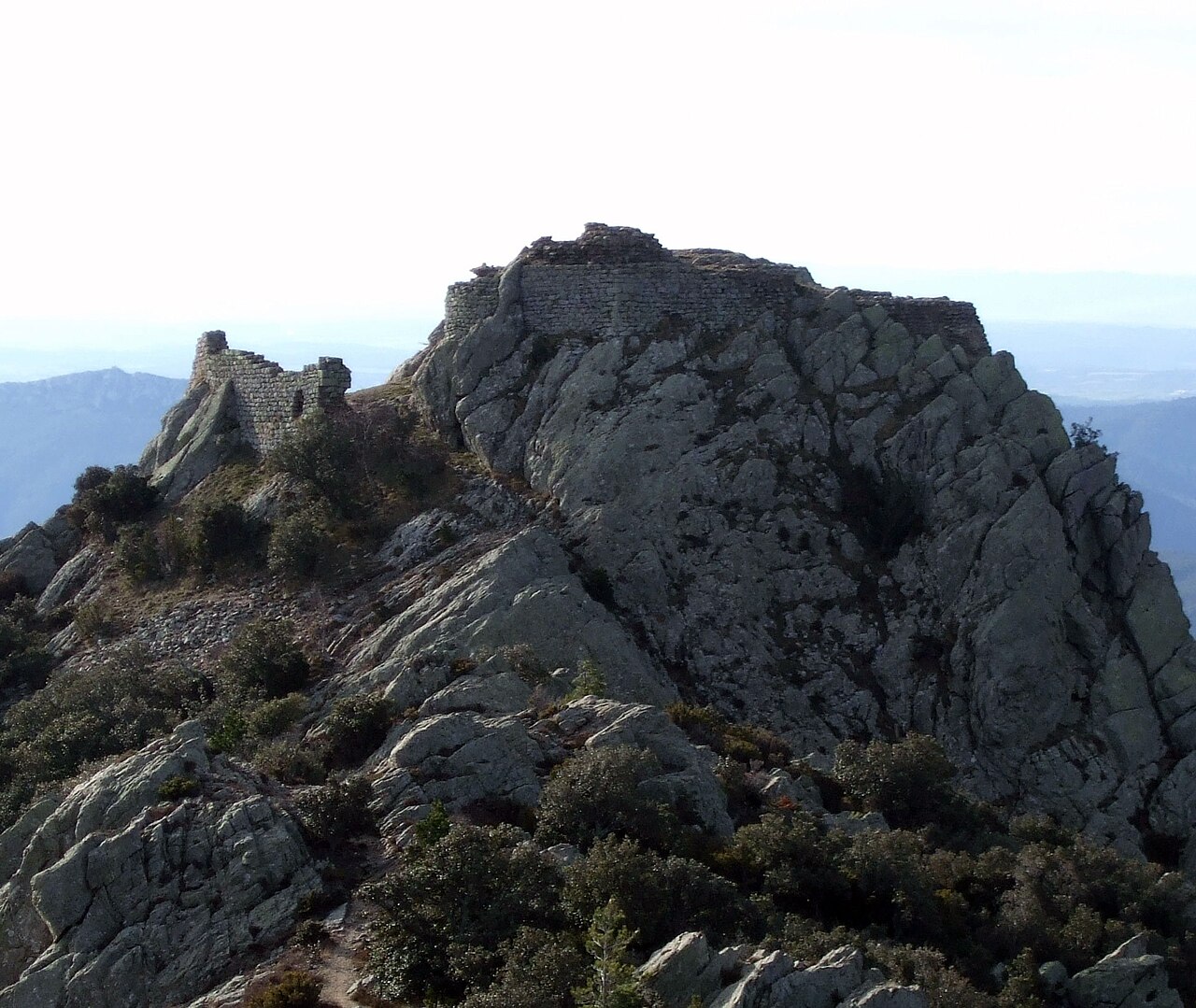
The Fort de Bellegarde, also known as Fort or Castell de Bellaguarda in Catalan, is a prominent 17th-century bastion fortress strategically perched above the town of Le Perthus in the Pyrénées-Orientales département of southern France. This fortress occupies a commanding position near the Franco-Spanish border, reflecting its crucial role in the military history of the region. The fort's location on a steep, rocky outcrop overlooking the main pass between France and Spain made it a vital defensive stronghold controlling access through the Pyrenees.
Following the Treaty of the Pyrenees in 1659, which transferred Le Perthus from Spanish to French control, the fortress became a key frontier post. The Spanish briefly recaptured the site in 1674 and initiated new fortification works in 1675. However, these efforts were interrupted when the French swiftly regained control. In 1678, the renowned military engineer Sébastien Le Prestre de Vauban was commissioned to design a modern fortification at Bellegarde. Vauban's design introduced a strong pentagonal bastioned fort with a detached hornwork projecting southwards toward the border, embodying the principles of Renaissance military architecture adapted for artillery warfare.
Architectural design and fortifications
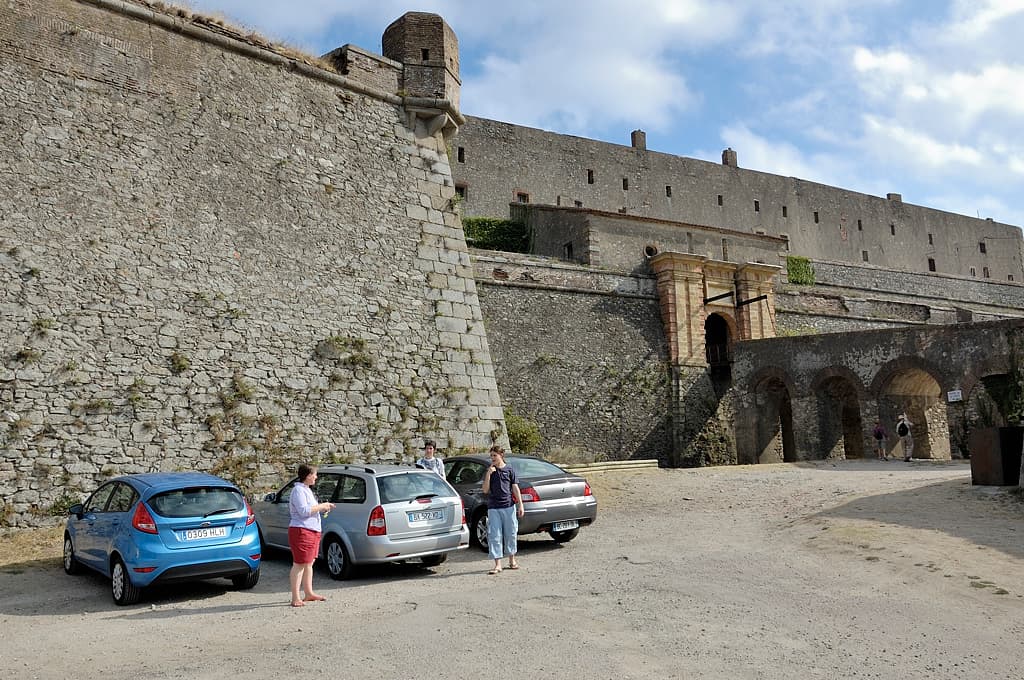
The Fort de Bellegarde features a classic bastioned fortress layout with a five-bastioned trace forming the main defensive perimeter. This layout allowed for overlapping fields of fire, minimizing blind spots and maximizing defensive coverage. The fort is constructed on two tiers: an upper and a lower level, which provided layered defense and accommodated various military functions.
In front of the most vulnerable sections of the walls, Vauban incorporated a deep ditch to hinder enemy advances and undermine siege operations. The fortress is further protected by three demi-lunes (ravelins), which are detached triangular outworks positioned on the more accessible sides of the fortification. These outworks served to absorb and disrupt attacking forces before they could reach the main walls. The eastern side of the fortress benefits from a natural defense consisting of a sheer precipice, reducing the need for artificial fortifications on that flank.
Structural elements and materials
The construction of Fort de Bellegarde utilized robust local stone, carefully cut and laid to form thick walls capable of withstanding artillery bombardment. The bastions are angular and protrude outward, designed specifically to deflect cannonballs and provide enfilading fire along the curtain walls. The hornwork, a detached outwork extending southwards, was intended to protect the main gate and control the approach from the frontier.
Within the fortress, various functional buildings such as barracks, magazines, and command posts were integrated into the defensive walls or located in the central courtyard. These structures were designed for efficient military use and to sustain prolonged sieges.
Historical significance and military engagements
The fort's strategic importance is underscored by its role in several conflicts. During the War of the Pyrenees (1793-1795), part of the larger French Revolutionary Wars, Fort de Bellegarde was besieged twice: first by the Spanish forces in May-June 1793, and then by the French in 1794. These sieges tested the fort's defenses and highlighted its significance as a border fortress controlling access between France and Spain.
In the 20th century, the fort's military role evolved. During World War II, it was repurposed by the Gestapo as a holding prison for escaped prisoners of war and enemy agents. This dark chapter reflects the fortress's continued strategic utility even in modern warfare contexts.
Current status and visitor information
Today, Fort de Bellegarde is open to the public primarily during the summer months, from June to September. Visitors can explore the extensive fortifications, including the bastions, hornwork, and defensive ditches, gaining insight into 17th-century military engineering. The site hosts exhibits detailing the fort's history, its archaeological findings, and the broader historical context of the surrounding region.
The fort's preservation as a well-maintained bastioned fortress offers a tangible connection to the military and political history of the Franco-Spanish borderlands. Its impressive architecture and panoramic views attract historians, architecture enthusiasts, and tourists alike.
Accessibility and amenities
Access to the fort involves a climb up from the town of Le Perthus, with pathways leading to the main entrance. The site provides educational materials and guided tours during the open season, enhancing visitor understanding of its complex defensive systems and historical episodes.
Frequently asked questions (FAQ)
- How do I get to Fort de Bellegarde from Le Perthus?
- Fort de Bellegarde is located just above the town of Le Perthus. Visitors can reach the fort by walking uphill along marked paths from the town center, which takes about 15-20 minutes.
- What are the opening hours of Fort de Bellegarde?
- The fort is open to visitors daily from June to September, typically between 10:00 and 18:00. It is closed outside these months.
- Is there an entrance fee to visit Fort de Bellegarde?
- Yes, the entrance fee is €6 for adults and €3 for children. Tickets can be purchased at the entrance.
- What historical events took place at Fort de Bellegarde?
- Fort de Bellegarde was involved in the War of the Pyrenees during the French Revolutionary Wars, enduring sieges by Spanish and French forces. It was also used by the Gestapo during World War II as a prison for escaped POWs and enemy agents.
- Can I take guided tours at Fort de Bellegarde?
- Guided tours are available during the open season, providing detailed insights into the fort's architecture and history. These tours enhance understanding of its military significance.
- What architectural style characterizes Fort de Bellegarde?
- The fort exemplifies Renaissance military architecture with its bastioned design by Vauban, featuring a pentagonal layout and detached hornwork for enhanced defense.
Photo gallery

Information
Opening hours
June to September, daily 10:00-18:00
Ticket prices
€6 adult, €3 child
Current owner
Municipality
Loading map...
Visitor reviews
No reviews yet. Been here? Write the first review and help other travelers!
Write the first reviewVisited this castle? Share your experience
Your review helps other travelers and adds first-hand knowledge to our encyclopedia.