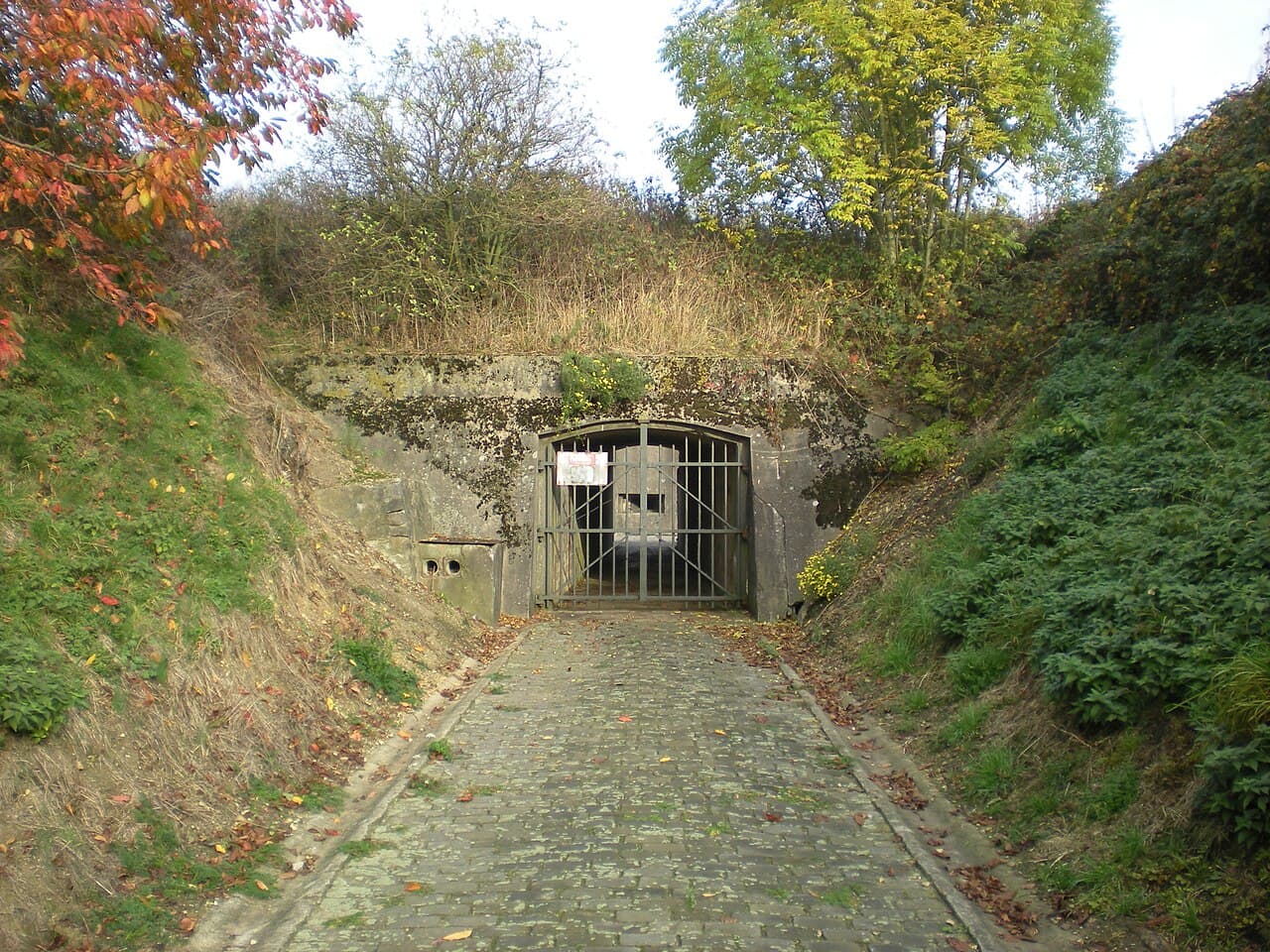
Fort d'Aubin-Neufchâteau
The Fort d'Aubin-Neufchâteau is a significant example of 20th-century military architecture in Belgium, constructed in the 1930s as part of the defensive network known as the fortified position of Liège. This network was designed to strengthen Belgium's eastern frontier against potential German aggression. The fort is located near the town of Neufchâteau, close to the border with Germany, and was one of four new forts built to complement the twelve older forts originally constructed in the 1880s to defend the city of Liège.
Historical context and strategic importance
During the interwar period, rising tensions in Europe prompted Belgium to modernize and reinforce its defensive structures. The Fort d'Aubin-Neufchâteau was part of this effort, reflecting advances in military technology and fortification design following the lessons learned from World War I. Its construction aimed to delay or repel any invading forces approaching from the east, particularly Germany.
The fort's strategic location near Neufchâteau allowed it to control key transportation routes and act as a barrier protecting the interior regions of Belgium. It was designed to work in concert with other forts in the Liège defensive system, including the nearby Fort Eben-Emael, which played a pivotal role during the German invasion in May 1940.
Architectural features and design
Fort d'Aubin-Neufchâteau is classified as a bastioned fortress, a style characterized by angular bastions projecting outward from the main walls to provide overlapping fields of fire. The design incorporated modern concrete and steel reinforcements to withstand artillery bombardment, a significant evolution from earlier masonry forts.
The fort's layout includes multiple defensive elements such as thick reinforced walls, underground galleries, gun turrets, and observation posts. Its armament comprised heavy artillery pieces, anti-tank guns, and machine guns, arranged to cover all approaches. The fort also featured living quarters, ammunition storage, and command facilities, all built to sustain prolonged defense under siege conditions.
Defensive systems and innovations
The fort's defensive capabilities were enhanced by its integration of underground tunnels connecting various parts of the complex, allowing troops to move safely and coordinate defense efforts. The use of reinforced concrete was a modern innovation at the time, providing superior protection against aerial and artillery attacks compared to older stone constructions.
Role in World War II
At the outbreak of World War II, Fort d'Aubin-Neufchâteau was manned by Belgian forces tasked with defending the eastern frontier. In May 1940, German forces launched a rapid and coordinated assault on Belgian fortifications, including the dramatic capture of Fort Eben-Emael by airborne troops.
Following the fall of Eben-Emael, the Fort d'Aubin-Neufchâteau faced overwhelming pressure and was compelled to surrender in the early days of the conflict. Despite its modern design and armament, the fort was unable to withstand the combined arms tactics and air superiority of the German assault.
Preservation and public access
Today, Fort d'Aubin-Neufchâteau is well preserved and serves as a historical site open to visitors. It offers a unique glimpse into Belgium's military history and fortification architecture of the early 20th century. The fort's underground galleries, gun emplacements, and defensive structures remain largely intact, providing educational opportunities about the challenges of modern warfare and defensive engineering.
Visitors can explore the fort's extensive tunnels and chambers, gaining insight into the daily lives of the soldiers stationed there and the strategic importance of the site during World War II. The preservation of the fort contributes to the cultural heritage of Belgium and commemorates the efforts of those who served in its defense.
Frequently asked questions (FAQ)
- What is the historical significance of Fort d'Aubin-Neufchâteau?
- Fort d'Aubin-Neufchâteau was built in the 1930s as part of Belgium's fortified position of Liège to defend against German invasion. It played a role in the early days of World War II before surrendering to German forces.
- Is Fort d'Aubin-Neufchâteau open to the public for visits?
- Yes, the fort is well preserved and open to visitors. It offers tours of its underground galleries, gun emplacements, and defensive structures, providing insight into 20th-century military fortifications.
- What architectural style characterizes Fort d'Aubin-Neufchâteau?
- The fort is a bastioned fortress featuring reinforced concrete construction, angular bastions, and modern defensive systems typical of early 20th-century military architecture.
- When was Fort d'Aubin-Neufchâteau constructed?
- The fort was constructed in the 1930s during Belgium's efforts to modernize its defenses prior to World War II.
- Where is Fort d'Aubin-Neufchâteau located?
- It is located near the town of Neufchâteau in Belgium, close to the German border, forming part of the fortified position of Liège.
Photo gallery

Information
Current owner
State museum
Loading map...
Visitor reviews
No reviews yet. Been here? Write the first review and help other travelers!
Write the first reviewVisited this castle? Share your experience
Your review helps other travelers and adds first-hand knowledge to our encyclopedia.


