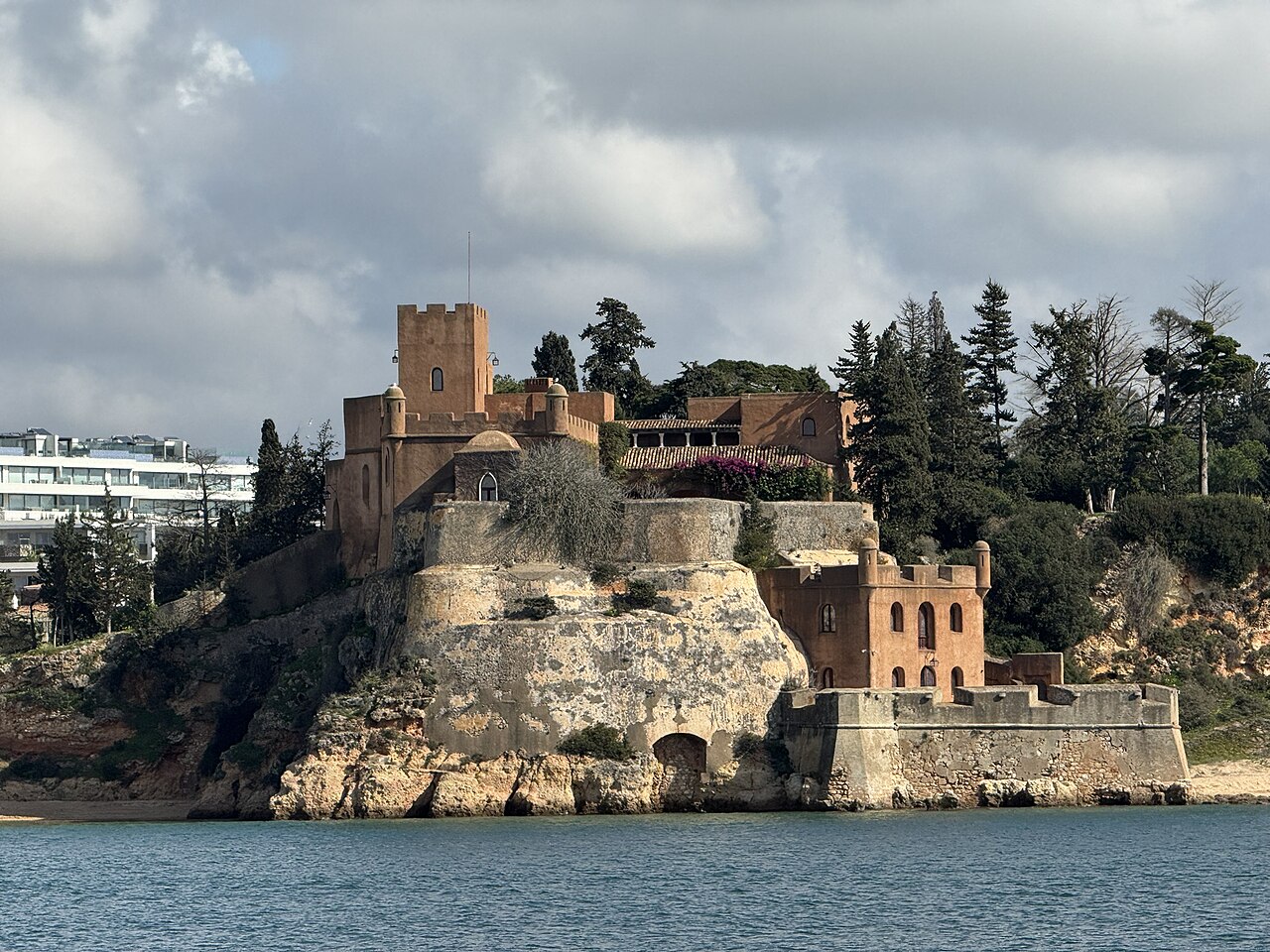
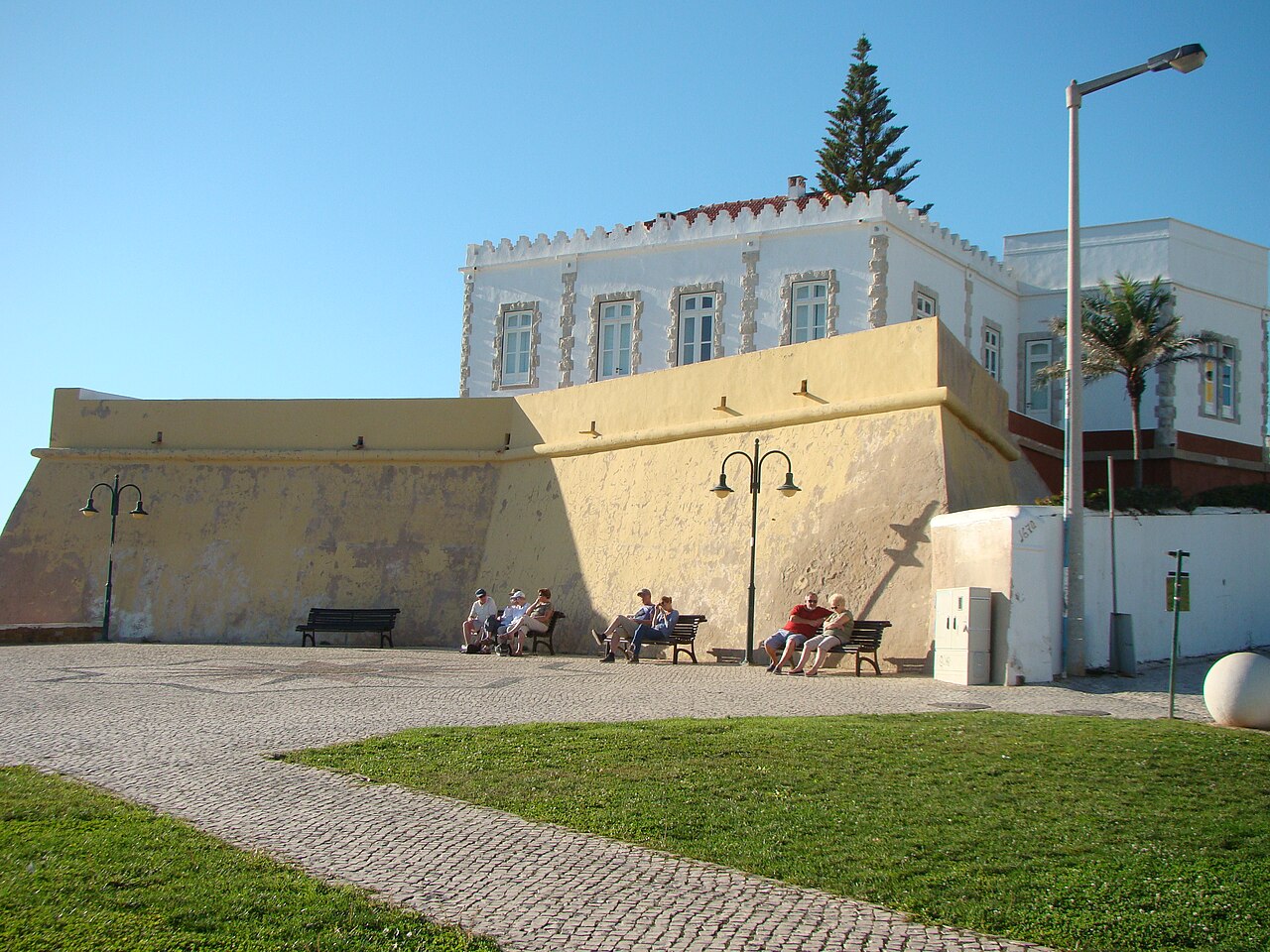
Castle of Alvor
The Castle of Alvor stands as a significant historical monument located in the municipality of Portimão, Portugal. This hill castle occupies a strategic position on a low elevation near the Atlantic coast, with origins tracing back to one of the earliest fortified settlements in the region. Its history spans over two millennia, reflecting a succession of Mediterranean civilizations and military powers that shaped its development and architectural character.
The site was initially fortified by the ancient Lusitanians during the 7th century B.C.E., marking it as a place of longstanding human occupation and defense. The location’s strategic importance attracted the attention of the Phoenicians and Greeks, who established trading and maritime activities here. The Carthaginians later took control, with the renowned commander Hannibal capturing the settlement in 436 B.C.E. and renaming it Portus Annibalis. The site was also known as Barcínia and Ipses in different periods, reflecting its evolving cultural influences.
During the Roman era, the settlement retained its significance as a center of commerce and regional governance. The continuity of occupation through antiquity underscores the site’s enduring strategic and economic value.
The moorish period and fortification
In 716, the site fell under the control of Moorish forces, who transformed it into a fortified location by the 9th century. This fortress, known as a hisn in Arabic, was part of a coastal defense network that included nearby strongholds such as Estômbar, Portimão, and Albufeira. The castle’s layout and construction during this period reflect typical Islamic military architecture, emphasizing robust defensive walls and strategic vantage points overlooking the coastline.
The alcáçova, or fortified citadel, remains the most prominent surviving feature of the castle. It occupies roughly 960 square meters on a low hill approximately five meters high. The walls are primarily built from large limestone blocks combined with red sandstone fragments sourced from nearby Silves, along with smaller stones, ceramic pieces, and lime mortar. This combination of materials illustrates the adaptive reuse of local resources and the layering of construction techniques over centuries.
Architectural features of the alcáçova
The walls of the alcáçova are thick, measuring about 1.7 meters in thickness, with the southwest section rising to approximately six meters in height. A narrow staircase at the southern corner, roughly half a meter wide, indicates the former presence of a chemin de ronde, a walkway used by defenders to patrol the walls. The main gate on the northern wall features a bent or elbow design, a defensive architectural element intended to slow attackers. This gate is about 2.5 meters wide and retains hinge sockets positioned around 2.6 meters above ground, suggesting it once held heavy wooden doors.
The entrance was likely protected by an albarrã tower, a projecting defensive tower extending beyond the main wall line, enhancing the castle’s protection against siege tactics. Foundations of an eastern tower and a substantial wall, possibly a barbican, provide further evidence of the castle’s layered fortifications designed to defend the main gate and interior spaces.
Medieval reconquest and later modifications
The castle’s control shifted during the turbulent period of the Christian Reconquista. In 1189, King Sancho I of Portugal, aided by German and Danish crusaders, captured Alvor. This conquest inflicted significant damage on the population and structures. However, the Almohads recaptured the site in 1191, maintaining Islamic control until 1240, when King Afonso III definitively reclaimed it for the Christian kingdom.
Following its reconquest, the castle underwent reconstruction commissioned by King Denis around 1300. This rebuilding effort underscored the castle’s revived strategic importance in controlling the southwestern Algarve coast. In the 16th century, King Sebastian ordered additional fortifications around the town in 1573, although these defensive walls were not fully completed. Records from 1606 indicate the castle still housed heavy artillery, reflecting its ongoing military role.
Impact of the 1755 earthquake and modern preservation
The 1755 Lisbon earthquake devastated much of the region, including the Castle of Alvor, reducing it largely to ruins. The earthquake’s impact marked the end of the castle’s military significance and led to the gradual abandonment of its defensive functions. Over time, residential buildings occupied the interior spaces of the alcáçova until the ruins were recognized for their historical value.
In 1984, the site was declared a Property of Public Interest, highlighting its cultural and heritage significance. Archaeological excavations conducted between 1986 and 1988 uncovered layers of the castle’s complex past, including pre-Islamic fortifications and Moorish additions. These studies also revealed secondary defensive structures closer to the coastline, emphasizing the site’s long-term military importance.
Current remains and urban context
The surviving remains focus on the alcáçova, which retains its roughly rectangular layout typical of Islamic fortresses in the region. The site is integrated within the modern urban fabric of Alvor, near Rua Poeta António Aleixo and Largo do Castelo, close to the municipal market. This location continues to mark the historical heart of the town.
The castle’s walls, constructed from a combination of limestone and red sandstone, stand as a testament to the adaptive building practices over centuries. The presence of a chemin de ronde, the bent main gate, and the foundations of defensive towers illustrate the castle’s layered defensive design. The eastern tower’s remains offer commanding views of the Atlantic coast, underscoring the castle’s strategic maritime role.
Today, the Castle of Alvor remains a valuable archaeological and cultural site. Its ruins provide insight into the diverse historical phases it experienced, from ancient Lusitanian fortifications through Roman, Moorish, and medieval Christian periods. Visitors can explore the remnants of its military architecture and appreciate the site’s significance in Portugal’s coastal defense history.
Frequently asked questions (FAQ)
- What is the historical significance of the Castle of Alvor?
- The Castle of Alvor is a 14th-century fortress that played a crucial role in the defense of the Algarve region during the medieval period. It reflects the architectural style of the time and is a testament to the strategic importance of Alvor as a coastal settlement.
- When was the Castle of Alvor built?
- The construction of the Castle of Alvor dates back to the 14th century, although its origins may trace back to earlier fortifications. The castle has undergone various renovations over the centuries, making it a significant historical landmark.
- Can I visit the Castle of Alvor?
- Yes, the Castle of Alvor is open to visitors who wish to explore its historical grounds. Guests can enjoy the scenic views from the castle walls and learn about its rich history through informative displays.
- What are the opening hours for the Castle of Alvor?
- The Castle of Alvor typically opens to visitors from 9 AM to 5 PM, but these hours may vary seasonally. It's advisable to check the official website or contact local tourism for the most current information before your visit.
- Is it possible to access the Castle of Alvor with mobility issues?
- The Castle of Alvor has some accessibility options, but due to its historical nature, certain areas may be challenging for visitors with mobility impairments. It's best to contact the site in advance to inquire about specific accessibility features available during your visit.
- When is the best time to visit the Castle of Alvor?
- The best time to visit the Castle of Alvor is during the spring and fall months when the weather is mild, and the tourist crowds are smaller. Visiting during these seasons allows for a more enjoyable exploration of the castle and its surroundings.
- What are some nearby attractions to the Castle of Alvor?
- Nearby attractions include the beautiful beaches of Alvor, the charming village center, and the scenic Ria de Alvor Nature Reserve. These locations offer visitors a chance to experience both the natural beauty and cultural heritage of the Algarve region.
- What are the ticket prices for the Castle of Alvor?
- Ticket prices for the Castle of Alvor are generally affordable, with discounts available for students and seniors. Check the official site for the latest pricing information and any special offers that may be available during your visit.
Information
Loading map...
Visitor reviews
No reviews yet. Been here? Write the first review and help other travelers!
Write the first reviewVisited this castle? Share your experience
Your review helps other travelers and adds first-hand knowledge to our encyclopedia.