Fort Conger
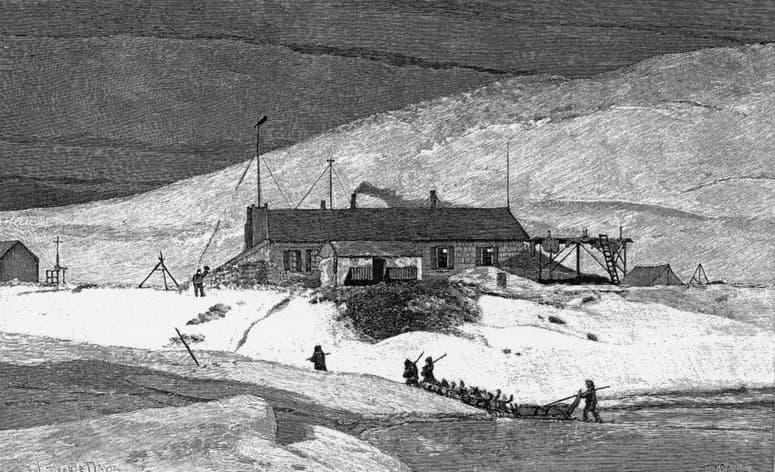
Fort Conger stands as a significant 19th-century bastioned fortress and scientific research post located in the remote Qikiqtaaluk Region of Nunavut, Canada. Established in 1881, this site played a pivotal role in early Arctic exploration and scientific study during the era of international polar research efforts. It was the base for the Lady Franklin Bay Expedition, led by Adolphus Greely, which marked the first major scientific expedition to the northern polar region as part of the First International Polar Year (1882-1883). The fort subsequently served as a key outpost for renowned explorer Robert Peary during his Arctic expeditions, contributing to the advancement of polar knowledge and exploration.
Strategic location and environment
Fort Conger is situated on the northern shore of Lady Franklin Bay within Grinnell Land on northeastern Ellesmere Island, inside the boundaries of Quttinirpaaq National Park. The fort overlooks Discovery Harbour, with Bellot Island lying directly across the water. The surrounding landscape is marked by rugged terrain and steep cliffs that rise sharply around the harbour, providing natural defensive advantages. The area is characterized by sparse vegetation, primarily consisting of grasses and sedges, as the harsh Arctic climate limits tree growth, leaving the site without timber resources. This remote location was chosen for its strategic vantage point and access to the Arctic Ocean, essential for polar expeditions and scientific observations.
Architectural and structural features
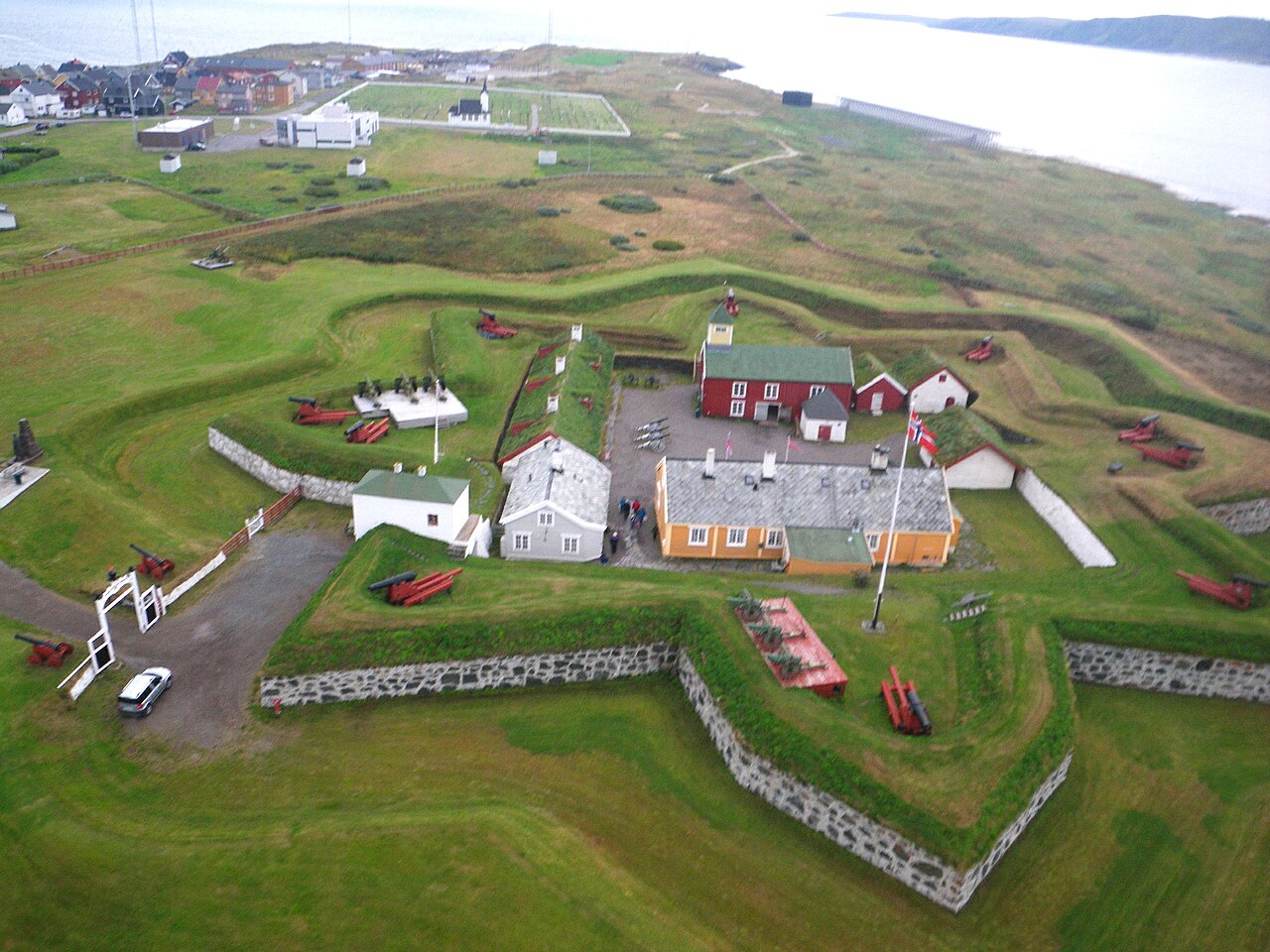
As a bastioned fortress, Fort Conger was designed with defensive considerations suited to its isolated Arctic setting. Although the traditional European bastion design was adapted to the local environment, the fortifications included and to withstand the severe weather conditions. The layout incorporated multiple buildings for living quarters, storage, and scientific laboratories, arranged around a central courtyard. The fort's construction utilized local stone and imported materials, reflecting the logistical challenges of building in such a remote area. The buildings were designed to provide shelter from extreme cold and high winds, with compact forms and sturdy construction.
Historical significance and expeditions
The establishment of Fort Conger was a direct result of the United States government's commitment to the First International Polar Year, a coordinated international scientific effort to study polar meteorology, geomagnetism, and other phenomena. The Lady Franklin Bay Expedition (1881-1884), led by Adolphus Greely, used Fort Conger as its primary base for conducting scientific observations and exploring the surrounding Arctic region. Despite facing extreme hardships, including supply failures and harsh winters, the expedition contributed valuable data on Arctic conditions.
Following the Greely expedition, the fort was intermittently used by other explorers, most notably Robert Peary, who occupied Fort Conger during his attempts to reach the North Pole in the late 19th and early 20th centuries. Peary's use of the site underscores Fort Conger's role as a logistical hub and shelter during one of the most challenging periods of polar exploration.
Preservation and heritage status
Today, Fort Conger remains uninhabited but is recognized for its historical and cultural importance. The fort is located within Quttinirpaaq National Park, one of the northernmost protected areas in Canada, which helps preserve the site's natural and historical integrity. In 1991, several structures at Fort Conger were designated as Classified Federal Heritage Buildings, acknowledging their significance in Canadian and international Arctic exploration history.
The site is one of the few remaining staffed stations in the Queen Elizabeth Islands, offering valuable insights into the challenges of early polar research and military fortification in extreme environments. Visitors to the park can view the ruins and remnants of the fort, which stand as a testament to human endurance and scientific curiosity in one of the world's most inhospitable regions.
Environmental conditions and challenges
The Arctic environment surrounding Fort Conger presents extreme conditions that have shaped both its construction and use. The area experiences long, harsh winters with temperatures often plunging far below freezing, limited daylight during winter months, and brief, cool summers. These conditions required robust building techniques and careful planning to ensure the survival of expedition members and the preservation of scientific equipment.
Logistical challenges included transporting materials and supplies over vast distances with limited infrastructure. The absence of timber meant that construction relied heavily on stone and imported wood. The rugged cliffs and sparse vegetation contributed to the isolation but also provided natural defense and vantage points for monitoring sea and ice conditions.
Legacy of Fort Conger in polar exploration
Fort Conger's legacy is closely tied to the history of Arctic exploration and scientific research. It symbolizes the era of international cooperation during the First International Polar Year and the determination of explorers like Adolphus Greely and Robert Peary to push the boundaries of human knowledge in extreme environments. The data collected and experiences gained at Fort Conger contributed to the understanding of Arctic meteorology, geography, and survival techniques.
As a bastioned fortress adapted to the Arctic, it also represents the intersection of military engineering and scientific endeavor in a unique geographical context. The preservation of Fort Conger allows historians, scientists, and visitors to appreciate the complexities of early polar expeditions and the architectural responses to one of the world's most challenging climates.
Frequently asked questions (FAQ)
- When was Fort Conger established and for what purpose?
- Fort Conger was established in 1881 as a base for the Lady Franklin Bay Expedition, part of the First International Polar Year scientific research efforts.
- Where is Fort Conger located?
- Fort Conger is located on the northern shore of Lady Franklin Bay in Grinnell Land, northeastern Ellesmere Island, Nunavut, Canada.
- What architectural style characterizes Fort Conger?
- Fort Conger is a bastioned fortress with thick stone walls and reinforced structures adapted for the harsh Arctic environment.
- Is Fort Conger open to visitors?
- Fort Conger is located within Quttinirpaaq National Park and can be viewed by visitors, although it is uninhabited and access is challenging due to its remote location.
- What is the historical significance of Fort Conger?
- Fort Conger served as the main base for the Lady Franklin Bay Expedition and was later used by Robert Peary, making it a key site in Arctic exploration history.
Photo gallery

Photo by NOAA•Public domain
Information
Current owner
Canadian government
Loading map...
Visitor reviews
No reviews yet. Been here? Write the first review and help other travelers!
Write the first reviewVisited this castle? Share your experience
Your review helps other travelers and adds first-hand knowledge to our encyclopedia.