Fort Barrancas
Fort Barrancas, originally known as Fort San Carlos de Barrancas, is a significant bastioned fortress located in the former Warrington area of Pensacola, Florida. This historic fortification stands on a strategic hilltop overlooking the entrance to Pensacola Bay, a vital harbor on the Gulf Coast of the United States. The fort's location within the modern Naval Air Station Pensacola reflects its continued military importance through centuries of American history.
The origins of Fort Barrancas date back to the late 18th century when the Spanish constructed the original wooden fortification known as Fuerte San Carlos de Barrancas around 1787. This early fort was part of Spain's defensive network in the region during a period of colonial competition in the Americas. The fort was strategically positioned to guard the bay's entrance and protect the nearby town of Pensacola from naval attacks.
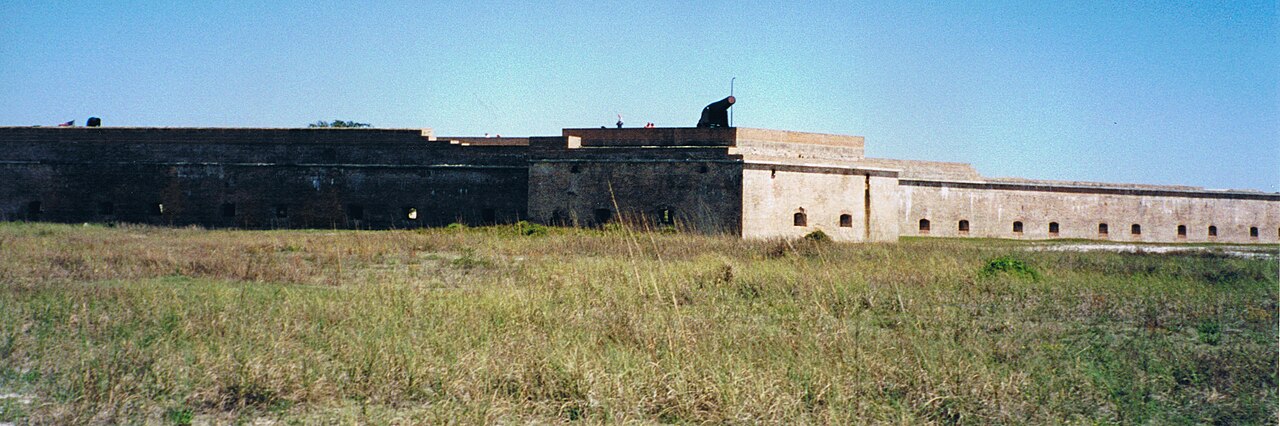
In the early 19th century, the fort underwent a dramatic transformation. Between 1839 and 1844, the United States Army reconstructed and expanded the fort extensively in brick masonry, creating the imposing structure seen today. This reconstruction incorporated advanced military architectural techniques of the post-Renaissance period, emphasizing the bastioned fortress design with angled walls and multiple defensive layers to withstand artillery bombardment.
Architectural features and layout
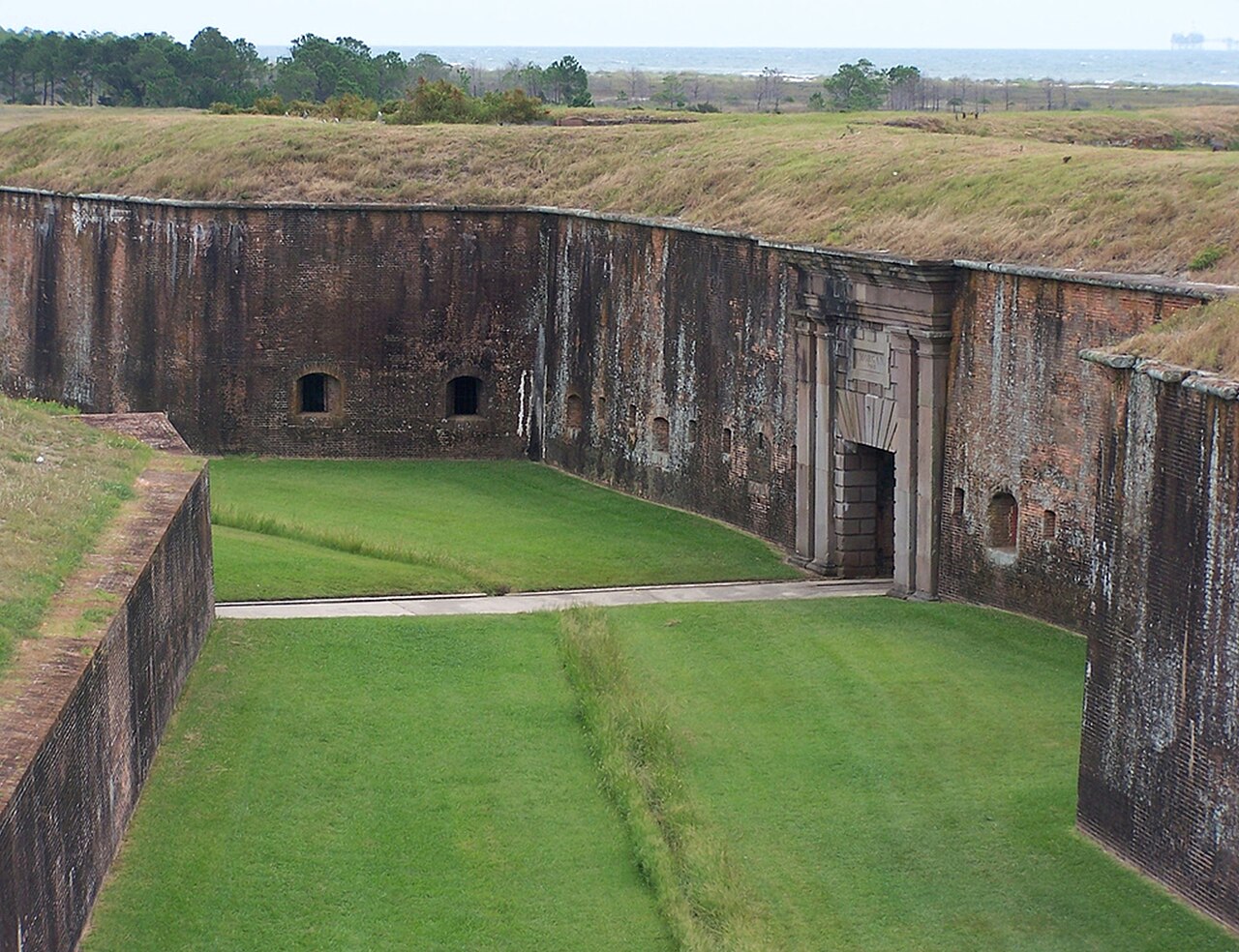
The fort's design reflects the principles of bastioned fortification, which were prevalent in European military architecture from the 16th century onward. The fortification walls are thick and angled to deflect cannonballs, with bastions projecting outward to provide overlapping fields of fire. These bastions allowed defenders to cover the fort's walls and moat with crossfire, eliminating blind spots.
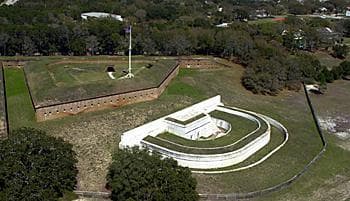
Fort Barrancas is built on a hilltop, providing a commanding view of Pensacola Bay and the surrounding landscape. Below the hill, at sea level, lies the water battery known as Bateria de San Antonio, constructed by the Spanish in 1787. This battery, sometimes referred to as Fort San Carlos, worked in conjunction with the hilltop fort to create a layered defense system controlling access to the bay.
The fort includes multiple defensive features such as moats, curtain walls, gun embrasures, and casemates—vaulted chambers within the walls used for storage and protection of artillery and troops. The layout also incorporates parade grounds and living quarters for soldiers, reflecting its function as a self-sustaining military installation.
Historical significance and military use
Fort Barrancas played a crucial role in the defense of the Gulf Coast during periods of colonial conflict, the War of 1812, and later American military engagements. Its location was strategic for controlling naval access and protecting the important port of Pensacola.
During the 19th century, the fort was part of the United States' coastal defense system. It saw limited combat but served as a deterrent against potential naval threats. Between World War I and World War II, the fort was repurposed as a Citizens' Military Training Camp, reflecting its ongoing military relevance and adaptation to new defense needs.
Following World War II, changes in military technology and strategic priorities led to the deactivation of Fort Barrancas by the U.S. Army on April 15, 1947. The fort's military function ended, but its historical value was recognized at the national level.
Preservation and public access
Designated a National Historic Landmark in 1960, Fort Barrancas was transferred to the National Park Service in 1971. Extensive restoration efforts were undertaken throughout the 1970s to preserve the fort's structural integrity and historical appearance. These efforts included masonry repairs, stabilization of walls, and conservation of original architectural elements.
Today, Fort Barrancas is open to the public, offering visitors a chance to explore its well-preserved bastioned walls, historic gun batteries, and interpretive exhibits detailing its rich military history. Its location within Naval Air Station Pensacola provides a unique context, blending active military operations with heritage tourism.
Fort Barrancas in the context of coastal fortifications
Fort Barrancas is an example of the evolution of coastal defenses from the colonial period through the 19th century. Its combination of Spanish colonial origins and American post-Revolutionary War reconstruction illustrates the layered history of military architecture in the Gulf Coast region.
The fort's bastioned design reflects the adaptation of European military engineering principles to the American frontier. Its integration with the lower water battery demonstrates a sophisticated approach to controlling maritime access and defending strategic points.
Comparison to other forts
Compared to other contemporaneous coastal forts, Fort Barrancas is notable for its extensive brick construction and the preservation of both hilltop and water battery components. This dual-level defense system is less common and provides valuable insight into 18th and 19th-century fortification strategies.
Visitor information and experience
Visitors to Fort Barrancas can explore the fort's extensive network of walls, bastions, and underground chambers. Informational signage and guided tours provide context on the fort's construction, military use, and historical significance.
The fort's elevated position offers panoramic views of Pensacola Bay, enhancing the visitor experience. The site is accessible year-round, with facilities managed by the National Park Service to support educational programs and heritage tourism.
Frequently asked questions (FAQ)
- When was Fort Barrancas originally built?
- Fort Barrancas originated as a Spanish wooden fortification called Fort San Carlos de Barrancas around 1787, with major reconstruction occurring between 1839 and 1844.
- What architectural style characterizes Fort Barrancas?
- Fort Barrancas is designed as a bastioned fortress, a post-Renaissance military architectural style featuring angled walls and bastions for enhanced defense.
- Is Fort Barrancas open to the public?
- Yes, Fort Barrancas is open to the public and managed by the National Park Service, offering tours and educational exhibits about its history.
- What was the role of Fort Barrancas during World War I and II?
- Between World War I and II, Fort Barrancas served as a Citizens' Military Training Camp, reflecting its continued military use before deactivation in 1947.
- Where is Fort Barrancas located?
- Fort Barrancas is located in the Warrington area of Pensacola, Florida, within the Naval Air Station Pensacola.
Photo gallery

Photo by National Park Service•Public domain
Information
Current owner
National Park Service
Loading map...
Visitor reviews
No reviews yet. Been here? Write the first review and help other travelers!
Write the first reviewVisited this castle? Share your experience
Your review helps other travelers and adds first-hand knowledge to our encyclopedia.