Fort Angké — Indonesia castle

Fort Angké

Fort angké: 17th-century bastioned fortress in north jakarta
North Jakarta, Jakarta Raya, Indonesia
Renaissance (15th–17th c.)
Ruins

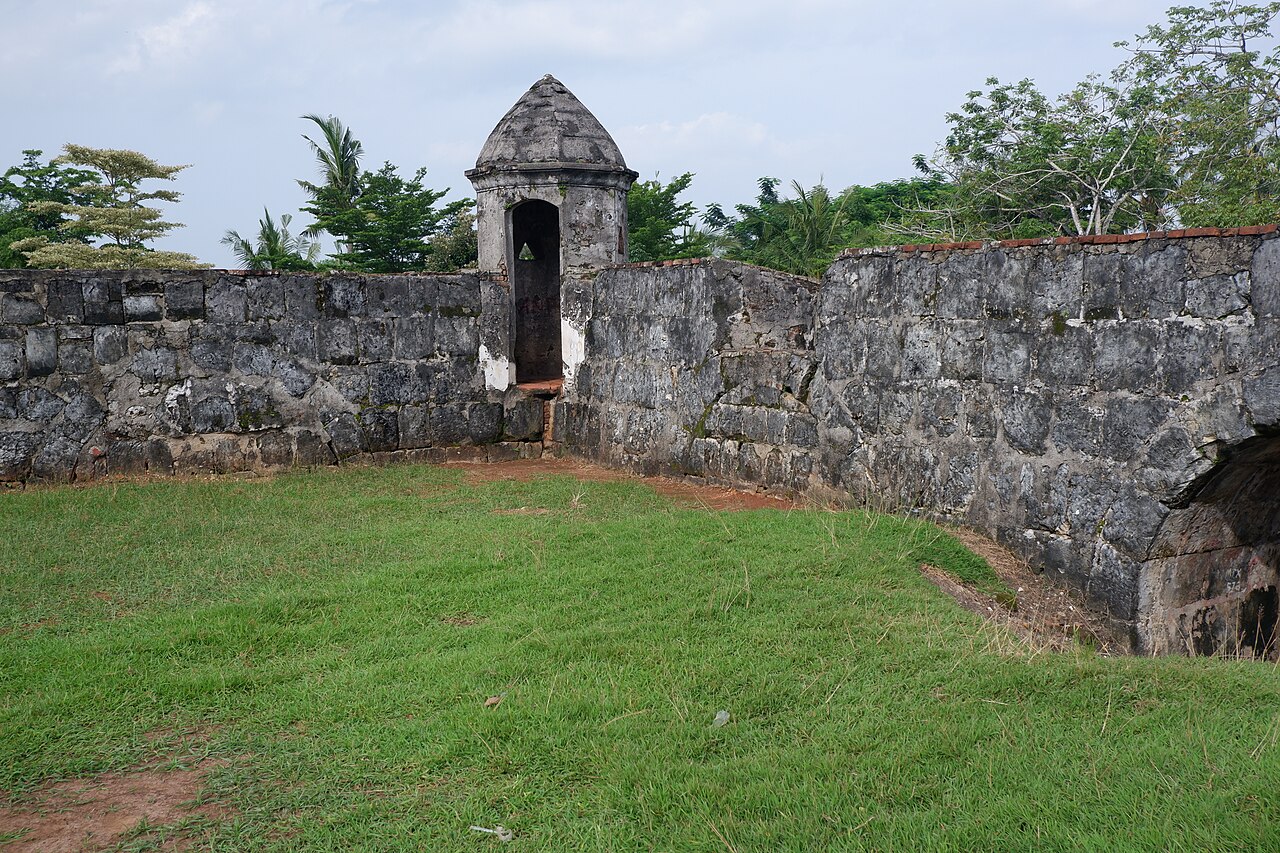
Fort Angké is a historic bastioned fortress located in North Jakarta, Indonesia. Constructed in 1657 by the Dutch East India Company (VOC), the fort was strategically positioned along the Angke River, to the west of the city of Batavia (modern-day Jakarta). Its location at the intersection of the Mookervaart channel and the Angke River provided a vital defensive point controlling river traffic and protecting the western approaches to Batavia, the VOC's administrative and commercial hub in the region during the 17th century.

Architectural design and strategic importance

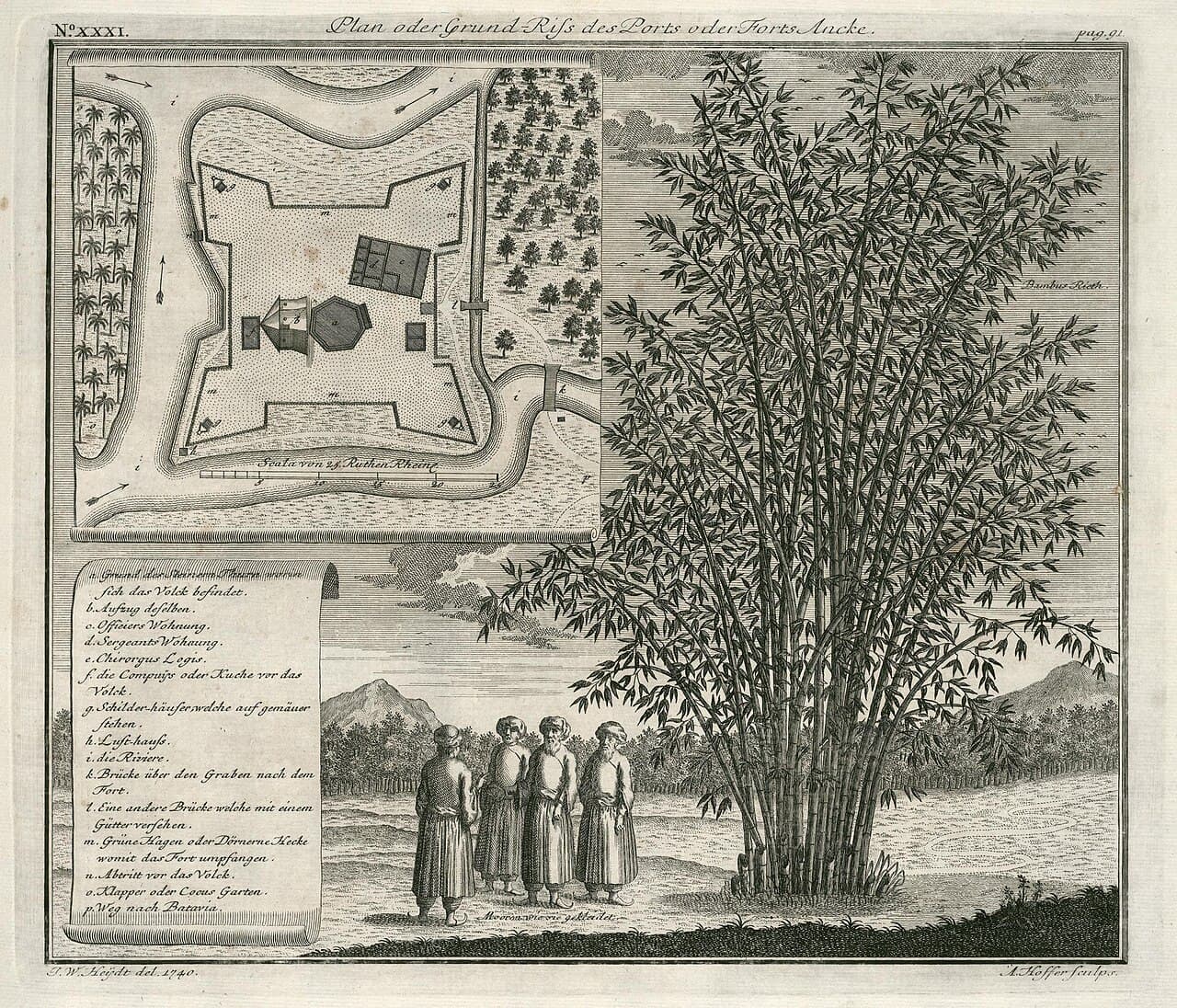
Fort Angké exemplifies the characteristics of a bastioned fortress, a style that emerged during the renaissance period and was widely adopted by European powers to improve fortifications against artillery. The fort's design likely included angular bastions that allowed defenders to cover adjacent walls with overlapping fields of fire, minimizing blind spots and strengthening its defensive capabilities. Although detailed architectural plans of Fort Angké are scarce, its classification as a bastioned fortress indicates adherence to these principles, which were standard in VOC fortifications across Southeast Asia.

Location and construction context

Built during the VOC's expansion in the Indonesian archipelago, Fort Angké served to secure Dutch interests against rival European powers and local resistance. Situated about an hour's travel from Batavia, the fort's placement along the Angke River was crucial for controlling inland waterways and protecting trade routes. The river access also facilitated the movement of supplies and reinforcements from Batavia to the fort.

Historical significance and events

Fort Angké played a role in the complex colonial dynamics of the late 17th and 18th centuries. One notable historical episode involved the imprisonment of three officers from the French corsair ship Le Modeste. These officers were held captive at the fort for five months, a fact recorded by the French naturalist J.-J. La Billardière during his visit in November 1796. This incident highlights the fort's function as a military detention site during periods of conflict between European powers competing for dominance in the region.

Cartographic evidence

A 1740 Dutch map confirms the fort's location at the strategic confluence of the Mookervaart channel and the Angke River. This cartographic documentation underscores the fort's importance in the VOC's defensive network and its role in controlling navigation and trade in the waterways around Batavia.

Legacy and current state

Today, Fort Angké's remains are limited, and much of its original structure has not survived the centuries of urban development and environmental changes in Jakarta. The fort is recognized for its historical value as part of Indonesia's colonial heritage and the broader narrative of European fortifications in Southeast Asia. While it is not a major tourist attraction like some other colonial forts, Fort Angké remains a point of interest for historians and archaeologists studying the VOC's military architecture and colonial strategies.

Cultural and heritage considerations

Efforts to preserve and study Fort Angké contribute to understanding the Dutch colonial period's impact on Indonesia's urban and military landscape. The fort's story adds depth to the history of Batavia and the complex interactions between European colonizers and local populations during the 17th and 18th centuries.

Frequently asked questions (FAQ)

What is the historical significance of Fort Angké?
Fort Angké, built in the 17th century, played a crucial role in the defense of Batavia during the colonial era. It served as a military outpost for the Dutch East India Company and is a testament to the colonial architecture and military strategy of the time.
When was Fort Angké constructed?
Fort Angké was constructed between 1660 and 1665 as part of a series of forts designed to protect the port of Batavia. Its construction reflects the strategic military importance of the area during the Dutch colonial period.
What are the opening hours for visiting Fort Angké?
Fort Angké is open to visitors from 9 AM to 5 PM, Tuesday through Sunday. It is advisable to check for any special closure days or events that may affect visiting hours.
Is it possible to access Fort Angké by public transportation?
Yes, Fort Angké can be accessed by public transportation, including buses and local taxis. Visitors can also use ride-sharing services for a more convenient option, as the fort is located in North Jakarta.
Can I take guided tours at Fort Angké?
Yes, guided tours are available at Fort Angké, providing visitors with insights into its rich history and architectural features. It’s recommended to book a tour in advance to ensure availability.
What is the best time to visit Fort Angké?
The best time to visit Fort Angké is during the dry season, which runs from May to September. Visiting during these months allows for more pleasant weather and clearer skies, perfect for exploring the fort and its surroundings.
Are there any nearby attractions to visit after Fort Angké?
Yes, after visiting Fort Angké, you can explore several nearby attractions, including the old town of Kota Tua and the Sunda Kelapa harbor. These sites offer a glimpse into Jakarta’s colonial past and vibrant maritime history.
How much are the ticket prices for Fort Angké?
Ticket prices for Fort Angké are quite affordable, with general admission typically costing around IDR 10,000. Discounts may be available for students and groups, so it's worth inquiring at the entrance.

Photo gallery

Fort Angké
Click to view

Photo by Johann Wolffgang Heydt / Andreas Hoffer•Public domain

1 photo • Click any image to view in full screen

Information

Bastioned Fortress

Loading map...

Visitor reviews

No reviews yet. Been here? Write the first review and help other travelers!

Write the first review

Visited this castle? Share your experience

Your review helps other travelers and adds first-hand knowledge to our encyclopedia.
Write a review

(5/5)

0/2000 characters

Your review will be visible after admin approval

Nearby castles

4.3 km
Batavia Castle — Indonesia castle

Batavia Castle

Jakarta, Indonesia

Batavia Castle (Dutch: Kasteel Batavia, Indonesian: Kastil Batavia) was a prominent fortification located at the mouth of the Ciliwung River in what is now Jakarta, Indonesia. Serving as the administrative center of the Dutch East India Company (VOC) in Asia, it played a crucial role in the colonial governance and military strategy of the Dutch in the East Indies during the 17th and 18th centuries. The castle was constructed shortly after the establishment of the city of Batavia in 1619 by the VOC as part of their efforts to control trade and assert dominance in the region. Strategically positioned at the river mouth, Batavia Castle was designed to protect the harbor and the city from naval attacks and served as the headquarters for the VOC's operations in Asia. Historical significance and role Batavia Castle was more than just a military fortification; it was the residence of the Governor General, the highest-ranking official of the VOC in the Dutch East Indies. The Governor General also chaired the Council of the Indies, the executive committee responsible for making key decisions regarding the administration, trade policies, and military actions in the region. The castle thus functioned as the political and administrative heart of the VOC's colonial empire in Asia. Its importance was reflected in its robust construction and strategic location, which allowed for control over maritime access and oversight of the burgeoning colonial city. Architectural features and layout While detailed architectural records of Batavia Castle are limited, it is known that the fort was built following European military architectural principles adapted to tropical conditions. The castle featured bastioned walls designed to withstand cannon fire and included defensive towers and gates controlling access to the harbor and the city. The fort's layout incorporated courtyards and administrative buildings within its walls, including the Governor General's residence and offices for VOC officials. The location by the river mouth allowed for easy resupply and communication with VOC fleets. Demolition and legacy Batavia Castle was demolished in 1809 by Governor General Herman Willem Daendels as part of his reforms and urban redesign of Batavia. The demolition was intended to modernize the city's defenses and infrastructure, replacing the old fortifications with new urban layouts. Today, no visible remains of Batavia Castle exist, but its historical significance as the center of Dutch colonial power in Indonesia remains well documented. The site where the castle once stood is now part of the urban fabric of Jakarta, with modern buildings occupying the area. Batavia Castle in the context of Dutch colonial architecture Batavia Castle exemplified the VOC's approach to fortification and colonial administration in Southeast Asia, combining military functionality with administrative governance. Its design reflected the adaptation of European fortress architecture to the tropical environment and the strategic needs of controlling trade routes and local populations. The castle's role as both a defensive structure and a seat of power highlights the intertwined nature of military and political authority in colonial enterprises. Its demolition marked a shift in urban planning and defense strategies in the early 19th century Dutch East Indies.

Early Medieval (5th–10th c.)
Details
22.4 km
Indonesian Children's Castle — Indonesia castle

Indonesian Children's Castle

, Indonesia

The Indonesian children's castle is a distinctive structure located in Indonesia, notable for its design as a hill castle. Unlike traditional medieval castles built primarily for defense and residence of nobility, this castle serves a modern, educational, and recreational purpose aimed at children. It is an example of how castle architecture can be adapted to contemporary cultural and social needs, blending historical inspiration with playful, child-friendly elements. Architectural design and features The castle is situated on elevated terrain, characteristic of a hill castle, which historically provided strategic advantages such as enhanced visibility and defense. However, in this context, the elevation primarily offers an engaging environment for visitors, enhancing the castle's visual prominence and creating a scenic backdrop for activities. The architecture incorporates simplified versions of traditional castle elements such as turrets, battlements, and courtyards, designed with safety and accessibility in mind for children. These features are often stylized and colorful, promoting imaginative play and learning about historical architecture in an interactive way. Historical and cultural context While the Indonesian children's castle does not date back to the medieval period, it reflects a modern interpretation of castle architecture within an Indonesian cultural setting. It serves as an educational tool, introducing children to architectural history and heritage through hands-on experiences and themed activities. The castle may also host events and programs that celebrate local traditions and stories, integrating cultural education with entertainment. This approach helps preserve and promote Indonesian cultural identity while making history accessible and enjoyable for younger generations. Function and visitor experience The castle functions primarily as a recreational and educational venue. It is designed to accommodate children and families, offering playgrounds, interactive exhibits, and guided tours that explore the concept of castles and their role in history. Visitors can engage with the castle's features through climbing structures, maze-like courtyards, and imaginative play areas that mimic the defensive and residential aspects of traditional castles. These activities encourage physical activity, creativity, and learning in a safe environment. Preservation and current status As a modern construction, the Indonesian children's castle is well-maintained and preserved to ensure safety and functionality. Its condition remains well preserved, reflecting ongoing efforts to provide a quality experience for visitors. Significance and impact The castle represents a unique fusion of historical architectural concepts with contemporary educational goals. It highlights how castle designs can be adapted beyond their original military and residential purposes to serve community and cultural functions. By engaging children with history and architecture in an interactive setting, the castle fosters early appreciation for cultural heritage and encourages imaginative play, making it a valuable asset in Indonesia's cultural landscape.

Details
70.2 km
Fort Speelwijk — Indonesia castle

Fort Speelwijk

, Indonesia

Fort Speelwijk is a notable example of a bastioned fortress located in Indonesia. This type of fortress is characterized by angular bastions projecting from the main walls, designed to provide overlapping fields of fire and eliminate blind spots in defense. Built during the colonial period, Fort Speelwijk reflects the military architectural strategies employed by European powers in Southeast Asia to secure strategic coastal positions and control maritime routes. Historical context and significance Fort Speelwijk was constructed as part of the colonial efforts to establish and maintain control over important trading routes and territories in the Indonesian archipelago. The fortress served as a military stronghold to defend against rival colonial powers and local resistance. Its strategic location allowed it to oversee and protect nearby waterways, which were vital for commerce and naval operations during the period of European expansion in the region. Architectural features of Fort Speelwijk Bastioned design The defining feature of Fort Speelwijk is its bastioned layout, a hallmark of early modern military architecture. The bastions are angular projections that extend from the main curtain walls, enabling defenders to cover adjacent walls with cannon and musket fire. This design minimized dead zones and improved the fort's defensive capabilities against siege warfare and artillery bombardment. Construction materials and techniques The fortress was primarily constructed using locally sourced materials, including stone and brick, combined with lime mortar. The walls were thick and robust to withstand cannon fire, and the bastions were reinforced to absorb and deflect attacks. The use of sloping walls and angled bastions reflects the influence of European military engineering principles adapted to the tropical environment of Indonesia. Defensive elements and layout Fort Speelwijk features a moat and a series of ramparts designed to slow and expose attacking forces. The entrance was typically guarded by a gatehouse with defensive structures such as portcullises and murder holes. Inside, the fort contained barracks, storage facilities for ammunition and provisions, and command quarters. The layout was planned to maximize defense while accommodating the needs of a garrisoned force. Role in regional history Throughout its active use, Fort Speelwijk played a key role in the military and political dynamics of the region. It was involved in various conflicts between colonial powers vying for dominance in Southeast Asia and served as a base for operations against local uprisings. The fortress's presence contributed to the establishment of colonial order and facilitated control over trade routes critical to the economy of the colonial administration. Current condition and preservation Today, Fort Speelwijk stands as a partially preserved bastioned fortress. While some sections of the walls and bastions remain intact, other parts have suffered from natural decay and human activity over the centuries. Efforts to preserve and restore the fortress have been undertaken to maintain its historical and architectural significance. It is recognized as an important cultural heritage site that offers insight into the colonial military architecture and history of Indonesia. Visiting Fort Speelwijk Visitors to Fort Speelwijk can explore the remaining structures and gain an understanding of the fortress's strategic design and historical context. The site provides a tangible connection to the colonial past and the military technologies of the era. Interpretive signage and guided tours may be available to enhance the visitor experience, highlighting the architectural details and historical narratives associated with the fortress.

Details