Batavia Castle
Batavia Castle (Dutch: Kasteel Batavia, Indonesian: Kastil Batavia) was a prominent fortification located at the mouth of the Ciliwung River in what is now Jakarta, Indonesia. Serving as the administrative center of the Dutch East India Company (VOC) in Asia, it played a crucial role in the colonial governance and military strategy of the Dutch in the East Indies during the 17th and 18th centuries.
The castle was constructed shortly after the establishment of the city of Batavia in 1619 by the VOC as part of their efforts to control trade and assert dominance in the region. Strategically positioned at the river mouth, Batavia Castle was designed to protect the harbor and the city from naval attacks and served as the headquarters for the VOC's operations in Asia.
Historical significance and role
Batavia Castle was more than just a military fortification; it was the residence of the Governor General, the highest-ranking official of the VOC in the Dutch East Indies. The Governor General also chaired the Council of the Indies, the executive committee responsible for making key decisions regarding the administration, trade policies, and military actions in the region.
The castle thus functioned as the political and administrative heart of the VOC's colonial empire in Asia. Its importance was reflected in its robust construction and strategic location, which allowed for control over maritime access and oversight of the burgeoning colonial city.
Architectural features and layout
While detailed architectural records of Batavia Castle are limited, it is known that the fort was built following European military architectural principles adapted to tropical conditions. The castle featured bastioned walls designed to withstand cannon fire and included defensive towers and gates controlling access to the harbor and the city.
The fort's layout incorporated courtyards and administrative buildings within its walls, including the Governor General's residence and offices for VOC officials. The location by the river mouth allowed for easy resupply and communication with VOC fleets.
Demolition and legacy
Batavia Castle was demolished in 1809 by Governor General Herman Willem Daendels as part of his reforms and urban redesign of Batavia. The demolition was intended to modernize the city's defenses and infrastructure, replacing the old fortifications with new urban layouts.
Today, no visible remains of Batavia Castle exist, but its historical significance as the center of Dutch colonial power in Indonesia remains well documented. The site where the castle once stood is now part of the urban fabric of Jakarta, with modern buildings occupying the area.
Batavia Castle in the context of Dutch colonial architecture
Batavia Castle exemplified the VOC's approach to fortification and colonial administration in Southeast Asia, combining military functionality with administrative governance. Its design reflected the adaptation of European fortress architecture to the tropical environment and the strategic needs of controlling trade routes and local populations.
The castle's role as both a defensive structure and a seat of power highlights the intertwined nature of military and political authority in colonial enterprises. Its demolition marked a shift in urban planning and defense strategies in the early 19th century Dutch East Indies.
Frequently asked questions (FAQ)
- When was Batavia Castle built and by whom?
- Batavia Castle was built in 1619 by the Dutch East India Company (VOC) shortly after the founding of Batavia, to serve as their administrative and military center in Asia.
- What was the primary function of Batavia Castle?
- The castle served as the administrative center of the VOC in Asia and the residence of the Governor General, who was the highest VOC official in the Dutch East Indies.
- Why was Batavia Castle demolished?
- Batavia Castle was demolished in 1809 by Governor General Herman Willem Daendels as part of efforts to modernize the city's defenses and urban layout.
- Are there any remains of Batavia Castle today?
- No visible remains of Batavia Castle exist today; the site is now part of modern Jakarta's urban area.
- What architectural style did Batavia Castle represent?
- Batavia Castle reflected European military architectural principles adapted to tropical conditions, typical of VOC fortifications in Southeast Asia.
Photo gallery

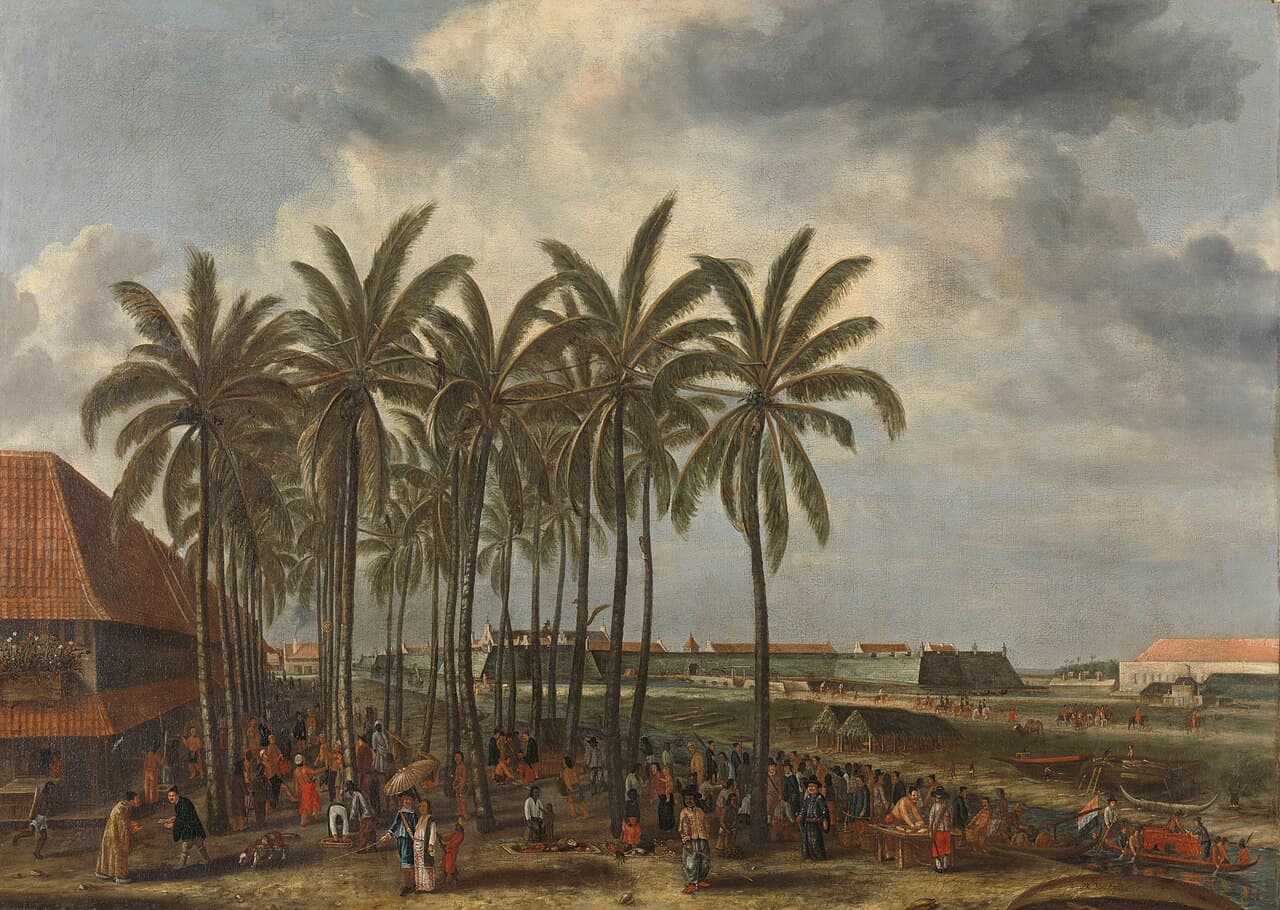
Photo by Andries Beeckman•Public domain
Information
Current owner
Municipality of Jakarta
Loading map...
Visitor reviews
No reviews yet. Been here? Write the first review and help other travelers!
Write the first reviewVisited this castle? Share your experience
Your review helps other travelers and adds first-hand knowledge to our encyclopedia.