Castle Williams — United States of America castle

Castle Williams

Castle Williams: historic bastioned fortress on Governors Island
New York City, New York, United States of America
Modern (19th–20th c.)
Well Preserved

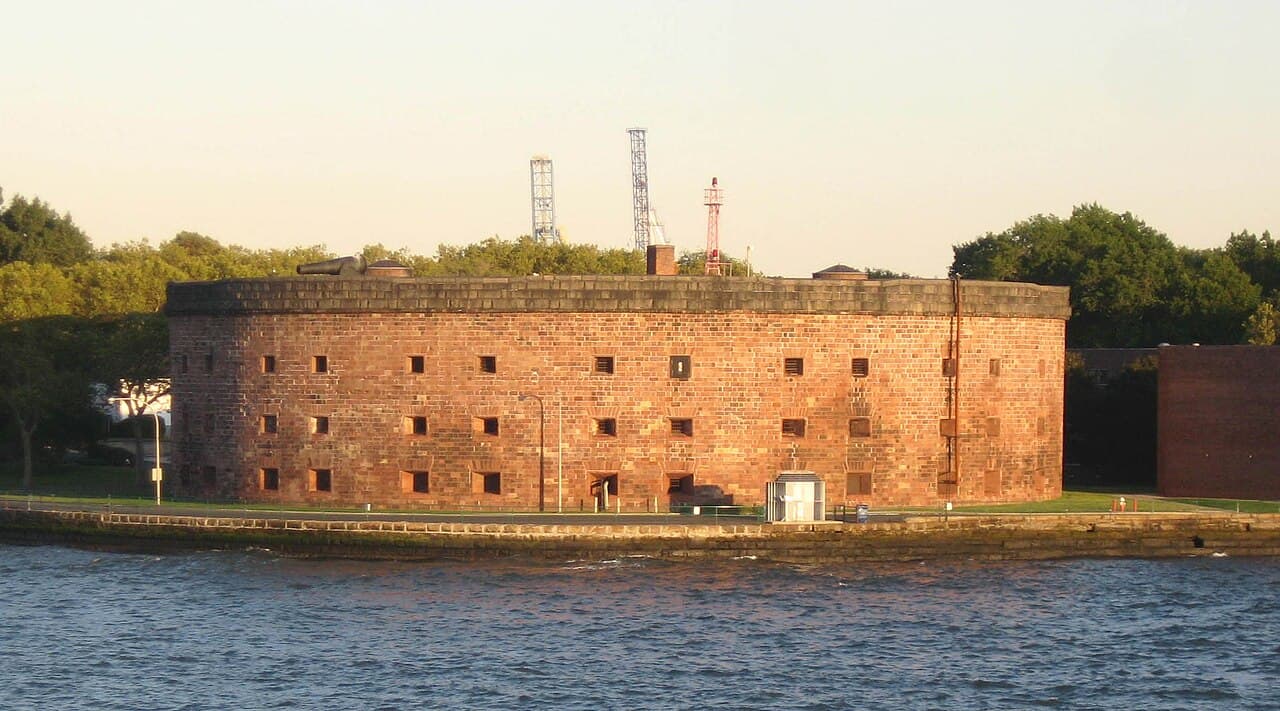
Castle Williams is a distinctive bastioned fortress constructed of red sandstone, located on the northwest point of Governors Island in New York Harbor. Built in the early 19th century, it formed a critical part of the coastal defense system designed to protect New York City from naval attacks during a period of heightened military tension. Its circular design and robust fortifications exemplify the modern military architecture of the era, incorporating multiple tiers of cannon placements and thick masonry walls to withstand bombardment.

Historical context and strategic importance

Constructed between 1807 and 1811, Castle Williams was part of the larger Third System of US coastal fortifications, a nationwide effort following the War of 1812 to bolster maritime defenses. Its location on Governors Island was strategically chosen to guard the entrance to the Hudson River and New York Harbor, key points for commerce and military movement. The fort was intended to deter and defend against potential British naval incursions and other foreign threats.

Architectural features and design

The fort is a circular structure approximately 200 feet in diameter, made primarily of red sandstone sourced locally. It features a multi-tiered bastioned design with three levels of casemates—vaulted gun chambers—allowing for a large number of cannons to be mounted in protected positions. The thick walls, some over 7 feet thick, were designed to absorb and deflect artillery fire.

The circular layout was innovative for its time, allowing for overlapping fields of fire and reducing blind spots. The bastions—projecting angular structures—enabled defenders to cover the fort's walls with crossfire, a key element in bastioned fortifications. The fort also includes a dry moat and a glacis, sloped earthworks enhancing defense against attackers.

Interior and functional spaces

Inside, Castle Williams housed barracks, powder magazines, and storage areas. The multiple tiers of casemates provided shelter for troops and artillery, enabling sustained defense during sieges. The central parade ground served as a muster area and facilitated movement within the fort.

Role through history

Castle Williams served as an active military installation throughout much of the 19th century, including during the American Civil War, when it was upgraded with additional artillery and defensive improvements. It later functioned as a prison for Confederate soldiers and military prisoners during the Civil War era.

In the 20th century, the fort's military significance declined with advances in naval technology and changes in defense strategy. It was eventually decommissioned and transferred to the National Park Service.

Preservation and current status

Today, Castle Williams is managed by the National Park Service as part of the Governors Island National Monument, alongside Fort Jay. It is well preserved, with ongoing efforts to maintain its historic fabric and interpret its significance to visitors. The fort stands as a prominent landmark in New York Harbor, offering insight into early 19th-century coastal defense architecture and military history.

Visitors to Governors Island can explore Castle Williams during guided tours and public programs, gaining a deeper understanding of its construction, strategic purpose, and role in American military heritage.

Frequently asked questions (FAQ)

How do I visit Castle Williams on Governors Island?
Castle Williams is accessible to the public via ferry to Governors Island from Manhattan or Brooklyn. The fort is open seasonally, with guided tours available during the summer months. Visitors should check the National Park Service website for current hours and tour schedules.
What is the historical significance of Castle Williams?
Castle Williams was built between 1807 and 1811 as part of the Third System of US coastal defenses. It protected New York Harbor from naval attacks and served as a military prison during the Civil War, reflecting its strategic and historical importance.
What architectural features distinguish Castle Williams?
The fort's circular bastioned design with three tiers of casemates is notable. Its thick red sandstone walls, dry moat, and overlapping fields of fire exemplify early 19th-century military engineering principles.
Is Castle Williams wheelchair accessible?
Due to its historic structure and design, Castle Williams has limited wheelchair accessibility. Some areas may be challenging to navigate, so visitors with mobility concerns should contact the National Park Service for specific accessibility information.
When is the best time to visit Castle Williams?
The best time to visit Castle Williams is during the warmer months, typically from late spring through early fall, when ferry services are running regularly and guided tours are offered.

Photo gallery

Castle Williams
Click to view

Photo by Jim.henderson•Public domain

1 photo • Click any image to view in full screen

Information

Bastioned Fortress

Current owner

National Park Service

Loading map...

Visitor reviews

No reviews yet. Been here? Write the first review and help other travelers!

Write the first review

Visited this castle? Share your experience

Your review helps other travelers and adds first-hand knowledge to our encyclopedia.

Write a review

(5/5)

0/2000 characters

Your review will be visible after admin approval

Nearby castles

0 km

Castle Williams

New York, United States Minor Outlying Islands

Castle Williams stands as a prominent historic fortress on Governors Island, located just off the southern tip of Manhattan in New York Harbor. Constructed between 1807 and 1811, this circular red sandstone fortification was a critical component of the United States' coastal defenses during the early 19th century, particularly designed to protect New York City from naval threats during the War of 1812. The fort's strategic location on the northwest corner of Governors Island allowed it to command the harbor's entrance, working in conjunction with other nearby fortifications such as Castle Clinton at Battery Park. Castle Williams was designed as a multi-tiered, circular bastion with eight-foot-thick walls arranged in a concentric arc, enabling it to mount approximately 100 cannons that could fire in nearly every direction. This design maximized defensive coverage and provided a formidable deterrent against enemy ships attempting to enter the harbor. Architectural design and construction The fort's architecture reflects the principles of early 19th-century military engineering, emphasizing durability and all-around defense. Built primarily from red sandstone, the structure features multiple tiers of gun emplacements, allowing overlapping fields of fire. The circular shape was relatively innovative for its time, facilitating better defense than traditional rectangular forts by eliminating blind spots and allowing defenders to concentrate firepower efficiently. Castle Williams consists of a central courtyard surrounded by thick masonry walls, with casemates—vaulted chambers—housing artillery and providing protected quarters for troops. The fort's roof was designed to accommodate additional artillery placements, further increasing its firepower. The robust walls and strategic embrasures were constructed to withstand bombardment, reflecting the military engineering advancements of the early federal period. Historical significance and military use Although Castle Williams never saw combat during the War of 1812—as the British did not launch a direct assault on New York City—the fort played a vital role as a deterrent and symbol of American coastal defense. Following the war, it continued to serve various military functions throughout the 19th and early 20th centuries. Civil war era and prison use During the American Civil War, Castle Williams was repurposed as a Union barracks and military prison. Its secure construction made it suitable for detaining Confederate prisoners of war and military convicts. The fort's function as a prison was expanded in subsequent decades, and it became a key military prison facility well into the 20th century. 20th century military role and decommissioning Throughout the early 1900s, Castle Williams remained an active military installation, adapting to changing defense needs. It served as a prison and administrative center until its decommissioning in 1965. After nearly 160 years of military use, the fort was retired from active service, reflecting shifts in military technology and strategic priorities. Governors island and public access Governors Island itself has a rich military history dating back to the Revolutionary War, serving as a key military base for over two centuries. However, since the departure of the United States Coast Guard in 1996, the island has undergone a transformation into a public park and cultural site. Castle Williams is now accessible to visitors during the warmer months, typically from May through September. The fort is part of the Governors Island National Monument, managed by the National Park Service, which preserves its historic structures and offers educational programs about its military and architectural significance. Architectural legacy and preservation Castle Williams is notable for its early 19th-century military architecture and its role in the evolution of coastal fortifications in the United States. Its circular design influenced later fortifications and remains a rare example of this style. Preservation efforts have focused on maintaining the structural integrity of the sandstone walls, casemates, and gun emplacements, allowing visitors to experience a tangible connection to America's coastal defense heritage. The fort's robust construction and historical importance have earned it recognition as a significant cultural landmark. Its survival through centuries of military use and eventual preservation as a public monument highlight the enduring legacy of America's early coastal defenses. Visitor information and experience Visitors to Castle Williams can explore the fort's interior, including the casemates, gun platforms, and central courtyard. Interpretive signage and guided tours provide insights into the fort's construction, military history, and role in protecting New York Harbor. The site offers panoramic views of the harbor and Manhattan skyline, making it a popular destination for history enthusiasts and tourists alike. Accessibility improvements have been made to facilitate public visits, although some areas may be restricted due to preservation concerns. Best time to visit and access details The island and Castle Williams are generally open to the public from May through September. Visitors can reach Governors Island by ferry from Manhattan and Brooklyn, with frequent service during the open season. Nearby attractions Castle Clinton at Battery Park, another early 19th-century coastal fortification Governors Island parklands featuring historic buildings, recreational spaces, and cultural events Manhattan and Brooklyn waterfronts offering scenic views and additional historic sites

Early Medieval (5th–10th c.)
Details
0.3 km

Fort Jay

New York, United States Minor Outlying Islands

Fort Jay stands as a prominent example of a coastal bastion fort constructed in the late 18th century to protect one of the most strategic maritime gateways in the United States. Located on Governors Island in New York Harbor, this fortification played a crucial role in the defense of Upper New York Bay and the city of New York itself. Built initially in 1794, during the post-Renaissance period of military architecture, Fort Jay reflects the evolving needs and technologies of coastal defense in the early years of the American republic.The fort was originally designed to guard the harbor entrance against naval threats, embodying the principles of bastioned fort design, which featured angled walls and protruding bastions to maximize defensive coverage and reduce blind spots. Its position on Governors Island allowed it to work in concert with other nearby fortifications, creating a layered defense system that was instrumental during periods of conflict, most notably the War of 1812.Historical significance and military roleFort Jay was initially known simply as a coastal fortification but was renamed Fort Columbus from 1806 to 1904, presumably in honor of the explorer Christopher Columbus. This renaming reflected the fort's growing importance as the primary United States Army post defending New York City. As the largest military installation on Governors Island, Fort Columbus was central to the military strategy that protected the city and its vital harbor.The fort's strategic value was underscored during the War of 1812, when the British navy sought to disrupt American commerce and military operations. The robust coastal defenses, including Fort Columbus, discouraged British naval forces from attempting a direct assault on New York Harbor. Instead, the British targeted other locations such as the Great Lakes region, the Chesapeake Bay—where they famously burned Washington, DC—and the Gulf of Mexico near New Orleans.Architectural features and designFort Jay exemplifies the bastioned fort design characteristic of late 18th-century military architecture. Its layout includes a roughly star-shaped configuration with bastions projecting at angles to provide overlapping fields of fire. The fort's walls were constructed using durable masonry and earthworks designed to absorb and deflect artillery fire.The fort's defensive structures include ramparts, bastions, and moats, which together created formidable obstacles for any attacking force. The interior of the fort housed barracks, officers' quarters, magazines for storing ammunition, and parade grounds. These facilities supported the garrison stationed at the fort and ensured readiness for defense.Renovations and changes over timeThroughout its history, Fort Jay underwent several modifications to adapt to changing military technologies and strategic needs. The fort's original 18th-century structures were expanded and reinforced in the 19th century, particularly as artillery technology advanced. Despite these updates, the fort retained much of its original bastioned form, preserving its historical character.Post-military use and preservationFollowing its active military use, Fort Jay and Governors Island transitioned to new roles. The fort was decommissioned as a military post in the 20th century, and the island has since been redeveloped for public use and historical preservation. Fort Jay is currently open to visitors during the summer months, offering a glimpse into the military history of New York Harbor.Efforts to stabilize and preserve Fort Jay are ongoing, managed by the City of New York in partnership with the Trust for Governors Island. These initiatives aim to maintain the fort's structural integrity while enhancing its accessibility and educational value for the public. The fort's preservation contributes to a broader understanding of America's coastal defense heritage and the evolution of military architecture.Visiting Fort Jay todayVisitors to Fort Jay can explore its well-preserved bastioned walls, historic buildings, and scenic views of New York Harbor. The fort's location on Governors Island makes it accessible by ferry from Manhattan and Brooklyn, providing an engaging historical experience combined with recreational opportunities on the island.Seasonal tours and interpretive programs help contextualize the fort's significance, highlighting its role in American military history and its architectural features. These programs are designed to educate visitors about the strategic importance of coastal forts and the lives of the soldiers who served there.

Post-Renaissance (17th–18th c.)
Details
1.2 km
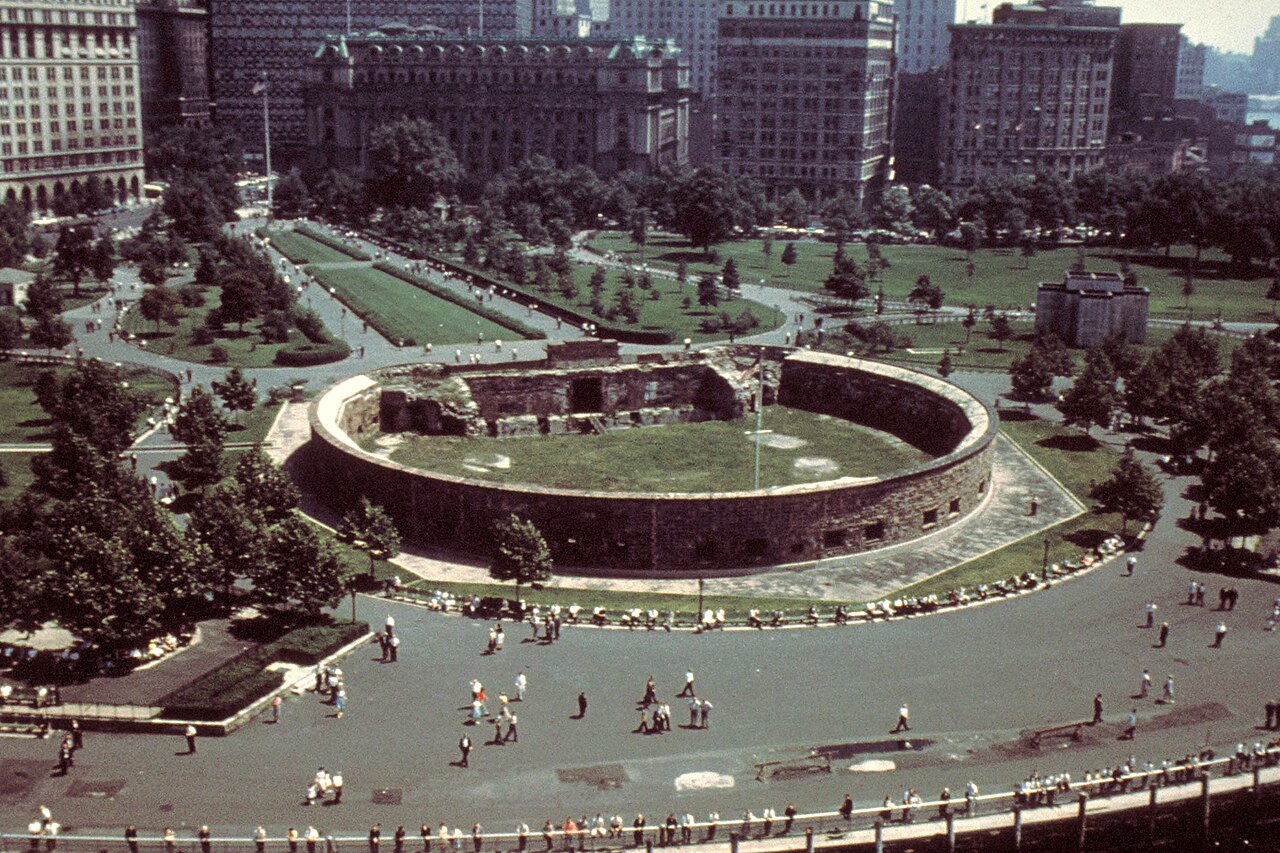
Castle Clinton — United States of America castle

Castle Clinton

, United States of America

Castle Clinton, originally known as Fort Clinton and Castle Garden, is a restored bastioned sandstone fort located in Battery Park at the southern tip of Manhattan, New York City. Constructed between 1808 and 1811, it represents one of the earliest examples of American coastal fortifications designed to protect the vital harbor of New York. The fort's circular design and bastioned walls reflect early 19th-century military architectural principles aimed at maximizing defensive coverage and resistance to artillery fire. Initially named the West Battery or Southwest Battery, the fort was built on an artificial island off the Manhattan shoreline. It was designed by the prominent architect John McComb Jr. with engineering consultation from Jonathan Williams, who was the first superintendent of the United States Military Academy at West Point. The fort was garrisoned during the War of 1812 but never engaged in battle, serving primarily as a deterrent against British naval forces. Architectural features and military design Castle Clinton is a bastioned fortress characterized by its circular sandstone walls approximately 62 feet in diameter and 20 feet high. The walls are punctuated by casemates—vaulted chambers used for mounting cannons and storing ammunition. The fort's design incorporates earthen embankments behind the stone walls to absorb artillery impacts, a common defensive feature in the period's coastal forts. The fort's bastions project outward to allow defenders to fire along the face of the walls, eliminating blind spots. The original structure included a moat and drawbridge, enhancing its defensive capabilities. Over time, the moat was filled in as the surrounding land was expanded through landfill projects. Evolution of use: from military fort to cultural landmark Early military role and transition Though built for defense, Fort Clinton saw limited military action. After the War of 1812, its strategic importance diminished due to advances in military technology and changing defense priorities. By the 1820s, the fort was repurposed to serve the growing city's recreational needs. Castle garden: an entertainment venue In 1824, the City of New York transformed the fort into Castle Garden, a 6,000-seat theater and beer garden. It became a popular venue for concerts, exhibitions, and public gatherings. The fort's robust stone walls and unique circular shape provided an atmospheric setting for entertainment, making it a cultural hub in the city. The first american immigration station Castle Garden's most historically significant role began in 1855 when it was converted into the first American immigration station, predating the famous Ellis Island facility by several decades. Between 1855 and 1890, more than 7.5 million immigrants passed through its processing halls, marking it as a critical gateway for newcomers to the United States during a period of intense immigration. The immigration station was equipped with offices, dormitories, and medical inspection rooms. Its location at Manhattan's southern tip made it an ideal entry point for ships arriving from Europe. The station operated until 1890, when immigration processing was moved to Ellis Island, reflecting the need for a larger, more modern facility. New york aquarium and later uses Following its immigration role, Castle Clinton was repurposed as the first home of the New York Aquarium in 1896. The aquarium operated there until 1941, featuring marine exhibits and public educational programs. During this period, the fort underwent several expansions and renovations to accommodate its new functions. Preservation efforts and modern significance In the 1940s, the fort faced demolition proposals by New York City parks commissioner Robert Moses to make way for the Brooklyn–Battery Tunnel. This sparked a preservation campaign that led to the establishment of the Castle Clinton National Monument in 1946. The National Park Service assumed control in 1950, safeguarding the structure for future generations. After decades of neglect and several restoration attempts, a comprehensive renovation was completed in 1975, restoring the fort's historic appearance and structural integrity. Since 1986, Castle Clinton has served as a visitor center and the departure point for ferries to the Statue of Liberty National Monument and Ellis Island, continuing its legacy as a gateway to American history. Cultural and historical importance Castle Clinton stands as a rare surviving example of early 19th-century American coastal fortifications and embodies multiple layers of New York City's history—from military defense to entertainment, immigration, and conservation. Its designation as a New York City landmark, a U.S. national monument, and its listing on the National Register of Historic Places reflect its significance as a cultural and architectural treasure. The fort's adaptive reuse over two centuries illustrates the evolving needs of a growing metropolis and the importance of preserving historic sites for public education and heritage tourism. Visitors today can explore the fort's stone walls, casemates, and courtyard, gaining insight into its multifaceted past.

Modern (19th–20th c.)
Details