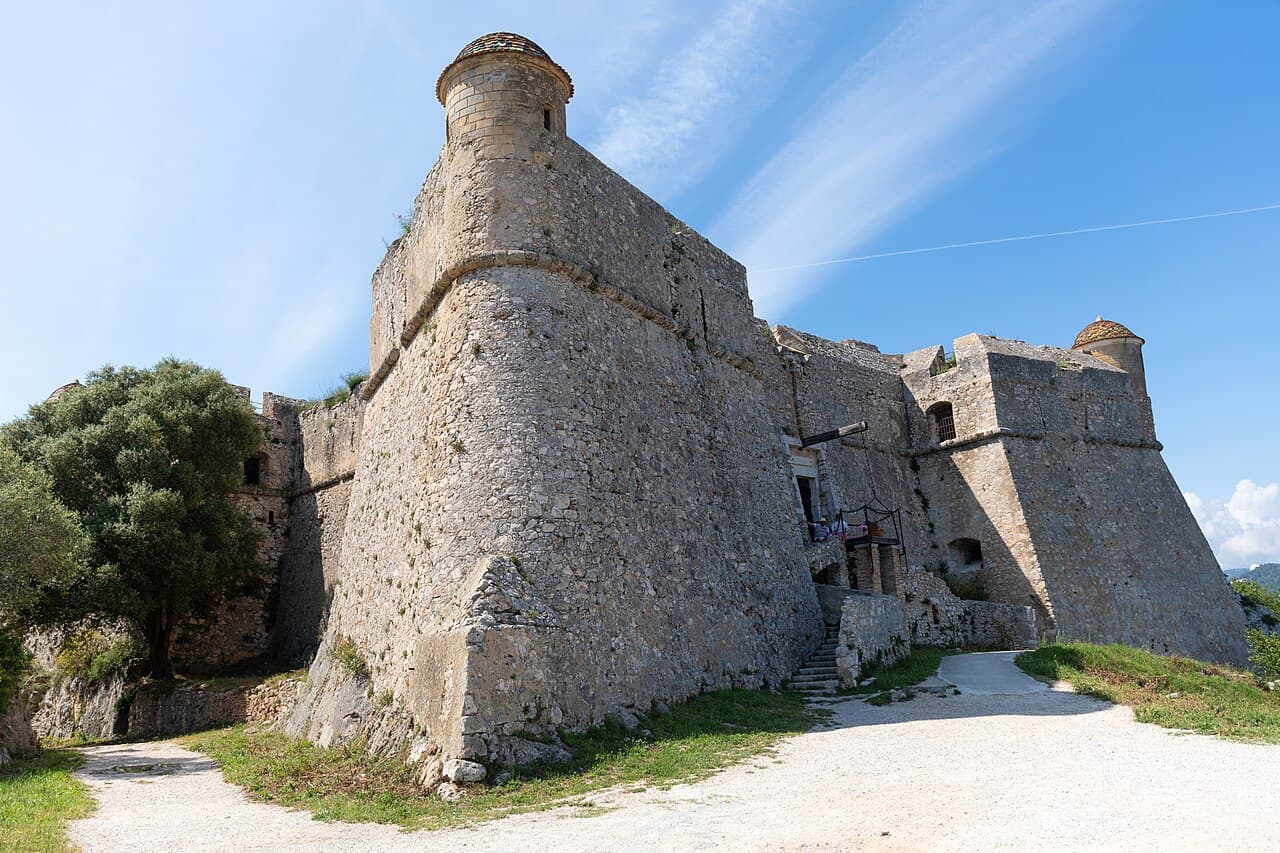
Fort Alban
Fort du Mont Alban is a remarkable example of Renaissance military architecture situated in Nice, France. Constructed between 1557 and 1560 by order of Emmanuel Philibert, Duke of Savoy, the fort was built to strengthen the region's defenses following the 1543 Siege of Nice. This bastioned fortress was designed to protect the strategic area between Nice and the harbor of Villefranche-sur-Mer, taking advantage of its commanding position on a hill approximately 220 meters above sea level.
Architectural design and military significance
The design of Fort du Mont Alban reflects the innovations in military fortification during the Renaissance period, particularly the adoption of bastions to better withstand artillery attacks. The fortress features angular bastions that allowed defenders to cover all approaches with overlapping fields of fire, a significant advancement over medieval castle designs. Its robust stone walls, moats, and defensive earthworks exemplify the era's strategic military engineering.
The fort's location was carefully chosen for its tactical advantage. Perched on a hill, it commands panoramic views over Nice to the west and the Baie des Anges to the east, providing early warning of any approaching naval or land forces. This vantage point made Fort du Mont Alban a critical element in the defense network of the region throughout the centuries.
Historical context and role through the centuries
Following the Siege of Nice in 1543, when the city was attacked by Franco-Ottoman forces, the Duke of Savoy recognized the need for a stronger, modern fortification. Fort du Mont Alban was part of a broader effort to reinforce the frontier defenses of the Duchy of Savoy, which was then a significant regional power.
Throughout its history, the fort has seen various military uses. It was involved in conflicts during the 17th and 18th centuries, including the wars between France and Savoy. Despite changes in military technology and tactics, the fort remained a strategic asset due to its location and construction.
During World War II, Fort du Mont Alban was damaged but notably survived in a well-preserved state compared to many other military structures. Its resilience is a testament to the quality of its original construction and its ongoing maintenance.
Architectural features and layout
The fortress is characterized by its star-shaped layout, typical of bastioned fortresses designed to eliminate blind spots and provide comprehensive defense. The walls are thick and angled, with bastions projecting outward to allow crossfire. The fort includes ramparts, casemates, and gun emplacements that were adapted over time to accommodate evolving artillery.
Inside, the fort contains barracks, , and storage facilities necessary for sustaining a garrison. The internal courtyard and pathways reflect the functional military design focused on defense and operational efficiency.
Current status and visitor experience
Today, Fort du Mont Alban stands as one of the best-preserved examples of 16th-century French military architecture. It is accessible to visitors and offers some of the most spectacular views on the French Riviera. From its elevated position, visitors can see the entire city of Nice to the west and the Baie des Anges to the east, making it a popular destination for day trips and history enthusiasts.
The fort's preservation allows visitors to appreciate the Renaissance bastioned fortress design and understand the military strategies of the period. Its surroundings provide a scenic backdrop that combines natural beauty with historical significance.
Visiting information
Visitors to Fort du Mont Alban can explore the ramparts and enjoy panoramic views. The site is suitable for walking tours and photography, especially given its commanding vantage points. While some areas may have restricted access for safety reasons, the overall experience offers insight into Renaissance military architecture and regional history.
Frequently asked questions (FAQ)
- How do I get to Fort Alban?
- Fort Alban is accessible by public transportation, including buses and trams from central Nice. If you're driving, there are parking facilities nearby, but be aware that spaces can fill up quickly during peak tourist season.
- What is the historical significance of Fort Alban?
- Fort Alban, built in the 17th century, played a crucial role in the defense of Nice against various invasions. It is a testament to the military architecture of its time and offers insight into the strategic importance of the region.
- When was Fort Alban constructed?
- Construction of Fort Alban began in 1660 and was completed in 1668. It was designed to protect the city from naval attacks and has been a significant landmark ever since.
- Can I take guided tours of Fort Alban?
- Yes, guided tours of Fort Alban are available, providing visitors with in-depth knowledge of its history and architecture. Tours typically last about an hour and are offered in multiple languages.
- Why is Fort Alban a popular tourist attraction?
- Fort Alban attracts visitors due to its rich history, stunning views of Nice and the Mediterranean Sea, and impressive architectural features. Its educational value and picturesque surroundings make it a must-visit for history enthusiasts and photographers alike.
- Is it possible to visit Fort Alban year-round?
- Yes, Fort Alban is open to visitors year-round, although opening hours may vary by season. It’s advisable to check the official website for the most current information on visiting hours and any seasonal closures.
- What are the ticket prices for visiting Fort Alban?
- Ticket prices for Fort Alban are quite reasonable, with discounts available for students and seniors. Children under a certain age may enter for free, making it an affordable destination for families.
- What is the best time to visit Fort Alban?
- The best time to visit Fort Alban is during the spring and fall when the weather is mild and the tourist crowds are smaller. This allows for a more enjoyable experience while exploring the fort and its breathtaking scenery.
- Are there any nearby attractions to visit after Fort Alban?
- Yes, after visiting Fort Alban, you can explore the beautiful Parc de la Colline du Château, which offers panoramic views of the city and coastline. Additionally, the Old Town of Nice is a short distance away, featuring charming streets, shops, and local cuisine.
Photo gallery

Information
Current owner
Municipality of Nice
Loading map...
Visitor reviews
No reviews yet. Been here? Write the first review and help other travelers!
Write the first reviewVisited this castle? Share your experience
Your review helps other travelers and adds first-hand knowledge to our encyclopedia.


