Cimetière du Château

Cimetière du château in nice: historic fortress cemetery with scenic views
Nice, France
Post-Renaissance (17th–18th c.)
Partially Preserved

The Cimetière du Château in Nice, France, founded in 1783, is a unique historic cemetery situated on the site of the old citadel of Nice. This site combines the solemn function of a graveyard with the rich heritage of a former military fortress, offering visitors not only a place of remembrance but also a glimpse into the city's defensive past and stunning panoramic views of Nice and the Mediterranean coastline.

Historical background of the citadel and cemetery

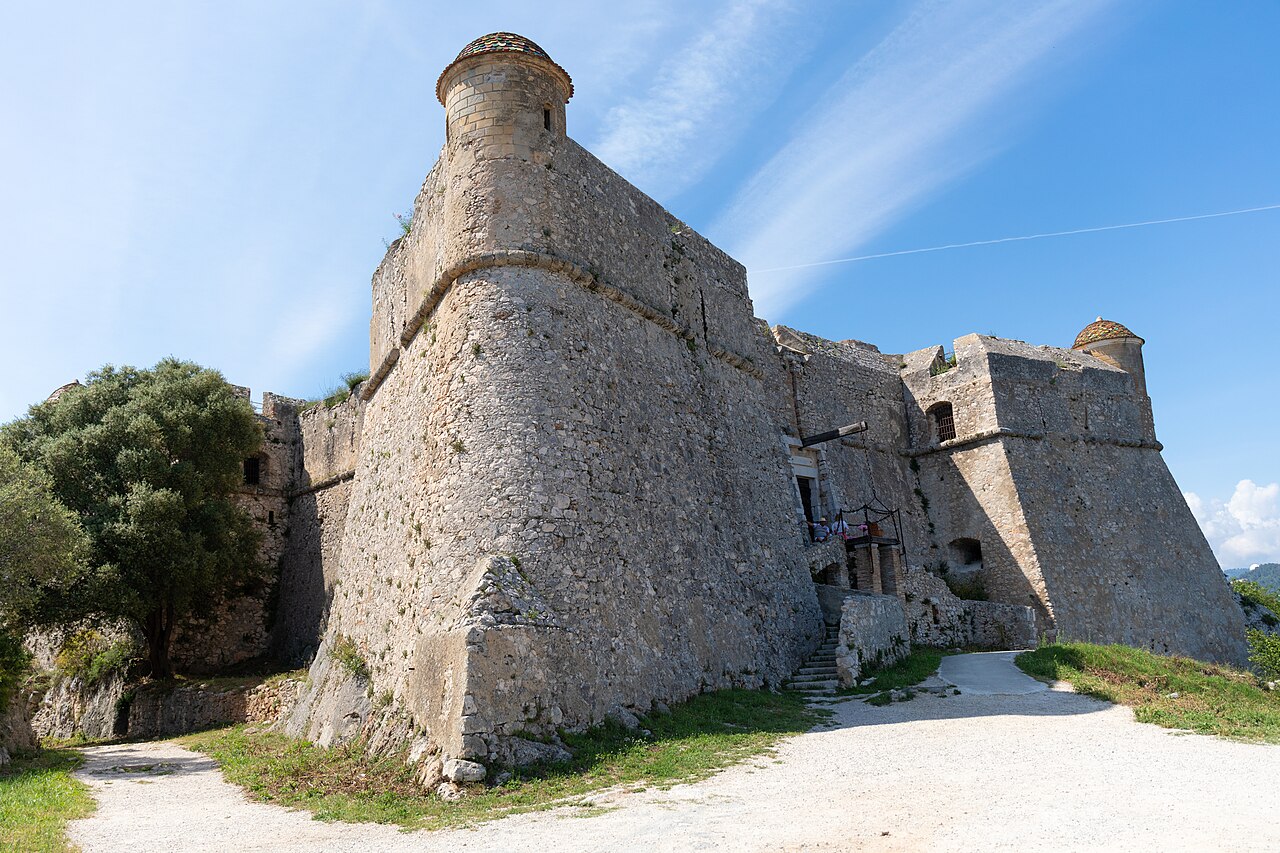
The cemetery occupies the grounds of a 16th-century fortress that once served as one of the most secure strongholds in France. The fortress was strategically built to defend the city of Nice, which was a key Mediterranean port and a contested territory through various European conflicts. While the fortress itself was dismantled in later centuries, significant portions of its massive defensive walls remain intact within the cemetery grounds, providing a tangible connection to the site's military origins.

In 1783, the site was repurposed as a cemetery, reflecting changes in urban planning and the need for new burial grounds outside the city center. Since then, it has become the final resting place for approximately 2,800 individuals, including many notable figures from Nice's history, spanning various social and cultural backgrounds.

Architectural and landscape features

The cemetery's layout respects the contours of the former fortress, with pathways and graves arranged around the surviving sections of the fortification walls. Visitors can observe the robust stonework of the ramparts and remnants of bastions that once formed part of the citadel's defenses. These features provide a striking contrast to the peaceful, landscaped areas filled with gravestones and monuments.

The elevated position of the cemetery offers expansive views over the city of Nice, the Baie des Anges (Bay of Angels), and the surrounding hills. This scenic vantage point has made the site a popular destination not only for those paying respects but also for tourists and locals seeking panoramic views and a quiet retreat.

Cultural significance and notable burials

Cimetière du Château holds cultural importance as the burial site of many of Nice's prominent citizens, including artists, politicians, and local dignitaries. The cemetery reflects the social history of the city through its diverse range of tombstones and memorials, which vary in style from simple markers to elaborate sculptures.

The preservation of the fortress walls within the cemetery grounds also serves as a reminder of Nice's strategic military history and its transformation over centuries from a fortified city to a cultural and tourist hub on the French Riviera.

Visitor experience and practical information

Today, the cemetery is accessible to the public and offers a contemplative environment enriched by its historical context and natural beauty. Visitors can explore the pathways among the graves and fortress ruins, appreciating both the heritage and the views.

While primarily a cemetery, the site is often included in walking tours of Nice due to its unique combination of history, architecture, and landscape. The peaceful atmosphere and the elevated location make it a favored spot for reflection and photography.

Frequently asked questions (FAQ)

How do I get to Cimetière du Château?
Cimetière du Château is located in Nice, France, and can be accessed via public transportation or by walking. The nearest tram stop is a short distance away, and visitors can enjoy a scenic walk up the hill to reach the castle.
What is the historical significance of Cimetière du Château?
Cimetière du Château, or Castle Cemetery, is significant as it is situated on the site of the former Castle of Nice, which was destroyed in the late 17th century. The cemetery holds many notable graves and offers insight into the history of the region, reflecting the rich cultural heritage of Nice.
When was Cimetière du Château established?
Cimetière du Château was established in the early 19th century, around 1820. It was built to replace the older cemetery located in the city center, making it a peaceful final resting place overlooking the city and the Mediterranean Sea.
Can I take photographs at Cimetière du Château?
Yes, visitors are welcome to take photographs at Cimetière du Château. The beautiful architecture and stunning views provide ample opportunities for great pictures, but please be respectful of the solemn environment.
Why is Cimetière du Château a popular tourist attraction?
Cimetière du Château is popular due to its stunning panoramic views of Nice and the coastline, as well as its historical and artistic significance. The unique graves and beautiful sculptures draw visitors who appreciate history, art, and serene landscapes.
Is it possible to access Cimetière du Château with a wheelchair?
Cimetière du Château has some accessible pathways, but due to its hilly terrain, certain areas may be challenging for wheelchair users. It is advisable to check in advance and plan your visit accordingly, as assistance may be required in some sections.
What are the opening hours for Cimetière du Château?
Cimetière du Château is generally open to visitors year-round, with opening hours from 8 AM to 6 PM. However, hours may vary seasonally, so it is recommended to check local listings before your visit.
What are the ticket prices for visiting Cimetière du Château?
Visiting Cimetière du Château is free of charge. This allows visitors to explore the site without any admission fees, making it an accessible destination for anyone interested in its history and beauty.
What is the best time to visit Cimetière du Château?
The best time to visit Cimetière du Château is during the spring and early autumn months when the weather is mild and pleasant. Early mornings or late afternoons also provide a quieter experience and beautiful lighting for photography.
Are there any nearby attractions to Cimetière du Château?
Yes, nearby attractions include the stunning Promenade des Anglais, the vibrant Old Town (Vieux Nice), and the beautiful Parc de la Colline du Château, which offers further panoramic views of the city. These sites are easily accessible and enhance your visit to the area.

Information

Archaeological Site / Ruins

Loading map...

Visitor reviews

No reviews yet. Been here? Write the first review and help other travelers!

Write the first review

Visited this castle? Share your experience

Your review helps other travelers and adds first-hand knowledge to our encyclopedia.

Write a review

(5/5)

0/2000 characters

Your review will be visible after admin approval

Nearby castles

0.2 km

Nice Castle Hill

Nice, France

Nice Castle Hill, known locally as Colline du Château, is a historic fortified site perched on a strategic limestone hill overlooking the Bay of Nice in southeastern France. This hill castle was originally constructed in the 11th century and served as a vital military, administrative, and religious center for centuries. Today, it is a beloved public park renowned for its spectacular panoramic views, historical ruins, and cultural significance. Medieval origins and strategic importance The site of Nice Castle Hill was first fortified in the high medieval period as a castrum, a fortified settlement that included a cathedral and clustered dwellings on its upper plateau. Its commanding position, rising approximately 93 meters above sea level, allowed control over the surrounding region and the entrance to the Mediterranean coast. The castle complex evolved as a stronghold for the local rulers and later the House of Savoy after Nice submitted to them in 1388, enhancing its role as a regional bastion. Early architecture and layout The original medieval castle featured a pentagonal fortress with four to five towers, including the prominent central keep known as the "Grosse" or Royal tower. This tower was the symbolic heart of the castle, flying the Savoy flag from its summit. Surrounding the keep was a lower courtyard enclosed by thick defensive walls approximately eight meters high and two meters thick, reinforced by towers such as the Roquette Tower, built in 1440 to guard the approaches from the Lympia valley. A deep well within the castle ensured a reliable water supply during sieges, a crucial feature for sustaining defenders. The castle also housed a chapel dedicated to Saint Lambert, guardhouses, and a prison, reflecting its multifaceted role as a military, religious, and administrative center. Military adaptations and expansions With the advent of gunpowder and artillery warfare in the 16th century, Nice Castle Hill underwent significant fortification upgrades. Between 1517 and 1520, artillery positions were added to the castle, including embrasures in the keep to accommodate cannons. A new bastioned artillery front known as the "boulevard d’artillerie" was constructed, featuring three artillery towers: the round towers of Saint-Paul and Saint-Victor flanking the entrance, and the semi-circular Saint-Charles tower guarding the main gate. The modern citadel In 1577, construction began on a modern citadel on the hill’s lower northern plateau, reflecting Italian military engineering influences. This citadel included bastions named Il Prencipe, Il Duco, and Il Vitello, designed to withstand cannon fire and provide overlapping fields of defensive artillery. Although the citadel was never fully completed, it represented a major effort to modernize the fortress's defenses in response to evolving warfare. Sieges and destruction The castle was besieged multiple times throughout its history, notably in 1543 by French and Ottoman forces allied against the Duchy of Savoy, and again in 1691 during conflicts involving French troops. Its final siege occurred during the War of the Spanish Succession in 1705-1706, when French forces subjected the fortress to a prolonged 54-day bombardment. After surrendering, the castle was ordered to be demolished by King Louis XIV in 1706. Explosive charges and mines were used over six months to dismantle the defensive structures, effectively ending the castle's military role. Post-military transformation and cultural significance Following its destruction, the hill remained in ruins for over a century. In 1822, a royal decree transformed the site into a public park and garden, initiating landscaping efforts that integrated the castle ruins into a recreational space. This transformation preserved the site's historical legacy while providing a green oasis in the city of Nice. The park is famed for its panoramic views, often called "the cradle of the sun," offering breathtaking sights of the Harbor of Nice, the Promenade des Anglais, and the surrounding Mediterranean landscapes from sunrise to sunset. Visitors can explore the remains of the castle walls, towers, and the foundations of the medieval cathedral, as well as enjoy the decorative cascade built atop the donjon ruins, which also served as an overflow for the city's early water supply system. Modern archaeological discoveries and wartime history Since 2007, archaeological excavations have revealed significant medieval structures, including towers, bastions, and the cathedral's foundations. These findings are preserved in a crypt near Place Toja, providing visitors with tangible connections to the site's layered history. During World War II, German forces re-fortified the hill, installing artillery positions near the current elevator shaft and carving extensive underground barracks and tunnels into the rock. An iron spiral staircase from a local casino was repurposed to connect different levels, adding a modern chapter to the site's defensive use. Architectural features and surviving elements The castle's medieval walls, bastions, and towers showcase a blend of high medieval and early modern military architecture. The robust curtain walls, bastioned artillery fronts, and strategic positioning reflect evolving defensive needs over several centuries. Visible cannonball marks on the northern donjon walls attest to the fierce sieges endured by the fortress. Today, large stone blocks from the ruined castle remain near the former cathedral site, while the park’s landscaping highlights the historical footprint of the fortress. The combination of natural beauty, historical ruins, and panoramic vistas makes Nice Castle Hill a unique cultural and tourist destination. Visiting nice castle hill Visitors to Nice Castle Hill can enjoy walking trails, picnic areas, and panoramic viewpoints that showcase the city and coastline. The site is accessible via stairs, an elevator, and a funicular, making it reachable for many visitors. Interpretive signage and the crypt museum offer insights into the castle’s history and archaeological discoveries. As one of the most popular public gardens in Nice, the hill attracts tourists year-round, drawn by its blend of natural beauty, historical intrigue, and spectacular views. The site’s nickname, "the cradle of the sun," reflects its enduring appeal as a place to witness the changing light over the Mediterranean.

High Medieval (11th–13th c.)
Details
1.6 km

Château de l’Anglais

, France

The Château de l’Anglais stands as a unique testament to the cultural and architectural exchanges of the mid-19th century in France. Located in the Hauts-de-France region, this hill castle was constructed between 1856 and 1858 by Robert Smith, a British colonel and engineer whose extensive experience in India deeply influenced the château's design. The estate reflects an eclectic blend of architectural traditions, most notably the neo-Mughal style, which was a revival of Indo-Islamic architecture. This style is prominently visible in the château's distinctive merloned battlements, modeled after those of the Red Fort of Delhi, a historic fortress that Smith had helped restore during his service. Architectural design and features The château is perched on a large terraced plot overlooking the sea, providing sweeping views of the Mediterranean coastline. Its design is remarkable for its imaginative fusion of exotic architectural elements with romantic 19th-century aesthetics. The main building is surrounded by a variety of ornamental structures, including towers, kiosks, belvederes (small lookout pavilions), and elaborate staircases, all crafted to complement the neo-Mughal theme and enhance the picturesque quality of the estate. The merloned battlements The most striking visual feature of the château is its battlements, which feature shaped merlons directly inspired by the Red Fort's defensive walls. These battlements lend the château a fortress-like silhouette uncommon among French coastal residences, emphasizing the owner's connection to British colonial India and his fascination with its architectural heritage. The rotunda and double-spiral staircase One of the château’s most architecturally significant components is the rotunda, originally part of the music hall. This circular structure is capped with a dome pierced by multiple openings or lanterns, designed to flood the interior with natural light. The rotunda’s interior contrasts with the exotic exterior through its neoclassical decoration, creating a dialogue between two distinct 19th-century styles. Historically, the rotunda was accessible via a sophisticated double-spiral staircase descending from the upper floors of the main residence. This staircase’s design features intertwining helices allowing two-way passage without meeting, an architectural feat that remains preserved and protected today. Due to property subdivision after World War II, the rotunda now stands physically separate from the main château, positioned below it on the estate. Historical ownership and transformations Following Robert Smith’s death, the château passed to the Polish Gurowsky de Wezele family in 1875. Over the decades, the property changed ownership multiple times and experienced significant subdivision, particularly in the 20th century. After World War II, the château was converted into a condominium, reflecting broader housing trends in the region. The subdivision led to the separation of the rotunda from the main building in 1949, fragmenting the estate’s original architectural unity. Additionally, a villa was constructed in the 1950s near the château, encroaching on the historic grounds and partially obscuring key features such as the rotunda and the cliffside views. Gardens and heritage significance The château’s extensive gardens are recognized for their botanical importance and have been classified as a botanical garden of Major Interest. These landscaped grounds showcase a variety of plant species cultivated according to 19th-century horticultural practices, adding significant cultural and natural value to the estate. The gardens and architectural ensemble together create a harmonious artistic composition, where the ornamental structures and the natural environment complement each other. This integration exemplifies the 19th-century romantic ideal of blending architecture with landscape design. Modern restoration efforts In 2000, the château and its rotunda were officially listed as historic monuments, recognizing their architectural and cultural significance. In 2023, new private owners acquired the property and initiated a comprehensive restoration project under the guidance of architect Joe Aoun. This project aims to restore the château’s visual prominence by demolishing the intrusive 1950s villa and constructing a contemporary building further from the cliff edge. The restoration seeks to preserve the integrity of the neo-Mughal architectural elements, the double-spiral staircase, and the neoclassical rotunda interior, while enhancing the visibility and accessibility of the estate’s historic features. These efforts reflect a broader commitment to conserving the château as a cultural landmark and maintaining the botanical garden’s status as a site of major interest. Cultural and architectural importance The Château de l’Anglais is a rare example of 19th-century eclecticism that bridges European romanticism with Indian architectural motifs. Its construction by a British engineer with colonial experience provides a fascinating case study of cross-cultural influence in architecture during the Victorian era. The château’s preservation and restoration contribute to understanding the historical narratives of colonialism, cultural exchange, and architectural innovation. Today, the château remains a significant heritage site in Hauts-de-France, attracting interest from historians, architects, and visitors intrigued by its unique blend of styles and its picturesque setting overlooking the sea.

Post-Renaissance (17th–18th c.)
Details
1.6 km
Fort Alban — France castle

Fort Alban

Nice, France

Fort du Mont Alban is a remarkable example of Renaissance military architecture situated in Nice, France. Constructed between 1557 and 1560 by order of Emmanuel Philibert, Duke of Savoy, the fort was built to strengthen the region's defenses following the 1543 Siege of Nice. This bastioned fortress was designed to protect the strategic area between Nice and the harbor of Villefranche-sur-Mer, taking advantage of its commanding position on a hill approximately 220 meters above sea level. Architectural design and military significance The design of Fort du Mont Alban reflects the innovations in military fortification during the Renaissance period, particularly the adoption of bastions to better withstand artillery attacks. The fortress features angular bastions that allowed defenders to cover all approaches with overlapping fields of fire, a significant advancement over medieval castle designs. Its robust stone walls, moats, and defensive earthworks exemplify the era's strategic military engineering. The fort's location was carefully chosen for its tactical advantage. Perched on a hill, it commands panoramic views over Nice to the west and the Baie des Anges to the east, providing early warning of any approaching naval or land forces. This vantage point made Fort du Mont Alban a critical element in the defense network of the region throughout the centuries. Historical context and role through the centuries Following the Siege of Nice in 1543, when the city was attacked by Franco-Ottoman forces, the Duke of Savoy recognized the need for a stronger, modern fortification. Fort du Mont Alban was part of a broader effort to reinforce the frontier defenses of the Duchy of Savoy, which was then a significant regional power. Throughout its history, the fort has seen various military uses. It was involved in conflicts during the 17th and 18th centuries, including the wars between France and Savoy. Despite changes in military technology and tactics, the fort remained a strategic asset due to its location and construction. During World War II, Fort du Mont Alban was damaged but notably survived in a well-preserved state compared to many other military structures. Its resilience is a testament to the quality of its original construction and its ongoing maintenance. Architectural features and layout The fortress is characterized by its star-shaped layout, typical of bastioned fortresses designed to eliminate blind spots and provide comprehensive defense. The walls are thick and angled, with bastions projecting outward to allow crossfire. The fort includes ramparts, casemates, and gun emplacements that were adapted over time to accommodate evolving artillery. Inside, the fort contains barracks, , and storage facilities necessary for sustaining a garrison. The internal courtyard and pathways reflect the functional military design focused on defense and operational efficiency. Current status and visitor experience Today, Fort du Mont Alban stands as one of the best-preserved examples of 16th-century French military architecture. It is accessible to visitors and offers some of the most spectacular views on the French Riviera. From its elevated position, visitors can see the entire city of Nice to the west and the Baie des Anges to the east, making it a popular destination for day trips and history enthusiasts. The fort's preservation allows visitors to appreciate the Renaissance bastioned fortress design and understand the military strategies of the period. Its surroundings provide a scenic backdrop that combines natural beauty with historical significance. Visiting information Visitors to Fort du Mont Alban can explore the ramparts and enjoy panoramic views. The site is suitable for walking tours and photography, especially given its commanding vantage points. While some areas may have restricted access for safety reasons, the overall experience offers insight into Renaissance military architecture and regional history.

Renaissance (15th–17th c.)
Details