Château de l’Anglais
The Château de l’Anglais stands as a unique testament to the cultural and architectural exchanges of the mid-19th century in France. Located in the Hauts-de-France region, this hill castle was constructed between 1856 and 1858 by Robert Smith, a British colonel and engineer whose extensive experience in India deeply influenced the château's design. The estate reflects an eclectic blend of architectural traditions, most notably the neo-Mughal style, which was a revival of Indo-Islamic architecture. This style is prominently visible in the château's distinctive merloned battlements, modeled after those of the Red Fort of Delhi, a historic fortress that Smith had helped restore during his service.
Architectural design and features
The château is perched on a large terraced plot overlooking the sea, providing sweeping views of the Mediterranean coastline. Its design is remarkable for its imaginative fusion of exotic architectural elements with romantic 19th-century aesthetics. The main building is surrounded by a variety of ornamental structures, including towers, kiosks, belvederes (small lookout pavilions), and elaborate staircases, all crafted to complement the neo-Mughal theme and enhance the picturesque quality of the estate.
The merloned battlements
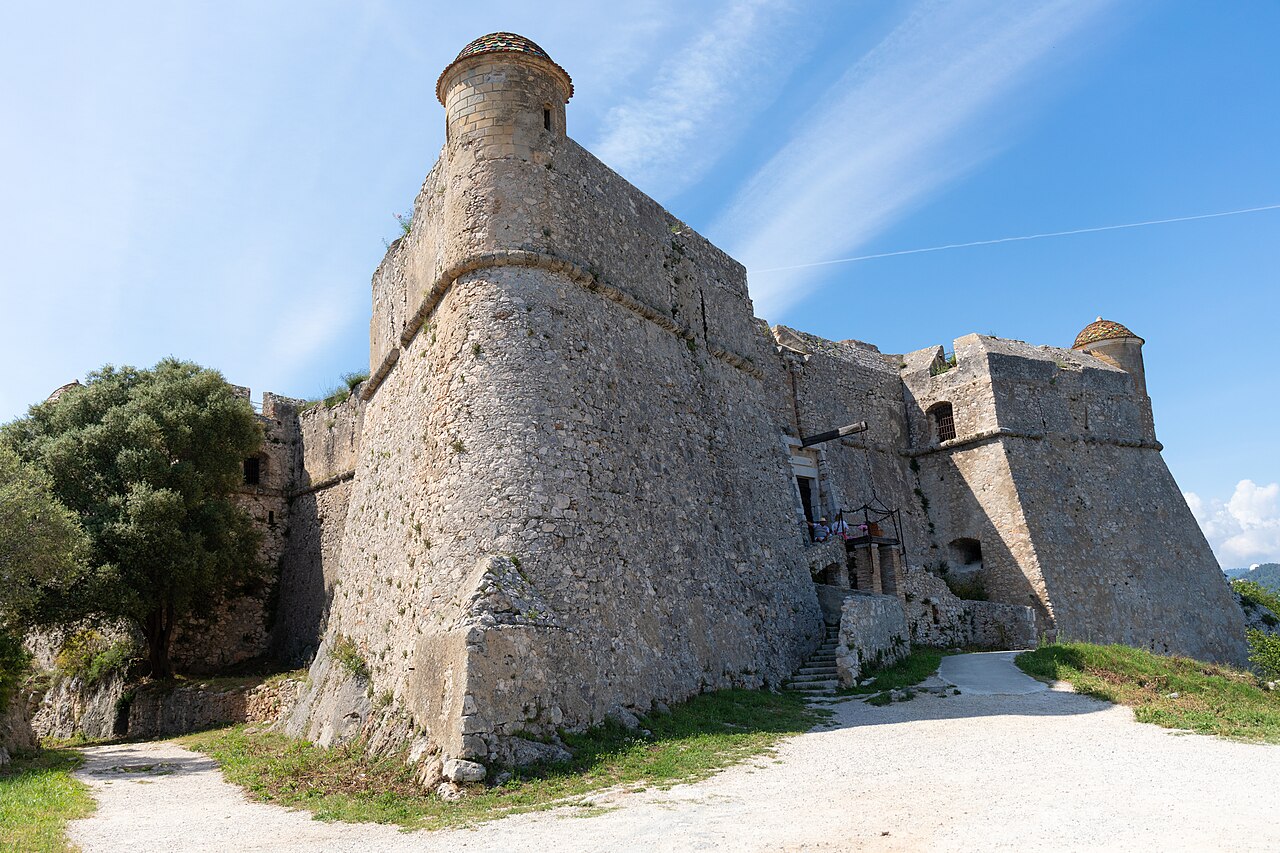
The most striking visual feature of the château is its battlements, which feature shaped merlons directly inspired by the Red Fort's defensive walls. These battlements lend the château a fortress-like silhouette uncommon among French coastal residences, emphasizing the owner's connection to British colonial India and his fascination with its architectural heritage.
The rotunda and double-spiral staircase
One of the château’s most architecturally significant components is the rotunda, originally part of the music hall. This circular structure is capped with a dome pierced by multiple openings or lanterns, designed to flood the interior with natural light. The rotunda’s interior contrasts with the exotic exterior through its neoclassical decoration, creating a dialogue between two distinct 19th-century styles.
Historically, the rotunda was accessible via a sophisticated double-spiral staircase descending from the upper floors of the main residence. This staircase’s design features intertwining helices allowing two-way passage without meeting, an architectural feat that remains preserved and protected today. Due to property subdivision after World War II, the rotunda now stands physically separate from the main château, positioned below it on the estate.
Historical ownership and transformations
Following Robert Smith’s death, the château passed to the Polish Gurowsky de Wezele family in 1875. Over the decades, the property changed ownership multiple times and experienced significant subdivision, particularly in the 20th century. After World War II, the château was converted into a condominium, reflecting broader housing trends in the region.
The subdivision led to the separation of the rotunda from the main building in 1949, fragmenting the estate’s original architectural unity. Additionally, a villa was constructed in the 1950s near the château, encroaching on the historic grounds and partially obscuring key features such as the rotunda and the cliffside views.
Gardens and heritage significance
The château’s extensive gardens are recognized for their botanical importance and have been classified as a botanical garden of Major Interest. These landscaped grounds showcase a variety of plant species cultivated according to 19th-century horticultural practices, adding significant cultural and natural value to the estate.
The gardens and architectural ensemble together create a harmonious artistic composition, where the ornamental structures and the natural environment complement each other. This integration exemplifies the 19th-century romantic ideal of blending architecture with landscape design.
Modern restoration efforts
In 2000, the château and its rotunda were officially listed as historic monuments, recognizing their architectural and cultural significance. In 2023, new private owners acquired the property and initiated a comprehensive restoration project under the guidance of architect Joe Aoun. This project aims to restore the château’s visual prominence by demolishing the intrusive 1950s villa and constructing a contemporary building further from the cliff edge.
The restoration seeks to preserve the integrity of the neo-Mughal architectural elements, the double-spiral staircase, and the neoclassical rotunda interior, while enhancing the visibility and accessibility of the estate’s historic features. These efforts reflect a broader commitment to conserving the château as a cultural landmark and maintaining the botanical garden’s status as a site of major interest.
Cultural and architectural importance
The Château de l’Anglais is a rare example of 19th-century eclecticism that bridges European romanticism with Indian architectural motifs. Its construction by a British engineer with colonial experience provides a fascinating case study of cross-cultural influence in architecture during the Victorian era. The château’s preservation and restoration contribute to understanding the historical narratives of colonialism, cultural exchange, and architectural innovation.
Today, the château remains a significant heritage site in Hauts-de-France, attracting interest from historians, architects, and visitors intrigued by its unique blend of styles and its picturesque setting overlooking the sea.
Frequently asked questions (FAQ)
- How do I get to Château de l’Anglais?
- Château de l’Anglais is located in the picturesque countryside of France. The nearest major city is Bordeaux, which is approximately a 1.5-hour drive away. Public transportation options such as trains and buses are also available, with local services connecting to the castle.
- What is the historical significance of Château de l’Anglais?
- Château de l’Anglais dates back to the 18th century and has played a crucial role in the region's history. Originally built as a defensive structure, it later served as a noble residence showcasing the architectural styles of the period. Its rich history is reflected in the preserved artifacts and documents found within the castle.
- When was Château de l’Anglais built?
- The construction of Château de l’Anglais began in 1760 and was completed in the late 18th century. It was designed to exemplify the elegance of the French neoclassical style, making it a significant architectural landmark. Over the years, it has undergone various restorations to maintain its historical integrity.
- Can I visit Château de l’Anglais with a guided tour?
- Yes, guided tours are available for visitors interested in exploring the rich history and architecture of Château de l’Anglais. These tours provide in-depth insights into the castle's past, as well as access to areas that may not be open to the public. Reservations are recommended, especially during peak tourist seasons.
- Why is Château de l’Anglais considered an architectural gem?
- Château de l’Anglais is renowned for its stunning neoclassical architecture, which features elegant facades, intricate moldings, and beautifully landscaped gardens. The design reflects the grandeur of the 18th-century French aristocracy, making it a notable example of the style. Its well-preserved state allows visitors to appreciate the craftsmanship of the era.
- Is it possible to host events at Château de l’Anglais?
- Yes, Château de l’Anglais offers facilities for hosting various events, including weddings, corporate gatherings, and private parties. The enchanting surroundings and historical ambiance create a unique setting for any occasion. Interested parties should contact the château management for availability and specific arrangements.
- What are the opening hours for Château de l’Anglais?
- Château de l’Anglais is open to visitors from 10 AM to 6 PM, Tuesday through Sunday, during the tourist season. Hours may vary in the off-season or during special events, so it's advisable to check the official website before planning your visit. The castle is closed on Mondays and certain holidays.
- What are the ticket prices for visiting Château de l’Anglais?
- Ticket prices for Château de l’Anglais are typically €10 for adults and €5 for children aged 6 to 12. Discounts may be available for students and seniors, and family packages are often offered. Tickets can be purchased at the entrance or online for convenience.
- What is the best time to visit Château de l’Anglais?
- The best time to visit Château de l’Anglais is during the spring and early autumn when the weather is mild, and the gardens are in full bloom. These seasons provide a picturesque backdrop for exploring the grounds and taking part in outdoor activities. Additionally, fewer tourists during these times allow for a more intimate experience.
- Are there any nearby attractions to visit along with Château de l’Anglais?
- Yes, there are several nearby attractions worth exploring, including the charming village of Saint-Émilion, famous for its vineyards and wine production. The area is also home to beautiful hiking trails and other historic landmarks. Visitors can easily plan a day trip to enjoy both the castle and its surrounding treasures.
Information
Loading map...
Visitor reviews
No reviews yet. Been here? Write the first review and help other travelers!
Write the first reviewVisited this castle? Share your experience
Your review helps other travelers and adds first-hand knowledge to our encyclopedia.