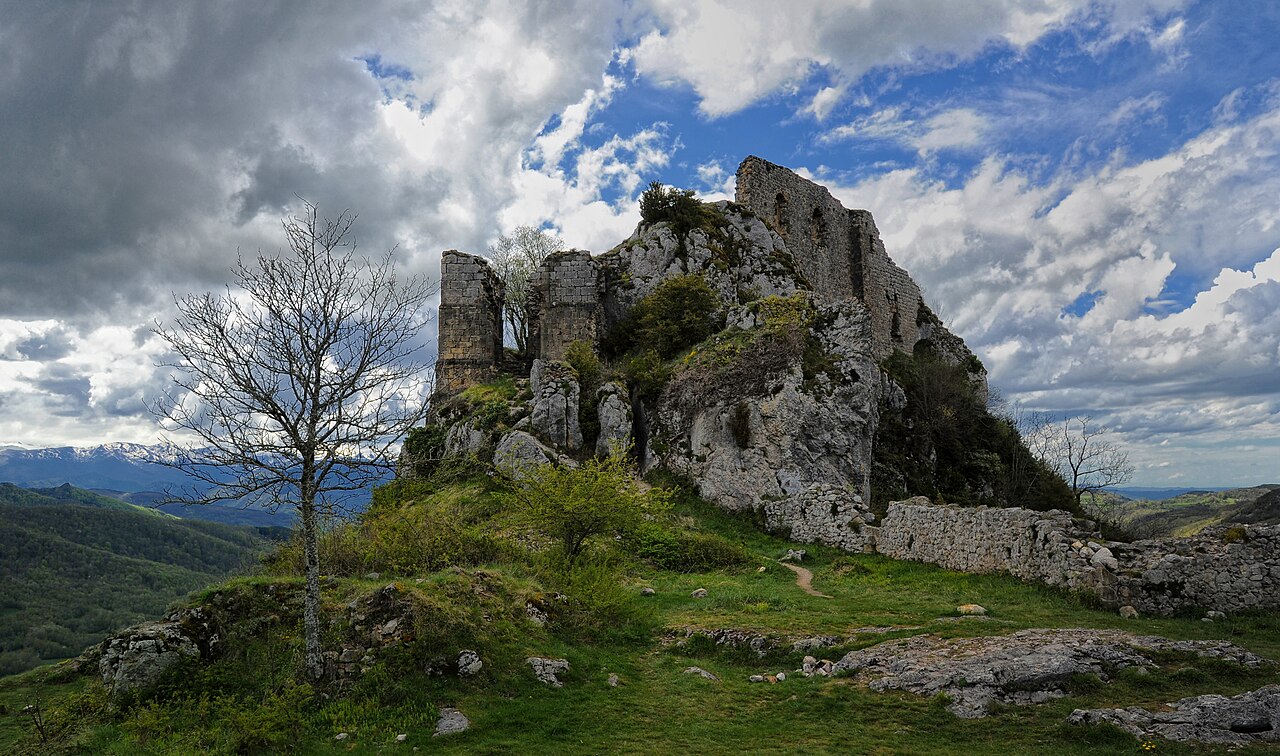
Foix Castle
Foix Castle stands prominently above the town of Foix in the Occitanie region of southern France, a striking example of medieval military architecture with a rich history intertwined with the Cathar resistance and the complex feudal politics of the Pyrenean region. Built originally in the 10th century on the site of an earlier 7th-century fortification, this hill castle was strategically positioned to control access to the upper Ariège valley and to oversee the surrounding lands from its commanding vantage point.
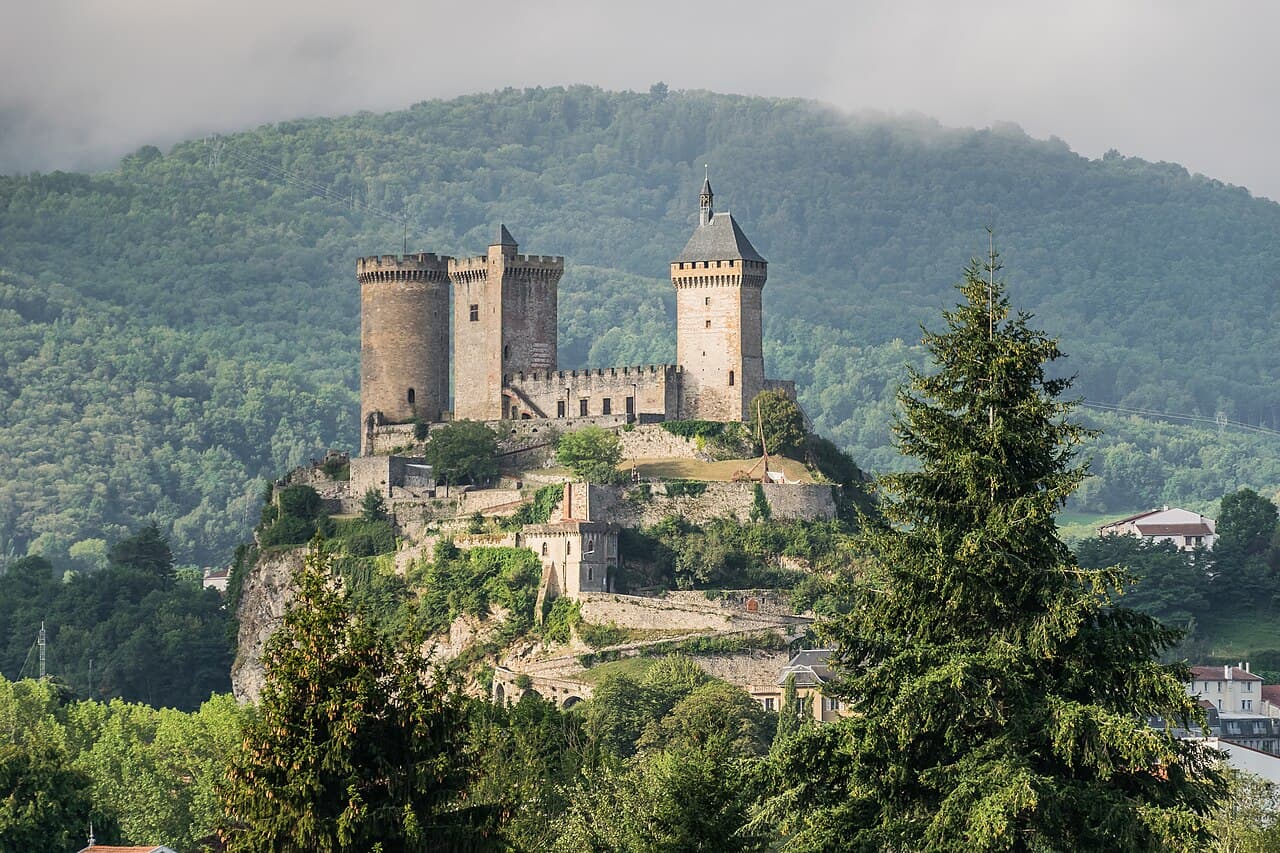
The castle’s imposing silhouette is defined by its three main towers: two massive square towers dating from before the 11th century, and a later round tower constructed in the 15th century. These towers, connected by thick defensive curtain walls, formed an impregnable stronghold that withstood numerous sieges throughout the Middle Ages. The castle’s robust fortifications and elevated position made it a formidable obstacle to invaders, most famously resisting the assaults led by Simon de Montfort during the Albigensian Crusade in the early 13th century.
The castle’s role in the Cathar crusade and medieval history
Foix Castle became a vital refuge for the persecuted Cathars, a religious group deemed heretical by the Catholic Church. The castle’s lord during this turbulent period, Raymond Roger de Foix, was a staunch defender of the Cathar faith and the castle served as a sanctuary for many fleeing the crusade against the Albigensians. The castle’s resistance to Simon de Montfort’s siege in 1211 and 1212 is legendary; despite relentless attacks, the fortress remained unconquered, symbolizing the resilience of the Cathar cause in the region.
The castle’s history is also marked by poignant personal stories, such as that of Raymond Roger’s wife, Philippa, one of the first known Cathar adherents, and his sister Esclarmonde, who participated in religious debates before the crusade. The tragic fate of his stepdaughter, a believing Cathar whose remains were exhumed and burned by the Inquisition in 1269, underscores the brutal repression faced by the Cathars.
Architectural evolution and strategic importance
Originally constructed as a defensive fortress, the castle evolved architecturally over the centuries to meet changing military and residential needs. The two square towers are among the oldest surviving parts of the castle, reflecting early medieval fortification techniques with thick stone walls and narrow arrow slits. The later round tower, built in the 15th century, was designed to improve defense against artillery and to provide a better field of fire.
Throughout the Middle Ages, the castle was the seat of the Counts of Foix, who played a significant role in the politics of the region. In 1034, Foix became the capital of the County of Foix, further elevating the castle’s status. The Counts were influential figures in the Occitan resistance during the Albigensian Crusade and later became Kings of Navarre from 1479. The last of these counts, who ascended to the French throne as Henri IV, united his Pyrenean domains with France, marking a turning point in the castle’s political significance.
Later history and preservation
After the Counts of Foix moved their residence to the more comfortable Governors' Palace in the 14th century, the castle continued to serve military and administrative functions. It was the seat of the regional governor and played a defensive role during the Wars of Religion in the 16th century. Remarkably, the castle was the only fortress in the region spared from destruction under the orders of Cardinal Richelieu in the early 17th century, preserving its medieval fabric.
The castle also served as a prison for political and civil detainees for over four centuries, until 1862. Its history as a prison adds another layer to its complex past, reflecting the changing uses of such fortresses over time.
Since 1930, the restored Château de Foix has housed the Ariège departmental museum, which showcases the region’s rich history from prehistory through the medieval period. The museum’s collections include archaeological artifacts, medieval arms and armor, and exhibits dedicated to the history of the castle and the County of Foix. Ongoing efforts aim to enhance the visitor experience by recreating the medieval life of the castle and its surroundings.
Architectural features and visitor experience
The castle’s architecture is notable for its blend of early medieval and late medieval military design. The square towers demonstrate the defensive priorities of the 10th and 11th centuries, with massive walls and limited openings, while the round tower reflects advances in fortification responding to the advent of gunpowder artillery.
Visitors to Foix Castle can explore the imposing courtyards, climb the towers for panoramic views of the town and surrounding Pyrenean landscape, and walk along the battlements that once defended the region. The museum provides detailed historical context, making the visit both educational and immersive.
The castle’s strategic location
Perched on a rocky outcrop, the castle’s position allowed control over the key routes through the Ariège valley, a vital corridor in the Pyrenees. This strategic advantage was crucial for the Counts of Foix in maintaining their power and influence over the region.
Preservation and cultural significance
Foix Castle is classified as a monument historique by the French Ministry of Culture since 1840, recognizing its importance as a cultural and historical landmark. Its preservation allows visitors to connect with the turbulent history of the Cathars, medieval warfare, and regional politics in southern France.
Today, the castle is a major tourist attraction in Occitanie, drawing visitors interested in medieval history, architecture, and the Cathar legacy. Its combination of well-preserved fortifications, rich history, and museum collections makes it an essential destination for those exploring the heritage of the French Pyrenees.
Frequently asked questions (FAQ)
- How do I get to Foix Castle?
- Foix Castle is located in the Midi-Pyrénées region of France, easily accessible by car or public transport. The nearest train station is Foix, from where you can take a short walk to the castle. Local signage will guide you through the charming streets of Foix to reach this historic site.
- What is the historical significance of Foix Castle?
- Foix Castle, built in the 10th century, played a crucial role in the history of the region, particularly during the Cathar Wars. It served as a stronghold for the Counts of Foix and is a symbol of the medieval architecture and feudal power of the time. The castle’s rich history makes it a fascinating destination for history enthusiasts.
- When was Foix Castle built?
- The construction of Foix Castle began in the early 10th century, making it a significant example of medieval fortification. Over the centuries, it was expanded and renovated, reflecting various architectural styles. Today, it stands as a testament to the historical evolution of castle design in France.
- Can I visit Foix Castle with my family?
- Yes, Foix Castle is family-friendly and offers engaging exhibits and activities for visitors of all ages. There are guided tours available that provide insights into the castle's history and architecture, making it an educational experience for children and adults alike. Children will enjoy exploring the castle’s grounds and scenic views.
- Why is Foix Castle a popular tourist attraction?
- Foix Castle is popular for its stunning location atop a rocky hill, offering breathtaking views of the surrounding countryside. Its rich history, well-preserved architecture, and dramatic medieval ambiance attract visitors interested in culture and history. Additionally, the castle hosts events and exhibitions that enhance the visitor experience.
- Is it possible to access all areas of Foix Castle?
- While many areas of Foix Castle are accessible to visitors, certain parts may have restricted access due to preservation efforts. The main attractions, including the towers and main courtyard, are open for exploration. It's advisable to check with the staff for any specific accessibility concerns before your visit.
- What are the opening hours of Foix Castle?
- Foix Castle is typically open to visitors from 10 AM to 6 PM, with extended hours during the peak tourist season. It's recommended to check the official website for the most current hours and any holiday closures. Arriving early in the day can help you avoid crowds and fully enjoy the site.
- What are the ticket prices for Foix Castle?
- Ticket prices for Foix Castle are generally affordable, with discounts available for students, seniors, and children. As of the latest updates, adult tickets are around €6, while reduced prices may apply for families or groups. Be sure to check for any special offers or packages that enhance your visit.
- What nearby attractions should I visit when at Foix Castle?
- When visiting Foix Castle, consider exploring the charming town of Foix itself, with its quaint shops and local eateries. Nearby, the picturesque Ariège region offers opportunities for hiking, exploring caves, and visiting other historical sites such as the Château de Montségur. These attractions complement your castle visit perfectly.
Photo gallery

Information
Loading map...
Visitor reviews
No reviews yet. Been here? Write the first review and help other travelers!
Write the first reviewVisited this castle? Share your experience
Your review helps other travelers and adds first-hand knowledge to our encyclopedia.