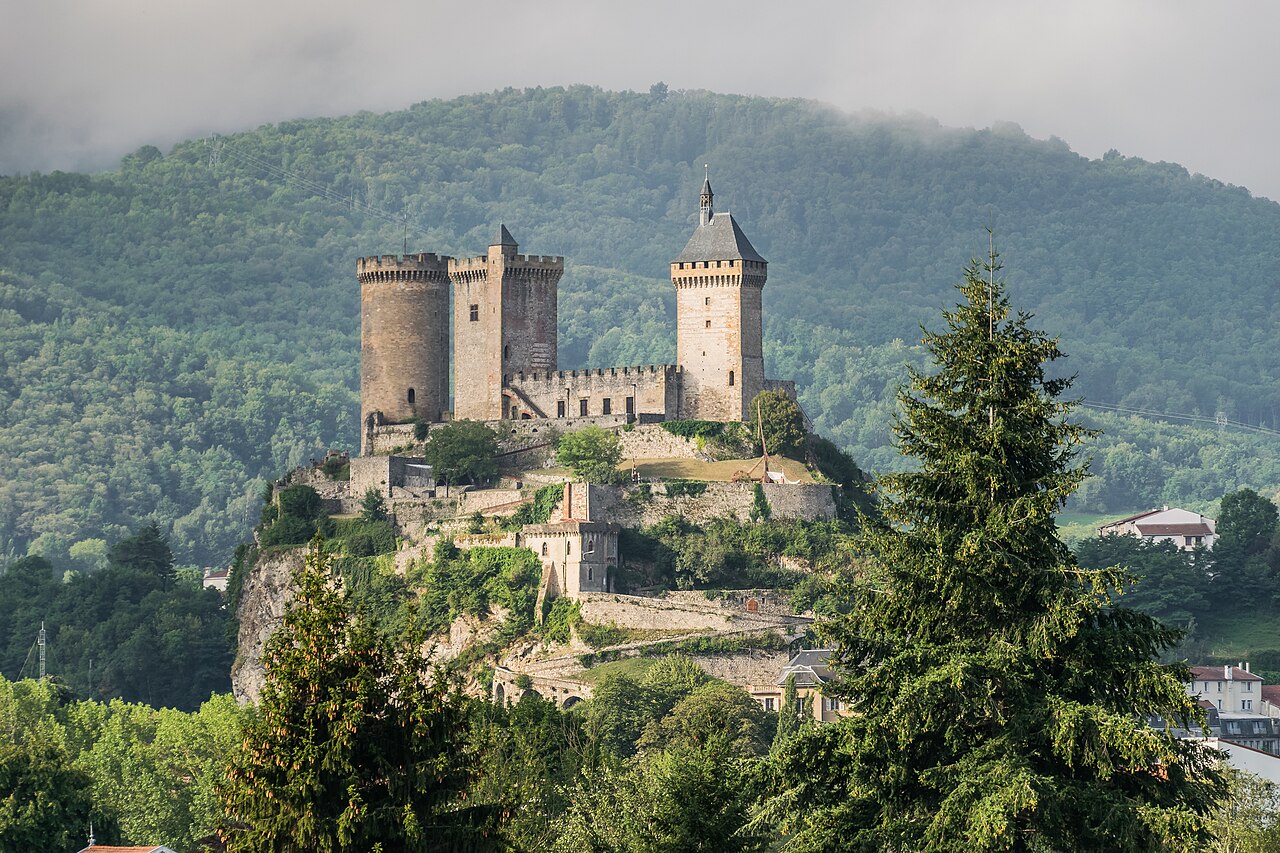
Château de Fiches

Château de Fiches: historic hill castle in Hauts-de-France
Hauts-de-France, France

The Château de Fiches stands as a remarkable example of a historic hill castle located in the Hauts-de-France region of northern France. Though its exact city location remains unspecified, the château's rich history and architectural features reflect centuries of French heritage, spanning from the late medieval period through the early modern era and into the 18th century. This castle, originally a residence acquired in the late 16th century by Jean de Roubert, a counselor at the Toulouse parliament, is deeply connected to the administrative and noble classes of its time.

Historical context and ownership

The château's origins trace back to a period when fortified residences were often centers of local power and administration. The acquisition by Jean de Roubert at the close of the 16th century signifies the castle's role as a symbol of social status and political influence. During the early 17th century, the estate was embroiled in the religious conflicts that marked France's turbulent Wars of Religion. In 1631, a documented event reveals that the property, then known as the Fiches farm and owned by Catholics, was seized by Huguenot forces under the command of the Baron de Léran. This episode situates the château within the broader narrative of religious strife between Catholic and Protestant factions, highlighting its strategic and symbolic importance.

By the 18th century, the château came under the ownership of the Abribat de La Vilotte family from nearby Pamiers. This transition reflects common patterns of estate consolidation by regional noble families, who often enhanced and maintained such properties as private residences. Since then, the château has remained privately owned, preserving its historical integrity and architectural heritage.

Architectural features and preservation

The Château de Fiches is notable for preserving architectural elements that span several centuries, illustrating the evolution of French castle design and domestic architecture. One of its most significant features is a wooden staircase dating from the 15th century, which predates Jean de Roubert's acquisition. This staircase is recognized as a Monument historique, a testament to its exceptional craftsmanship and preservation from the late medieval period. The staircase exemplifies the transition from defensive medieval structures to more comfortable noble residences.

The château's façade and roof structures have also been designated as historic monuments, underscoring their architectural significance and the careful conservation efforts to maintain the château's original character. These elements contribute to the castle's aesthetic and historical value, offering insight into construction techniques and stylistic preferences of the era.

Interior artistic heritage

Inside the château, visitors encounter two richly decorated salons that display distinct artistic periods and styles. The first salon features painted ceilings from the late 16th to early 17th century, showcasing a remarkable bestiary that combines depictions of real animals with fantastical creatures. This artistic ensemble is distinguished by its abundance and intricate detail, reflecting Renaissance artistic influences and the symbolic use of animals in heraldry and decoration.

The second salon presents paintings from the 18th century, corresponding to the period of ownership by the Abribat de La Vilotte family. These artworks reflect the evolving tastes of the time, characterized by a more refined and elegant aesthetic that aligns with the Enlightenment era's cultural shifts.

Library and botanical collections

The château houses a historically significant library that embodies the ideals of the honnête homme, a cultivated gentleman of the early modern period who valued knowledge, culture, and virtue. This collection includes books dating back to the 16th century, offering a rare glimpse into the intellectual pursuits of the château's inhabitants.

Complementing the library is an herbarium compiled in 1801 by Joseph Adrien Fauré, a student of the renowned naturalist Jean-Baptiste de Lamarck. With over 1,500 regional plant specimens meticulously preserved, the herbarium links the château to early botanical science and natural history studies in France. This collection highlights the château's role not only as a noble residence but also as a site of scientific curiosity and scholarly activity.

Cultural significance and heritage protection

The Château de Fiches is an important cultural landmark that offers valuable insights into French history, architecture, and art. Its designation as a protected heritage site ensures the preservation of its unique features, from the medieval wooden staircase to the painted salons and botanical collections. The château's private ownership has helped maintain its integrity, allowing it to stand as a testament to the region's noble past and the complex history of religious and social change in France.

Visitors and scholars alike appreciate the château for its blend of architectural styles and historical layers, which together narrate a story of continuity and transformation over several centuries. The preservation of both structural and artistic elements makes the Château de Fiches a significant example of French heritage and a valuable resource for understanding the evolution of noble residences in the Hauts-de-France region.

Frequently asked questions (FAQ)

How do I get to Château de Fiches?
Château de Fiches is conveniently located in the heart of France, accessible by car and public transport. If you are driving, you can follow the A6 motorway and take the local roads to reach the castle. There are also train services that connect to nearby towns, from where you can take a short taxi ride.
What is the historical significance of Château de Fiches?
Château de Fiches dates back to the 12th century and has played a pivotal role in the region's history. It served as a stronghold during various conflicts and has been a residence for notable noble families. The castle's rich history is reflected in its architecture and the artifacts found within its walls.
When was Château de Fiches built?
Construction of Château de Fiches began in the early 12th century, with significant renovations occurring throughout the centuries. The castle showcases a blend of architectural styles, including Romanesque and Gothic elements, reflecting its long-standing history. Its enduring structure highlights the craftsmanship of the eras in which it was built.
Can I take guided tours of Château de Fiches?
Yes, guided tours are available at Château de Fiches, providing visitors with an in-depth look at its history and architecture. Tours are led by knowledgeable guides who share fascinating stories and insights about the castle. It is recommended to book in advance, especially during peak tourist seasons.
Why is the architecture of Château de Fiches unique?
The architecture of Château de Fiches is unique due to its combination of various historical styles that evolved over the centuries. The castle features impressive stonework, intricate carvings, and fortified walls that illustrate its defensive purpose. Each architectural element tells a story of the period it represents, making it a fascinating site for history enthusiasts.
Is it possible to host events at Château de Fiches?
Yes, Château de Fiches offers options for hosting private events, such as weddings and corporate gatherings. The picturesque setting and historic ambiance make it a popular choice for memorable occasions. Interested parties should contact the castle administration for details on availability and services.
What are the opening hours for Château de Fiches?
Château de Fiches is open to visitors from 10 AM to 6 PM daily, with extended hours during the summer months. It is advisable to check the official website for any seasonal changes or special event closures. Planning your visit during weekdays can help avoid larger crowds.
What are the ticket prices for Château de Fiches?
Ticket prices for Château de Fiches vary depending on age and group size, with discounts available for students and seniors. General admission typically ranges from €10 to €15. Family packages and group rates can provide additional savings, so it's worth checking the website for current promotions.
When is the best time to visit Château de Fiches?
The best time to visit Château de Fiches is during the spring and early fall when the weather is mild, and the gardens are in full bloom. These seasons also tend to be less crowded than the summer months. Additionally, special events and exhibitions are often held during these times, enhancing the visitor experience.
Are there any nearby attractions to visit?
Yes, there are several attractions near Château de Fiches, including beautiful parks, local museums, and charming villages. Visitors can explore the surrounding countryside, which offers hiking trails and scenic views. Additionally, cultural events and local markets in nearby towns provide a taste of French heritage.

Information

Hill Castle

Sources & official resources

Verify the information above using these authoritative references.

Loading map...

Visitor reviews

No reviews yet. Been here? Write the first review and help other travelers!

Write the first review

Visited this castle? Share your experience

Your review helps other travelers and adds first-hand knowledge to our encyclopedia.

Write a review

(5/5)

0/2000 characters

Your review will be visible after admin approval

Nearby castles

8.4 km

Château de Labarre

Foix, France

The Château de Labarre is a historically significant hill castle located in the Hauts-de-France region of France, near the town of Foix. Originally constructed during the 12th century, this fortress was built by the rulers of the County of Foix to serve as a strategic defensive site overlooking the Alses river. The castle's earliest recorded mention dates back to the late 1160s under the name Castrum de Barra, highlighting its medieval origins and early ties to both secular and religious authorities, as ownership was transferred by Count Roger Bernard of Foix to the abbot of Saint-Volusien de Foix. Medieval origins and strategic importance Constructed atop the rocky outcrop known as the Grès de Labarre, the castle's location was chosen for its natural defensibility and commanding views over the surrounding valley and the nearby Château de Foix. This vantage point allowed control over key routes and the river below, making it a critical element in the defensive network of the County of Foix during the high medieval period. The castle's fortifications and position helped secure the territory against external threats and internal conflicts. The albigensian crusade and destruction During the early 13th century, the castle became embroiled in the turmoil of the Albigensian Crusade, a military campaign initiated to eradicate the Cathar heresy in southern France. In 1210, forces led by Simon de Montfort attacked the surrounding area known as Pas de la Barre, and the castle itself was destroyed shortly after during Montfort's return in 1211. This event marked a significant turning point in the castle's history, leading to its initial decline as a military stronghold. Later medieval modifications and decline Despite its destruction, efforts were made in the late Middle Ages to restore some defensive capabilities at the site. An enclosure was constructed around a smaller fortified structure within the complex, known as a châtelet, which served as a keep or gatehouse. This addition reflects the castle's continued strategic relevance, albeit on a reduced scale. However, by the early 16th century, the local settlement shifted downward toward the nearby church, leading to the castle's abandonment prior to 1540. Use during the wars of religion and final desertion During the turbulent 16th and 17th centuries, the castle ruins saw intermittent use amid the French Wars of Religion. Soldiers and bandits occasionally occupied the site, taking advantage of its defensible position. Nevertheless, by the end of the 17th century, the castle was permanently deserted, marking the end of its active military and residential function. Architectural features and surviving remains Today, the remains of Château de Labarre are limited to fragments of the original 12th-century fortress. The surviving structures primarily consist of local stone masonry laid directly on the rocky platform of the Grès de Labarre. Notable among these remains is the enclosure wall built around the châtelet, which illustrates the medieval efforts to maintain defense at the site during later periods. Although detailed architectural elements such as gates, staircases, or decorative features have not been documented, the castle's elevated position emphasizes its role in regional defense and territorial control. The ruins offer a tangible connection to the layered history of conflict, habitation, and strategic importance that shaped this part of the Hauts-de-France region for several centuries. Cultural and historical significance The Château de Labarre stands as a testament to the medieval military architecture and feudal power structures of northern France. Its history intertwines with major historical events such as the Albigensian Crusade and the Wars of Religion, reflecting the complex socio-political landscape of the region. The castle's ruins continue to attract interest for their evocative setting and as a symbol of the enduring legacy of medieval fortifications in France. Visiting the site today While the castle is now in a ruined state, it remains accessible to visitors interested in medieval history and architecture. The site offers spectacular views over the valley and the nearby Château de Foix, providing an immersive experience of the region's historical landscape. Visitors should be prepared for limited facilities and rugged terrain, as the castle is preserved in situ with minimal modern intervention.

High Medieval (11th–13th c.)
Details
12 km
Foix Castle — France castle

Foix Castle

Midi-Pyrénées, France

Foix Castle stands prominently above the town of Foix in the Occitanie region of southern France, a striking example of medieval military architecture with a rich history intertwined with the Cathar resistance and the complex feudal politics of the Pyrenean region. Built originally in the 10th century on the site of an earlier 7th-century fortification, this hill castle was strategically positioned to control access to the upper Ariège valley and to oversee the surrounding lands from its commanding vantage point. The castle’s imposing silhouette is defined by its three main towers: two massive square towers dating from before the 11th century, and a later round tower constructed in the 15th century. These towers, connected by thick defensive curtain walls, formed an impregnable stronghold that withstood numerous sieges throughout the Middle Ages. The castle’s robust fortifications and elevated position made it a formidable obstacle to invaders, most famously resisting the assaults led by Simon de Montfort during the Albigensian Crusade in the early 13th century. The castle’s role in the Cathar crusade and medieval history Foix Castle became a vital refuge for the persecuted Cathars, a religious group deemed heretical by the Catholic Church. The castle’s lord during this turbulent period, Raymond Roger de Foix, was a staunch defender of the Cathar faith and the castle served as a sanctuary for many fleeing the crusade against the Albigensians. The castle’s resistance to Simon de Montfort’s siege in 1211 and 1212 is legendary; despite relentless attacks, the fortress remained unconquered, symbolizing the resilience of the Cathar cause in the region. The castle’s history is also marked by poignant personal stories, such as that of Raymond Roger’s wife, Philippa, one of the first known Cathar adherents, and his sister Esclarmonde, who participated in religious debates before the crusade. The tragic fate of his stepdaughter, a believing Cathar whose remains were exhumed and burned by the Inquisition in 1269, underscores the brutal repression faced by the Cathars. Architectural evolution and strategic importance Originally constructed as a defensive fortress, the castle evolved architecturally over the centuries to meet changing military and residential needs. The two square towers are among the oldest surviving parts of the castle, reflecting early medieval fortification techniques with thick stone walls and narrow arrow slits. The later round tower, built in the 15th century, was designed to improve defense against artillery and to provide a better field of fire. Throughout the Middle Ages, the castle was the seat of the Counts of Foix, who played a significant role in the politics of the region. In 1034, Foix became the capital of the County of Foix, further elevating the castle’s status. The Counts were influential figures in the Occitan resistance during the Albigensian Crusade and later became Kings of Navarre from 1479. The last of these counts, who ascended to the French throne as Henri IV, united his Pyrenean domains with France, marking a turning point in the castle’s political significance. Later history and preservation After the Counts of Foix moved their residence to the more comfortable Governors' Palace in the 14th century, the castle continued to serve military and administrative functions. It was the seat of the regional governor and played a defensive role during the Wars of Religion in the 16th century. Remarkably, the castle was the only fortress in the region spared from destruction under the orders of Cardinal Richelieu in the early 17th century, preserving its medieval fabric. The castle also served as a prison for political and civil detainees for over four centuries, until 1862. Its history as a prison adds another layer to its complex past, reflecting the changing uses of such fortresses over time. Since 1930, the restored Château de Foix has housed the Ariège departmental museum, which showcases the region’s rich history from prehistory through the medieval period. The museum’s collections include archaeological artifacts, medieval arms and armor, and exhibits dedicated to the history of the castle and the County of Foix. Ongoing efforts aim to enhance the visitor experience by recreating the medieval life of the castle and its surroundings. Architectural features and visitor experience The castle’s architecture is notable for its blend of early medieval and late medieval military design. The square towers demonstrate the defensive priorities of the 10th and 11th centuries, with massive walls and limited openings, while the round tower reflects advances in fortification responding to the advent of gunpowder artillery. Visitors to Foix Castle can explore the imposing courtyards, climb the towers for panoramic views of the town and surrounding Pyrenean landscape, and walk along the battlements that once defended the region. The museum provides detailed historical context, making the visit both educational and immersive. The castle’s strategic location Perched on a rocky outcrop, the castle’s position allowed control over the key routes through the Ariège valley, a vital corridor in the Pyrenees. This strategic advantage was crucial for the Counts of Foix in maintaining their power and influence over the region. Preservation and cultural significance Foix Castle is classified as a monument historique by the French Ministry of Culture since 1840, recognizing its importance as a cultural and historical landmark. Its preservation allows visitors to connect with the turbulent history of the Cathars, medieval warfare, and regional politics in southern France. Today, the castle is a major tourist attraction in Occitanie, drawing visitors interested in medieval history, architecture, and the Cathar legacy. Its combination of well-preserved fortifications, rich history, and museum collections makes it an essential destination for those exploring the heritage of the French Pyrenees.

Early Medieval (5th–10th c.)
Details
14.1 km

Castle of Foix

Foix, France

The Castle of Foix stands as a formidable medieval hill castle dominating the town of Foix in southern France. Its strategic location atop a rocky promontory commands the entrance to the upper Ariège valley, offering natural defense and surveillance over the surrounding landscape. This castle is renowned as a symbol of medieval military architecture and as a center of Cathar resistance during the tumultuous Albigensian Crusade. Today, it houses the Ariège departmental museum, preserving and showcasing the rich history of the region from prehistoric times through the Middle Ages. The castle's origins trace back to a fortification from the 7th century, with the first documented mention in 987. It was initially constructed to control access to the upper Ariège valley and protect the lower lands behind its impregnable walls. By the early 11th century, the castle became the capital of the County of Foix, serving as the seat of power for the counts who played pivotal roles in regional politics and military conflicts. Historical significance and the counts of foix In 1002, Roger I, Count of Carcassonne, entrusted the castle to his youngest son Bernard, who was later recognized as the first Count of Foix around 1012. The castle became the administrative and military heart of the county by 1034. Over the following centuries, the Counts of Foix emerged as key figures in the region, notably during the Albigensian Crusade in the 13th century. The castle was a bastion of Occitan resistance and a refuge for the persecuted Cathars, although it never officially served as a Cathar sanctuary. The fortress endured multiple sieges, including significant assaults in 1211 and 1212 led by Simon de Montfort, a commander of the crusading forces. Despite these attacks, the castle remained unconquered until 1486, when it fell due to internal betrayal during a family conflict. From the 14th century, the Counts began to spend less time at the castle, favoring more comfortable residences such as the Governors' Palace. With the elevation of the Counts of Foix to the Kings of Navarre in 1479, the castle's political importance shifted. Henri IV, the last Count of Foix and King of France, integrated the Pyrenean lands into the French kingdom. The castle then served as the seat of the regional governor, maintaining its military role during the Wars of Religion in the 16th century. Architectural features and fortifications Early medieval construction and towers The castle's initial structures include two principal square donjon towers: the Arget Tower, built by Bernard Roger, and the Pointue Tower, attributed to Roger II. These date from the 10th or 11th century and were connected by a large hall that likely served as the main residence of the lords. The castle's walls follow the natural contours of the rocky cliff, constructed primarily from local limestone with later additions using finely cut sandstone. Fortification enhancements and later additions In the late 13th century, the Arget Tower was clad with slate and surrounded by a protective chemise wall. Defensive features such as machicolations, crenellations, arrow slits, barbicans, and châtelets were incorporated to strengthen the castle's defenses against siege warfare. The walls were reinforced with limestone and brick, and some sections were doubled to resist artillery and prolonged attacks. The round tower and residential improvements In the early 15th century, a distinctive Round Tower was added, rising approximately 34 meters with five floors arranged in a hexagonal plan. Unlike the earlier defensive towers, this tower was designed for habitation, featuring a ground-floor chapel, large windows, fireplaces, latrines, and vaulted ceilings. The walls, up to four meters thick, were built with finely dressed sandstone from a nearby quarry, reflecting advancements in construction techniques and the increasing importance of comfort. Later history and preservation From the 17th century until 1862, the castle was repurposed as a prison for political and civil detainees. This new function led to modifications such as the installation of sturdy cell doors, barred windows, and administrative buildings on the eastern terraces. Graffiti left by prisoners remains visible on the walls of the Round Tower, providing poignant evidence of this period. The castle was spared destruction during the centralization policies of Cardinal Richelieu in the 17th century, a fate that befell many other regional fortresses. Restoration efforts in the 19th century, led by architect Paul Boeswillwald, aimed to preserve and restore the castle's medieval character, preventing its decline. Since 1930, the Castle of Foix has housed the Ariège departmental museum. The museum's collections span from prehistoric artifacts to Gallo-Roman and medieval archaeology, with dedicated exhibits on the castle's history and the Counts of Foix. This cultural institution plays a vital role in educating visitors about the region's rich heritage and the castle's enduring significance. Visitor experience and cultural importance Visitors to the Castle of Foix can explore its imposing towers, defensive walls, and historic chambers, gaining insight into medieval military architecture and the turbulent history of southern France. The museum's extensive collections provide context for the castle's role in regional defense, governance, and cultural identity. The castle's preservation as a well-maintained hill castle offers a rare glimpse into the architectural and historical evolution of a medieval stronghold that remained active through centuries of conflict and change. The castle's commanding presence over the town of Foix and the surrounding landscape continues to attract tourists, historians, and architecture enthusiasts alike. Its blend of robust fortifications and refined residential features illustrates the dual military and domestic functions of medieval castles. The Castle of Foix remains a testament to the resilience of regional power and the enduring legacy of the Counts of Foix in French history.

Early Medieval (5th–10th c.)
Details