Fiholm Castle
Fiholm Castle is a notable example of Renaissance architecture located near Eskilstuna in Södermanland County, Sweden. The estate's history dates back to at least 1275, when it was first mentioned in a letter by King Valdemar Birgersson. Over the centuries, Fiholm changed hands several times, reflecting the turbulent political and religious shifts in Sweden. In 1404, it was donated by King Eric of Pomerania to the Eskilstuna monastery, which was managed by the powerful Order of Saint John. Following the Reformation, the monastery was demolished, and in 1562 the estate was granted as a fiefdom to the Privy Council member Kristiernson Gabriel Oxenstierna by King Erik XIV.
The most significant phase of Fiholm's development began in the early 17th century when Axel Oxenstierna, one of Sweden's most influential statesmen, inherited the estate in 1617. Oxenstierna planned to transform Fiholm into a grand manor house befitting his status. For this ambitious project, he engaged the young architect Nicodemus Tessin the Elder, who was only 25 years old at the time but would later become one of Sweden's foremost architects.
Architectural design and construction
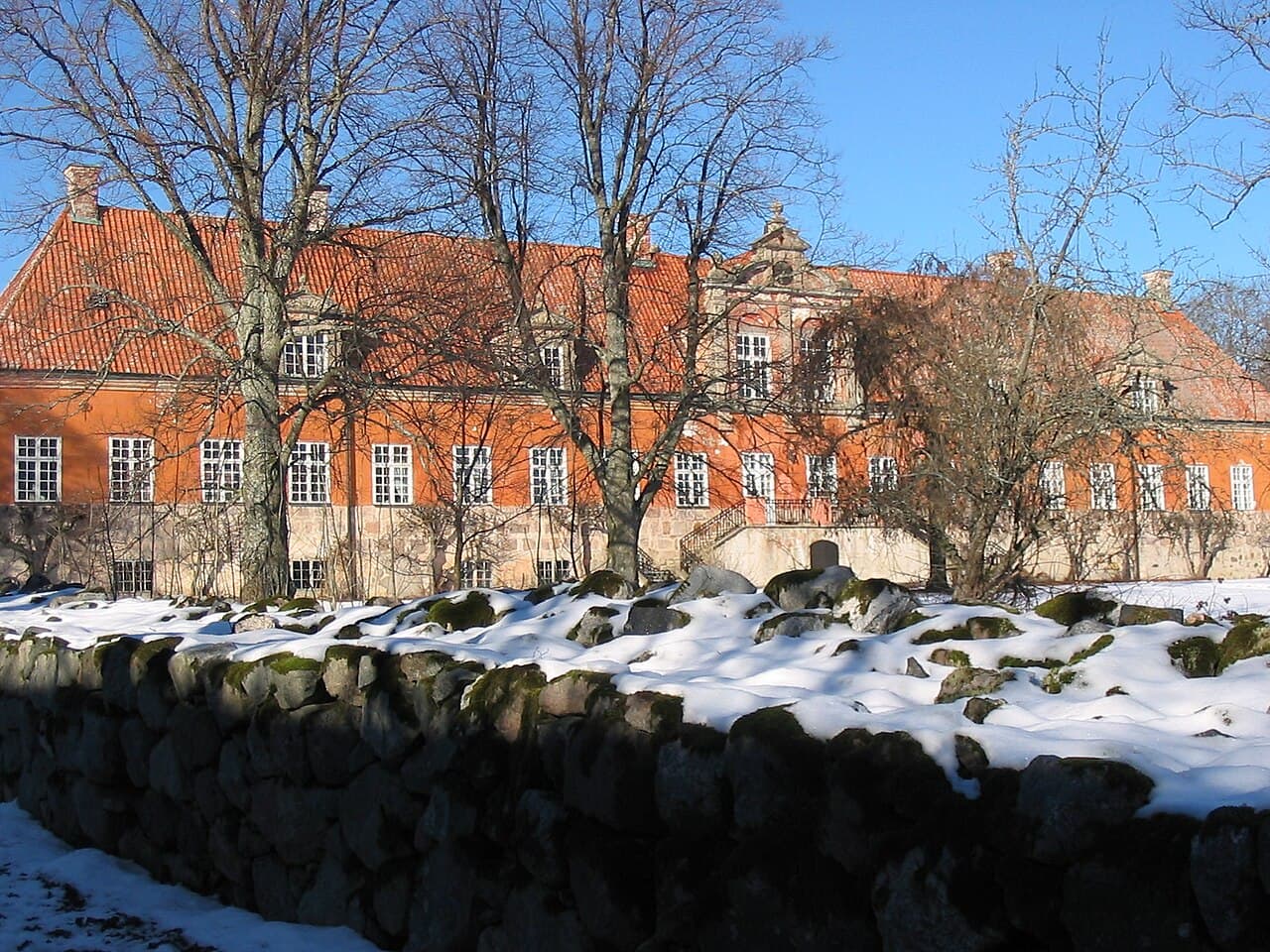
Between 1640 and 1642, two magnificent wings were constructed in the Franco-Dutch Renaissance style, showcasing intricate brickwork and elegant gables characteristic of this architectural movement. These wings were intended to flank a central main building, which was designed in 1642 by the French architect Simon de la Vallée. De la Vallée's design reflected the Dutch Renaissance style and was meant to create a stately manor house that would stand as a symbol of Oxenstierna's power and influence.
Despite these grand plans, the main building was never realized, leaving the two wings as the only surviving structures of the original vision. The wings remain some of the finest preserved examples of Swedish Renaissance architecture and demonstrate the early work of Nicodemus Tessin the Elder, who oversaw the construction.
Historical context and significance
Fiholm Castle's history is closely tied to the broader religious and political transformations in Sweden during the 15th and 16th centuries. The transition from monastic ownership to noble estate reflects the impact of the Reformation and the redistribution of church properties. The involvement of the Oxenstierna family, particularly Axel Oxenstierna, places Fiholm within the narrative of Sweden's rise as a European power in the 17th century.
Nearby Jäder Church, also commissioned by Axel Oxenstierna around the same time as the manor's construction, serves as the family burial church and provides insight into the grandeur that the main manor house might have achieved had it been completed. The church's imposing architecture complements the Renaissance style of Fiholm's wings and emphasizes the cultural ambitions of the Oxenstierna family.
Present-day status and visitor information
Today, Fiholm Castle remains privately owned by Charlott and Goran Mörner. The estate includes a barn dating from 1864 that has been converted into a café and gift shop, offering visitors a chance to experience the historic atmosphere of the manor grounds. While the main building was never constructed, the existing wings provide a rare glimpse into 17th-century Swedish noble architecture and the early career of Nicodemus Tessin the Elder.
The castle is classified as a hill castle, situated on elevated terrain that would have provided strategic advantages and scenic views of the surrounding landscape. Its preservation as a well-preserved Renaissance manor makes it an important heritage site that reflects Sweden's architectural and aristocratic history.
Architectural features of the surviving wings
The two wings of Fiholm Castle exhibit hallmark features of the Franco-Dutch Renaissance style, including steeply pitched roofs, decorative brick façades, and stepped gables. The windows are symmetrically arranged, framed by stone mullions and transoms that add to the elegance of the structures. Inside, the wings were designed to accommodate the residential and administrative functions of a noble estate, with spacious halls and chambers that would have supported the daily life and governance of the manor.
The choice of materials and craftsmanship reflects the high standards of 17th-century Swedish aristocratic architecture, blending functionality with aesthetic refinement. The wings stand as a testament to the ambitions of Axel Oxenstierna and the architectural innovation of Nicodemus Tessin the Elder during a period of significant cultural development in Sweden.
Legacy of Nicodemus Tessin the Elder and Simon de la Vallée
Nicodemus Tessin the Elder, who supervised the construction of Fiholm's wings, would later become one of the most prominent architects in Sweden, contributing to major projects such as the Royal Palace in Stockholm. His early work at Fiholm demonstrates his skill in adapting Renaissance styles to Swedish contexts.
Simon de la Vallée, the French architect commissioned to design the main manor house, brought continental influences to Sweden, blending French and Dutch Renaissance elements. Although his grand design was never realized, his involvement at Fiholm marks an important moment in the introduction of European architectural trends to Swedish noble estates.
Frequently asked questions (FAQ)
- What is the historical significance of Fiholm Castle?
- Fiholm Castle, built in the late 16th century, is a significant example of Renaissance architecture in Sweden. It served as a noble residence and has witnessed various historical events, reflecting the region's rich heritage.
- When was Fiholm Castle constructed?
- Fiholm Castle was constructed between 1588 and 1591, commissioned by the nobleman Johan Oxenstierna. Its design and construction are notable for their representation of the architectural style of the time.
- What are the opening hours for Fiholm Castle?
- Fiholm Castle is typically open to visitors from May to September, with varying hours depending on the day of the week. It is advisable to check the official website for the most current opening hours before planning your visit.
- Can I take guided tours of Fiholm Castle?
- Yes, guided tours are available at Fiholm Castle, providing insights into its history and architecture. These tours are a fantastic way to learn more about the castle's significance and explore its stunning grounds.
- Is Fiholm Castle accessible for visitors with disabilities?
- Fiholm Castle strives to be accessible to all visitors, providing facilities for those with mobility challenges. However, due to the historical nature of the site, some areas may have limitations, so it's best to inquire ahead of your visit.
- What is the best time to visit Fiholm Castle?
- The best time to visit Fiholm Castle is during the summer months when the weather is pleasant, and the gardens are in full bloom. Additionally, many events and activities are held during this season, enhancing the visitor experience.
- Are there nearby attractions to visit alongside Fiholm Castle?
- Yes, there are several nearby attractions to explore, including the picturesque Eskilstuna city center and the beautiful parks around the castle. Visitors can also enjoy local museums and cultural sites that enrich the historical context of the area.
- How much do tickets to Fiholm Castle cost?
- Ticket prices for Fiholm Castle vary depending on the season and age of the visitor, with discounts often available for children and seniors. It is recommended to check the official site for the latest pricing information before your visit.
Photo gallery

Photo by No machine-readable author provided. Tompen0000 assumed (based on copyright claims).•Public domain
Information
Loading map...
Visitor reviews
No reviews yet. Been here? Write the first review and help other travelers!
Write the first reviewVisited this castle? Share your experience
Your review helps other travelers and adds first-hand knowledge to our encyclopedia.