Fiddaun Castle
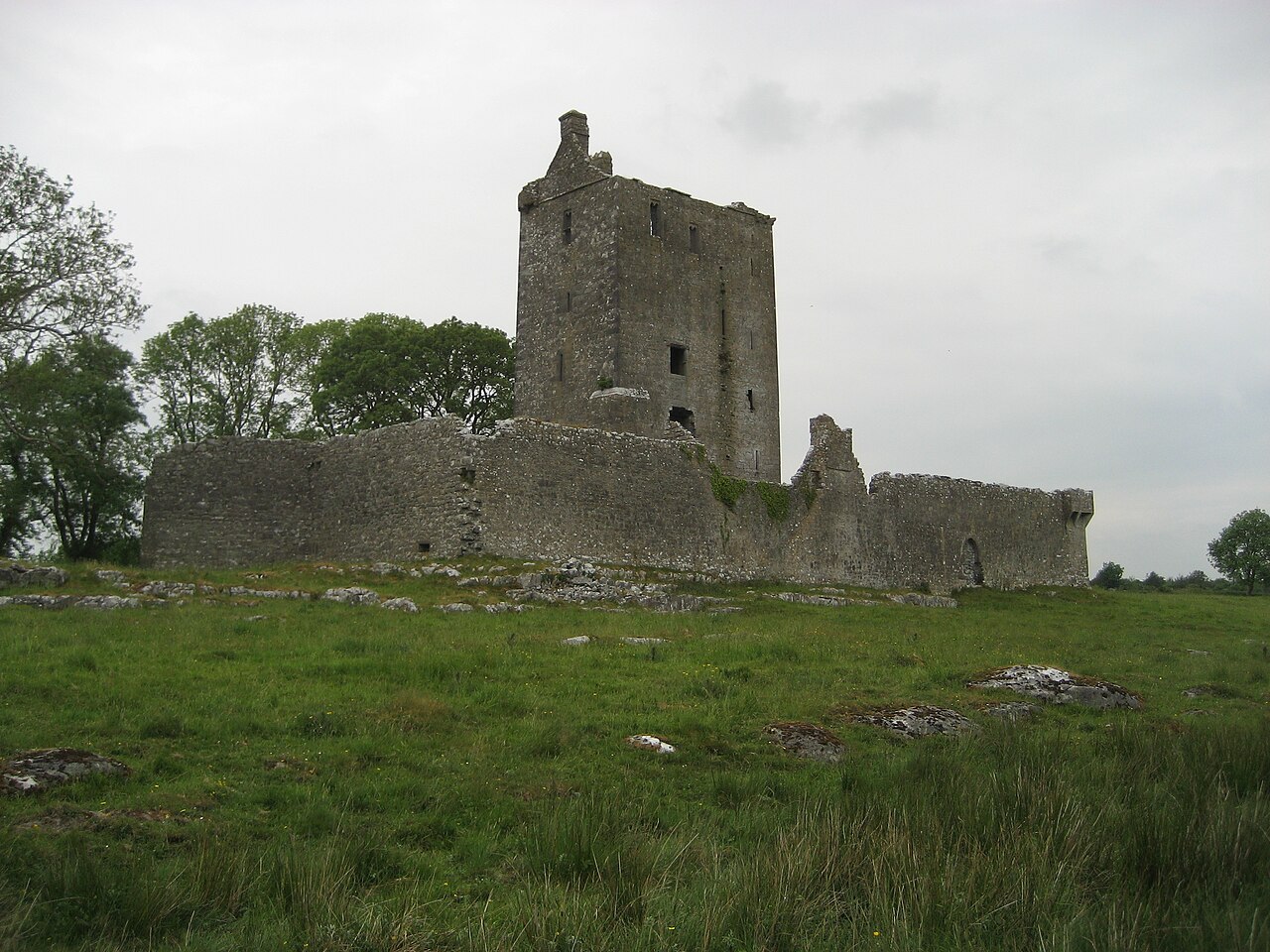
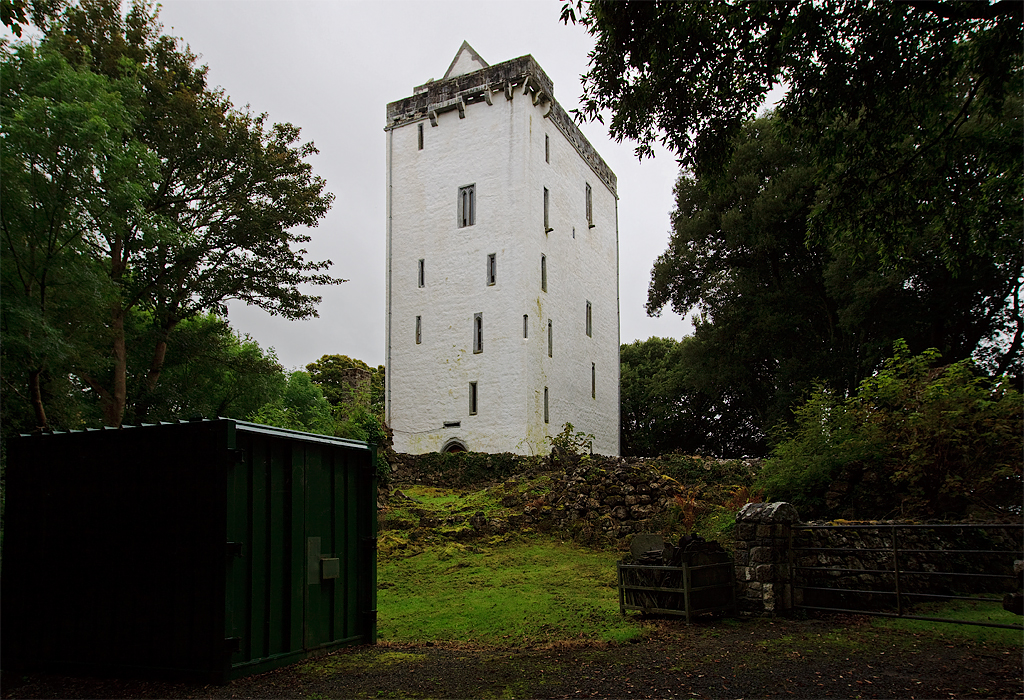
Fiddaun Castle stands as a remarkable example of a 16th-century Irish tower house, nestled in the rural landscape of County Galway, Ireland. This six-story tower house is notable for its exceptional state of preservation, especially its inner bawn walls which remain largely intact despite the loss of its outer defenses. Built around 1574, Fiddaun Castle reflects the architectural and historical traditions of Gaelic Ireland during a period of territorial consolidation and conflict.
Architectural features and layout
The castle's design centers on a compact but sturdy tower house, a common form of fortified residence among Gaelic lords in the late medieval period. Though the main building itself is not expansive, the castle was historically surrounded by an extensive outer wall enclosure that once encompassed nearly twelve acres. While these outer walls have not survived, the inner bawn—a defensive courtyard wall—remains remarkably well-preserved, providing a rare glimpse into the defensive strategies employed by its builders.
The inner bawn walls feature climbable steps and walkable defenses, allowing visitors to experience the castle's fortifications firsthand. The tower house itself contains multiple floors accessible via a narrow, spiral staircase, which leads visitors through the residential chambers up to the rooftop, offering panoramic views of the surrounding countryside. The castle's stone masonry exemplifies traditional construction techniques of the period, using locally sourced stone to create thick, durable walls.
Historical context and ownership
Fiddaun Castle was constructed during a time when many Gaelic Irish families fortified their holdings to assert control and defend their territories. The castle is closely associated with the O’Shaughnessy family, a prominent Gaelic lineage in the region historically known as the kingdom of Uí Fiachrach Aidhne. It is believed that the castle's construction was overseen by Sir Roger Gilla Dubh Ó Seachnasaigh, the earliest known occupant and a significant figure in the family's history.
The castle's name, derived from the Irish phrase "Fiodh Duin" meaning "wood of the fort," reflects its original setting amid wooded terrain, a characteristic feature of many Gaelic strongholds that combined natural landscape with defensive architecture. Fiddaun was one of four castles held by the O’Shaughnessy family in this border region near County Clare, highlighting its strategic importance in the complex political landscape of 16th-century Ireland.
Strategic location and natural surroundings
Situated between two lakes, Lough Doo and Lough Aslaun, near the village of Tubber, Fiddaun Castle’s location was chosen for both defensive and practical reasons. The proximity to water bodies provided natural barriers against attack and access to resources, while the surrounding landscape offered routes for communication and transport.
The castle’s setting within a wooded environment not only inspired its name but also contributed to its defense. The natural features complemented the man-made fortifications, creating a formidable stronghold that could withstand sieges and raids common during the turbulent 16th century.
Preservation and current status
Today, Fiddaun Castle is recognized as a National Monument of Ireland, underscoring its cultural and historical significance. Although it stands on private property, the site is protected and maintained under the care of the Office of Public Works, ensuring its preservation for future generations.
The castle’s condition is described as well preserved, with the main tower house and inner defensive walls intact. Visitors can explore the interior chambers and ascend the spiral staircase to the rooftop, experiencing the castle much as it would have appeared centuries ago. The absence of the outer walls and attic does not diminish the castle’s architectural value; rather, it highlights the durability of the inner structures and the skill of its builders.
Cultural significance and heritage value
Fiddaun Castle exemplifies the Gaelic tradition of fortified architecture during the late medieval period in Ireland. Its association with the O’Shaughnessy family provides insight into the social and political dynamics of the time, illustrating how families used architecture to assert power and protect their lands.
The castle’s preservation allows historians and visitors to understand the living conditions, defensive techniques, and architectural styles of 16th-century Gaelic Ireland. As one of the few surviving tower houses with intact bawn walls, Fiddaun offers a unique window into Ireland’s feudal past and the enduring legacy of its Gaelic heritage.
Exploring fiddaun castle today
While the castle is not heavily commercialized or developed as a tourist attraction, its accessibility and intact structure make it a fascinating destination for those interested in Irish history and medieval architecture. Visitors should exercise caution when navigating the narrow spiral staircase and climbing the defensive walls, but the experience offers a rare opportunity to explore a largely untouched castle environment.
Fiddaun Castle remains a testament to the resilience of Gaelic architecture and the historical significance of the families who shaped Ireland’s landscape during a pivotal era.
Frequently asked questions (FAQ)
- How do I visit Fiddaun Castle?
- Fiddaun Castle is located near Tubber in County Galway. It is on private land but can be viewed from public paths nearby. Visitors should respect private property and check local access guidelines before visiting.
- What is the historical significance of Fiddaun Castle?
- Fiddaun Castle was built in the late 16th century by the O’Shaughnessy family and served as a fortified residence demonstrating Gaelic lordship and defensive architecture during a turbulent period in Irish history.
- Can I explore inside Fiddaun Castle?
- The castle's interior is well-preserved with accessible floors and a spiral staircase leading to the rooftop. However, visitors should exercise caution due to narrow stairs and uneven surfaces.
- When was Fiddaun Castle built?
- Fiddaun Castle was constructed around 1574, during the late medieval period of Irish history.
- Why is Fiddaun Castle considered important?
- It is one of the best-preserved examples of a mid-16th century Irish tower house, with intact inner bawn walls, providing valuable insight into Gaelic defensive architecture and family strongholds.
Information
Sources & official resources
Verify the information above using these authoritative references.
Loading map...
Visitor reviews
No reviews yet. Been here? Write the first review and help other travelers!
Write the first reviewVisited this castle? Share your experience
Your review helps other travelers and adds first-hand knowledge to our encyclopedia.