Ardamullivan Castle — Ireland castle

Ardamullivan Castle

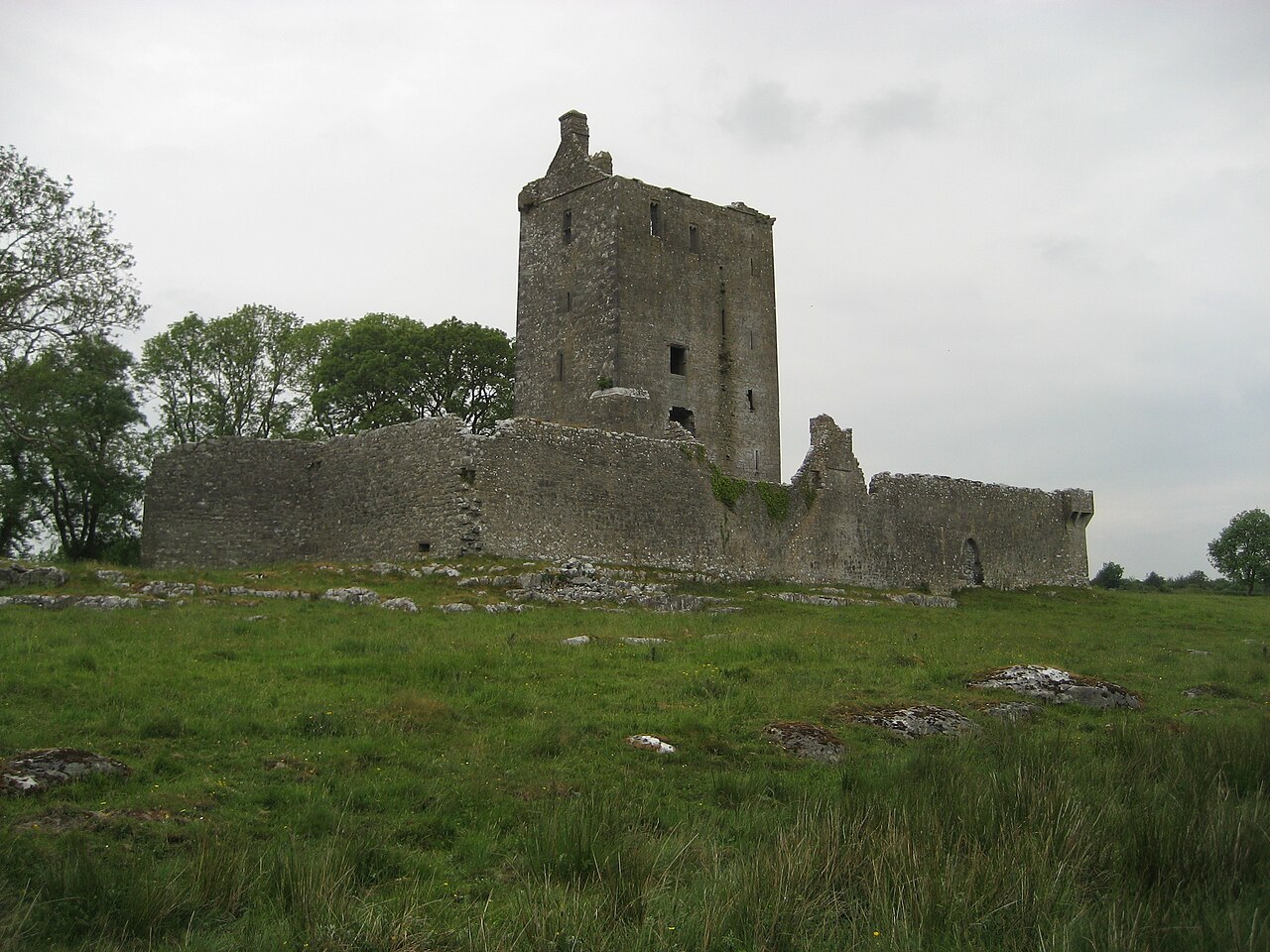
Ardamullivan Castle, a 16th-century tower house in County Galway
Renaissance (15th–17th c.)
Well Preserved

Ardamullivan Castle is a prominent 16th-century tower house located in County Galway, Ireland. It stands as an excellent example of a Renaissance-period fortified residence, characteristic of the Irish tower houses built during this era. The castle is recognized as a National Monument, reflecting its cultural and historical importance in Irish heritage.

Historical context and significance

Constructed in the 16th century, Ardamullivan Castle was built during a period of significant social and political change in Ireland. Tower houses like Ardamullivan were typically erected by local Gaelic lords or Anglo-Irish gentry as fortified homes that combined defensive features with residential comfort. This period coincides with the Renaissance influence spreading across Europe, which is reflected in some of the castle's architectural details.

The castle was associated with the O'Shaughnessy family, a notable Gaelic clan in the Galway region. The O'Shaughnessys were influential in local politics and often found themselves involved in the turbulent conflicts of 16th-century Ireland, including clan feuds and resistance to English rule.

Architectural features and design

Ardamullivan Castle is classified as a hill castle due to its elevated position, which provided strategic advantages for defense and surveillance of the surrounding landscape. The structure is a classic example of a tower house, a type of fortified residence common in Ireland from the late medieval period through the Renaissance.

The castle's design includes a tall, rectangular stone tower with thick walls, narrow windows, and battlements at the top for defense. The entrance is protected by a strong door and possibly a murder hole or defensive machicolations, typical of tower houses designed to repel attackers. Inside, the castle would have contained multiple floors with living quarters, storage rooms, and a great hall for social and administrative functions.

Notable architectural elements include the spiral staircase winding within the thick walls, allowing access to the upper floors and roof. The windows, while narrow for defense, are larger than those in earlier medieval fortifications, reflecting Renaissance influences that favored more light and comfort within the living spaces.

Preservation and current condition

Today, Ardamullivan Castle remains well preserved, allowing visitors to appreciate its architectural and historical significance. The castle's condition provides valuable insights into the construction techniques and lifestyle of the Irish gentry during the Renaissance period.

As a National Monument, the site is protected by the Irish government, ensuring its conservation and maintenance. Visitors can explore the castle and its immediate surroundings, gaining a sense of the defensive and domestic functions of a tower house in 16th-century Ireland.

Visiting Ardamullivan Castle

The castle is accessible to the public, although specific visiting hours and facilities may vary. It is advisable for visitors to check local tourism resources or heritage organizations for the latest information on access and guided tours.

Ardamullivan Castle offers a compelling destination for those interested in Irish history, medieval architecture, and the cultural landscape of County Galway. Its combination of defensive features and Renaissance stylistic elements make it a notable example of Ireland's architectural heritage.

Frequently asked questions (FAQ)

How do I get to Ardamullivan Castle?
Ardamullivan Castle is located in the scenic countryside of Ireland, easily accessible by car. The nearest major city is Galway, which is about an hour's drive away, with well-marked routes leading directly to the castle.
What is the historical significance of Ardamullivan Castle?
Ardamullivan Castle dates back to the 15th century and is known for its rich history as a stronghold during various Irish conflicts. It has been a witness to significant events and changes in the region, making it an important landmark in Irish heritage.
When was Ardamullivan Castle built?
Ardamullivan Castle was constructed in the late 1400s, reflecting the architectural styles and defensive needs of that era. Its design showcases medieval influences that were prevalent in Ireland during that time.
Can I visit Ardamullivan Castle year-round?
Yes, Ardamullivan Castle is open to visitors throughout the year, though hours may vary with the seasons. It’s advisable to check the official website for the latest information on opening times before planning your visit.
Why is Ardamullivan Castle a popular tourist attraction?
Ardamullivan Castle attracts visitors for its stunning architecture, historical significance, and picturesque surroundings. It offers a glimpse into Ireland's rich medieval history and is a favorite spot for photography and exploration.
Is it possible to take guided tours of Ardamullivan Castle?
Yes, guided tours are available at Ardamullivan Castle, providing an in-depth look at its history and architectural features. These tours are led by knowledgeable guides who share fascinating stories about the castle's past.
What are the ticket prices for visiting Ardamullivan Castle?
Ticket prices for Ardamullivan Castle are quite reasonable, with discounts available for students and seniors. Children under a certain age may enter for free, making it an affordable outing for families.
What are the opening hours for Ardamullivan Castle?
Ardamullivan Castle typically opens at 10 AM and closes at 5 PM, but these hours can vary seasonally. It’s recommended to verify the hours before your visit to ensure you have ample time to explore.
What nearby attractions can I visit while at Ardamullivan Castle?
While visiting Ardamullivan Castle, you can explore several nearby attractions such as the beautiful landscapes of Connemara National Park and the charming town of Clifden. These sites offer additional opportunities for hiking, dining, and experiencing local culture.

Photo gallery

Ardamullivan Castle
Click to view

Photo by Mike Searle•CC BY-SA 2.0

1 photo • Click any image to view in full screen

Information

Hill Castle

Loading map...

Visitor reviews

No reviews yet. Been here? Write the first review and help other travelers!

Write the first review

Visited this castle? Share your experience

Your review helps other travelers and adds first-hand knowledge to our encyclopedia.

Write a review

(5/5)

0/2000 characters

Your review will be visible after admin approval

Nearby castles

2.8 km

Lough Cutra Castle

Gort, United Kingdom

Lough Cutra Castle stands as an exquisite example of early 19th-century British architectural ambition in Ireland, designed by the renowned English architect John Nash between 1811 and 1817. Commissioned by Colonel Charles Vereker, 2nd Viscount Gort, the castle was conceived as a grand residence reflecting the aristocratic status and refined tastes of its owner during the Regency period. Its location near Gort in County Galway, on the western coast of Ireland, places it within a region rich in history and natural beauty. Architectural design and features Lough Cutra Castle is a Regency country house exhibiting the hallmarks of John Nash's architectural style, characterized by elegant proportions, picturesque massing, and a harmonious relationship with its surrounding landscape. Though detailed architectural plans are scarce, the castle's design includes a prominent dining room capable of hosting formal occasions, as evidenced by the 2015 state dinner for 18 guests. The structure likely incorporates typical Regency features such as symmetrical facades, sash windows, and classical detailing, all set within a carefully landscaped parkland. The castle is situated on a sprawling 600-acre estate that borders Lough Cutra lake, notable for being the largest privately held lake in Europe, covering approximately 1,000 acres. This extensive estate combines both residential and natural elements, offering a tranquil setting that enhances the castle's grandeur. Historical significance and ownership The castle's history is intertwined with the Vereker family, a lineage of British and Irish nobility. After its construction, it became associated with Hugh Gough, 1st Viscount Gough, a distinguished military figure, although direct connections between his military exploits and the castle remain undocumented. In 1952, Standish Vereker, 7th Viscount Gort, reacquired the estate, ensuring it remained within the family. In recent decades, Sir Humphry Wakefield, married to the Honorable Elizabeth Sidney, a great-niece of Viscount Gort, has overseen restoration efforts, preserving the castle as a private residence. This continuity of family ownership and stewardship has safeguarded the castle's architectural integrity and historical legacy. Contemporary use and cultural events Beyond its residential function, Lough Cutra Castle has embraced a role in public life. Since 2012, the estate has hosted an annual triathlon event, attracting athletes and visitors to its scenic grounds. The castle's cultural significance was further highlighted in May 2015, when it served as the venue for a state visit by Prince Charles and Camilla, Duchess of Cornwall. Their three-day stay included a formal state dinner attended by the President of Ireland and his spouse, underscoring the castle's ongoing social and diplomatic importance. Preservation and condition Lough Cutra Castle remains a well-preserved example of Regency architecture, benefiting from careful restoration and maintenance by its private owners. Unlike many historic castles, it does not present as a ruin but as a fully habitable country house, with no known archaeological excavations or structural ruins on site. The estate's combination of architectural heritage and natural surroundings contributes to its unique character as a private yet culturally significant landmark. Location and regional context Located near the town of Gort in County Galway, Lough Cutra Castle is situated within the province of Connacht in the west of Ireland. This region is known for its rugged landscapes, historical sites, and cultural richness, providing a fitting backdrop for a country house of such stature. The castle's proximity to the expansive Lough Cutra lake enhances its appeal, offering scenic vistas and recreational opportunities.

Post-Renaissance (17th–18th c.)
Details
3.4 km
Fiddaun Castle — Ireland castle

Fiddaun Castle

, Ireland

Fiddaun Castle is a prominent example of a 16th-century Renaissance tower house located near Tubber in County Galway, Ireland, close to the border with County Clare. This castle is recognized as a National Monument of Ireland, reflecting its historical and architectural significance. Tower houses like Fiddaun were common in Ireland during the late medieval and Renaissance periods, serving as fortified residences for local lords and gentry. Historical context and significance Constructed in the 16th century, Fiddaun Castle was built during a period marked by the transition from medieval fortifications to more comfortable and stylistically refined residences. The Renaissance influence is evident in its architectural details, although it retained many defensive features typical of Irish tower houses. This era in Ireland was characterized by frequent local conflicts and the need for defensible homes, which explains the castle's robust construction and strategic hilltop location. The castle was likely commissioned by a prominent Gaelic family or Anglo-Irish lord, as many tower houses were built to assert control over land and demonstrate social status. Its proximity to the border of County Clare suggests it played a role in regional power dynamics during the turbulent periods of Irish history, including clan rivalries and English colonial expansion. Architectural features and layout Structure and design Fiddaun Castle exemplifies the typical hill castle type, strategically positioned on elevated ground to maximize defensive advantage and visibility over the surrounding landscape. The castle is a classic tower house, a vertical stone structure several stories high, designed to combine residential and defensive functions. The tower is rectangular in plan, with thick stone walls that provided protection against attacks. Narrow windows and arrow slits allowed defenders to observe and repel assailants while minimizing exposure. The entrance was often protected by a sturdy door and possibly a murder hole or defensive machicolations above. Interior and defensive elements Inside, Fiddaun Castle would have contained a great hall on one of the main floors, serving as the social and administrative center. Other floors housed private chambers, storage rooms, and possibly a kitchen area. Spiral staircases within the thick walls connected the different levels, designed to favor right-handed defenders. Defensive features likely included battlements at the roof level, where guards could patrol and defend the castle. The tower house design allowed for a relatively small garrison to hold off attackers, relying on the strength of the stone walls and elevated position. Preservation and current status Today, Fiddaun Castle stands as a well-preserved example of an Irish Renaissance tower house, though it may show signs of weathering and partial ruin typical of structures from this period. Its designation as a National Monument ensures protection and recognition of its cultural heritage. Visitors to the site can appreciate the castle's imposing silhouette on the hillside and explore its architectural details, which provide insight into the lifestyle and defensive needs of its original inhabitants. The castle's rural setting adds to its atmospheric appeal, offering views of the surrounding Irish countryside. Fiddaun Castle in the context of Irish tower houses Fiddaun Castle is part of a broader tradition of tower house construction across Ireland, which peaked between the 15th and 17th centuries. These structures served as fortified homes for the Irish gentry and were often symbols of local power and prestige. Unlike larger castles with extensive curtain walls and baileys, tower houses like Fiddaun were more compact but no less formidable. Their design reflects a balance between domestic comfort and military utility, adapted to the social and political realities of Renaissance Ireland. Architectural style and influences The Renaissance period saw some introduction of stylistic elements such as decorative stonework and more refined window designs, which may be present at Fiddaun Castle. However, the overall style remains functional and robust, emphasizing defense. Visiting information and cultural importance As a National Monument, Fiddaun Castle is an important heritage site that offers educational opportunities for those interested in Irish history and medieval architecture. While access details can vary, the castle's location near Tubber makes it accessible for visitors exploring County Galway and the surrounding region. The castle contributes to Ireland's rich tapestry of historical sites, attracting scholars, tourists, and locals alike who seek to understand the country's past through its built environment.

Renaissance (15th–17th c.)
Details
3.4 km

Fiddaun Castle

Galway, United Kingdom

Fiddaun Castle stands as a remarkable example of a 16th-century Irish tower house, nestled in the rural landscape of County Galway, Ireland. This six-story tower house is notable for its exceptional state of preservation, especially its inner bawn walls which remain largely intact despite the loss of its outer defenses. Built around 1574, Fiddaun Castle reflects the architectural and historical traditions of Gaelic Ireland during a period of territorial consolidation and conflict. Architectural features and layout The castle's design centers on a compact but sturdy tower house, a common form of fortified residence among Gaelic lords in the late medieval period. Though the main building itself is not expansive, the castle was historically surrounded by an extensive outer wall enclosure that once encompassed nearly twelve acres. While these outer walls have not survived, the inner bawn—a defensive courtyard wall—remains remarkably well-preserved, providing a rare glimpse into the defensive strategies employed by its builders. The inner bawn walls feature climbable steps and walkable defenses, allowing visitors to experience the castle's fortifications firsthand. The tower house itself contains multiple floors accessible via a narrow, spiral staircase, which leads visitors through the residential chambers up to the rooftop, offering panoramic views of the surrounding countryside. The castle's stone masonry exemplifies traditional construction techniques of the period, using locally sourced stone to create thick, durable walls. Historical context and ownership Fiddaun Castle was constructed during a time when many Gaelic Irish families fortified their holdings to assert control and defend their territories. The castle is closely associated with the O’Shaughnessy family, a prominent Gaelic lineage in the region historically known as the kingdom of Uí Fiachrach Aidhne. It is believed that the castle's construction was overseen by Sir Roger Gilla Dubh Ó Seachnasaigh, the earliest known occupant and a significant figure in the family's history. The castle's name, derived from the Irish phrase "Fiodh Duin" meaning "wood of the fort," reflects its original setting amid wooded terrain, a characteristic feature of many Gaelic strongholds that combined natural landscape with defensive architecture. Fiddaun was one of four castles held by the O’Shaughnessy family in this border region near County Clare, highlighting its strategic importance in the complex political landscape of 16th-century Ireland. Strategic location and natural surroundings Situated between two lakes, Lough Doo and Lough Aslaun, near the village of Tubber, Fiddaun Castle’s location was chosen for both defensive and practical reasons. The proximity to water bodies provided natural barriers against attack and access to resources, while the surrounding landscape offered routes for communication and transport. The castle’s setting within a wooded environment not only inspired its name but also contributed to its defense. The natural features complemented the man-made fortifications, creating a formidable stronghold that could withstand sieges and raids common during the turbulent 16th century. Preservation and current status Today, Fiddaun Castle is recognized as a National Monument of Ireland, underscoring its cultural and historical significance. Although it stands on private property, the site is protected and maintained under the care of the Office of Public Works, ensuring its preservation for future generations. The castle’s condition is described as well preserved, with the main tower house and inner defensive walls intact. Visitors can explore the interior chambers and ascend the spiral staircase to the rooftop, experiencing the castle much as it would have appeared centuries ago. The absence of the outer walls and attic does not diminish the castle’s architectural value; rather, it highlights the durability of the inner structures and the skill of its builders. Cultural significance and heritage value Fiddaun Castle exemplifies the Gaelic tradition of fortified architecture during the late medieval period in Ireland. Its association with the O’Shaughnessy family provides insight into the social and political dynamics of the time, illustrating how families used architecture to assert power and protect their lands. The castle’s preservation allows historians and visitors to understand the living conditions, defensive techniques, and architectural styles of 16th-century Gaelic Ireland. As one of the few surviving tower houses with intact bawn walls, Fiddaun offers a unique window into Ireland’s feudal past and the enduring legacy of its Gaelic heritage. Exploring fiddaun castle today While the castle is not heavily commercialized or developed as a tourist attraction, its accessibility and intact structure make it a fascinating destination for those interested in Irish history and medieval architecture. Visitors should exercise caution when navigating the narrow spiral staircase and climbing the defensive walls, but the experience offers a rare opportunity to explore a largely untouched castle environment. Fiddaun Castle remains a testament to the resilience of Gaelic architecture and the historical significance of the families who shaped Ireland’s landscape during a pivotal era.

Late Medieval (14th–15th c.)
Details