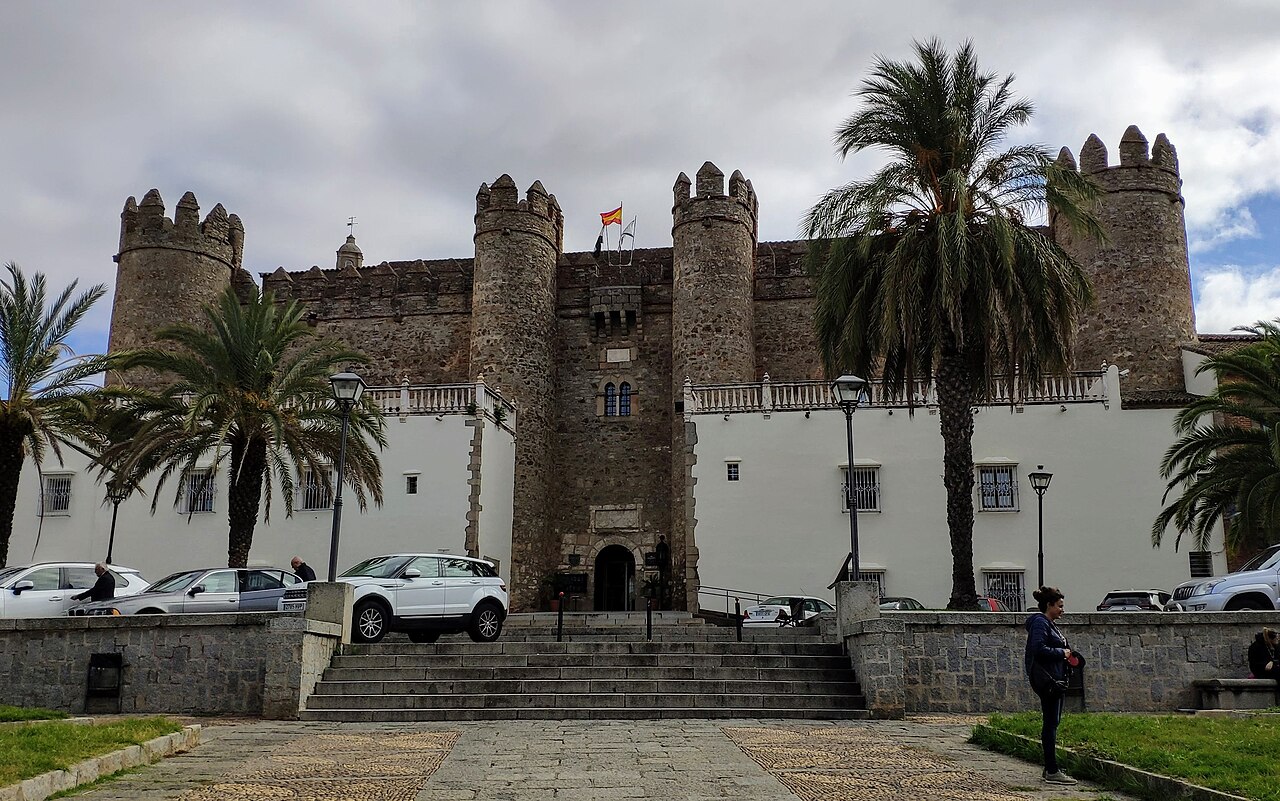
Feria Castle
Feria Castle, located in the town of Feria in Spain, is a notable example of a late medieval hill castle that was built in the 15th century on the site of an earlier Moorish fortification. The castle was extensively remodeled and expanded by the powerful local Feria family, who played a significant role in the region's history during the late Middle Ages. The castle's elevated position on a hilltop provides commanding panoramic views of the surrounding landscape, a strategic advantage for defense and surveillance.
Architectural evolution and features
The castle's construction incorporates remnants of the original Moorish fortress, blending Islamic military architecture with the later Christian medieval fortification styles. The most prominent feature is the Torre del Homenaje (keep or main tower), which rises above the rest of the structure. Visitors can climb to the roof of this tower to enjoy the full 360-degree views of the countryside.
The castle is arranged over three floors, each serving different functions typical of medieval castles. Defensive elements such as thick stone walls, battlements, and arrow slits are evident, reflecting the need for protection during turbulent times. The castle also includes residential quarters, storage rooms, and halls that would have been used for administration and daily life.
The Museo Señorío de Feria
Inside the castle, the Museo Señorío de Feria occupies the interior spaces, offering visitors detailed exhibits primarily in Spanish. The museum focuses on the history of the Feria family and their influence in the region, as well as the castle's own history and its role in local defense. Exhibits include artifacts, documents, and interpretive displays that provide insight into the social and political context of the castle's era.
The museum also highlights the family's connections to other nearby castles, illustrating the network of fortifications that helped control and secure the territory.
Strategic importance and historical context
Feria Castle's location was chosen for its commanding views and natural defensive advantages, typical of hill castles built during the late medieval period. The castle played a role in regional conflicts and power struggles between Christian and Muslim forces during the Reconquista and subsequent centuries.
Its transformation from a Moorish fort into a Christian stronghold reflects the shifting political landscape of Spain in the 15th century, a time of consolidation of Christian kingdoms and territorial expansion.
Preservation and visitor experience
Today, Feria Castle is well preserved and accessible to the public, offering a unique combination of historical architecture and cultural heritage. Visitors can explore the castle's defensive structures, climb the towers, and enjoy the museum's educational resources.
The castle's hilltop setting makes it a popular destination for those interested in medieval history, military architecture, and panoramic photography.
Frequently asked questions (FAQ)
- How do I get to Feria Castle?
- Feria Castle is located in the charming town of Feria, Spain. You can reach it by car or public transport from nearby cities such as Badajoz or Mérida. Local buses and taxi services are available for convenience.
- What is the historical significance of Feria Castle?
- Feria Castle dates back to the 15th century and played a crucial role in the defense of the region during the Reconquista. It is an excellent example of medieval military architecture and reflects the strategic importance of the area in Spanish history.
- When was Feria Castle built?
- Feria Castle was constructed in the late 1400s, around 1470, to protect the town and its surroundings. The castle has undergone several renovations over the centuries, which have preserved its historical integrity while enhancing its architectural features.
- Can I visit Feria Castle year-round?
- Yes, Feria Castle is open to visitors year-round, although specific opening hours may vary seasonally. It is advisable to check the official website or contact local tourism offices for the most current visiting information before planning your trip.
- Why is Feria Castle considered an architectural gem?
- Feria Castle is renowned for its well-preserved towers and walls, showcasing the typical defensive structures of the period. The castle's design reflects both functionality and aesthetic appeal, making it a fascinating study for architecture enthusiasts.
- Is it possible to explore the interior of Feria Castle?
- Yes, visitors can explore certain areas of the castle, including the interior and the surrounding grounds. Guided tours may be available to provide insights into its history and architecture, enhancing your visit.
- What are the ticket prices for Feria Castle?
- Entry to Feria Castle is typically affordable, with reduced rates for children, students, and seniors. For the most accurate and up-to-date pricing, it is best to check the official website or inquire at the ticket office upon arrival.
- What are the opening hours for Feria Castle?
- Feria Castle generally opens in the morning and closes in the late afternoon, with extended hours during peak tourist seasons. Always confirm the exact hours of operation before your visit to ensure you have ample time to explore.
- What are some nearby attractions to Feria Castle?
- In addition to Feria Castle, visitors can enjoy the picturesque town of Feria itself, known for its charming streets and local culture. Nearby attractions include the historic town of Zafra and the stunning natural landscapes of the surrounding region.
- When is the best time to visit Feria Castle?
- The best time to visit Feria Castle is during the spring and fall months when the weather is mild and pleasant. These seasons also attract fewer crowds, allowing for a more enjoyable exploration of the castle and its surroundings.
Loading map...
Visitor reviews
No reviews yet. Been here? Write the first review and help other travelers!
Write the first reviewVisited this castle? Share your experience
Your review helps other travelers and adds first-hand knowledge to our encyclopedia.