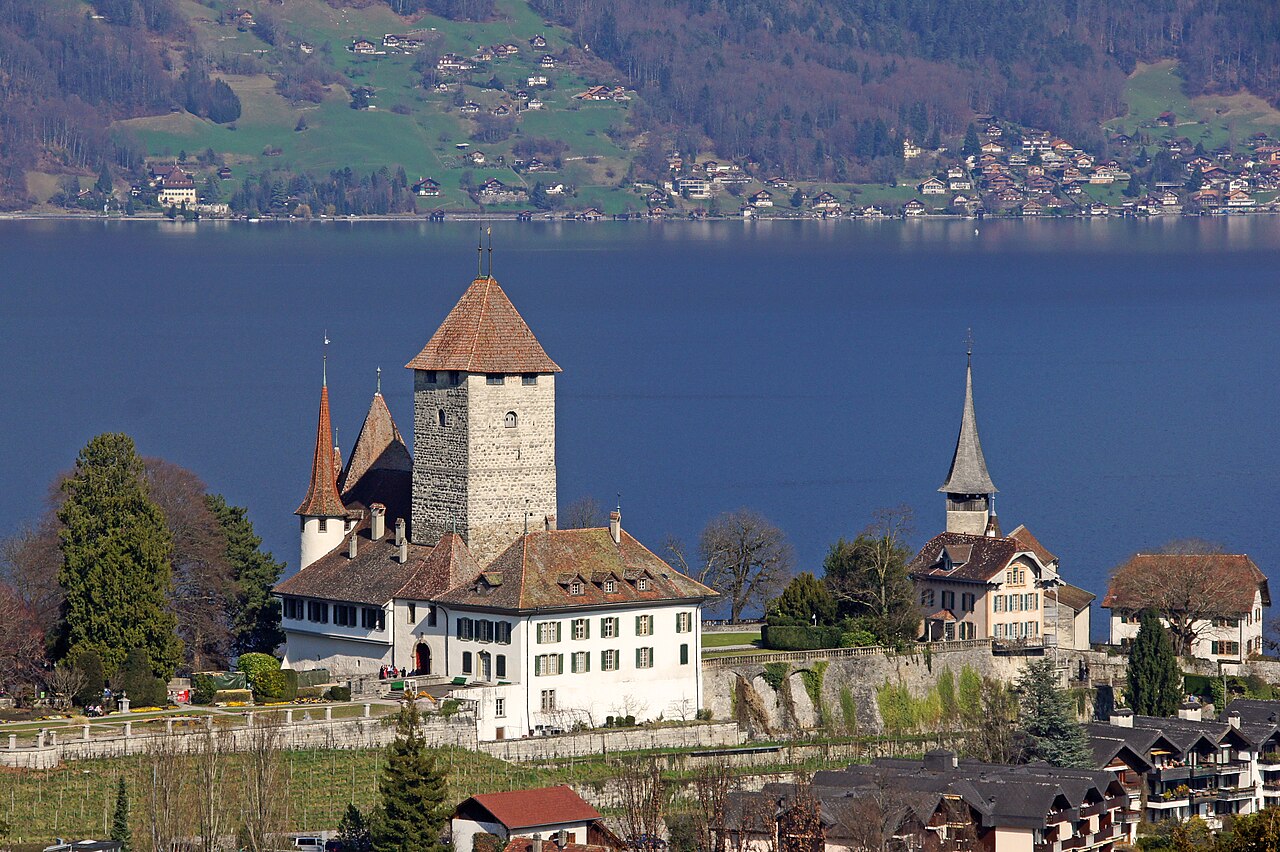
Felsenburg Castle
Felsenburg castle is a medieval hill castle ruin perched on a rocky spire above the historic Gemmi pass road in Kandergrund, Switzerland. Constructed in the 12th century, it was originally built for the Freiherr of Kien to control this vital alpine route connecting the Bernese Oberland with the Valais region. The castle's strategic location allowed its occupants to monitor and defend the mountain passage, a crucial transit point during the high medieval period.
Early history and ownership transitions
Felsenburg castle was part of the broader lordship known as the Herrschaft of Frutigen. In 1290, the castle and its surrounding domain were inherited by the Freiherr of Wädenswil. Subsequently, in 1312, ownership passed to the Freiherr of Turn. These noble families maintained control of the castle during a period marked by territorial disputes and shifting allegiances in the Swiss Alps.
The castle is first referenced in written records in 1339 under the Latin name castrum de Petra, meaning "castle of stone," emphasizing its robust stone construction and rocky site. Later, in 1368, it was mentioned as Stein, the German word for stone, again highlighting the castle's defining geological and architectural characteristics.
Bern acquisition and decline
By the year 1400, the powerful city-state of Bern acquired Felsenburg castle along with the entire Herrschaft of Frutigen. Bern established its administrative center nearby at Tellenburg, a more accessible and strategically favorable location. Consequently, Felsenburg was abandoned and left without maintenance or a permanent garrison. Over time, the castle fell into ruin, reflecting the changing political and military priorities of the region during the late medieval period.
Architectural features and surviving remains
The castle's remains occupy a commanding position on a rocky spur, overlooking the ancient route through the Gemmi pass. This elevated site was carefully chosen for its defensive advantages, providing clear views of approaching travelers or potential threats.
The most prominent surviving structure is the rectangular main tower, also known as the donjon. This central keep would have served as the last defensive refuge and residential quarters for the castle's lord. Surrounding the donjon are fragments of the curtain walls, the stone fortifications that once enclosed the castle's courtyard and protected its inhabitants.
Although detailed records of construction materials and decorative elements are lacking, the existing ruins clearly illustrate the castle's primary function as a fortified stronghold designed to control a key alpine passage. The use of local stone and the castle's integration with the natural rocky outcrop reflect typical high medieval defensive architecture in the Swiss Alps.
Regional context and significance
Felsenburg castle forms part of a network of medieval fortifications in the Bernese Oberland region, including nearby sites such as Tellenburg and Mülenen. These castles collectively controlled important trade and military routes through the challenging alpine terrain. The castle's strategic role in overseeing the Gemmi pass underscores its importance in regional power dynamics during the high medieval period.
Today, Felsenburg stands as a partially preserved ruin, attracting visitors interested in medieval history, alpine geography, and castle architecture. Its rugged location and surviving structures provide valuable insights into the defensive strategies and feudal governance of the Swiss Alps in the 12th to 14th centuries.
Visitor information and accessibility
While the castle is largely in ruins, the site is accessible via hiking trails from Kandergrund. Visitors can explore the remains of the donjon and curtain walls, enjoying panoramic views of the surrounding mountains and the historic Gemmi pass road. The castle's elevated position offers a tangible connection to the medieval past and the strategic importance of alpine routes.
Due to its ruinous state, visitors should exercise caution when exploring the site. There are no formal facilities or guided tours on-site, so preparation and appropriate footwear are recommended. The castle is best visited during the warmer months when trails are clear and weather conditions are favorable.
Frequently asked questions (FAQ)
- How do I get to Felsenburg castle?
- Felsenburg castle is accessible by hiking trails from the town of Kandergrund. The trails lead up to the rocky spur where the ruins are located, offering scenic views of the surrounding area.
- What is the historical significance of Felsenburg castle?
- Felsenburg castle was built in the 12th century to control the important Gemmi pass route. It played a strategic role in regional power dynamics during the high medieval period.
- Can I explore the ruins of Felsenburg castle?
- Yes, visitors can explore the remains of the rectangular main tower and fragments of the curtain walls. However, the site is a ruin, so caution is advised when walking around the uneven terrain.
- When is the best time to visit Felsenburg castle?
- The castle is best visited during the warmer months when hiking trails are clear and weather conditions are favorable, typically from late spring to early autumn.
- Are there any facilities or guided tours at Felsenburg castle?
- There are no formal facilities or guided tours at the castle site. Visitors should prepare accordingly and bring necessary supplies for a self-guided visit.
Information
Website
Visit websiteSources & official resources
Verify the information above using these authoritative references.
Loading map...
Visitor reviews
No reviews yet. Been here? Write the first review and help other travelers!
Write the first reviewVisited this castle? Share your experience
Your review helps other travelers and adds first-hand knowledge to our encyclopedia.