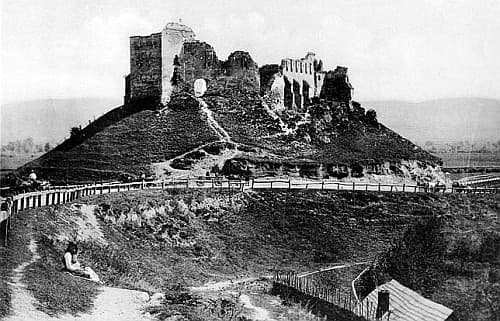
Feldioara Fortress
Feldioara Fortress is a remarkable example of medieval military architecture located in the municipality of Feldioara, Romania. This hill castle stands nearly 500 meters above sea level, strategically positioned near the left bank of the Olt River and naturally defended by the Homorod River on three sides. Its commanding location and robust fortifications reflect its historical role as a defensive stronghold and refuge for local communities over centuries.
The fortress was originally constructed in the 13th century by the Teutonic Knights, a military order invited by King Andrew II of Hungary to protect the Burzenland region from incursions by the nomadic Cumans. The initial fortifications were modest, consisting of wooden and earthen defenses. However, royal permission granted in 1222 allowed the knights to erect stone fortifications, leading to the construction of Feldioara Fortress as a stone castle. This fortress became the most significant among the five strongholds the Teutonic Knights established in the area.
Historical context and early construction
The fortress's origins date to 1211, when the Teutonic Knights settled in the region under the patronage of the Virgin Mary. Their early efforts focused on establishing a defensive presence to secure the strategic Burzenland territory. The stone walls built after 1222 incorporated large boulders at the base with smaller stones above, held together by fine mortar, demonstrating advanced medieval masonry techniques.
Despite their initial success, the Teutonic Knights' ambitions to expand beyond Burzenland towards the Land of Brodnici and the Danube led to tension with the Hungarian crown. This resulted in their expulsion in 1225. Subsequently, the local Saxon community assumed control of the fortress, undertaking significant repairs and enlargements, especially after the devastating Mongol invasion of 1241, which destroyed key structures including the original Romanesque chapel.
Medieval transformations and military significance
Following the knights' departure, the Saxons reshaped Feldioara Fortress to adapt to the oval shape of the hilltop plateau. They added defensive towers along the curtain walls, enhancing the fortress's military capabilities. The main entrance faced south, with towers strategically placed to cover all approaches. Notably, the western tower remains largely intact today, featuring wooden staircases connecting multiple floors, while the eastern tower is distinguished by its semicylindrical vaulted ceiling.
The fortress endured numerous attacks and sieges throughout the medieval period. It was burned by Turkish forces in 1430 and suffered an assault by Vlad Țepeș in 1457, though local inhabitants swiftly rebuilt it. Damage also occurred around the time of the Battle of Feldioara, possibly inflicted by the troops of Moldavian ruler Petru Rareș. By the reign of Sigismund of Luxembourg, Feldioara Fortress served primarily as a refuge for peasants, reflecting its evolving role from a military bastion to a community stronghold.
Architectural features and defensive elements
The fortress's curtain walls reach heights of six to seven meters and include holes for wooden beams that once supported battlement walkways. These walkways allowed defenders to patrol and defend the fortress effectively. Additionally, preserved machicolations in the southern wall provided openings to drop stones or pour boiling substances on attackers, a common defensive feature in medieval castles.
Inside the fortress, a deep well approximately seventy meters deep ensured a reliable water supply during sieges. This well was reconstructed during recent restoration efforts, highlighting the importance of sustainable defense infrastructure. Surrounding the main enclosure is a Zwinger, an outer defensive wall that has been fully restored along with four principal towers positioned to the north, south, east, and west.
Archaeological significance and restoration efforts
Archaeological excavations have revealed that the site of Feldioara Fortress was inhabited long before the medieval period. Finds include Neolithic artifacts from the Cucuteni culture, Bronze Age remains, and Roman period objects such as coins and gold ingots dating to the early 5th century AD. These Roman items may have been tribute payments related to migrating groups like the Huns, indicating the site's long-standing strategic and cultural importance.
Between 2013 and 2017, a comprehensive restoration project led by the Brașov County Council and archaeologist Daniela Marcu-Istrate revitalized the fortress. The restoration emphasized historical accuracy, using traditional materials such as hand-made bricks from a local factory, wood, stone, and ceramic roof tiles. A specialized hydraulic lime mortar was employed to repair masonry and plaster, closely matching the original construction techniques. To distinguish restored sections from original walls, visible wooden elements were incorporated into the reconstruction.
Today, the fortress is open to the public and serves as a cultural venue hosting various events. Visitors can explore the courtyard where foundations of the original chapel and the later Cistercian monastery are marked, illustrating the site's religious heritage. The fortress's current appearance reflects its 17th-century state, characterized by a plastered façade that once adorned its walls.
Cultural heritage and visitor experience
Feldioara Fortress stands as a testament to the complex history of Transylvania and the strategic importance of the Burzenland region. Its layered construction phases, from the Teutonic Knights' original stone walls to Saxon modifications and later restorations, offer valuable insights into medieval fortification techniques and regional power dynamics.
Visitors to Feldioara can appreciate the fortress's well-preserved defensive features, including towers, battlements, machicolations, and the deep well. The site also provides a tangible connection to the medieval military orders, local Saxon communities, and the broader historical narratives of Hungary and Romania. The fortress's hilltop location offers scenic views of the surrounding landscape, enhancing its appeal as both a historical monument and a cultural destination.
Feldioara Fortress's restoration and archaeological research continue to enrich understanding of the region's history, making it a significant heritage site in Romania. Its accessibility and cultural programming ensure that it remains a vibrant part of the local community and a captivating destination for history enthusiasts and tourists alike.
Frequently asked questions (FAQ)
- What is the historical significance of Feldioara Fortress?
- Feldioara Fortress, built in the 13th century, served as a strategic defensive stronghold for the Saxon settlers in Transylvania. It played a crucial role in protecting the region from invasions and has become a symbol of the area's rich cultural heritage.
- When was Feldioara Fortress constructed?
- Feldioara Fortress was initially constructed in 1211, making it one of the oldest fortifications in Transylvania. It underwent several modifications and expansions over the centuries, reflecting the architectural styles and defensive needs of different periods.
- What are the opening hours for Feldioara Fortress?
- Feldioara Fortress is typically open to visitors from 9:00 AM to 6:00 PM during the summer months and has reduced hours in the winter. It's advisable to check the official website or contact local tourism offices for updated hours, especially during holidays.
- Can I visit Feldioara Fortress with children?
- Yes, Feldioara Fortress is family-friendly and can be explored with children. The site offers a fascinating glimpse into medieval history, making it an educational and enjoyable experience for visitors of all ages.
- Is it possible to take guided tours of Feldioara Fortress?
- Yes, guided tours are available at Feldioara Fortress, providing visitors with in-depth information about its history and architecture. These tours are often conducted by knowledgeable guides who can enhance your understanding of the site.
- What are the ticket prices for Feldioara Fortress?
- Ticket prices for Feldioara Fortress are generally affordable, with discounted rates for students and seniors. It's best to check local listings or the official website for the most current pricing and any special offers.
- What is the best time to visit Feldioara Fortress?
- The best time to visit Feldioara Fortress is during the spring and early autumn months when the weather is pleasantly mild. This allows for comfortable exploration of the fortress and its surrounding scenic views.
- How do I get to Feldioara Fortress?
- Feldioara Fortress is easily accessible by car or public transport from nearby cities such as Brașov. Visitors can follow the main roads and should look for local signage directing them to the fortress.
- Are there any nearby attractions to Feldioara Fortress?
- Yes, there are several nearby attractions, including the town of Brașov, known for its medieval architecture, and the scenic Piatra Mare Mountains. Exploring these areas can enrich your visit to Feldioara Fortress.
Photo gallery

Photo by Utilizator:Alex:D•Public domain
Information
Website
Visit websiteSources & official resources
Verify the information above using these authoritative references.
Loading map...
Visitor reviews
No reviews yet. Been here? Write the first review and help other travelers!
Write the first reviewVisited this castle? Share your experience
Your review helps other travelers and adds first-hand knowledge to our encyclopedia.


