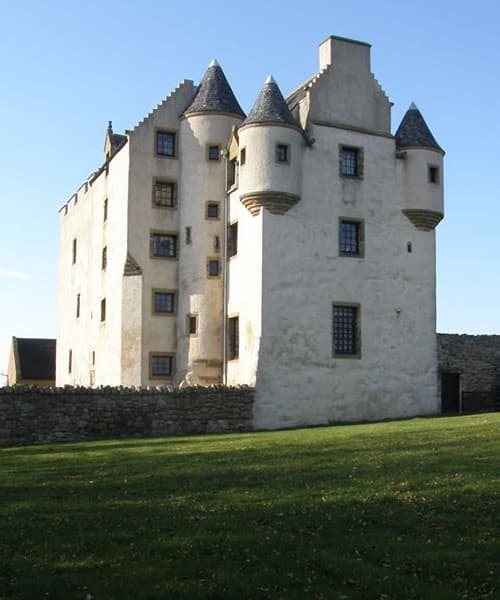
Fa'side Castle
Fa'side Castle, located in East Lothian, Scotland, is a remarkable example of a 15th-century L-plan keep that has witnessed centuries of Scottish history. Perched on a high ridge, the castle offers extensive views over the surrounding countryside and the Firth of Forth, underscoring its strategic importance since medieval times. The site has been occupied since at least the late 12th century, with early fortifications predating the existing structure.
The early history and construction
The earliest known fortification at the site of Fa'side Castle dates back to the late 12th century, associated with the first Earl of Winchester. However, the castle as it stands today primarily reflects the work of the Fawside family, who acquired the land in 1371. The Fawsides were influential landowners following the time of Robert the Bruce's rebellion, and they initiated the construction of the present castle during the 15th century.
The castle's original design is that of a classic L-plan keep, a common form in Scottish castle architecture during the late medieval period. This design typically features a main rectangular block with a smaller wing projecting at right angles, which provided both defensive advantages and additional living space. Fa'side Castle's structure includes a vaulted basement and several stories above, with a later-added turreted block enhancing its silhouette.
Significant historical events
The Rough Wooing and the Battle of Pinkie Cleugh
Fa'side Castle played a notable role during the turbulent period known as the Rough Wooing (1544–1548), a series of conflicts between Scotland and England. In 1547, just before the Battle of Pinkie Cleugh on 10 September, English forces burned the castle. This attack was devastating, reportedly suffocating or burning all those inside, underscoring the brutal nature of the conflict.
Mary, Queen of Scots' visit
The castle also has royal connections, as Mary, Queen of Scots, visited Fa'side in 1567. She departed from the castle on 15 June 1567 to engage in the Battle of Carberry Hill, a significant event in Scottish history that led to her eventual imprisonment. This visit highlights Fa'side Castle's importance as a noble residence and strategic location during the 16th century.
Later ownership and architectural developments
Following the Fawsides, the castle changed hands in 1631 when it was sold to a merchant named Hamilton from Edinburgh. During the late 16th century, the castle was extended to the south, reflecting evolving architectural tastes and the need for more comfortable living quarters. Notably, a surviving oak bed made for Margaret Fawside, who married Patrick Levingstone of Saltcoats, is preserved at the Biggar Museum, offering a tangible link to the castle's domestic history.
Decline, restoration, and modern use
By the 19th century, Fa'side Castle had fallen into ruin and was nearly demolished in the 1970s. Fortunately, restoration work commenced in 1976 and was completed by 1982, preserving the castle's historical fabric and architectural integrity. Today, Fa'side Castle remains in private ownership and functions as a bed and breakfast, combining heritage tourism with hospitality.
The estate also includes a stud farm and tourist accommodations in a tower and two cottages. The castle itself features five bedrooms, blending its medieval character with modern comfort. Despite its peaceful contemporary use, Fa'side Castle's history of conflict echoes into the present, having been involved in a notable embezzlement case in the early 2010s, which led to its sale for £1.9 million.
Architectural features and setting
Fa'side Castle is a fine example of a late medieval Scottish keep, characterized by its four-storey height and turreted additions. The vaulted basement would have served both defensive and storage purposes, common in castles of the period. The L-plan layout provided a strong defensive position while allowing for comfortable living spaces.
Its location on a high ridge not only offered commanding views but also strategic advantage against potential attackers. The castle's stone walls, battlements, and turrets reflect the military architecture of the time, designed to withstand sieges and assaults.
Interior and furnishings
While much of the interior has been adapted for modern use, historical artifacts like the oak bed associated with the Fawside family provide insight into the castle's past. The preservation of such items helps connect visitors with the daily lives of its former inhabitants.
Fa'side Castle in cultural heritage
Fa'side Castle stands as a testament to Scotland's turbulent history, from medieval conflicts to royal intrigues. It embodies the architectural evolution of Scottish castles and the resilience of heritage sites through restoration efforts. As a functioning bed and breakfast, it offers visitors a unique opportunity to experience living history amidst the scenic beauty of East Lothian.
Its proximity to significant historical battlefields and its association with notable figures like Mary, Queen of Scots, enhance its cultural importance. Fa'side Castle continues to attract interest from historians, architecture enthusiasts, and tourists seeking to explore Scotland's rich medieval past.
Frequently asked questions (FAQ)
- How do I visit Fa'side Castle?
- Fa'side Castle is privately owned and operates as a bed and breakfast. Visitors can stay overnight by booking accommodation in advance. Public access to the castle grounds may be limited, so it is advisable to contact the owners for visiting arrangements.
- What is the historical significance of Fa'side Castle?
- Fa'side Castle is historically significant for its role in the Rough Wooing and its association with Mary, Queen of Scots. It reflects 15th-century Scottish castle architecture and has witnessed key events in Scotland's medieval and early modern history.
- When was Fa'side Castle built?
- The current structure of Fa'side Castle was built in the 15th century, with earlier fortifications on the site dating back to the late 12th century.
- Can I stay overnight at Fa'side Castle?
- Yes, Fa'side Castle operates as a bed and breakfast with five bedrooms and additional tourist accommodations in a tower and cottages. Booking in advance is recommended.
- Why was Fa'side Castle burned in 1547?
- Fa'side Castle was burned by English forces during the Rough Wooing before the Battle of Pinkie Cleugh to weaken Scottish defenses and control the area.
Photo gallery

Information
Sources & official resources
Verify the information above using these authoritative references.
Loading map...
Visitor reviews
No reviews yet. Been here? Write the first review and help other travelers!
Write the first reviewVisited this castle? Share your experience
Your review helps other travelers and adds first-hand knowledge to our encyclopedia.


