Falkenberg
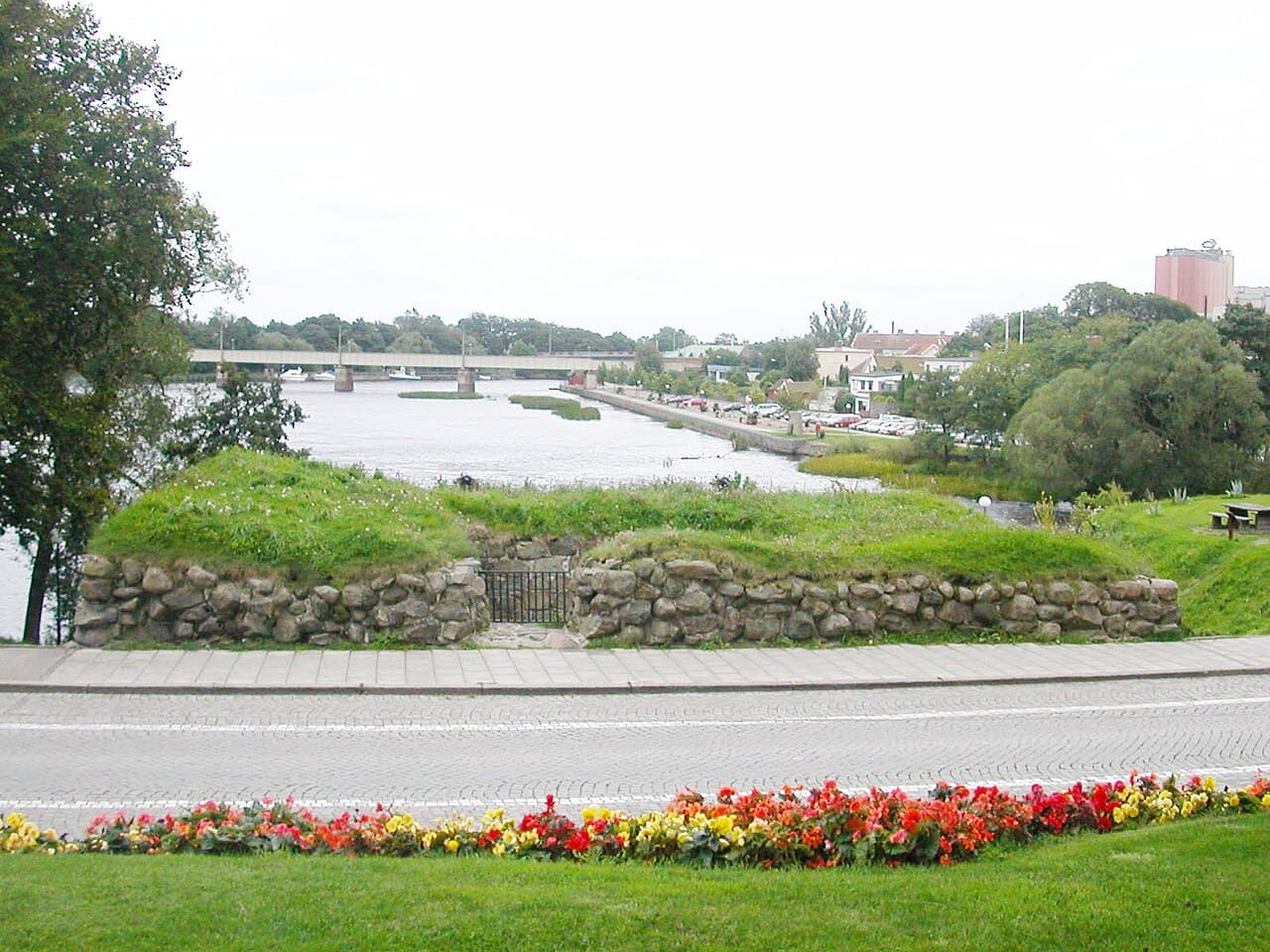
Falkenberg Castle, also known as Falkenbergshus, was a significant medieval fortification located in Halland County, Sweden, strategically positioned on the south bank of the river Ätran. Constructed in the 13th century, this bastioned fortress played a crucial role in the defense and administration of the region during the High Medieval period. Its location, approximately 60 meters from the southern abutment of the Falkenberg Bridge, was chosen to control river traffic and protect the important crossing point.
Historical context and strategic importance
The fortress was originally built during a time when Halland was a contested borderland between Denmark and Sweden. Falkenberg Castle served as a military stronghold and administrative center under Danish rule, reflecting the turbulent political landscape of the 13th century. Its position on the river allowed it to monitor and regulate trade and military movements along the Ätran, which was a vital waterway for the region.
The castle's presence significantly influenced the development of the nearby settlement, which was initially known as Ätraby. Over time, the settlement grew around the fortress, eventually adopting the name Falkenberg from the castle itself. This transformation illustrates the castle's role not only as a military installation but also as a catalyst for urban development in medieval Sweden.
Architectural features and design
Falkenberg Castle was constructed as a bastioned fortress, a style that became increasingly important in medieval military architecture for its enhanced defensive capabilities. The design incorporated angular bastions that projected outward from the main walls, allowing defenders to cover adjacent walls with crossfire and reducing blind spots vulnerable to attackers.
The fortress likely featured thick stone walls and robust gatehouses, typical of bastioned designs, which were intended to withstand sieges and artillery attacks. Its proximity to the river also suggests the possible inclusion of moats or water defenses, though specific details about these features are scarce due to the castle's current state.
Fortification layout
The layout of Falkenberg Castle would have included multiple bastions positioned at key points along the curtain walls, creating a polygonal shape optimized for defense. The bastions provided platforms for archers and later artillery, allowing defenders to repel assaults from various angles. The castle's internal structures likely comprised residential quarters, a great hall, storage facilities, and garrison accommodations.
The castle's role through the centuries
Throughout the High Medieval and subsequent periods, Falkenberg Castle remained a focal point of military and political activity in Halland. It witnessed numerous conflicts, including skirmishes related to the shifting control between Danish and Swedish forces. The castle's fortifications were adapted over time to meet evolving military technologies and threats.
By the early modern period, the strategic importance of Falkenberg Castle diminished as new military technologies and political changes rendered many medieval fortresses obsolete. The castle eventually fell into decline, and only ruins remain today, providing valuable archaeological insights into medieval fortification techniques in Scandinavia.
Legacy and cultural significance
Falkenberg Castle's legacy endures through its influence on the town of Falkenberg, which grew from the medieval settlement around the fortress. The castle's name is preserved in the town, linking modern Falkenberg to its medieval origins. The site is recognized for its historical importance and is a subject of archaeological study and cultural heritage preservation efforts.
Today, visitors to Falkenberg can explore the remains of the castle and learn about its role in the region's medieval history. Interpretive materials and guided tours highlight the castle's architectural features and its significance in the broader context of Scandinavian medieval fortifications.
Frequently asked questions (FAQ)
- When was Falkenberg Castle built?
- Falkenberg Castle was constructed in the 13th century during the High Medieval period.
- What type of castle is Falkenberg?
- Falkenberg Castle is a bastioned fortress, designed with angular bastions for improved defense.
- Where is Falkenberg Castle located?
- The castle is located in Falkenberg, Halland County, Sweden, on the south bank of the river Ätran.
- Can I visit the ruins of Falkenberg Castle?
- Yes, the ruins of Falkenberg Castle are accessible to the public and can be visited throughout the year.
- What is the historical significance of Falkenberg Castle?
- Falkenberg Castle played a key role in medieval military defense and influenced the development of the town of Falkenberg.
Photo gallery

Information
Current owner
Municipality
Loading map...
Visitor reviews
No reviews yet. Been here? Write the first review and help other travelers!
Write the first reviewVisited this castle? Share your experience
Your review helps other travelers and adds first-hand knowledge to our encyclopedia.