Fagaras Citadel
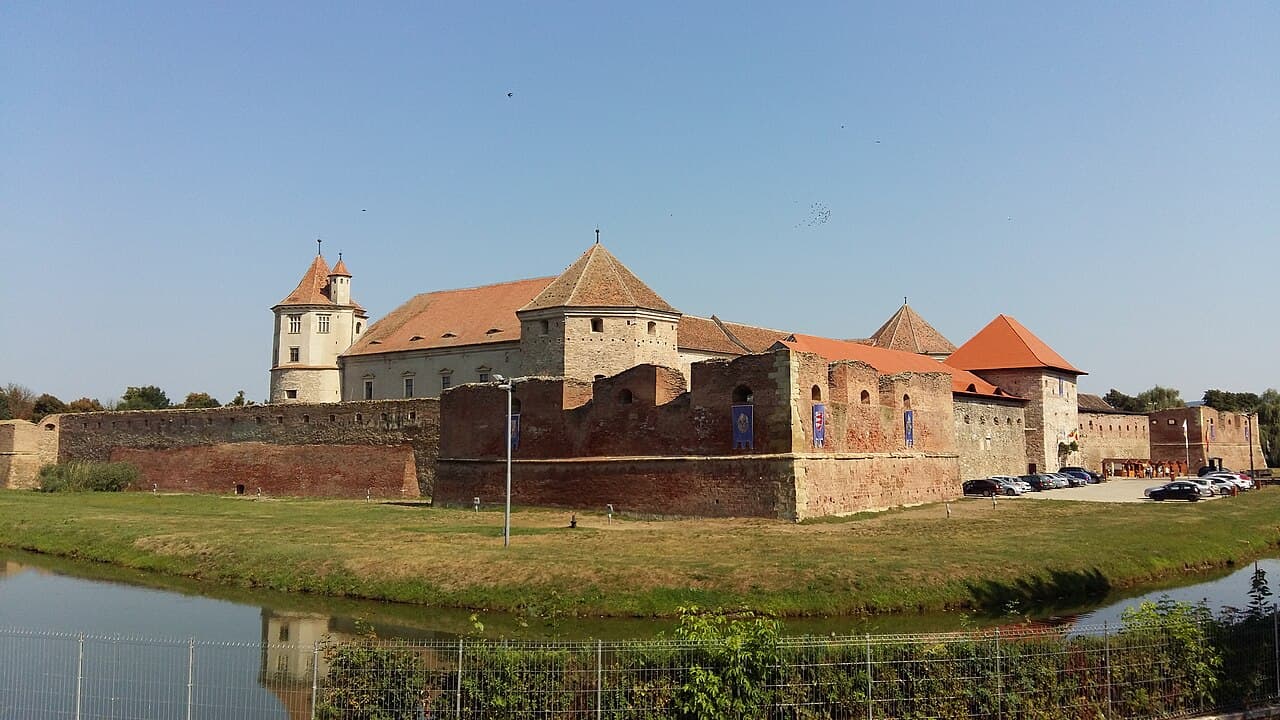
Fagaras Citadel stands as a monumental 14th-century fortress in the heart of Transylvania, Romania. This imposing stronghold was strategically constructed to defend against Ottoman incursions and served as a vital military bastion for Romanian, Austrian, and Hungarian princes throughout its history. Its robust medieval walls, towers, and fortifications exemplify the military architecture of the Late Medieval period, designed to withstand prolonged sieges and assaults.
Throughout the centuries, Fagaras Citadel played a crucial role in regional power struggles. It was notably the residence of Michael the Brave (Mihai Viteazul), the Romanian prince famed for uniting the three principalities of Wallachia, Moldavia, and Transylvania in 1600. This unification marked a significant moment in Romanian history, symbolizing the aspiration for a united Romanian state. The citadel became his home and a center of political and military activity during this turbulent era.
Architectural features and defensive design
The fortress exhibits a classic Late Medieval design with a nearly square layout, surrounded by thick stone walls and a deep moat. The walls are punctuated by multiple bastions and towers that provided vantage points for surveillance and defense. The main entrance is fortified with a massive gatehouse, and the interior includes a central courtyard surrounded by residential quarters, storage rooms, and a chapel.
Over time, the citadel was enhanced with Renaissance elements, reflecting the evolving military architecture of the 16th century. The incorporation of angled bastions allowed defenders to cover blind spots and improved artillery defense against cannon fire, a feature that was essential during the frequent Ottoman sieges.
Historical significance and notable events
Michael the brave and the unification of romania
Michael the Brave used Fagaras Citadel as a strategic base during his campaign to unite the Romanian principalities. His rule was marked by military prowess and political ambition, but also by intense conflict with neighboring powers. In 1601, Michael was assassinated under orders from the Austrian prince who sought to maintain control over Transylvania, ending his brief but impactful reign.
Lady stanca's imprisonment and legacy
Following Michael's assassination, his wife, Lady Stanca, was imprisoned within the citadel. She endured harsh conditions and humiliation, ultimately dying in captivity two years later. To commemorate her suffering and steadfastness, a bust was erected near the castle with an inscription honoring her as the "tortured and eternally inconsolable wife of Michael the Brave" who endured threats and humiliation for seeking justice for her people.
Transition to austrian military fortification and prison
After Transylvania fell under Austrian rule, Fagaras Citadel was repurposed as a military fortification and prison. Its strategic location and robust construction made it an ideal site for detaining prisoners and controlling the region. The fortress's role evolved from a princely residence to a symbol of imperial authority and military discipline.
Cultural heritage and preservation
Today, Fagaras Citadel is recognized as a significant cultural and historical monument in Romania. Its well-preserved structure offers visitors insight into medieval and early modern military architecture. The citadel hosts a museum that displays artifacts related to its history, including exhibits on Michael the Brave and the region's defense against Ottoman expansion.
The castle's preservation allows for educational and cultural activities, making it a focal point for tourism in Transylvania. Its imposing silhouette against the Carpathian backdrop continues to attract historians, architects, and travelers interested in Romania's rich medieval heritage.
Visitor information and accessibility
Fagaras Citadel is accessible to the public and offers guided tours that explore its extensive history and architectural features. Visitors can explore the courtyards, dungeons, defensive walls, and historical chambers that narrate the story of the fortress and its inhabitants. The site often hosts cultural events, reenactments, and exhibitions that enrich the visitor experience.
The best time to visit is during the warmer months when the weather allows full exploration of the outdoor fortifications and gardens. The castle is located in the town of Fagaras, which provides amenities and accommodations for tourists.
Frequently asked questions (FAQ)
- What is the historical significance of Fagaras Citadel?
- Fagaras Citadel is a prominent historical landmark in Romania, built in the 14th century. It served as a vital defensive fortress and royal residence, playing a crucial role in the region's military history and serving various rulers throughout the centuries.
- When was Fagaras Citadel constructed?
- The construction of Fagaras Citadel began in 1310, with significant modifications and expansions occurring over the following centuries. It was completed in its current form by the late 17th century, showcasing a blend of Gothic and Renaissance architectural styles.
- Can I visit Fagaras Citadel year-round?
- Yes, Fagaras Citadel is open to visitors year-round, although specific hours may vary by season. It is advisable to check the official website for the most up-to-date information on visiting hours and any potential holiday closures.
- What are the ticket prices for Fagaras Citadel?
- Ticket prices for Fagaras Citadel are generally affordable, with discounts available for students and seniors. Adult tickets typically range from 10 to 15 RON, while children under a certain age may enter for free.
- Is it possible to access Fagaras Citadel with limited mobility?
- Fagaras Citadel has been working to improve accessibility for visitors with limited mobility. However, due to the historical nature of the site, some areas may still present challenges, so it's recommended to inquire about specific accommodations prior to your visit.
- When is the best time to visit Fagaras Citadel?
- The best time to visit Fagaras Citadel is during the spring and early autumn when the weather is mild and conducive for exploring the outdoor grounds and scenic views. Summer can be quite busy with tourists, while winter may limit access due to weather conditions.
- What nearby attractions can I visit after Fagaras Citadel?
- After visiting Fagaras Citadel, you can explore nearby attractions such as the Fagaras Mountains, the beautiful Trăisteni Monastery, and the local museums highlighting the region's rich history. These sites offer a deeper insight into the culture and natural beauty of the area.
- What architectural styles can be seen at Fagaras Citadel?
- Fagaras Citadel showcases a unique blend of Gothic, Renaissance, and Baroque architectural styles. Visitors can appreciate the impressive stone walls, ornate towers, and intricate interior designs that reflect its historical evolution and strategic importance.
Photo gallery

Information
Loading map...
Visitor reviews
No reviews yet. Been here? Write the first review and help other travelers!
Write the first reviewVisited this castle? Share your experience
Your review helps other travelers and adds first-hand knowledge to our encyclopedia.