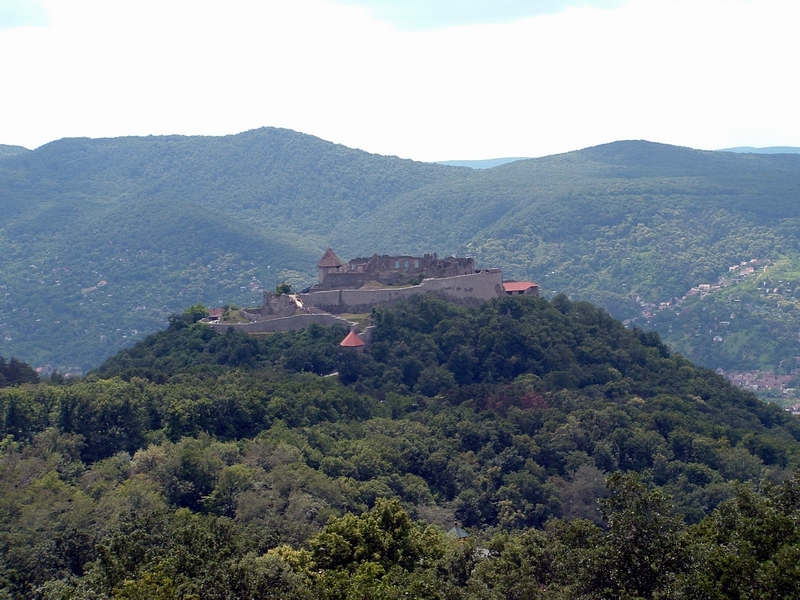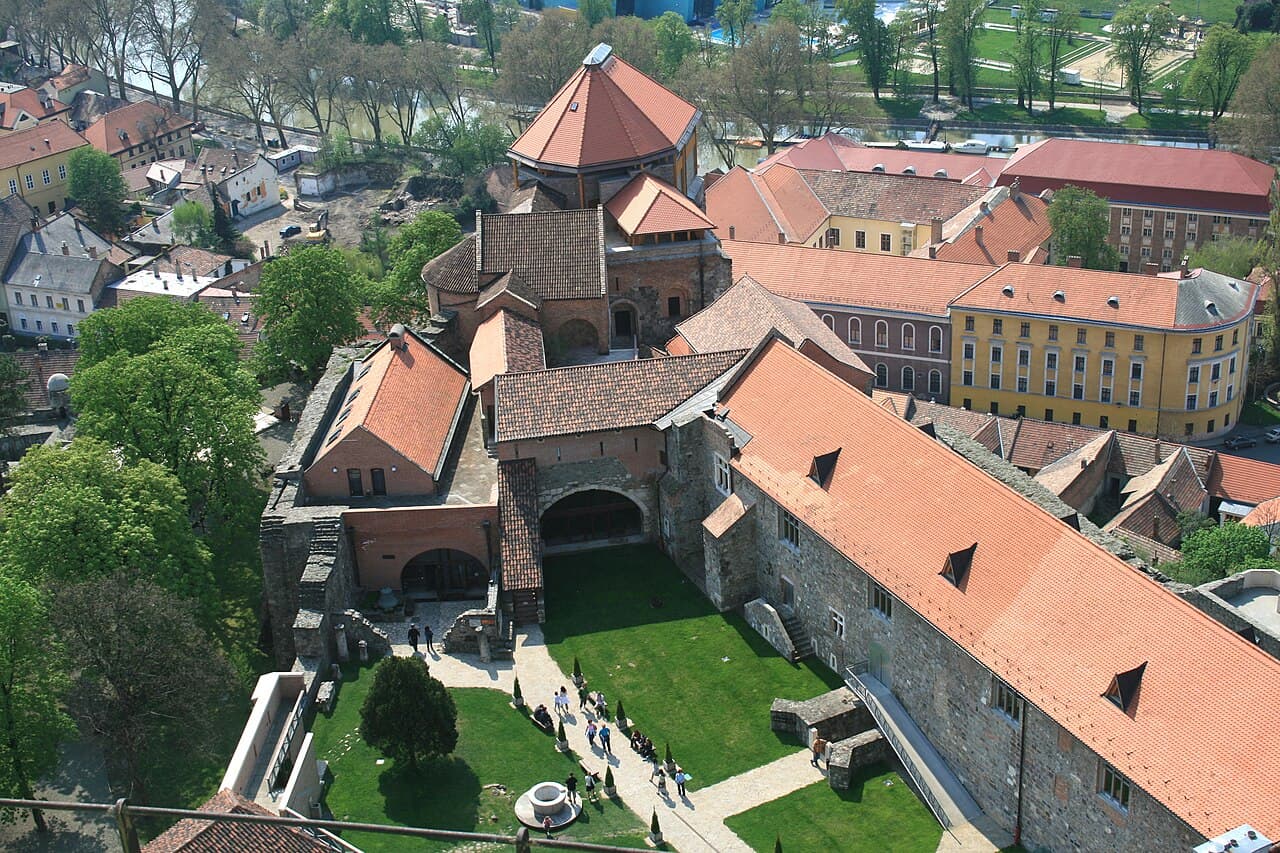
Esztergom Castle
Esztergom Castle stands as a significant historical and archaeological site in Hungary, marking the early medieval period of the nation's formation. Constructed in the 10th century on the foundations of an ancient Roman castrum, the castle was originally the royal residence and administrative heart of Hungary from the 10th century until the mid-13th century. This period encompasses the reign of the House of Árpád, during which Esztergom was not only the political capital but also the religious center of the kingdom.
The origins and early significance of Esztergom Castle
Esztergom’s strategic location on the banks of the Danube River contributed to its prominence. The castle was built to serve multiple roles: as a fortified royal residence, a seat of government, and a religious hub. The site was originally a Roman military camp, and its transformation into a medieval fortress illustrates the continuity of strategic importance across centuries. The castle's walls and fortifications were designed to protect the royal family and the administrative elite, as well as to symbolize the emerging Hungarian state’s authority.
Royal residence and political center
During the early medieval period, Esztergom was the kingdom’s capital until King Béla IV relocated the royal seat to Buda following the Mongol invasion in 1241. Until that time, the castle housed the royal court and served as the venue for important political decisions and ceremonies. The castle’s fortifications were enhanced over time to withstand external threats, including raids and invasions.
Religious importance and ecclesiastical authority
After the royal court moved to Buda, the castle and its palace were transferred to the archbishop of Esztergom, who developed the site into a religious center. The bishops fortified and decorated the castle, reinforcing its role as a spiritual and administrative center. The castle's proximity to various monasteries and religious institutions turned Esztergom into a focal point for ecclesiastical power in Hungary.
Medieval conflicts and changes in ownership
Esztergom Castle’s history was marked by numerous sieges and occupations reflecting the turbulent political landscape of medieval Hungary. In 1304, the castle was occupied and raided by forces of Wenceslaus II, the Czech king, during a period of dynastic struggle following the fall of the Árpád dynasty. Subsequently, the castle passed through the hands of several rulers, including Róbert Károly and Louis the Great, who both patronized the town and its fortifications.
The Ottoman threat and military struggles
The Battle of Mohács in 1526 marked a turning point for Esztergom and Hungary as a whole. The death of the archbishop of Esztergom in this battle symbolized the decline of the region’s religious and political stability. Between 1526 and 1543, Esztergom was besieged six times amid the conflict between two rival kings, Ferdinand I and John Zápolya, and the advancing Ottoman Empire. In 1530, Ferdinand I secured the castle, but in 1543 it fell to the forces of Sultan Suleiman I.
Ottoman rule and later Habsburg reconquest
Under Ottoman control, Esztergom became the center of a sanjak, an administrative district governing several counties. The castle served as a key fortress on the northwestern frontier of the Ottoman Empire. Throughout the 17th century, the castle and town were repeatedly besieged during the Ottoman-Habsburg wars, resulting in widespread destruction. By the time the Habsburgs reconquered the area, much of the medieval architecture was in ruins, with only uninhabitable remains left behind.
Post-medieval developments and current state
In 1761, the bishopric regained control of the castle ruins and initiated preliminary reconstruction efforts. The remains of the medieval churches of Saint Stephen and Saint Adalbert were cleared to make way for the construction of a new cathedral, marking a shift in the site's religious significance. Today, Esztergom Castle exists primarily as an archaeological site with extensive ruins that testify to its complex history as a royal, religious, and military center.
Architectural features and ruins
The castle's surviving ruins include fragments of defensive walls, foundations of ecclesiastical buildings, and remnants of the royal palace. These ruins reveal the castle's evolution from a fortified royal residence to a religious stronghold and military fortress. Archaeological excavations have uncovered artifacts and structural details that provide insight into the castle's construction techniques and the lifestyle of its medieval inhabitants.
Tourism and cultural heritage
Esztergom Castle attracts visitors interested in Hungary’s medieval history and archaeology. The site offers a glimpse into the early formation of the Hungarian state and the interplay between royal and ecclesiastical powers. The castle's ruins, combined with the nearby Esztergom Basilica, contribute to the area's cultural and historical landscape, making it a significant destination for heritage tourism.
Frequently asked questions (FAQ)
- What is the historical significance of Esztergom Castle?
- Esztergom Castle is one of the oldest and most important historical sites in Hungary, serving as the seat of the Hungarian kings and the archbishops. It played a crucial role in the formation of the Hungarian state, with its roots dating back to the 10th century. The castle is also a symbol of national identity and a key site in Hungary's religious history.
- When was Esztergom Castle built?
- The origins of Esztergom Castle trace back to the early 10th century, making it one of the oldest stone fortifications in Hungary. Over the centuries, it has undergone numerous renovations and expansions, reflecting various architectural styles from Romanesque to Gothic. Its long history is evident in the structure and layout of the castle.
- Can I visit Esztergom Castle?
- Yes, Esztergom Castle is open to visitors year-round, offering guided tours and exhibitions that showcase its rich history. Visitors can explore the castle's museum, enjoy stunning views of the Danube River, and learn about its significance in Hungarian heritage. It is advisable to check the official website for any special events or closures before your visit.
- What are the opening hours of Esztergom Castle?
- Esztergom Castle generally opens at 10 AM and closes at 5 PM, but hours may vary seasonally. During the peak tourist season, it may extend its hours to accommodate more visitors. Always verify the opening times on the official website before planning your visit.
- Is it possible to access Esztergom Castle with a wheelchair?
- Yes, Esztergom Castle is generally accessible for visitors with mobility challenges, but some areas may have limited access due to the castle's historic architecture. The main exhibition spaces are designed to be more accessible, and staff are available to assist visitors as needed. It's recommended to check in advance for specific accessibility options.
- When is the best time to visit Esztergom Castle?
- The best time to visit Esztergom Castle is during the spring (April to June) and early autumn (September to October) when the weather is mild and the surrounding scenery is beautiful. These seasons also tend to have fewer crowds, allowing for a more enjoyable experience. Summer can be hot and busy, while winter may limit certain activities.
- What are some nearby attractions to Esztergom Castle?
- In addition to Esztergom Castle, visitors can explore the Basilica of Esztergom, which is one of the largest churches in Hungary. The charming old town of Esztergom offers several museums, cafes, and shops that add to the cultural experience. Additionally, the stunning Danube Bend area is perfect for outdoor activities and scenic views.
- How much does it cost to visit Esztergom Castle?
- Ticket prices for Esztergom Castle are quite reasonable, typically ranging from 1,000 to 2,000 HUF for adults, with discounts available for students and seniors. Children under a certain age may enter for free. It's best to check the latest pricing on the official website or at the entrance for any updates or special offers.
Photo gallery

Photo by Karelj•Public domain
Information
Loading map...
Visitor reviews
No reviews yet. Been here? Write the first review and help other travelers!
Write the first reviewVisited this castle? Share your experience
Your review helps other travelers and adds first-hand knowledge to our encyclopedia.