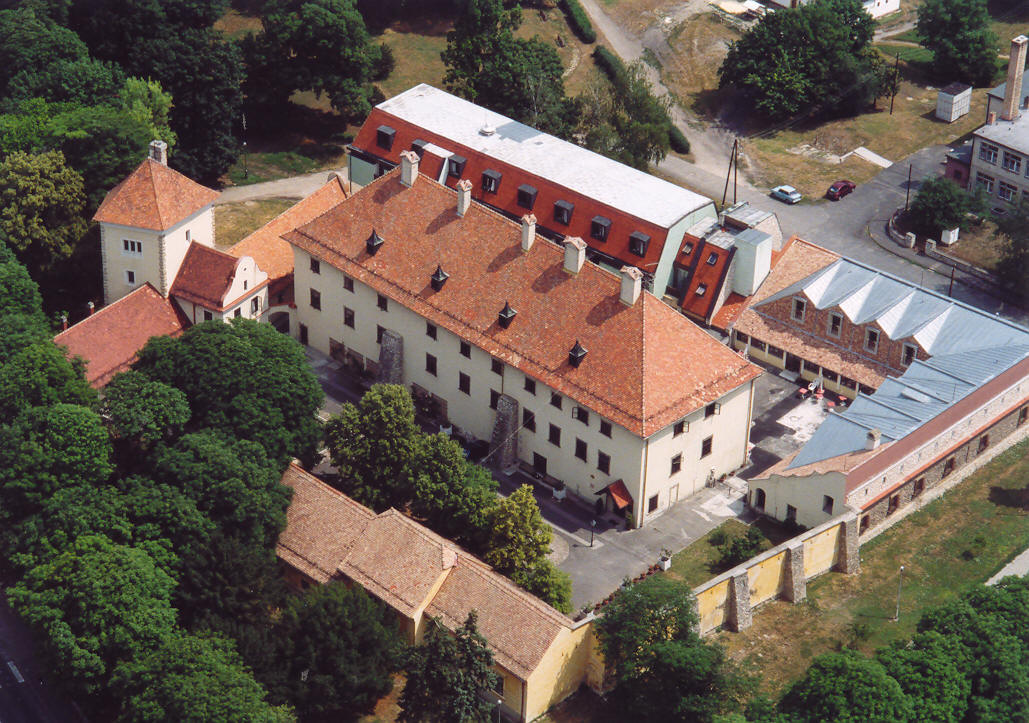
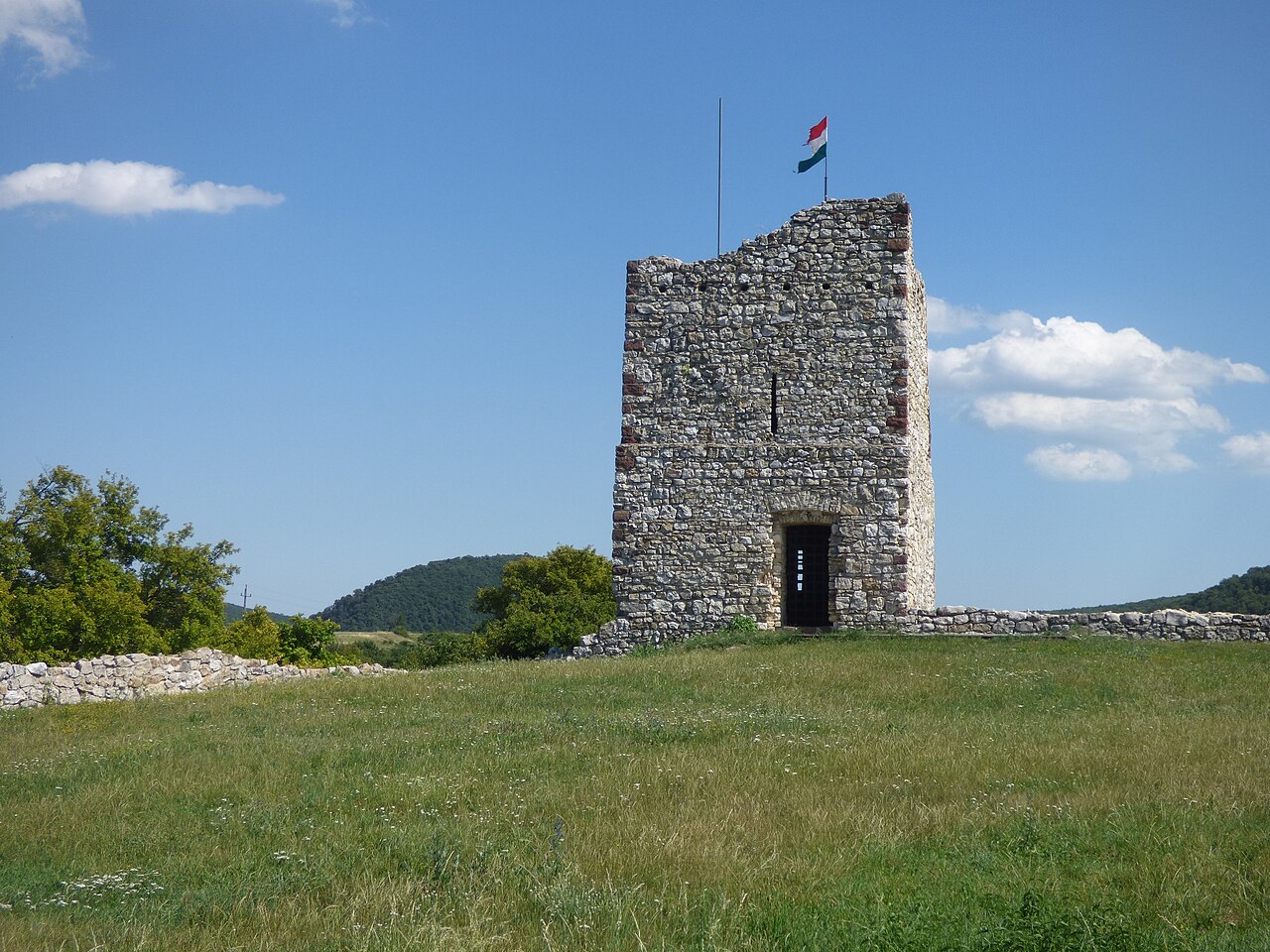
Castle of Döbrönte

Castle of döbrönte: medieval hill castle in hungary's bakony hills
Döbrönte, Hungary
Late Medieval (14th–15th c.)
Partially Restored

The Castle of Döbrönte stands as a significant medieval fortress located on the western slopes of the Bakony hills in Döbrönte, Hungary. Constructed in the 14th century, it served as both a fortified residence and a strategic defensive site within the noble estates of the region. The castle's history and architecture reflect the turbulent political and military developments of medieval and Renaissance Hungary.

Historical origins and early construction

The castle's foundation dates back to 1367, when King Louis I of Hungary granted permission to Benedek Himfy, the ispán (head) of Pozsony county and a trusted royal court member, to build a stone fortress on his estate in Döbrönte. This marked the creation of a noble stronghold intended to secure the Himfy family's territorial claims and influence in the region. The initial construction utilized durable stone masonry, typical of high medieval fortifications, incorporating defensive walls and a courtyard layout to support both defense and residence.

The himfy family's tenure and challenges

Over the following decades, the castle remained under the ownership of the Himfy family, though their political power gradually declined. By the early 15th century, the family faced increasing threats, including a notable assault in 1401 by troops linked to the Gyulaffy family, lords of nearby Rátót, who plundered the castle. The Himfys' fortunes continued to wane, culminating in their involvement in outlawed activities such as the 1464 raid on Pannonhalma Abbey, where they stole valuable religious artifacts. This act led to the confiscation of their estates by King Matthias Corvinus, who transferred ownership to Baron László Kanizsai.

Conflicts and ownership transitions in the late medieval period

Despite losing their estates, the Himfy family eventually regained possession of the castle but became embroiled in internal disputes and external conflicts. In 1469, forces loyal to Lord Lőrinc attacked Döbrönte, further destabilizing the family's control. Towards the end of the 15th century, a strategic marriage in 1499 between Orsolya Himfy and Ferenc Essegvári resulted in the castle estate being pledged under the Essegvári name, reflecting shifting alliances and property management during this volatile period.

Military modernization and decline in the 16th century

The 16th century brought significant military challenges following the Battle of Mohács in 1526, which exposed Hungary to Ottoman incursions. In response, the Castle of Döbrönte underwent modernization to enhance its defenses against artillery. A prominent feature added during this period was a large rondella, a rounded bastion constructed with thick walls and equipped with gunports for cannon fire. This adaptation illustrates the transition from traditional medieval fortifications to Renaissance military architecture designed to withstand cannon attacks.

By 1547, the local governing body, the Pozsony Diet, hired mounted soldiers to garrison the castle, emphasizing its continued strategic importance despite its relatively modest scale. A report by Palatine Tamás Nádasdy in 1555 confirmed the castle was still intact, but soon after, it likely suffered destruction during a Turkish raid. Following its ruin, local inhabitants repurposed stones from the castle for other constructions, leading to its abandonment.

Architectural features and surviving remains

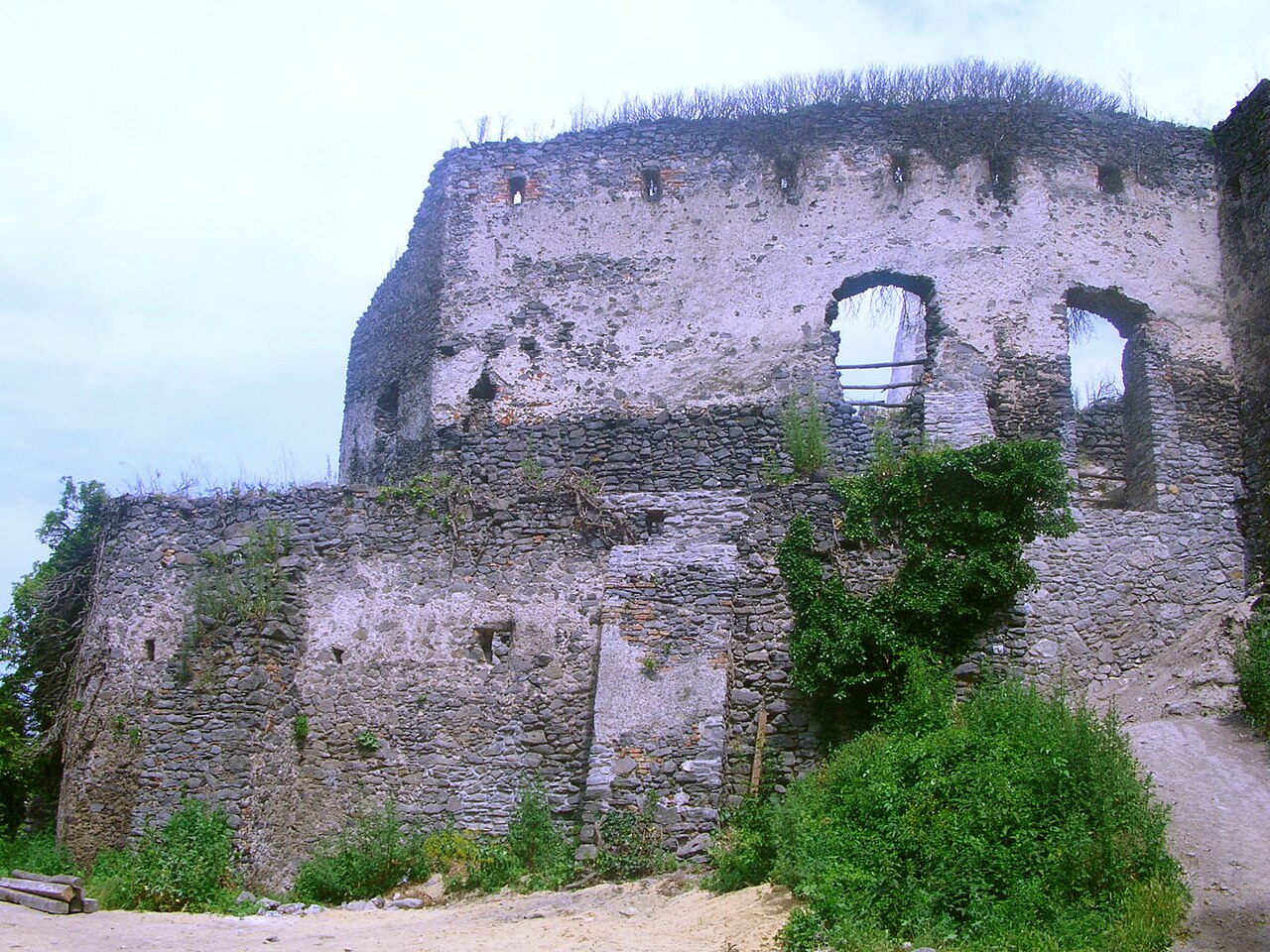
Situated on a prominent hilltop, the castle's ruins reveal the layout of an outer courtyard that once served as a defensive enclosure and working area. The remnants of a bastion can still be seen, illustrating the castle's defensive design. The stone walls, built using medieval masonry techniques, exhibit the castle's original durability and defensive intent.

The 16th-century rondella remains a defining architectural feature, showcasing the castle's adaptation to evolving military technology with thick walls and cannon openings. While much of the structure has deteriorated, partial restoration efforts in the 21st century have stabilized some walls, preserving the site's historical significance.

Portions of the castle are now low foundations or collapsed debris, with some areas buried and awaiting archaeological investigation. The castle's elevated position continues to dominate the landscape around Döbrönte and the Bakony hills, maintaining its historical presence.

Modern preservation and cultural significance

In recent decades, preservation efforts have aimed to stabilize and restore parts of the castle ruins. Notably, in 2018, the Castle of Döbrönte entered a twinning partnership with Szarvaskő Castle, establishing Hungary's first sister castle relationship. This initiative highlights the castle's cultural heritage and promotes awareness of its historical legacy within the broader context of Hungarian medieval fortifications.

Scale models displayed at Dinnyés Castle Park help visitors visualize the castle's original form, bridging past and present. The castle remains a testament to the region's medieval noble history, military architecture, and the complex socio-political changes that shaped Hungary from the Middle Ages through the Renaissance.

Frequently asked questions (FAQ)

What is the historical significance of the Castle of Döbrönte?
The Castle of Döbrönte is a notable example of medieval architecture in Hungary, showcasing the region's rich history. It dates back to the 13th century and has served various roles throughout its existence, from a defensive fortress to a noble residence.
When was the Castle of Döbrönte built?
The construction of the Castle of Döbrönte began in the 13th century, with significant modifications made in subsequent centuries. Its strategic location and robust design reflect the architectural styles and defensive needs of the time.
How do I get to the Castle of Döbrönte?
The Castle of Döbrönte is easily accessible by car and public transport from nearby cities. Local bus services connect Döbrönte to larger towns, making it a convenient destination for visitors.
What are the opening hours for the Castle of Döbrönte?
The Castle of Döbrönte is typically open to visitors from 10 AM to 6 PM, but it is advisable to check for seasonal changes in hours. Guided tours are available during these times, providing a deeper insight into the castle's history.
Can I take photographs inside the Castle of Döbrönte?
Yes, photography is allowed inside the Castle of Döbrönte, but flash photography may be restricted in certain areas to preserve the artwork and artifacts. Visitors are encouraged to capture the stunning architecture and picturesque surroundings.
Is it possible to book guided tours of the Castle of Döbrönte?
Absolutely! Guided tours of the Castle of Döbrönte can be booked in advance, allowing visitors to explore the castle's history with an expert guide. These tours often include access to areas that are not available to standard visitors.
What is the best time to visit the Castle of Döbrönte?
The best time to visit the Castle of Döbrönte is during the spring and early autumn months when the weather is mild and the surrounding landscapes are vibrant. These seasons also tend to have fewer crowds, providing a more enjoyable experience.
Are there any nearby attractions to visit?
Yes, the area surrounding the Castle of Döbrönte is rich in attractions, including beautiful hiking trails and other historic sites. Visitors can explore local villages, enjoy scenic views, and experience the natural beauty of Hungary.
What are the ticket prices for the Castle of Döbrönte?
Ticket prices for the Castle of Döbrönte are generally affordable, with discounts available for students and seniors. It is best to check the official website or visitor center for the most up-to-date pricing information.

Information

Hill Castle

Sources & official resources

Verify the information above using these authoritative references.

Loading map...

Visitor reviews

No reviews yet. Been here? Write the first review and help other travelers!

Write the first review

Visited this castle? Share your experience

Your review helps other travelers and adds first-hand knowledge to our encyclopedia.
Write a review

(5/5)

0/2000 characters

Your review will be visible after admin approval

Nearby castles

16.1 km
Somló Castle Ruins — Hungary castle

Somló Castle Ruins

Doba, Hungary

Somló castle ruins stand prominently on the northern slopes of Somló Hill in Hungary, a basaltic extinct volcanic formation rising to 431 meters. Constructed in the 13th century shortly after the Mongol Invasion, this hill castle played a significant role in the medieval defense system of the region. Its strategic location allowed it to control the surrounding landscape, including the fertile Somló wine region, offering commanding views that remain spectacular to this day. The castle’s history is marked by a succession of influential owners, including notable figures such as Pál Kinizsi, one of Hungary’s renowned military leaders, and Bishop Tamás Bakócz, who transformed the fortress during the late 15th century. Despite its military importance, the castle was never captured by the Ottoman Turks despite multiple attempts, underscoring its formidable defenses and strategic value. Historical development and ownership The earliest documented mention of Somló castle dates back to 1352, when King Louis I transferred ownership from a local noble to another prominent figure. Throughout the 14th and 15th centuries, the castle was royal property before passing into the hands of several noble families, including the Garai, Rozgonyi, Kanizsai, and Kinizsi families. The fortress was granted to Pál Kinizsi in 1479 by King Matthias Corvinus, cementing its military and political significance. The most transformative period occurred after Bishop Tamás Bakócz acquired the castle in 1495. He initiated extensive renovations, converting the medieval fortress into a Renaissance-style stronghold. These upgrades included the addition of a chapel tower with intricately carved stone door and window frames, enhancing both the castle’s defensive and spiritual functions. Bakócz also modernized the armaments, installing two large cannons, several smaller guns, and two bombards, reflecting the evolving nature of siege warfare during the period. In the 16th century, Somló castle remained a critical defensive position during the Ottoman wars. The castle successfully resisted multiple Turkish sieges, most notably in 1543, when Hungarian defenders inflicted heavy losses on the attackers. Ownership changed hands several times, with the Csoron family maintaining its military role but imposing heavy levies on the local peasantry. During the Rákóczi War of Independence in the early 18th century, the castle was controlled by Imperial forces until liberated by Vak Bottyán in 1707. After this period, the castle’s military importance declined, especially as nearby Sümeg rose as a dominant fortress in the region. By the late 18th century, the castle was largely abandoned and fell into ruin. Architectural features and layout Somló castle’s design is irregular, adapting to the natural contours of the basalt hill on which it sits. The fortress was surrounded by dense forests that provided natural concealment and hindered enemy approach. The castle complex consisted of multiple courtyards and internal towers, arranged to maximize defensive capabilities by utilizing the terrain. On the southern side, the castle was protected by a dry moat approximately eight meters wide. This moat was strategically bordered by a cliff on one end and sloping terrain on the other. A well-preserved wooden drawbridge once spanned the moat, controlling access through a narrow passage into the outer courtyard. The outer courtyard was enclosed by walls equipped with arrow slits, allowing archers to defend the castle effectively. Vaulted guard quarters along the western side provided accommodation and service spaces for soldiers. Access to the inner courtyard was gained via a second drawbridge and a narrow alley beneath a distinctive hexagonal tower. While once thought to be the castle kitchen, recent research supports its function as a chapel, consistent with renovations made by Bishop Bakócz. The chapel tower featured finely carved stone door and window frames, elevating the castle’s architectural and religious significance. The castle’s defenses were enhanced with artillery in the late 15th century, including two large cannons, smaller guns, and bombards, reflecting the adaptation to gunpowder weaponry. By the 18th century, only a few artillery pieces remained, indicative of the fortress’s declining military role. Decline, legend, and preservation Following its military decline, much of the castle’s stonework was dismantled and repurposed for construction of a later fortress at the foot of Somló Hill. The Erdődy family, who regained ownership in the 18th century, chose to build a new residence in the nearby village of Doba rather than restore the medieval ruins. The family retained possession until 1945, when the property was seized by Soviet forces. Local legend connects the castle to Pál Kinizsi, with a nearby basalt formation known as "Kinizsi Rock". The rock’s saddle-shaped depression is said to mark the spot where Kinizsi rested after climbing the hill to inspect the castle, symbolizing his enduring legacy in the region. After centuries of neglect, restoration efforts began in 2017 under Hungary’s National Castle Program. Today, the ruins are protected as a registered monument and can be reached only on foot or bicycle via a concrete path from the hill’s base. Visitors who make the ascent are rewarded with panoramic views of the surrounding Somló wine region and a tangible connection to Hungary’s medieval past. Visiting somló castle ruins Access to the castle ruins is limited to pedestrian and bicycle traffic, ensuring preservation of the site’s natural and historical integrity. The path to the castle is marked with signage, guiding visitors through the forested slopes of Somló Hill. The rugged terrain and elevation require moderate physical effort, making the visit suitable for those with reasonable fitness. The castle’s location offers not only historical insights but also stunning vistas over the Somló wine region, renowned for its unique volcanic terroir and wine production. Visitors can combine their historical tour with wine tasting experiences in the nearby villages, enriching their cultural and sensory appreciation of the area. Architectural significance and cultural heritage Somló castle is an exemplary high medieval hill castle that showcases the evolution of Hungarian fortress architecture from the 13th to the 18th century. Its adaptation to the basalt hill terrain, combined with Renaissance modifications by Bishop Bakócz, reflects the blend of military and religious functions typical of the period. The castle’s defensive features, including dry moats, drawbridges, arrow slits, and artillery embrasures, illustrate the transition from medieval fortifications to early modern warfare adaptations. The chapel tower and carved stone details highlight the cultural and spiritual aspirations of its owners, particularly in the late 15th century. Today, Somló castle ruins stand as a protected cultural heritage site, offering valuable insights into Hungary’s medieval history, architectural development, and regional identity. Its preservation and ongoing restoration contribute to the understanding and appreciation of the country’s rich historical landscape.

High Medieval (11th–13th c.)
Details
16.1 km
Castle of Devecser — Hungary castle

Castle of Devecser

Devecser, Hungary

The Castle of Devecser, also known as Esterházy Castle, stands as a significant historic monument in the town of Devecser, Hungary. Its origins trace back to the 15th century when the noble Choron family established a manor house on this strategic site. This early residence was destroyed in 1514 during the György Dózsa peasant uprising, a major revolt that swept through the region and caused widespread destruction. Following this upheaval, the estate was rebuilt and fortified amid the turbulent aftermath of the 1526 Battle of Mohács, which marked a turning point in Hungarian history by opening the way for Ottoman expansion. To adapt to the increased military threats, the manor was transformed into a small fortress with the addition of stone walls, a tall watchtower, and a surrounding moat. These defensive features allowed the castle to endure cavalry raids during the 1532 Ottoman campaign towards Vienna, although it was not equipped to withstand heavy artillery, limiting its role in the broader border defense system. Ownership and architectural evolution In 1583, the castle passed to the Nádasdy family through marriage, a wealthy baronial lineage, but under their stewardship, the fortress gradually declined. The estate changed hands again in 1626 when it was acquired by the influential Esterházy family. Initially obtained as a pledged property, it later became a hereditary possession. The Esterházys' loyalty to the Habsburg monarchy ensured the castle's preservation during periods when many similar fortifications were demolished as obsolete. The late 18th century marked a significant transformation for the castle. In 1790, under the guidance of architect R. Zillach, the building underwent extensive remodeling in the late Baroque style. This renovation shifted the castle's character from a military fortress to a more refined residential estate. The 19th century brought further changes with eclectic renovations led by Voyta Adolf. During this period, many of the outer defensive structures were removed, reflecting the reduced military importance of the site. Additionally, a nearby fishpond was converted into a Baroque garden, adding an aesthetic and recreational dimension to the castle grounds. Historical significance and modern use After World War II, the castle was nationalized and largely fell into disuse until it was managed by the local district administration. The castle gained renewed historical importance during the 1956 Hungarian Revolution, serving as the headquarters for local revolutionary forces. Since 1986, the castle has housed Devecser's public library, preserving some of its Renaissance architectural details within the rooms now used by the public. The castle's park suffered significant damage in 2010 due to a toxic red sludge spill from the nearby Ajka industrial accident. While the grass cover was devastated over a wide area, several mature trees survived, maintaining a fragment of the garden's original botanical heritage. Architectural features and layout Fortifications and defensive elements The Castle of Devecser is a multi-story structure with cellars that exhibits a blend of Gothic and Baroque architectural elements, reflecting its complex construction history. Initially built as a manor house, its conversion into a fortress included the erection of robust stone walls and the addition of a prominent watchtower designed for early warning and defense. The surrounding moat provided an extra layer of security during times of conflict. Residential and stylistic transformations The extensive remodeling in the late 18th and 19th centuries saw the removal of many external defensive structures, signaling a transition from military utility to residential comfort and aesthetic appeal. The adjacent fishpond's transformation into a Baroque garden park enhanced the castle's setting and remains a protected cultural landscape despite environmental challenges. Interior details and preservation Inside, the castle preserves remarkable Renaissance features such as door and window frames characterized by their period craftsmanship. The rooms currently housing the public library retain both Renaissance and Baroque fireplaces, demonstrating the layered architectural influences over centuries. Location and accessibility Strategically located just north of Devecser's urban area, the castle lies near key transport routes including road 7324, close to its junction with main road 8, and near the Székesfehérvár–Szombathely railway. This position underscores its historical role in regional defense and administration, providing easy access for visitors today. Environmental impact and conservation challenges The 2010 red sludge disaster severely affected the castle's surrounding park, destroying much of the grass cover and threatening the botanical heritage. Despite this, some mature trees survived, offering a living link to the site's historic garden design and underscoring ongoing conservation challenges in preserving both the castle and its landscape. Today, the Castle of Devecser stands as a testament to Hungary's layered history, architectural evolution, and resilience. Its blend of Gothic fortifications and Baroque residential elegance offers visitors a unique glimpse into the region's past, while its current function as a public library integrates cultural heritage with community life.

Late Medieval (14th–15th c.)
Details
21.3 km
Esseg Castle — Hungary castle

Esseg Castle

Hungary, Hungary

Esseg Castle stands as a remarkable example of a medieval hill castle in Hungary, located near the village of Bánd in Veszprém County. Established around 1270, the castle originated as a wooden complex before transitioning into a robust stone fortress during the 14th and 15th centuries. Its strategic position on a natural limestone rise overlooking the Séd stream provided both defensive advantages and control over the surrounding region. Early history and construction The castle first appears in historical records in 1309 under the name Castrum Scegh. Initially, it consisted of wooden residential and service buildings arranged around an irregular courtyard approximately 60 by 70 meters in size. The transition from wood to stone began in the early 14th century, reflecting evolving defensive needs and architectural trends. A significant addition was the Saint George chapel to the north, documented in 1332, which underscores the castle's role not only as a military stronghold but also as a center of religious life. Architectural evolution and fortifications Throughout the 15th century, Esseg Castle underwent extensive expansions and fortifications. The original wooden structures were replaced by stone buildings, including larger residential quarters along the eastern and western curtain walls. Outer towers projecting beyond the main walls were constructed to enhance the defensive perimeter. Among these, the rectangular eastern tower, known as the "old tower," remains one of the most prominent surviving elements, featuring preserved defensive features such as arrow slits. The castle's irregular layout encloses a central courtyard, which housed a cistern on the northern side, vital for collecting and storing water during sieges. The presence of a knights’ hall is also suggested, indicative of the castle's role as a noble residence and military hub. Historical significance and ownership struggles Esseg Castle was deeply entwined in the regional power dynamics of medieval Hungary. After its capture by the oligarch Ivan Kőszegi, who executed the then-owner, royal forces reclaimed the fortress after four years, restoring it to the Essegvári family. The family played a significant role in supporting Ladislaus of Naples during the Hungarian throne disputes, which led to King Sigismund confiscating the castle and assigning it to the ispán of Bakony. The castle also featured in the civil wars following King Albert's death in the 1440s, briefly falling under the control of Bishop Thomas Himfy. Legal contests over ownership continued until George Essegvári secured definitive control in 1472. The union of the Essegvári and Himfy families through marriage in the late 15th century marked a turning point, as the family shifted residence and the castle gradually declined. Decline and ruin The castle's destruction is believed to have occurred during a Turkish raid in 1552, after which it was abandoned. Local inhabitants repurposed its stones, accelerating its deterioration. Despite this, the castle remained a point of reference in regional disputes as late as 1641. Modern archaeological investigations and conservation efforts began in 2003, aiming to preserve the remaining structures and reveal more about its historical layout. Architectural remains and archaeological work Today, the ruins of Esseg Castle offer valuable insights into Gothic military architecture of the 14th and 15th centuries. The castle's surviving elements include the substantial eastern tower with its defensive arrow slits, sections of the eastern and southern curtain walls, and foundations of residential buildings. Excavations have revealed the layout of the courtyard, the location of the cistern, and the footprint of outer towers added during the castle's expansion. Conservation efforts have focused on stabilizing the ruins, particularly the southeastern tower and exposed wall segments. The site is registered as a protected Gothic monument under identifier 9788 in Veszprém County, reflecting its cultural and historical importance. Cultural and heritage significance Esseg Castle is a significant heritage site exemplifying the evolution of medieval Hungarian fortifications from wooden to stone construction. Its history encapsulates the turbulent political landscape of medieval Hungary, marked by noble family rivalries, royal interventions, and external threats such as the Ottoman incursions. The castle's ruins serve as a tangible link to this past, offering scholars and visitors alike a glimpse into the architectural and historical fabric of the region. Visitors to the site can explore the remains of the defensive structures and appreciate the strategic location that once made Esseg Castle a formidable fortress. The ongoing archaeological work continues to enrich understanding of the castle's role and development over centuries.

High Medieval (11th–13th c.)
Details