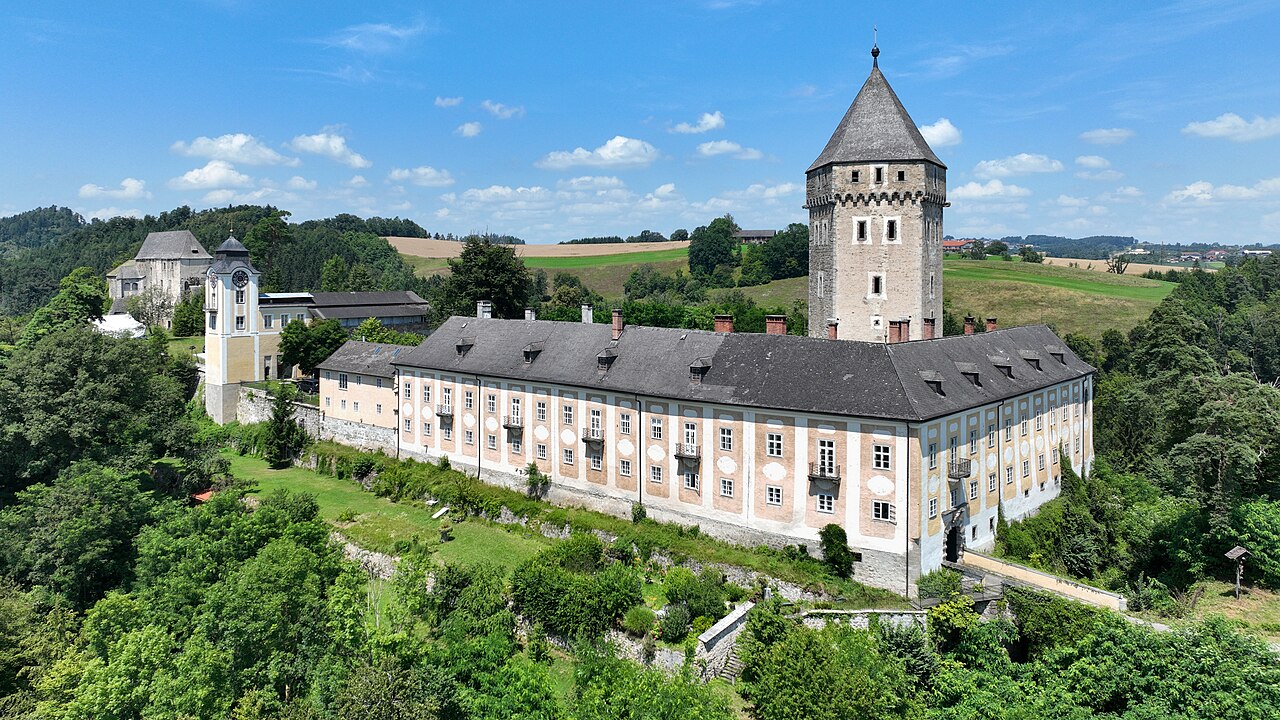
Eschelberg Castle
Eschelberg Castle, located in Eschelberg, Austria, is a notable example of a Renaissance castle with a rich architectural history dating back to the early 13th century. The first documented mention of the castle was in 1209, indicating its medieval origins. While the current structure predominantly reflects the 16th-century Renaissance style, it incorporates remnants of an earlier medieval fortress, particularly visible on its southern side.
Historical background and early origins
The site of Eschelberg Castle has been significant since the High Medieval period, serving as a defensive stronghold and noble residence. The earliest records from 1209 suggest a medieval castle existed here, likely constructed to oversee and protect the surrounding territory. Over the centuries, the castle underwent numerous modifications, reflecting changes in architectural styles and defensive needs.
Renaissance transformation in the 16th century
During the 16th century, the castle was extensively rebuilt and expanded in the Renaissance style. This transformation introduced characteristic features such as symmetrical layouts, ornamental façades, and larger windows compared to the earlier medieval fortifications. The Renaissance period emphasized comfort and aesthetics alongside defense, and Eschelberg Castle's reconstruction reflects this shift.
Architectural features
The castle's design includes a central courtyard typical of Renaissance residences, surrounded by robust walls and towers that retain some medieval defensive elements. The southern side of the castle preserves remains of the older medieval structure, offering a visible contrast between the two periods. These remnants include parts of the original curtain walls and possibly a defensive tower, which highlight the castle's evolution over time.
Current use and preservation
Today, Eschelberg Castle serves primarily as a venue for events and weddings, capitalizing on its historic ambiance and picturesque setting. The castle's preservation allows visitors to appreciate its architectural heritage, while its adaptive reuse supports its maintenance and public engagement. Although not a fully restored museum, the castle remains an important cultural landmark in the region.
Location and regional significance
Situated in the town of Eschelberg within Austria, the castle is part of the broader historical landscape of Upper Austria, a region known for its numerous castles and historic sites. Eschelberg Castle contributes to the cultural tourism of the area, attracting visitors interested in Renaissance architecture and medieval history.
Visitor information and accessibility
While primarily used for private functions, the castle occasionally opens for public tours and cultural events, providing insights into its architectural and historical significance. Visitors are encouraged to check local listings for event schedules and visiting hours. The castle's setting offers a unique experience of Renaissance architecture blended with medieval heritage.
Frequently asked questions (FAQ)
- When was Eschelberg Castle first documented?
- Eschelberg Castle was first documented in 1209, indicating its origins in the medieval period.
- What architectural styles are visible at Eschelberg Castle?
- The castle features a blend of medieval remains and Renaissance architecture from its 16th-century reconstruction.
- Is Eschelberg Castle open to the public?
- The castle is primarily used for events and weddings but occasionally allows public tours and cultural events.
- Where is Eschelberg Castle located?
- Eschelberg Castle is located in the town of Eschelberg, in the Upper Austria region of Austria.
- What is the current condition of Eschelberg Castle?
- The castle is partially preserved, with visible medieval remains and Renaissance structures still intact.
Information
Loading map...
Visitor reviews
No reviews yet. Been here? Write the first review and help other travelers!
Write the first reviewVisited this castle? Share your experience
Your review helps other travelers and adds first-hand knowledge to our encyclopedia.