Eresburg
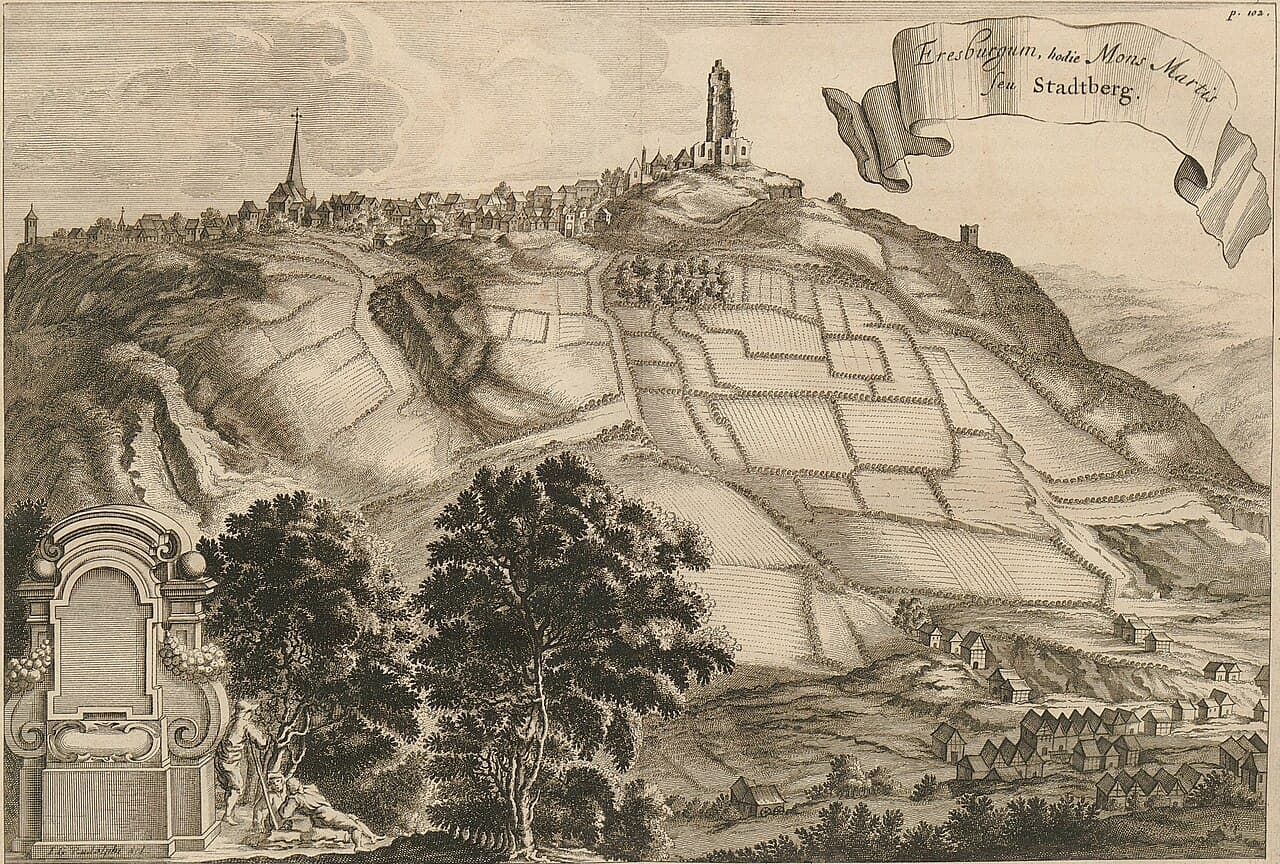
Eresburg castle is recognized as the largest and most prominent Old Saxon refuge castle (Volksburg), situated near the village of Obermarsberg in the borough of Marsberg, within the Hochsauerlandkreis county of Germany. This hill castle occupies a strategic position on the plateau of the Eresberg, a low table hill rising approximately 130 to 150 metres above the Diemel river, a tributary of the Weser. It lies at the southern edge of the historic Saxon Gau of Engern, bordering the Duchy of Franconia, marking it as a significant frontier fortress in the Early Medieval period.
Historical significance and context
The Eresburg holds a crucial place in the history of the Saxons during the Early Medieval era, particularly in the context of the Saxon Wars against Charlemagne in the late 8th and early 9th centuries. It served as a refuge and defensive stronghold for the Saxons resisting Frankish expansion. The castle's location on the Eresberg plateau provided natural defensive advantages, making it a formidable site for shelter and military operations.
Historical records indicate that the Eresburg was a major center of Saxon resistance. It was reportedly besieged and captured by Charlemagne’s forces during his campaigns to subdue the Saxons and integrate their territories into the Carolingian Empire. The castle's strategic position near the border with the Duchy of Franconia underscored its importance as a frontier fortress controlling access between the Saxon lands and Frankish domains.
Architectural features and layout
The castle was constructed as a hill castle, utilizing the natural topography of the Eresberg plateau to enhance its defenses. The plateau’s elevation of 130–150 metres above the Diemel river allowed for extensive visibility over the surrounding landscape, crucial for early warning of approaching enemies. The castle's design likely included typical Saxon fortification elements such as earthen ramparts, wooden palisades, and ditches, characteristic of refuge castles of that period.
While much of the original structure no longer survives, archaeological investigations have revealed traces of fortification walls and defensive earthworks. The site’s extensive size distinguishes it from smaller refuge castles, indicating its role as a major stronghold rather than a minor local fortification. Its position on a low table hill rather than a steep rocky outcrop classifies it as a hill castle rather than a rock castle.
Geographical setting and strategic importance
The Eresberg plateau is situated above the Diemel river valley, which was a vital natural corridor in the region. Control of this area allowed the Saxons to monitor and regulate movement along the river and adjacent routes, which were important for trade and military campaigns. The castle’s proximity to the border of the Duchy of Franconia made it a frontline defense point against Frankish incursions.
The surrounding landscape features mixed forests and rolling hills typical of the Sauerland region, providing natural resources and concealment for the castle’s inhabitants. The elevated position also facilitated communication with other Saxon fortifications through visual signals, an important aspect of early medieval military strategy.
Archaeological findings and preservation status
Excavations at the Eresburg site have uncovered remnants of fortification ditches, post holes from wooden structures, and artifacts dating to the Early Medieval period, confirming its use as a refuge castle. These findings contribute valuable insights into Saxon defensive architecture and settlement patterns during a turbulent historical era.
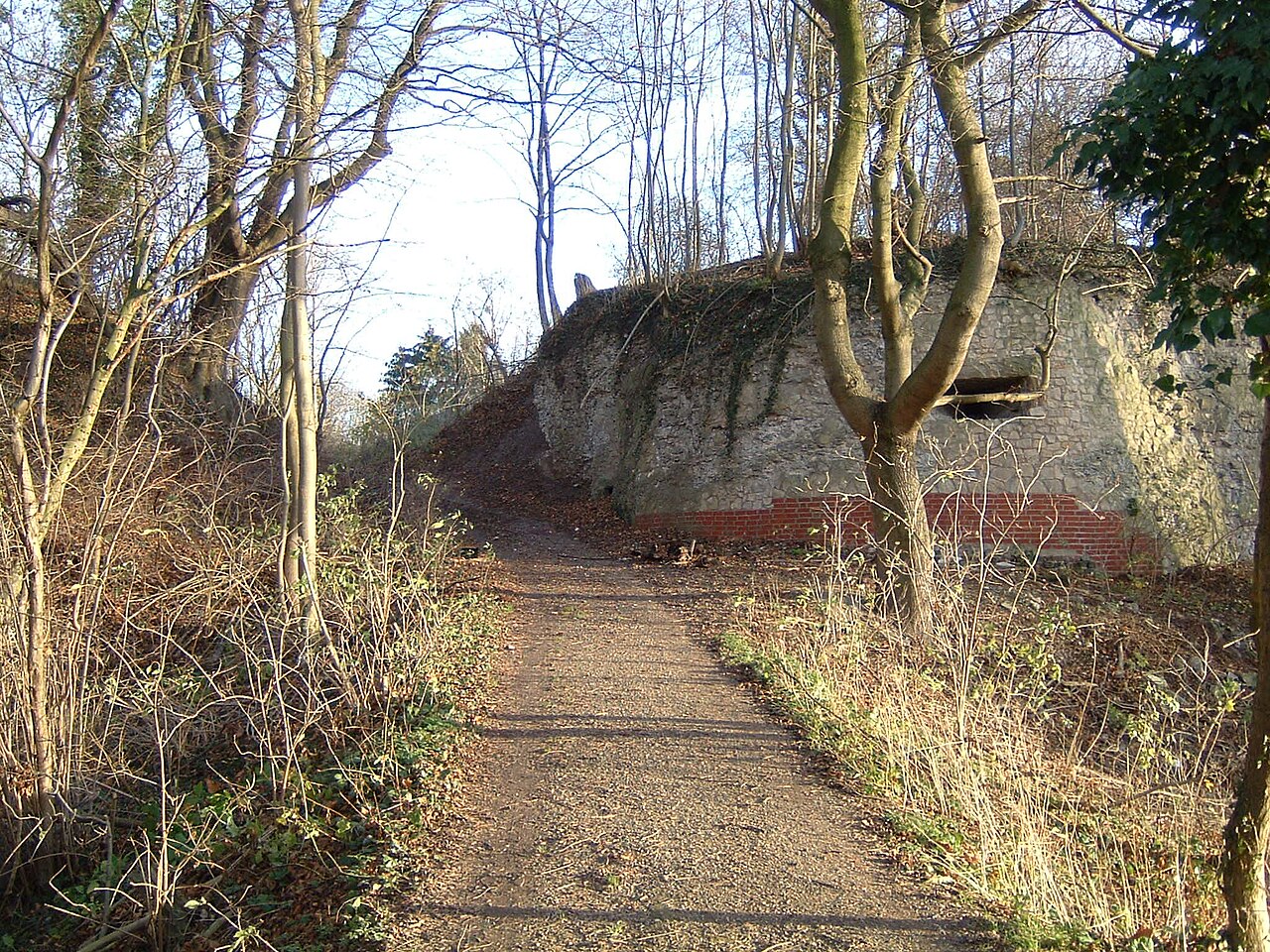
Today, the site is considered an important archaeological location rather than a fully preserved castle. Visible remains are limited, and much of the original fortifications have been lost to time and natural erosion. The castle is classified as a hill castle in ruins condition, with ongoing efforts to study and protect the site from further degradation.
Legacy and cultural significance
Eresburg castle symbolizes the resilience of the Saxon people during the Carolingian expansion and remains a key historical landmark in the Sauerland region. It offers insights into the military and social structures of early medieval Saxony and serves as a focal point for regional heritage and identity.
The site attracts historians, archaeologists, and visitors interested in early medieval fortifications and Saxon history. While it lacks extensive above-ground structures, its historical importance and archaeological value continue to make it a subject of study and preservation efforts.
Frequently asked questions (FAQ)
- When was Eresburg castle built?
- Eresburg castle dates back to the Early Medieval period, specifically during the Saxon Wars in the late 8th century.
- What is the historical significance of Eresburg castle?
- Eresburg castle was a major Saxon refuge and defensive stronghold against Frankish expansion during the Saxon Wars led by Charlemagne.
- Can visitors see remains of Eresburg castle today?
- Today, Eresburg exists mainly as archaeological ruins with limited visible remains, but the site is important for historical and archaeological study.
- Where is Eresburg castle located?
- Eresburg castle is located near Obermarsberg in the Hochsauerlandkreis county of North Rhine-Westphalia, Germany.
- What type of castle is Eresburg?
- Eresburg is classified as a hill castle, built on a plateau providing strategic defensive advantages.
Photo gallery

Photo by Johann Georg Rudolphi•Public domain
Information
Loading map...
Visitor reviews
No reviews yet. Been here? Write the first review and help other travelers!
Write the first reviewVisited this castle? Share your experience
Your review helps other travelers and adds first-hand knowledge to our encyclopedia.