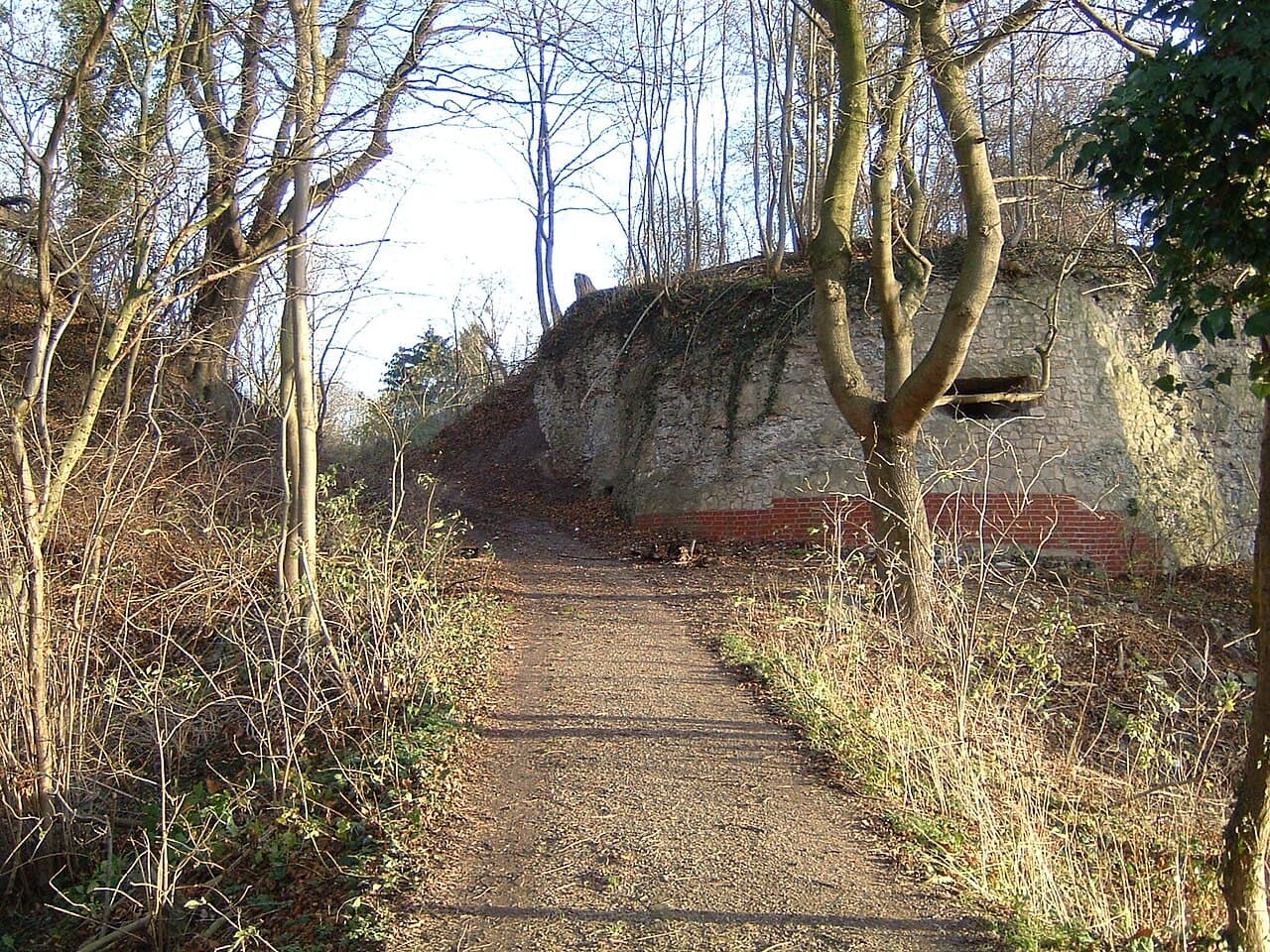
Calenberg Castle
Calenberg Castle, located on Calenberg hill in the municipality of Warburg, Germany, is a remarkable example of a medieval hill castle with origins dating back to the mid-13th century. Constructed around 1250 by the lords of Berkule, the castle was strategically positioned to oversee and control the surrounding territory, reflecting its military and administrative importance during the High Medieval period.
The earliest record of the castle appears in a document from 1299, marking its emergence as a significant local stronghold. In 1307, ownership was granted by Bishop Otto of Paderborn to the noble Westphalian family von Papenheim, who adopted the name Rave von Calenberg to signify their association with the site. By 1326, a treaty confirmed the family's possession and recognized the castle not only as a fortress but also as a burgeoning town, highlighting its growing regional prominence.
Historical conflicts and ownership transitions
The death of the last Rave von Calenberg lord in 1464 triggered a dispute over the castle's inheritance between Landgrave Ludwig II of Hesse and the Bishop of Paderborn. This conflict, known as the Hessen-Paderbornische Fehde, lasted until 1471, underscoring the castle's strategic value in the region's political landscape.
19th-century transformation and romantic restoration
In the 19th century, Calenberg Castle underwent significant changes under the ownership of Hugo Schuchard, a wealthy merchant with international ties. Acquiring the estate in 1868, Schuchard demolished many of the surrounding farm buildings, preserving only one for conversion into service apartments. He also commissioned the construction of a new manor house, Neu Calenberg, located in the valley below the hill, marking a shift from the castle's defensive origins to a more residential estate.
Between 1880 and 1884, architect Heinrich Wiethase of Cologne led an extensive renovation that reimagined the castle in a romantic medieval style popular in the period. This included linking two main sections of the castle with a new intermediate building and adding a large stair tower featuring a distinctive circular walkway designed to offer panoramic views of the surrounding landscape. The restoration preserved the castle's original walls and roof, emphasizing its medieval character while enhancing its aesthetic appeal.
20th century and modern use
Following the death of Hugo Schuchard in 1886, his widow, Luise Erbslöh, made the castle her residence until her passing in 1927. Their son, Hugo Schuchard Jr., inherited the property but used it intermittently. In 1938, a coal central heating system was installed, representing one of the few modern updates before World War II.
After World War II, the castle served as temporary housing for refugees and displaced persons from former German territories in the east, reflecting its continued role in regional history. In 1972, businessman Karl-Heinz Rehkopf purchased Calenberg Castle and undertook a thorough restoration aimed at preserving its historical integrity.
Architectural features and layout
Calenberg Castle occupies nearly half of the summit of Calenberg hill, originally surrounded by numerous farm buildings that were mostly removed in the late 19th century. The castle's layout consists of two main sections connected by an intermediate structure introduced during the 1880s renovation. Architect Heinrich Wiethase embraced a romantic medieval architectural style, enhancing the fortress’s fairy-tale appearance while respecting its historical roots.
The centerpiece of the renovation is a massive stair tower with an uncommon circular walkway, designed to facilitate movement within the castle and provide sweeping views of the countryside. The original medieval walls and roof remain structurally sound and were carefully preserved, reinforcing the castle's authentic medieval character.
Surrounding the castle, the grounds were transformed into formal gardens with newly planted trees on the hill slopes, contributing to the picturesque setting. Detailed architectural plans from the 1880 renovation document the castle’s ground floor layout, southern façade, and a cross-section of the palas—the main residential building—offering valuable insight into the castle’s spatial organization.
Defensive and residential elements
The castle’s original defensive features include thick stone walls and a strategic hilltop position, typical of High Medieval hill castles. Over time, especially during the 19th-century renovations, the focus shifted towards residential comfort and aesthetic appeal, blending medieval fortification elements with romantic architectural flourishes.
Cultural significance and preservation
Calenberg Castle stands today as a testament to the layered history of medieval fortifications adapted through centuries of change. Its blend of authentic medieval structures and 19th-century romantic restoration offers a unique glimpse into both the military and residential evolution of hill castles in Germany.
The castle's preservation efforts, particularly those initiated by Karl-Heinz Rehkopf in the 1970s, have ensured that Calenberg Castle remains a well-preserved historical monument. It continues to dominate the hilltop landscape, with the newer manor Neu Calenberg below illustrating the estate’s transition from a fortified stronghold to a noble residence.
Visitors to Calenberg Castle can appreciate its architectural complexity, historical significance, and scenic hilltop location, making it an important cultural landmark in the Warburg region.
Frequently asked questions (FAQ)
- What is the historical significance of Calenberg Castle?
- Calenberg Castle, located in Warburg, Germany, dates back to the 14th century and played a crucial role in the region's defense. It served as a residence for various noble families and was strategically important during various conflicts, showcasing the architectural evolution of fortifications in medieval Germany.
- When was Calenberg Castle built?
- Construction of Calenberg Castle began in 1322, making it a significant historical landmark in the area. Over the centuries, it has undergone various renovations and expansions, reflecting the architectural styles and needs of different eras.
- What are the opening hours for Calenberg Castle?
- Calenberg Castle is typically open to visitors from 10 AM to 5 PM, Tuesday through Sunday. However, it's advisable to check the official website for any seasonal variations or special event closures before planning your visit.
- Can I visit Calenberg Castle year-round?
- Yes, Calenberg Castle is generally open for visits throughout the year. However, some areas may be restricted during the winter months due to weather conditions, so it’s best to verify in advance.
- Is it possible to access Calenberg Castle with mobility aids?
- Accessibility at Calenberg Castle is somewhat limited due to its historical structure. While there are some paths that can accommodate visitors with mobility aids, certain areas, especially those with stairs, may not be fully accessible.
- What are the ticket prices for visiting Calenberg Castle?
- Tickets to Calenberg Castle are reasonably priced, typically around €5 for adults and €3 for children and seniors. Group discounts may also be available, so be sure to inquire if you are visiting with a larger party.
- When is the best time to visit Calenberg Castle?
- The best time to visit Calenberg Castle is during the spring and early autumn months when the weather is pleasant, and the surrounding landscape is vibrant. Additionally, these seasons often feature fewer crowds, allowing for a more enjoyable experience.
- What nearby attractions can I explore after visiting Calenberg Castle?
- After exploring Calenberg Castle, visitors can enjoy nearby attractions such as the historic town center of Warburg, which features charming medieval architecture, and the beautiful surrounding countryside, perfect for hiking and outdoor activities. Don't miss the chance to visit local museums that highlight the region's rich history.
Photo gallery

Information
Loading map...
Visitor reviews
No reviews yet. Been here? Write the first review and help other travelers!
Write the first reviewVisited this castle? Share your experience
Your review helps other travelers and adds first-hand knowledge to our encyclopedia.



