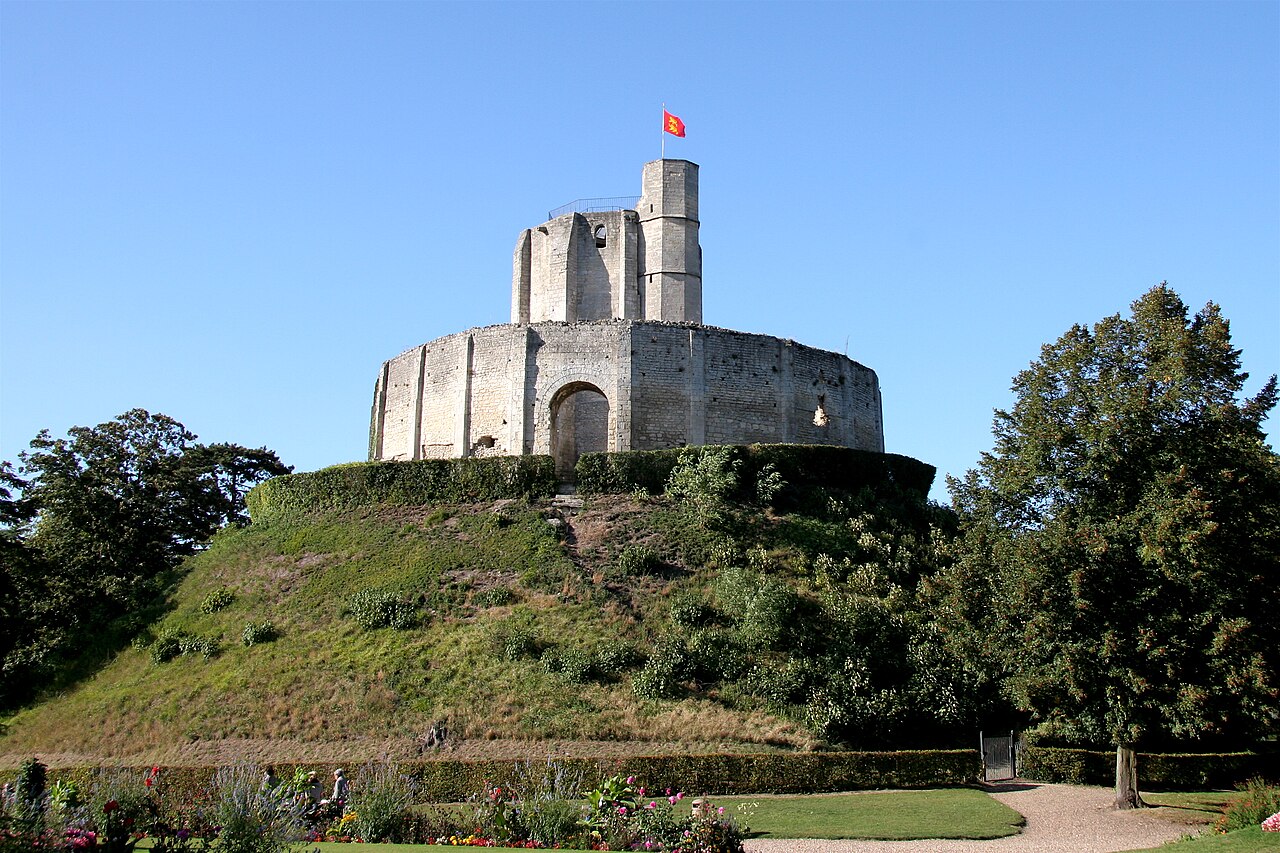
Éragny-sur-Epte Castle
Éragny-sur-Epte Castle, also known locally as the Manoir de Princes de Conti, is situated in the village of Éragny-sur-Epte in the Oise department of northern France. Despite its castle-like appearance, it is fundamentally a Renaissance manor house rather than a fortified castle. This distinction is important in understanding its architectural features and historical function.
Origins and construction in the 16th century
The manor was constructed in the early 16th century by the Du Perthuis family, who were the lords of Éragny dating back to the Middle Ages. The Du Perthuis lineage held the estate for several centuries, reflecting the typical pattern of noble landownership in France during this period. The manor's architecture embodies the Renaissance style, characterized by an emphasis on symmetry, proportion, and the incorporation of classical elements, although its design retains some traditional medieval features.
Architectural features and layout
The manor exhibits a rectangular plan with a central residential block flanked by outbuildings that historically served agricultural and service functions. The façades are marked by evenly spaced windows with stone mullions and lintels, typical of Renaissance domestic architecture in northern France. While the manor lacks defensive structures such as battlements or a moat, it does possess a modest gatehouse and enclosed courtyard, giving it a fortified appearance that likely contributed to its local designation as a castle.
The princes of Conti and subsequent ownership
In 1736, the manor was acquired by Louis-François de Bourbon-Conti, a member of the prominent Bourbon-Conti branch of the French royal family. This acquisition linked the estate to one of the most influential noble families in France. Although the manor was sold by his son, Louis-François-Joseph de Bourbon-Conti, in 1781, the property retained the name Manoir de Princes de Conti in recognition of this period of ownership.
Following the sale, the manor passed through several owners, many of whom used the property as a rental estate rather than a primary residence. This change in use reflects broader social and economic shifts in post-Renaissance France, where many noble estates were adapted for agricultural or income-generating purposes.
Damage, adaptation, and 19th to 20th-century use
A significant event in the manor's history was a fire around 1859, which partially destroyed the main building. The damage led to a decline in the manor's status and function. The outbuildings on the estate grounds were converted for agricultural use and became part of a farm complex. Meanwhile, the manor house itself found a new role in the mid-20th century when it served as a residence for the local mayor, illustrating adaptive reuse of historic properties in rural France.
Current condition and accessibility
Today, Éragny-sur-Epte Castle remains privately owned and is not open to the public. The manor is partially preserved, with some restoration likely needed due to the historical fire damage and subsequent changes. While it may not be a major tourist destination, the manor's exterior can be appreciated by visitors passing through the area, offering a glimpse into the architectural and social history of a Renaissance-era noble estate in northern France.
Historical and cultural significance
Although Éragny-sur-Epte Castle does not boast the fortifications or grand scale of many French castles, its significance lies in its representation of a 16th-century Renaissance manor that transitioned through notable noble ownership. The association with the Bourbon-Conti family adds a layer of aristocratic heritage. The manor exemplifies the evolution of French noble residences from medieval strongholds to more comfortable, stylistically refined homes reflecting Renaissance ideals.
Its survival through centuries of social change, partial destruction, and adaptive reuse provides insight into the challenges faced by rural noble estates in France. The manor's story reflects broader historical themes such as the decline of feudal lordship, the impact of financial pressures on noble families, and the changing functions of aristocratic properties over time.
Frequently asked questions (FAQ)
- Is Éragny-sur-Epte Castle open to visitors?
- Éragny-sur-Epte Castle is privately owned and not open to the public. Visitors can view the exterior from nearby roads but cannot enter the manor.
- What architectural style characterizes Éragny-sur-Epte Castle?
- The manor is built in the Renaissance style, featuring symmetrical façades, stone mullioned windows, and classical architectural elements typical of 16th-century French noble residences.
- Who were the original builders of the manor?
- The Du Perthuis family constructed the manor in the early 16th century and were the lords of Éragny since the Middle Ages.
- What is the historical significance of the manor's association with the Princes of Conti?
- The manor was owned by Louis-François de Bourbon-Conti, linking it to a prominent branch of the French royal family, which adds aristocratic heritage to the estate's history.
- What happened to the manor in the 19th century?
- A fire around 1859 partially destroyed the manor, after which the outbuildings were converted into farm buildings, and the manor later served as a residence for the local mayor in the 20th century.
Information
Address
Pl. Angèle-Boutigny, Éragny-sur-Epte, France
Loading map...
Visitor reviews
No reviews yet. Been here? Write the first review and help other travelers!
Write the first reviewVisited this castle? Share your experience
Your review helps other travelers and adds first-hand knowledge to our encyclopedia.