Enniscorthy Castle
Enniscorthy Castle stands as a prominent example of a Norman fortress with a rich history spanning from the late 12th century through the modern era. Located in the heart of Enniscorthy town beside the River Slaney, the castle today serves as the Wexford County Museum, offering visitors insights into the region's medieval, early modern, and industrial heritage.
Originally constructed in the 1190s by the Anglo-Norman knight Philip de Prendergast and his wife Maud, Enniscorthy Castle replaced an earlier wooden stronghold with a formidable stone structure. This transformation was part of the broader Norman military expansion following the invasion of Ireland, designed to assert control and provide defense. The castle's initial design featured typical Norman military architecture, including a rectangular keep and defensive towers.
The castle's ownership changed hands multiple times, reflecting the turbulent history of Ireland. In the 14th century, it was seized by the Gaelic lord Art MacMurrough Kavanagh, who held it for over a century before surrendering it to the English Crown's representative, Lord Leonard Grey, in 1536. The castle suffered damage in 1569 when it was deliberately set on fire by the Earl of Kildare, marking a period of decline.
16th-century rebuilding and Elizabethan expansion
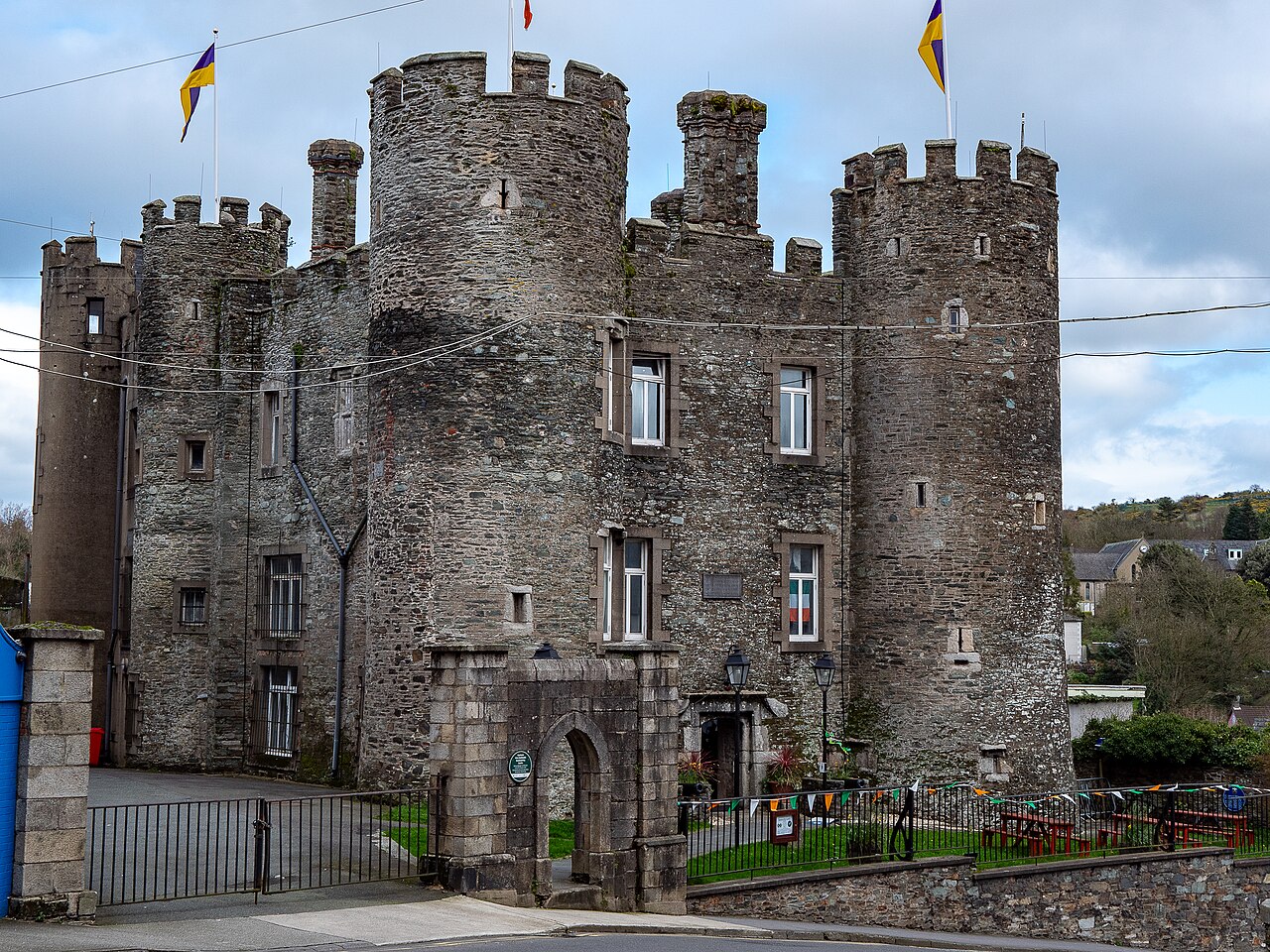
Significant restoration and rebuilding occurred around 1590 under Sir Henry Wallop, an English statesman involved in the Elizabethan plantations of Ireland. His work largely shaped the castle's current form, characterized by a four-story rectangular keep and four corner towers. The design reflects the defensive needs of the period, combining military functionality with residential elements. The castle's architecture bears resemblance to other regional Norman castles such as Ferns Castle and Carlow Castle, emphasizing its strategic importance.
Military significance and historical events
Throughout its history, Enniscorthy Castle played a vital role in Ireland's military and political conflicts. It was captured by Oliver Cromwell's forces in 1649 during the Cromwellian conquest and saw action during the Irish Confederate Wars. In the 1798 Irish Rebellion, the castle was used as a prison by both Irish insurgents and British troops, demonstrating its continued strategic and administrative importance.
20th-century restoration and museum conversion
By the early 20th century, the castle had fallen into ruin until the Roche family restored and extended it, living there from 1903 to 1951. Their efforts preserved the castle's medieval character while adapting it for modern habitation. Later, the castle was converted into the Wexford County Museum, which opened after extensive renovations completed between 2006 and 2011. The museum showcases the castle's layered history, the Roche family's legacy, and Enniscorthy's industrial and commercial development.
Architectural features and preservation
Enniscorthy Castle's stone construction exhibits typical medieval building techniques with thick defensive walls and robust corner towers designed for surveillance and protection. The four-story rectangular keep, or donjon, served as the main residential and defensive structure. Despite periods of damage and decline, the castle remains well preserved, with intact staircases, battlements, and towers that illustrate its Norman origins and Elizabethan modifications.
The castle grounds also feature a commemorative plaque honoring Denys Corbett-Wilson, who completed the first flight across the Irish Sea, linking the site to 20th-century historical milestones beyond its medieval and early modern significance.
Visiting Enniscorthy Castle today
Today, Enniscorthy Castle offers visitors a comprehensive historical experience through its museum exhibitions and preserved architecture. The site provides a tangible connection to Ireland's Norman past and the complex history of English and Gaelic interactions. Its central location in Enniscorthy town makes it accessible for tourists interested in medieval castles, Irish history, and cultural heritage.
Visitors can explore the castle’s courtyards, towers, and keep, gaining insight into medieval defensive strategies and residential life. The museum's collections include artifacts and displays related to the castle's history, the Roche family's residency, and the broader historical context of County Wexford.
Architectural comparisons
Enniscorthy Castle's design shares similarities with other regional Norman castles such as Ferns Castle and Carlow Castle, both featuring strong defensive elements and rectangular keeps. These castles collectively illustrate the Norman approach to fortification in Ireland during the medieval period, emphasizing strategic location, robust stone construction, and multi-tower layouts for defense.
Historical significance in Irish conflicts
The castle's role in significant historical conflicts, including the Cromwellian conquest and the 1798 Rebellion, underscores its strategic importance. Its use as a prison during the rebellion highlights the castle’s adaptability and enduring military relevance through centuries of Irish history.
Preservation efforts and cultural heritage
The early 20th-century restoration by the Roche family was crucial in preventing the castle's complete ruin. Their work ensured the survival of key architectural features and allowed the castle to transition into a cultural institution. The subsequent museum conversion has further enhanced public access and education, preserving Enniscorthy Castle as a vital link to Ireland's Norman heritage.
Frequently asked questions (FAQ)
- When was Enniscorthy Castle originally built?
- Enniscorthy Castle was originally built in the 1190s by the Anglo-Norman knight Philip de Prendergast and his wife Maud as a stone fortress replacing an earlier wooden stronghold.
- What architectural style characterizes Enniscorthy Castle?
- The castle features Norman military architecture with a four-story rectangular keep and four corner towers, reflecting Gothic influences from its 16th-century Elizabethan expansion.
- Can visitors tour Enniscorthy Castle today?
- Yes, Enniscorthy Castle is open to the public as the Wexford County Museum, offering exhibitions on the castle's history and local heritage.
- What significant historical events involved Enniscorthy Castle?
- The castle was involved in key events such as its capture by Oliver Cromwell's forces in 1649, use as a prison during the 1798 Irish Rebellion, and the 16th-century Elizabethan plantation period.
- Who restored Enniscorthy Castle in the 20th century?
- The Roche family restored and extended the castle from 1903 to 1951, preserving its medieval character and later converting it into a museum.
Information
Sources & official resources
Verify the information above using these authoritative references.
Loading map...
Visitor reviews
No reviews yet. Been here? Write the first review and help other travelers!
Write the first reviewVisited this castle? Share your experience
Your review helps other travelers and adds first-hand knowledge to our encyclopedia.