Embid Castle
Embid Castle, locally known as Castillo de Embid, is a small but historically significant ruined fortress located in the village of Embid in the province of Guadalajara, Spain. Situated at the eastern end of the Señorío de Molina, this castle occupies a strategic hilltop overlooking the village, characteristic of mountain castles built during the High Medieval period. Its location near the border with the Kingdom of Aragon made it an important defensive refuge during numerous conflicts between Castile and Aragon.
The origins of the village of Embid date back to the early stages of the Reconquista repopulation efforts around 1154. It was during the late 12th century that Dona Blanca, the 5th Lady of the Señorío de Molina, bequeathed the village and its surrounding lands to a knight named Sancho Lopez. However, the castle itself was not constructed until the early 14th century. In 1331, King Alfonso XI granted the property to Diego Ordóñez de Villaquirán with the explicit order to build a fortress, marking the formal establishment of Embid Castle.
By 1347, Diego Ordóñez de Villaquirán sold the castle to another knight, Adán García de Vargas. The castle subsequently passed through several noble families, including the Ruiz de Vera family in the late 14th century, until it was seized by the powerful Duke of Medinaceli. In 1426, the Medinaceli family transferred many of their holdings in the Señorío de Molina to Don Juan Ruiz de Molina, known locally as the "Caballero Viejo" or Old Knight. It was under his stewardship that the castle underwent significant rebuilding and fortification.
The castle remained in the Molina family until 1698 when King Carlos II granted it to the 9th Lord of Embid, Don Diego de Molina. The title and associated lands have descended to his present-day descendant, Don Luis Díaz Millán. This lineage underscores the castle's enduring connection to local nobility and its role in regional power dynamics.
Architectural features and layout
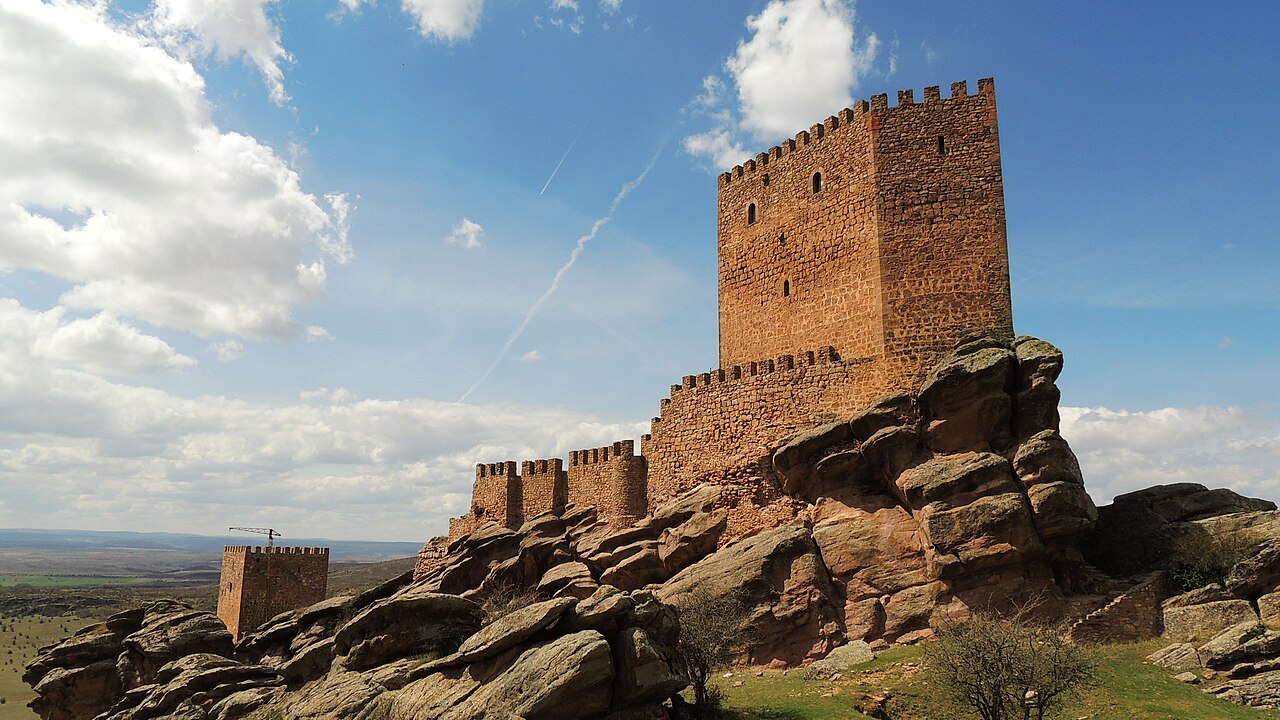
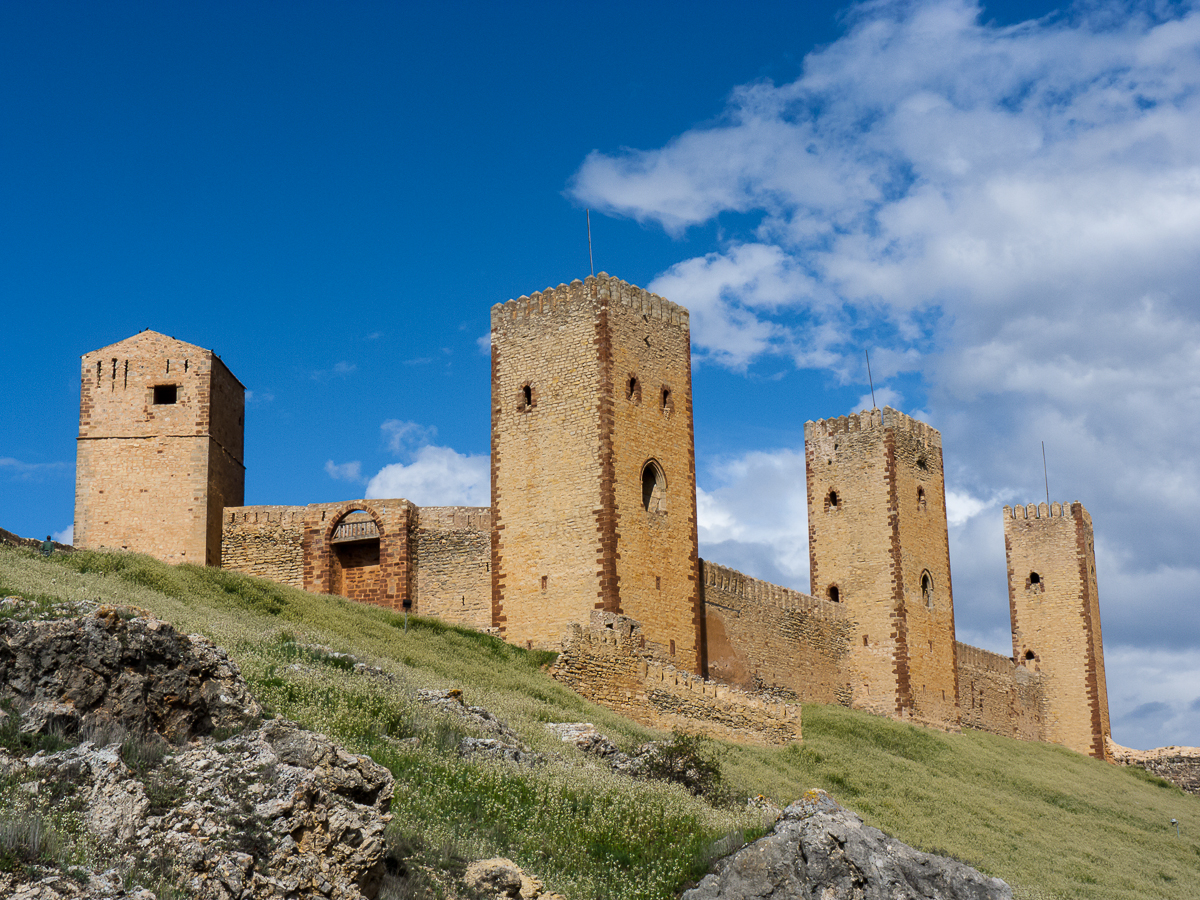
Embid Castle exemplifies a typical mountain castle design, strategically positioned on a hilltop to command views over the surrounding terrain and the village below. The castle's remains include portions of its defensive walls and three towers, although much of the structure is now in ruins. The middle tower collapsed in 1980, highlighting the castle's vulnerable state. The remaining towers and walls show significant deterioration, including large cracks, which threaten their stability.
The castle's construction reflects the military architectural practices of the High Medieval period, focusing on defense and surveillance. Its proximity to the border with Aragon meant it played a crucial role as a refuge for Castilian forces and local inhabitants during border conflicts. The castle's walls and towers were designed to withstand sieges and provide secure shelter.
At the base of the hill, the village of Embid developed, with dwellings clustered near the castle, illustrating the typical relationship between a fortified stronghold and its dependent settlement. This proximity allowed for mutual protection and facilitated the castle's role as a local power center.
Historical significance and ownership transitions
The history of Embid Castle is closely tied to the political and military struggles of medieval Spain, particularly the conflicts between the Kingdoms of Castile and Aragon. Its position on the frontier made it a key defensive site during the turbulent years following the Reconquista.
The castle's ownership history reflects the shifting allegiances and power structures of the region. From its initial grant by Dona Blanca to Sancho Lopez, through royal mandates by Alfonso XI, and subsequent transactions among noble families, the castle's control was a marker of status and influence. The involvement of prominent figures such as the Duke of Medinaceli and Don Juan Ruiz de Molina further emphasizes its importance.
Despite its military role, the castle also served as a noble residence and symbol of feudal authority. The rebuilding efforts in the 15th century under Don Juan Ruiz de Molina suggest attempts to modernize and reinforce the structure in response to evolving military needs.
Current condition and preservation challenges
Today, Embid Castle is in a state of significant ruin and deterioration. The collapse of the central tower in 1980 marked a critical loss, and ongoing neglect has led to fears that the remaining structures may also fall into ruin. The visible cracks and structural weaknesses highlight the urgent need for conservation efforts.
Despite its condition, the castle remains accessible to visitors free of charge. Its ruins offer insight into medieval military architecture and the historical landscape of the Señorío de Molina. However, the lack of active preservation measures poses a risk to this cultural heritage site.
Visiting embid castle
Visitors to Embid Castle can explore the ruins and surrounding village at their own pace, as the site is open without an entrance fee. The castle's hilltop location provides panoramic views of the Guadalajara province countryside and the village below. Due to its ruinous state, caution is advised when exploring the remaining structures.
The castle's historical context and architectural remnants make it a point of interest for those studying medieval fortifications or the history of the Castile-Aragon borderlands. Nearby towns and other historic sites in the Señorío de Molina offer additional opportunities for cultural tourism.
Frequently asked questions (FAQ)
- How do I get to Embid Castle?
- Embid Castle is located in the village of Embid in the province of Guadalajara, Castilla-La Mancha, Spain. It can be reached by local roads from nearby towns, with the castle situated on a hill at the edge of the village.
- What is the historical significance of Embid Castle?
- Embid Castle played a strategic role in the border conflicts between the Kingdoms of Castile and Aragon during the High Medieval period. It served as a defensive refuge and symbol of feudal authority in the Señorío de Molina.
- Is Embid Castle open to visitors?
- Yes, Embid Castle is freely accessible to visitors. There is no entrance fee, but visitors should be cautious due to the castle's ruinous condition and structural instability.
- When was Embid Castle built?
- The castle was constructed in the 14th century following a royal order by King Alfonso XI in 1331, although the village of Embid dates back to the mid-12th century.
- What architectural features are notable at Embid Castle?
- Embid Castle features typical mountain castle elements such as defensive walls and towers designed for surveillance and protection. The ruins include three towers, one of which collapsed in 1980.
Information
Loading map...
Visitor reviews
No reviews yet. Been here? Write the first review and help other travelers!
Write the first reviewVisited this castle? Share your experience
Your review helps other travelers and adds first-hand knowledge to our encyclopedia.