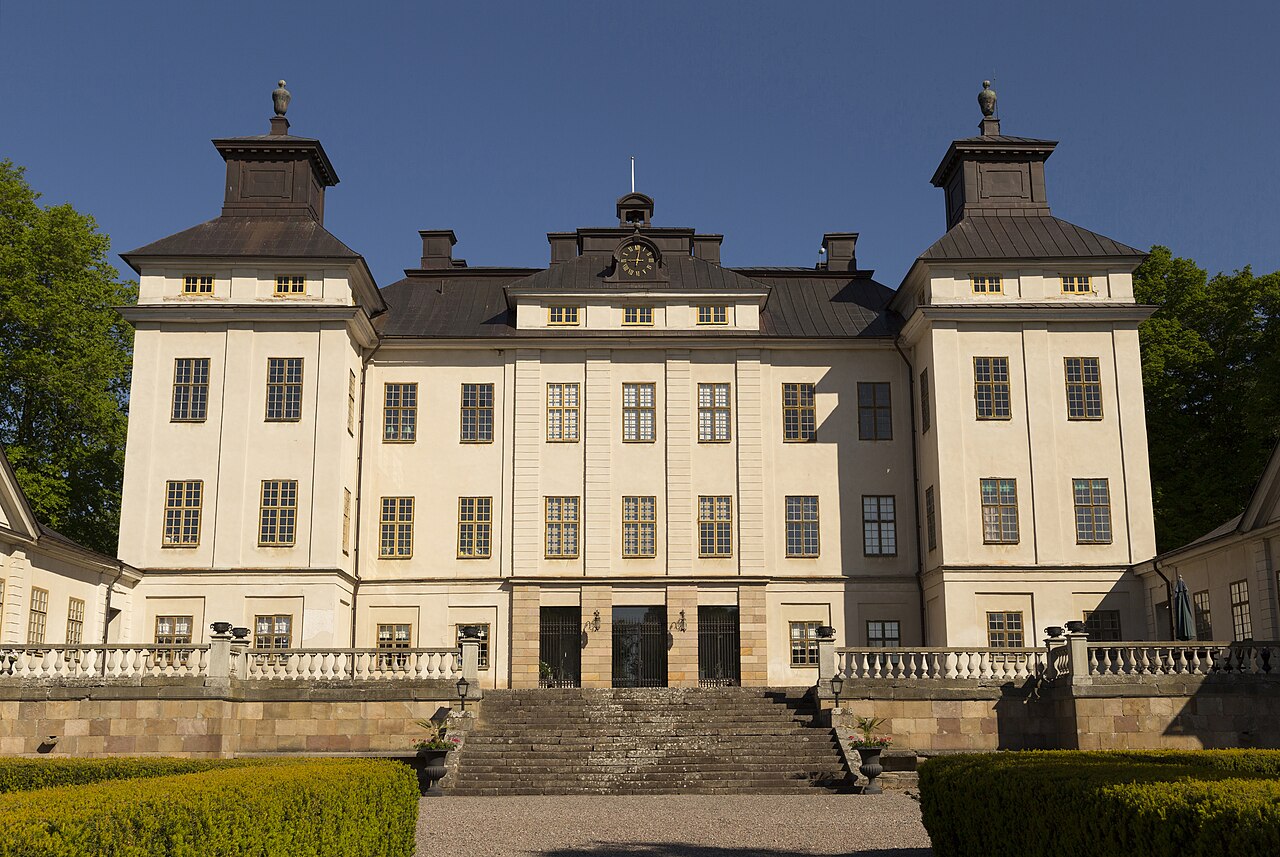
Ekolsund Castle

Ekolsund Castle: a renaissance manor with royal heritage in Sweden
Ekolsund, Sweden
Renaissance (15th–17th c.)
Well Preserved

Ekolsund Castle is a significant Renaissance manor located in Ekolsund, Sweden. The estate's origins trace back to the 14th century, with its establishment as a manor in the 1300s. The earliest recorded owner was Magnus Knutsson, a council member mentioned in 1351, marking the castle's deep historical roots in medieval Sweden.

Early history and royal connections

During the 16th century, Ekolsund transitioned into royal possession when King Gustav Vasa acquired it. This period marked the manor's growing importance as a royal residence. From 1578 to 1611, it served as the residence of Princess Sophia of Sweden, highlighting its status within the Swedish monarchy. The castle's ownership then passed to Åke Tott in 1618, a notable nobleman, before returning to the Crown during the reign of King Karl XI through the reduction policies that reclaimed lands for the monarchy.

Architectural development in the 17th century

The current form of Ekolsund Castle largely dates from the 17th century. Both the southern and northern wings of the castle were constructed in the mid-1600s. This era saw contributions from prominent architects such as Simon de la Vallée and Nicodemus Tessin the Elder, who played key roles in shaping the manor's Renaissance architectural character. Later centuries brought further enhancements, including additions by Carl Harleman, Carl Fredrik Adelcrantz, and Jean Eric Rehn, who each contributed to the castle's evolving style and grandeur.

Architectural features and style

Ekolsund Castle exemplifies Renaissance architectural style with its balanced proportions, elegant facades, and classical details. The manor complex includes distinct southern and northern buildings, which were originally built as separate wings but function together as a cohesive estate. The later addition of an excedran—a curved architectural feature—adds to the castle's aesthetic complexity and charm.

Ownership changes and historical significance

In 1716, the castle was granted to Landgraf Fredrik of Hessen-Kassel, who later became King Fredrik I of Sweden. By 1747, it was sold to Prince Adolf Fredrik to serve the future heir Gustav III. The castle remained in royal hands until 1785, when it was sold to George Seton, a man of Scottish descent, marking a shift from royal to private ownership.

In the 20th century, specifically 1917, Ekolsund was purchased by Carl Kempe, a prominent industrialist, reflecting the manor's continued prestige. Most recently, in 2002, the estate was acquired by a private firm, ensuring its preservation and continued use.

Ekolsund Castle today

Today, Ekolsund Castle stands as a well-preserved example of a Renaissance manor with a layered history of royal residence, noble ownership, and architectural evolution. Its association with prominent Swedish monarchs and architects makes it an important cultural landmark. The castle's blend of 17th-century construction and later enhancements offers insight into the development of Swedish aristocratic estates over several centuries.

The manor's location in Uppsala County situates it within a region rich in Swedish history and heritage. Visitors and scholars alike value Ekolsund for its architectural features, historical significance, and the continuity of ownership that reflects broader trends in Sweden's social and political history.

Frequently asked questions (FAQ)

How do I get to Ekolsund Castle?
Ekolsund Castle is located in Ekolsund, Sweden, and can be reached by car or public transportation. The nearest major city is Uppsala, from which you can take a bus or taxi to the castle. If you're driving, there is parking available on-site.
What is the historical significance of Ekolsund Castle?
Ekolsund Castle dates back to the late 17th century and has played a crucial role in Swedish history, serving as a noble residence and a strategic military site. It is known for its well-preserved architecture and beautiful gardens, reflecting the grandeur of its time. The castle has hosted numerous dignitaries and remains a symbol of Sweden's rich heritage.
When was Ekolsund Castle built?
Ekolsund Castle was originally constructed in 1680 and has undergone various renovations over the centuries. Its architecture showcases the transition from Renaissance to Baroque styles, making it a fascinating study for enthusiasts of historical design. The castle's construction is a testament to the craftsmanship of the period.
Can I visit Ekolsund Castle year-round?
Yes, Ekolsund Castle is open to visitors throughout the year. However, certain areas may have limited access during the winter months due to weather conditions. It's best to check the official website for seasonal opening hours and any special events.
Why is Ekolsund Castle considered an architectural gem?
Ekolsund Castle is considered an architectural gem due to its unique blend of Renaissance and Baroque styles, intricate detailing, and beautiful gardens. The castle features grand halls, elegant furnishings, and stunning views of the surrounding countryside. Its design reflects the wealth and status of its original owners, making it a significant example of Swedish nobility architecture.
Is it possible to book guided tours of the castle?
Yes, guided tours of Ekolsund Castle are available and provide visitors with an in-depth look at its history and architecture. Tours are typically available in multiple languages and are led by knowledgeable guides. It is advisable to book in advance, especially during peak tourist seasons.
What are the ticket prices for visiting Ekolsund Castle?
Ticket prices for Ekolsund Castle vary depending on the season and type of tour. Generally, adult tickets are priced around 100 SEK, while discounts are available for students and seniors. Children under a certain age may enter for free, so it’s a great place for family outings.
What are the opening hours for Ekolsund Castle?
Ekolsund Castle typically opens to visitors from 10 AM to 5 PM during the summer months. In the off-season, hours may vary, so it's recommended to check the official website for the latest information before planning your visit. Special events may also affect regular hours.
What nearby attractions should I visit while in the area?
While visiting Ekolsund Castle, you can explore nearby attractions such as the picturesque Ekolsund harbor and the beautiful nature trails around Lake Mälaren. Additionally, the town of Enköping, known for its historical sites and gardens, is just a short drive away. There are also several charming cafes and restaurants to enjoy local cuisine.

Information

Lowland Castle

Sources & official resources

Verify the information above using these authoritative references.

Loading map...

Visitor reviews

No reviews yet. Been here? Write the first review and help other travelers!

Write the first review

Visited this castle? Share your experience

Your review helps other travelers and adds first-hand knowledge to our encyclopedia.
Write a review

(5/5)

0/2000 characters

Your review will be visible after admin approval

Nearby castles

9.9 km
Salnecke Castle — Sweden castle

Salnecke Castle

Örsundsbro, Sweden

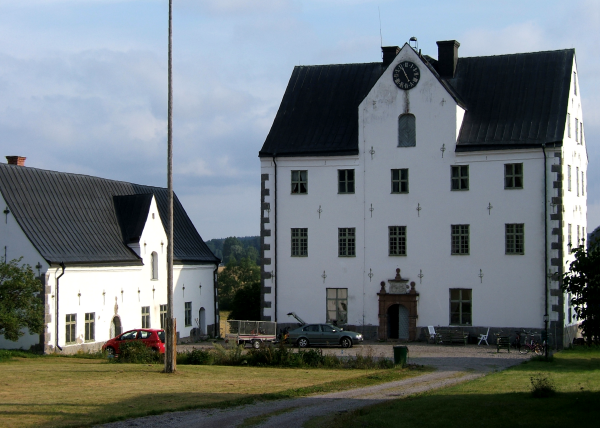
Salnecke Castle stands as one of the most well-preserved 17th-century castles in the historic province of Uppland, Sweden. This hill castle reflects the architectural and cultural shifts of the Renaissance period in Sweden, with construction dating back to the 1640s. Its strategic location near Örsundsbro provided both defensive advantages and control over the surrounding fertile lands. Early history and ownership The origins of Salnecke trace back to medieval times when it was first recorded as a farm owned by judge Karl Ingeborgasson Lejonbalk. In 1302, the property was sold to the Skokloster nunnery, marking its early connection to ecclesiastical institutions. Subsequently, ownership passed to prominent figures such as Bo Jonsson Grip, a powerful Swedish nobleman, and the monastery of St. Clare in Stockholm. The monastery retained control until 1460, when the estate transferred to archbishop Jons Bengtsson (Oxenstierna), a significant religious and political leader of the era. Following the Reformation, which led to the dissolution of many monastic holdings, Salnecke became crown property. In 1626, King Gustav II Adolf granted the estate to councilor Filip Sadler. After Sadler's death in 1641, the property was transferred to the Grissbach family, who maintained ownership until the 1730s. Later, in the 1830s, Salnecke was acquired by Klas Samuel Jonas Gyllenadler, whose descendants continue to own the castle to this day. Architectural features and design Salnecke Castle exemplifies Renaissance architecture adapted to Swedish conditions. The castle's design incorporates typical features of a hill castle, including elevated positioning for defense and visibility. Its structure includes robust stone walls, fortified towers, and a central courtyard, all characteristic of the period's military and residential architecture. The castle layout reflects a blend of functionality and aesthetic considerations, common in Renaissance noble residences. Defensive elements such as battlements and thick walls coexist with elegant chambers and halls designed for comfort and status display. The preservation of original elements like masonry, wooden beams, and period-specific windows provides valuable insight into 17th-century construction techniques in Sweden. Historical significance and cultural context Salnecke Castle's history mirrors the broader political and religious transformations in Sweden from the Middle Ages through the early modern period. Its passage through ecclesiastical hands, noble families, and the crown illustrates the shifting power dynamics influenced by the Reformation and the rise of centralized monarchy under rulers like Gustav II Adolf. The castle also reflects the social status of its owners, from medieval judges and religious institutions to influential noble families. The long-term possession by the Gyllenadler family since the 19th century underscores the continuity of Swedish aristocratic traditions and the preservation of historical estates. Preservation and current status Today, Salnecke Castle is recognized as a well-preserved Renaissance hill castle. Its condition allows visitors and historians to experience an authentic example of 17th-century Swedish noble architecture. The castle remains privately owned by the descendants of Klas Samuel Jonas Gyllenadler, maintaining its heritage and historical integrity. While not broadly open to the public, Salnecke occasionally participates in cultural events and heritage programs, contributing to the appreciation of Sweden's architectural and historical legacy. Architectural and historical legacy Salnecke Castle stands as a testament to the architectural evolution during the Renaissance in Sweden, combining defensive features with noble residential comforts. Its continuous lineage of ownership and preservation offers a unique window into the region's history, from medieval ecclesiastical power to modern aristocratic stewardship. The castle's enduring presence enriches the cultural landscape of Uppland and serves as a valuable resource for understanding Sweden's architectural and social history during a transformative era.

Renaissance (15th–17th c.)
Details
10.9 km
Sjöö Castle — Sweden castle

Sjöö Castle

Örsundsbro, Sweden

Sjöö Castle, located in the small parish of Holm near Örsundsbro in Uppland, Sweden, is a notable example of 17th-century Swedish aristocratic architecture. The castle's history dates back to the early 15th century, with the first recorded owner being Peter Laurensson in 1409. Over the centuries, the estate changed hands several times, acquiring its current name in 1541 when it was purchased by Jacob Vestgöte Sjöö. Architectural design and construction The present castle structure was commissioned in the 1660s during the ownership of Johan Gabriel Stenbock, a prominent Swedish nobleman and statesman. The design was executed by two of Sweden's most distinguished architects of the time: Nicodemus Tessin the Elder and Mathias Spieler. Tessin, known for his role in shaping the Swedish Baroque style, brought a refined sense of proportion and elegance to the project, while Spieler contributed to the detailed execution of the plans. Sjöö Castle is classified as a hill castle, situated on a slight elevation that enhances its commanding presence in the surrounding landscape. The castle's architecture reflects the Baroque style, characterized by its balanced and harmonious proportions, symmetrical layout, and restrained decorative elements. The building's facade features clean lines and large windows that allow ample natural light into the interior spaces. The castle and its park The castle is surrounded by a meticulously designed park, which complements the architectural elegance of the palace. The park's layout follows principles of symmetry and order, typical of the Baroque period, creating a seamless integration between the natural environment and the man-made structure. This combination of castle and park is widely regarded as one of the most beautiful and harmonious ensembles in Sweden. Historical ownership and legacy In 1813, Sjöö Castle was acquired by Johan Gustav Baner, and it remains in the possession of the Baner family to this day. The castle's continuous ownership by a single family for over two centuries has helped preserve its historical integrity and cultural significance. Significance in Swedish heritage Sjöö Castle stands as a testament to Swedish noble residence architecture of the 17th century. Its design by Nicodemus Tessin the Elder places it among the important Baroque architectural works in Sweden. The castle's well-preserved state and its elegant park contribute to its reputation as a cultural landmark in the region of Uppland. Architectural features Symmetrical facade with balanced proportions Large windows typical of Baroque style to illuminate interiors Hilltop location providing strategic and aesthetic advantages Baroque park designed with geometric patterns and axial alignments Visiting information While Sjöö Castle is privately owned by the Baner family, its historical and architectural significance makes it a point of interest for enthusiasts of Swedish castles and Baroque architecture. Visitors interested in Swedish cultural heritage often explore the surrounding region of Uppland, which hosts several other notable castles and historical sites.

Post-Renaissance (17th–18th c.)
Details
10.9 km
Wik Castle — Sweden castle

Wik Castle

Uppsala, Sweden

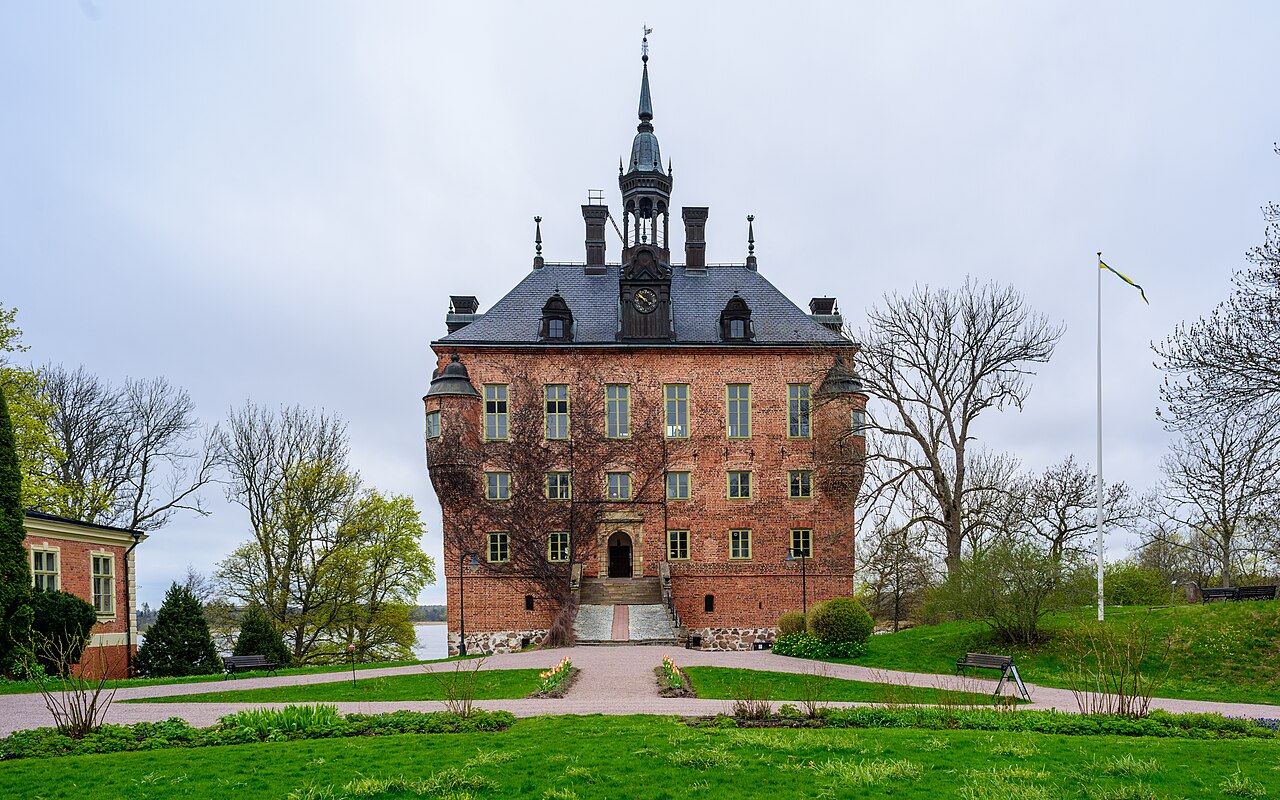
Wik Castle stands as one of the most well-preserved medieval castles in Sweden, prominently located near the northern shore of Lake Mälaren in the municipality of Uppsala. Its origins trace back to the late 13th century, with the estate first documented as the home of Ramborg Israelsdotter (And) and her husband Arvid Gustavsson (Sparre of Vik). The castle’s current imposing structure, featuring seven floors, was constructed around 1450 during the late medieval period. Built primarily of stone and brick, the fortress was designed as a large tower house with massive walls and surrounding moats, making it a formidable defensive stronghold in the Mälaren Valley. Medieval origins and strategic importance The initial construction phase of Wik Castle reflected the need for strong fortifications during a turbulent era in Scandinavian history. The castle’s defensive architecture typifies the late medieval style, with thick walls and a compact, vertical design that maximized protection. The site’s strategic location near Lake Mälaren allowed control over important waterways and trade routes, enhancing its military and economic significance. Throughout the Middle Ages, Wik Castle was owned and expanded by several powerful noble families, including the Sparre, Bielke, Horn von Liewe, de Geer, and von Essen families. These lineages contributed to the castle’s development, adapting it to changing needs and tastes over centuries. The siege by gustav vasa and military history One of the most notable episodes in Wik Castle’s history occurred during the Swedish War of Liberation in 1521. The castle was besieged for over a year by Gustav Vasa, who later became the king of Sweden and a key figure in the country’s independence from Danish rule. Despite the prolonged siege, the castle’s defenders, led by Knut Nilsson (Sparre of Ellinge), successfully resisted, demonstrating the fortress’s impregnability and the effectiveness of its medieval fortifications. 17th-century transformation and architectural evolution In the 17th century, Wik Castle underwent significant modifications that transformed its appearance and function. The castle was remodeled to reflect contemporary French architectural influences, shifting from a purely military fortress to a more comfortable and representational residence. This included the addition of wooden wings that expanded the living quarters and the creation of a landscaped park designed by architect Mathias Spihler around the 1670s. The park introduced formal gardens and leisure spaces, marking a departure from the castle’s original defensive purpose. 19th-century restoration and preservation efforts During the 19th century, the castle’s exterior was restored under the direction of architect Fredrik Wilhelm Scholander between 1858 and 1860. Scholander’s work aimed to preserve the medieval character of Wik Castle while adapting it to the aesthetic preferences of the time. His restoration efforts helped maintain the castle’s structural integrity and enhanced its visual appeal, securing its status as a historical monument. Ownership, cultural significance, and modern use For over six centuries and 24 generations, Wik Castle remained in the hands of noble families until it was sold in 1912. In 1923, it was acquired by the Uppsala County Council, which repurposed the estate as a folk high school, thus integrating educational functions into the historic site. The castle is also notable as the birthplace of Svante Arrhenius, the Nobel Prize-winning chemist of 1903. In the 1970s, the castle’s interiors hosted the ensemble Joculatores Upsalienses, who recorded medieval and Renaissance music there, highlighting Wik’s ongoing cultural relevance. Today, the castle is primarily used as a conference center with fifteen meeting rooms, including eight located within the medieval sections. Accommodation is provided in four hotel buildings on the estate, offering 86 to 88 beds. The surrounding grounds include a natural park with interpretive signage and recreational facilities such as a bathing area with piers. Although Wik Castle is currently closed to the public, its designation as a Swedish national monument since 1982 underscores its importance as a heritage site that preserves a continuous narrative from its medieval origins to its modern adaptations. Architectural features and castle complex The core of Wik Castle is its medieval tower house, characterized by thick stone and brick walls, narrow windows for defense, and a vertical layout that rises to seven floors. The original defensive features include moats and battlements, which contributed to its reputation as an impregnable fortress during the Middle Ages. The later additions of wooden wings in the 17th century introduced more spacious residential areas, reflecting the shift towards comfort and status display. The castle complex also contains several ancillary buildings that supported the estate’s operations, though detailed information on these structures is limited. The landscaped park designed by Mathias Spihler complements the castle’s architecture by providing a formal garden setting, which was fashionable among European nobility in the 17th century. This park includes walking paths and leisure areas that enhance the estate’s aesthetic and recreational value. Preservation and current condition Wik Castle is classified as a well-preserved medieval castle, retaining much of its original fabric alongside later modifications. The 19th-century restoration has ensured the survival of key architectural elements, while modern use as a conference center has allowed the castle to remain functional without compromising its historical integrity. Visitor information While the castle is currently closed to the public, its grounds and park can be appreciated from the outside. The estate’s use for conferences and cultural events helps maintain its upkeep and promotes awareness of Sweden’s medieval heritage.

Late Medieval (14th–15th c.)
Details