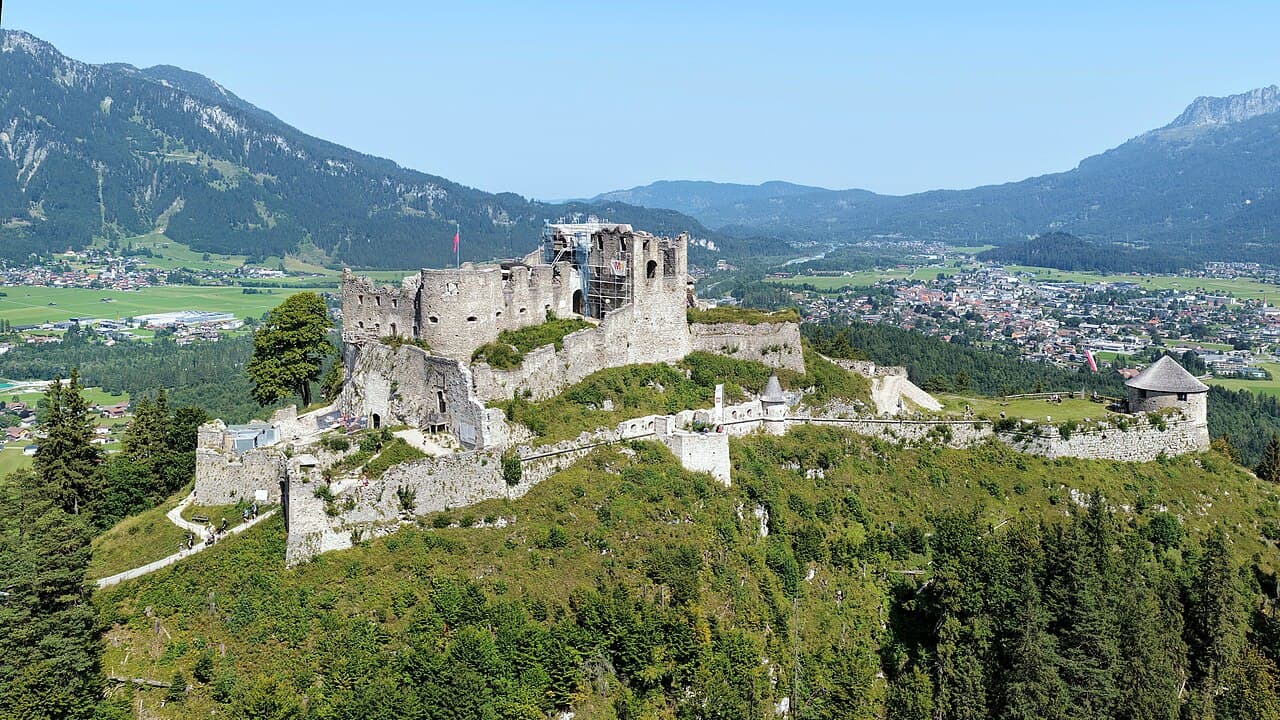
Ehrenberg Castle, constructed in 1296, is a significant example of a high medieval gothic fortress located in Reutte, Tyrol, Austria. Though now in ruins, it retains the essential characteristics of a medieval stronghold, including defensive walls, tall towers, and strategic positioning. The castle's architecture and history reflect its role as a military and political center through several centuries of European conflict.
Historical significance and military role
Ehrenberg Castle was a focal point in many historical military campaigns and power struggles. It served as a residence and fortress for emperors, kings, princes, and tsars, underscoring its importance in European politics. The castle's strategic location guarded a crucial mountain pass, making it a coveted asset during wartime.
In 1546, the fortress was occupied by the Protestant Schmalkaldic League, a defensive alliance during the Reformation. Later, in 1552, it was taken by Elector Moritz of Saxony. The castle faced Swedish forces in 1632 during the Thirty Years' War, and in 1703, it fell to the Bavarians during the War of the Spanish Succession. These events highlight Ehrenberg's military significance over several centuries.
Between 1716 and 1717, the castle was the place of exile for Russian Tsarevich Alexei, who fled from his father, Tsar Peter the Great. This episode connects Ehrenberg to broader European royal histories.
Even during the Napoleonic Wars, Ehrenberg Castle retained its strategic and symbolic importance.
Architectural features and layout
The castle complex was designed following typical Gothic military architecture principles of the late 13th century. It featured thick defensive walls to withstand sieges, tall towers for surveillance and defense, and a layout adapted to the mountainous terrain of Tyrol. The positioning of Ehrenberg Castle allowed control over the surrounding valley and the important trade and military routes passing through the region.
While much of the structure is now in ruins, archaeological studies and preservation efforts have revealed the castle's original scale and complexity. The ruins include remnants of the curtain walls, gatehouses, and foundations of residential and defensive buildings.
Modern preservation and tourist attractions
By the late 20th century, Ehrenberg Castle was a condemned ruin until Fridolin Schennach from Reutte initiated a rescue operation in 1971. This effort, supported by numerous volunteers and heritage enthusiasts, aimed to stabilize and preserve the castle remains.
One of the most remarkable modern additions related to Ehrenberg Castle is the Highline 179, completed in 2014. This pedestrian suspension bridge spans 403 meters at a height of 110 meters, connecting the Ehrenberg ruins with nearby Fort Claudia. It is the world's longest pedestrian suspension bridge and offers visitors spectacular views of the landscape and the historic fortifications.
Today, Ehrenberg Castle is a popular destination for history enthusiasts and tourists interested in medieval architecture and military history. The site offers educational exhibits, guided tours, and access to the Highline 179 bridge, blending historical preservation with modern adventure tourism.
Location and regional context
Located in the town of Reutte in the Austrian state of Tyrol, Ehrenberg Castle occupies a commanding position overlooking the Lech River valley. This location was crucial for controlling trade routes between Germany and Italy through the Alps.
The castle's proximity to other fortifications, such as Fort Claudia, illustrates the integrated defensive network established in this alpine region. This network was vital for regional security and the assertion of territorial control during the medieval and early modern periods.
Frequently asked questions (FAQ)
- How do I visit Ehrenberg Castle and the Highline 179 bridge?
- Ehrenberg Castle and the Highline 179 bridge are open to visitors year-round, with guided tours available during the warmer months. The site is accessible by car or public transport from Reutte, and the bridge offers spectacular views of the surrounding landscape.
- What is the historical significance of Ehrenberg Castle?
- Ehrenberg Castle was a strategic fortress involved in many European conflicts, including the Thirty Years' War and the War of the Spanish Succession. It also served as the exile site for Russian Tsarevich Alexei, linking it to broader European history.
- What architectural style characterizes Ehrenberg Castle?
- Ehrenberg Castle is primarily a Gothic fortress from the high medieval period, featuring thick defensive walls and tall towers adapted to its mountainous location.
- Is Ehrenberg Castle wheelchair accessible?
- Due to its ruinous state and mountainous terrain, Ehrenberg Castle has limited wheelchair accessibility. However, some parts of the site and the Highline 179 bridge have accommodations to assist visitors with mobility challenges.
- When was the Highline 179 pedestrian bridge completed?
- The Highline 179 pedestrian suspension bridge connecting Ehrenberg Castle ruins and Fort Claudia was completed in 2014 and is the longest of its kind in the world.
Photo gallery

Information
Sources & official resources
Verify the information above using these authoritative references.
Loading map...
Visitor reviews
No reviews yet. Been here? Write the first review and help other travelers!
Write the first reviewVisited this castle? Share your experience
Your review helps other travelers and adds first-hand knowledge to our encyclopedia.


