Dunstanburgh Castle
Dunstanburgh Castle stands as a monumental example of medieval fortification on a remote coastal headland in Northumberland, England. Constructed in the early 14th century, it is one of the largest castles in the region, embodying the turbulent political and military history of medieval England. The castle's imposing ruins, dramatic setting, and rich heritage continue to attract historians, archaeologists, and visitors alike.
Built between 1313 and 1322 by Thomas, 2nd Earl of Lancaster, Dunstanburgh Castle was conceived during a period of intense internal conflict and external threats. Thomas was one of the most powerful barons opposing King Edward II, and the castle was intended both as a formidable stronghold and a symbol of his wealth and defiance. Its scale and design reflect ambitions beyond mere military utility, emphasizing status and power.
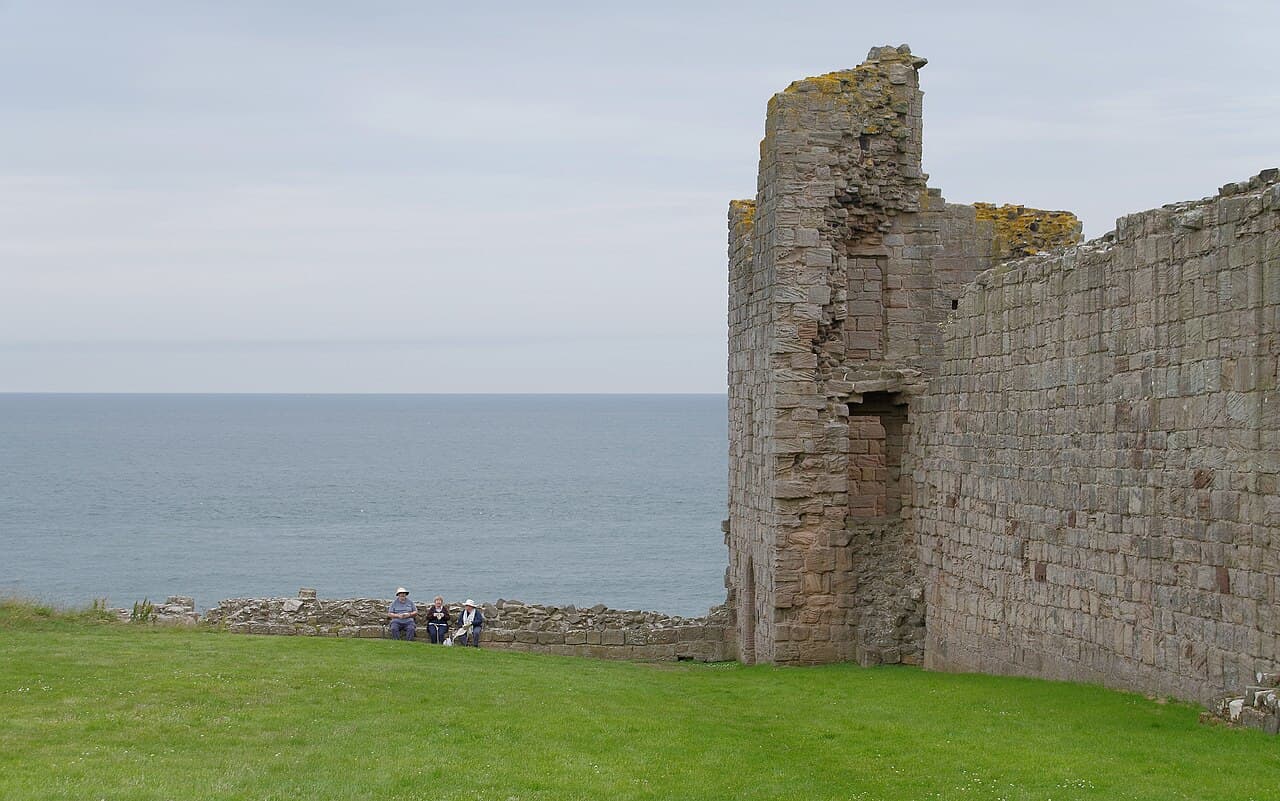
The castle's location on the Great Whin Sill geological formation provides natural defensive advantages, with steep cliffs to the north and gentler slopes to the south. Covering over four hectares, it is enclosed by massive curtain walls constructed from locally quarried ashlar sandstone over a basalt rubble core. These walls were later heightened with large basalt boulders, particularly during the Wars of the Roses in the 15th century, reflecting ongoing military adaptations.
Architectural design and fortifications
The great gatehouse
The most striking surviving feature is the Great Gatehouse, a three-story defensive structure with twin round towers originally rising approximately 24 meters. The gatehouse was designed to impress and intimidate, with spacious guardrooms, latrines, and spiral staircases on the ground floor. The first floor housed well-lit chambers with fireplaces for senior officers, while the top floor contained the great hall, an antechamber, and a private chamber likely used by Thomas of Lancaster himself. Four smaller towers crowned the roof, offering panoramic views of the surrounding landscape and sea.
John of gaunt’s enhancements
In the late 14th century, John of Gaunt, Duke of Lancaster, undertook significant improvements to bolster the castle’s defenses against Scottish incursions and internal unrest. He added a barbican to protect the gatehouse entrance and converted the gatehouse into a keep, enhancing its military capability. The barbican, although now mostly reduced to low foundations, originally extended 9.4 meters and provided an additional layer of protection with a portcullis and heavy wooden doors.
Other defensive structures
West of the Great Gatehouse lies John of Gaunt’s Gatehouse, which became the main entrance after replacing the original gatehouse’s function. Though now largely in ruins, it was once a multi-story structure defended by its own portcullis and a 25-meter-long barbican. The inner bailey enclosed by thick mantlet walls housed administrative and domestic buildings, including a kitchen and bakehouse.
The castle’s curtain walls are punctuated by several rectangular towers such as the Lilburn Tower, rising 18 meters and offering commanding views over Embleton Beach. This tower was likely a high-status residence, strategically positioned to be visible from Bamburgh Castle some 14 kilometers away. Other towers include the Constable’s Tower with comfortable quarters and the Egyncleugh Tower at the southeast corner, which contained a small gateway with a drawbridge facing Queen Margaret’s Cove.
Historical context and significance
Thomas of lancaster’s ambitions
Thomas of Lancaster’s construction of Dunstanburgh was deeply intertwined with his political rivalry with King Edward II. The castle served as a symbol of his defiance and a secure refuge far from the royal court. Unfortunately, Thomas never fully utilized the fortress, as he was captured and executed following his defeat at the Battle of Boroughbridge in 1322.
Ownership and military role
After Thomas’s death, Dunstanburgh became Crown property and was incorporated into the Duchy of Lancaster. John of Gaunt, a key figure in the late 14th century, enhanced the castle’s defenses amid ongoing conflicts with Scotland and social upheavals such as the Peasants’ Revolt of 1381. During the Wars of the Roses in the 15th century, Dunstanburgh was a contested site, besieged and captured multiple times by rival factions. These conflicts contributed to the castle’s gradual decline.
Decline and romantic legacy
By the 16th century, the castle had fallen into disrepair. Valuable materials were stripped for reuse, and by the mid-1500s, it was largely a ruin with only parts like the gatehouse remaining habitable. The castle’s military importance waned after the Union of the Crowns in 1603, and it passed into private hands in 1604, owned by the Grey family for centuries.
Despite its dilapidation, Dunstanburgh attracted artists and writers during the late 18th and early 19th centuries. Painters such as Thomas Girtin and J. M. W. Turner captured its evocative silhouette, while poet Matthew Lewis celebrated its romantic ruins in literature, enhancing its cultural significance.
Medieval landscape and archaeological features
Water defenses and meres
The castle is surrounded by a carefully designed medieval landscape featuring three artificial lakes or meres, covering over four hectares. These water features were fed by a natural spring through an underground stone channel and served both defensive and aesthetic purposes. The North Mere contained a moat over 100 meters long and more than five meters deep, while the West Mere included fishponds used for food supply, including a stew pond to keep fish alive.
Harbour and supply
Southeast of the castle lies the remains of a basalt stone quay about 75 meters long, evidence of a harbour used to receive building materials and visitors. Although exposed to harsh coastal weather, this harbour was a vital logistical feature during the castle’s active years.
Earthworks and siege features
West of the castle are earthwork remains of a longhouse or shieling and a rectangular earthwork possibly representing a siege fortification from 1462. If confirmed, this would be a unique example of a siege earthwork in England, underscoring the castle’s active role in 15th-century conflicts.
Symbolism and cultural connections
The castle’s orientation and layout were deliberately symbolic. The Great Gatehouse faces southeast, away from the main land approach, possibly to conceal its grandeur from land visitors while showcasing it to those arriving by sea. The Lilburn Tower was positioned to be visible from Bamburgh Castle, creating a visual dialogue between these two fortifications.
Scholars have noted that the castle’s design and surrounding water features evoke Arthurian legend, with the central fort surrounded by water reminiscent of Camelot. This connection suggests Thomas of Lancaster’s interest in mythology and his desire to associate his status with legendary authority.
Modern preservation and public access
Today, Dunstanburgh Castle is a protected Grade I listed building and part of a designated natural conservation area. Managed by heritage organizations, it remains a popular site for tourists and scholars. The castle’s dramatic ruins, scenic coastal setting, and rich historical layers provide a compelling experience for visitors interested in medieval architecture and English history.
During the Second World War, the castle was repurposed as a defensive observation post, fortified with trenches, pillboxes, and barbed wire to guard against potential invasion. This modern military use adds another chapter to the castle’s long history of strategic importance.
Ongoing archaeological investigations continue to reveal new insights into the castle’s construction, use, and the lives of its inhabitants, ensuring that Dunstanburgh remains an important site for historical and architectural study.
Frequently asked questions (FAQ)
- How do I get to Dunstanburgh Castle?
- Dunstanburgh Castle is located on the Northumberland coast near Craster. It is accessible by car and public transport to Craster, followed by a short walk along marked coastal paths to the castle site.
- What is the best time to visit Dunstanburgh Castle?
- The best time to visit Dunstanburgh Castle is during the late spring to early autumn months when the weather is milder and the coastal views are at their most spectacular. Avoid winter months due to potential harsh weather and slippery paths.
- Can I explore the interior of Dunstanburgh Castle?
- As Dunstanburgh Castle is largely in ruins, visitors can explore the extensive exterior walls, towers, and gatehouses. Some interior areas are accessible, but caution is advised due to uneven surfaces and partial preservation.
- Is there an entrance fee to visit Dunstanburgh Castle?
- There is no entrance fee to visit Dunstanburgh Castle, as it is managed by a state heritage organization and open to the public.
- What historical events is Dunstanburgh Castle known for?
- Dunstanburgh Castle is notable for its association with Thomas of Lancaster’s rebellion against King Edward II, its role in the Wars of the Roses, and its strategic importance during medieval conflicts with Scotland.
Photo gallery

Information
Sources & official resources
Verify the information above using these authoritative references.
Loading map...
Visitor reviews
No reviews yet. Been here? Write the first review and help other travelers!
Write the first reviewVisited this castle? Share your experience
Your review helps other travelers and adds first-hand knowledge to our encyclopedia.