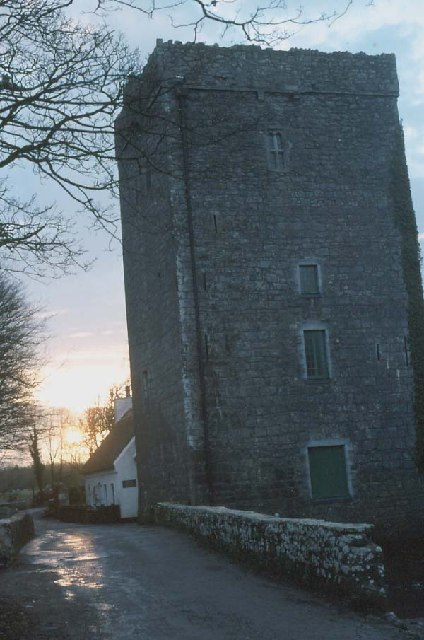
Dunguaire Castle
Dunguaire Castle stands as a striking example of a 16th-century Irish tower house on the southeastern shore of Galway Bay, near the small town of Kinvara in County Galway. Its name originates from the legendary Dun of King Guaire, a 7th-century monarch of Connacht, linking the site to deep historical roots in Irish tradition. The castle's imposing 75-foot (23 m) tower and surrounding defensive walls have been carefully restored, offering visitors a vivid glimpse into Ireland's medieval past and the lifestyle of Gaelic chieftains.
Historical background and origins
The castle was constructed around 1520 by the Hynes family (Ó hEidhin clan), who were prominent chieftains of the Coill Ua bhFiachrach territory, part of the larger Uí Fiachrach Aidhne kingdom. This period falls within the renaissance era in Ireland, characterized by the persistence of Gaelic lordship despite increasing Anglo-Norman influence. While the current stone tower dates to the early 16th century, local tradition suggests that an earlier fortification may have existed on the site, underscoring the strategic importance of this location overlooking Galway Bay.
In the 17th century, ownership transferred to Oliver Martin, father of the notable Irish politician Richard Martin. The Martin family retained the castle for several generations until the early 20th century. During this time, the castle gradually fell into disrepair, reflecting the broader decline of Gaelic aristocratic residences in post-medieval Ireland.
In the early 20th century, Oliver John Gogarty, an Irish poet, surgeon, and key figure in the Celtic Revival, acquired and restored the castle. Under Gogarty's stewardship, Dunguaire Castle became a cultural hub, hosting luminaries such as W.B. Yeats, George Bernard Shaw, Lady Gregory, and John Millington Synge. This period marked a renaissance of Irish arts and heritage, with the castle serving as a symbol of national identity and cultural pride.
Later, in 1954, Lady Christabel Amphlett purchased and completed restoration efforts, preserving the castle as a historical monument. Today, the site is managed by Shannon Development, a heritage organization dedicated to promoting Ireland's cultural landmarks.
Architectural features and defensive design
Dunguaire Castle exemplifies the typical tower house architecture prevalent in 16th-century Ireland. Constructed primarily from locally quarried stone, the castle features a tall, square tower rising approximately 75 feet, designed for both residential comfort and defensive capability.
The tower's thick walls and narrow windows reflect its defensive purpose, allowing inhabitants to repel attackers while maintaining visibility of the surrounding landscape. The castle is enclosed by a defensive curtain wall, creating a secure courtyard that would have housed ancillary buildings and provided space for daily activities.
Inside, the tower would have included multiple floors with living quarters, storage rooms, and possibly a great hall, although specific interior details are not extensively documented. The castle's elevated position on a slight hill overlooking Galway Bay provided strategic control over maritime routes and local territory.
Restoration and current condition
The castle has undergone extensive restoration to stabilize its structure and preserve its historical integrity. The restoration has maintained the original masonry and architectural style, ensuring that the tower remains a dominant feature in the landscape. The grounds are open to visitors, particularly in the summer months, and the site hosts medieval-themed banquets that recreate the atmosphere of its historic past.
Cultural significance and modern usage
Beyond its architectural and historical importance, Dunguaire Castle holds a special place in Irish cultural history. Its association with the Celtic Revival and prominent Irish literary figures highlights its role as a center for cultural and artistic exchange.
The castle has also gained popularity as a scenic landmark, frequently photographed for its picturesque setting against the backdrop of Galway Bay and nearby natural features such as the Burren and Slieve Aughty mountains. Its evocative presence has inspired artistic and literary works, contributing to Ireland's rich heritage tourism.
In popular culture, the castle has served as a filming location for movies such as the 1969 Disney film "Guns in the Heather" (where it portrayed Boyne Castle) and the 1979 thriller "North Sea Hijack", further cementing its iconic status.
Visitor experience and accessibility
Today, Dunguaire Castle welcomes tourists who can explore its well-preserved exterior and grounds. While the interior is not extensively furnished, visitors can appreciate the castle's architectural features and the panoramic views of Galway Bay. The site offers medieval banquets during peak seasons, providing an immersive historical experience.
The castle's location near Kinvara makes it accessible for day trips from Galway city and other parts of County Galway. Its proximity to other attractions like the Cliffs of Moher and the Burren region makes it a popular stop for visitors exploring the west of Ireland.
Landscape and surroundings
The castle's setting on the southeastern shore of Galway Bay offers stunning vistas of the Atlantic Ocean and the rugged Irish coastline. The nearby town of Kinvara adds to the cultural charm of the area, with traditional Irish music and festivals enhancing the visitor experience.
The natural environment surrounding the castle, including the Burren's unique limestone landscape and the Slieve Aughty hills, provides opportunities for hiking and nature exploration, complementing the historical visit.
Frequently asked questions (FAQ)
- When was Dunguaire Castle built and by whom?
- Dunguaire Castle was built around 1520 by the Hynes family (Ó hEidhin clan), chieftains of the Coill Ua bhFiachrach territory in County Galway.
- What architectural style characterizes Dunguaire Castle?
- Dunguaire Castle is a typical example of a 16th-century Irish tower house, featuring a tall stone tower with defensive walls and a secure courtyard.
- Can visitors explore the interior of Dunguaire Castle?
- Visitors can explore the castle's well-preserved exterior and grounds, though the interior is not extensively furnished. Medieval-themed banquets are held on site during summer months.
- What is the cultural significance of Dunguaire Castle?
- Dunguaire Castle played a key role in the Celtic Revival, hosting prominent Irish literary figures such as W.B. Yeats and George Bernard Shaw, making it a symbol of Irish heritage.
- Is Dunguaire Castle accessible to tourists year-round?
- The castle grounds are typically open to tourists during the summer months, with special events and banquets held seasonally. It's advisable to check opening times before visiting.
Information
Sources & official resources
Verify the information above using these authoritative references.
Loading map...
Visitor reviews
No reviews yet. Been here? Write the first review and help other travelers!
Write the first reviewVisited this castle? Share your experience
Your review helps other travelers and adds first-hand knowledge to our encyclopedia.