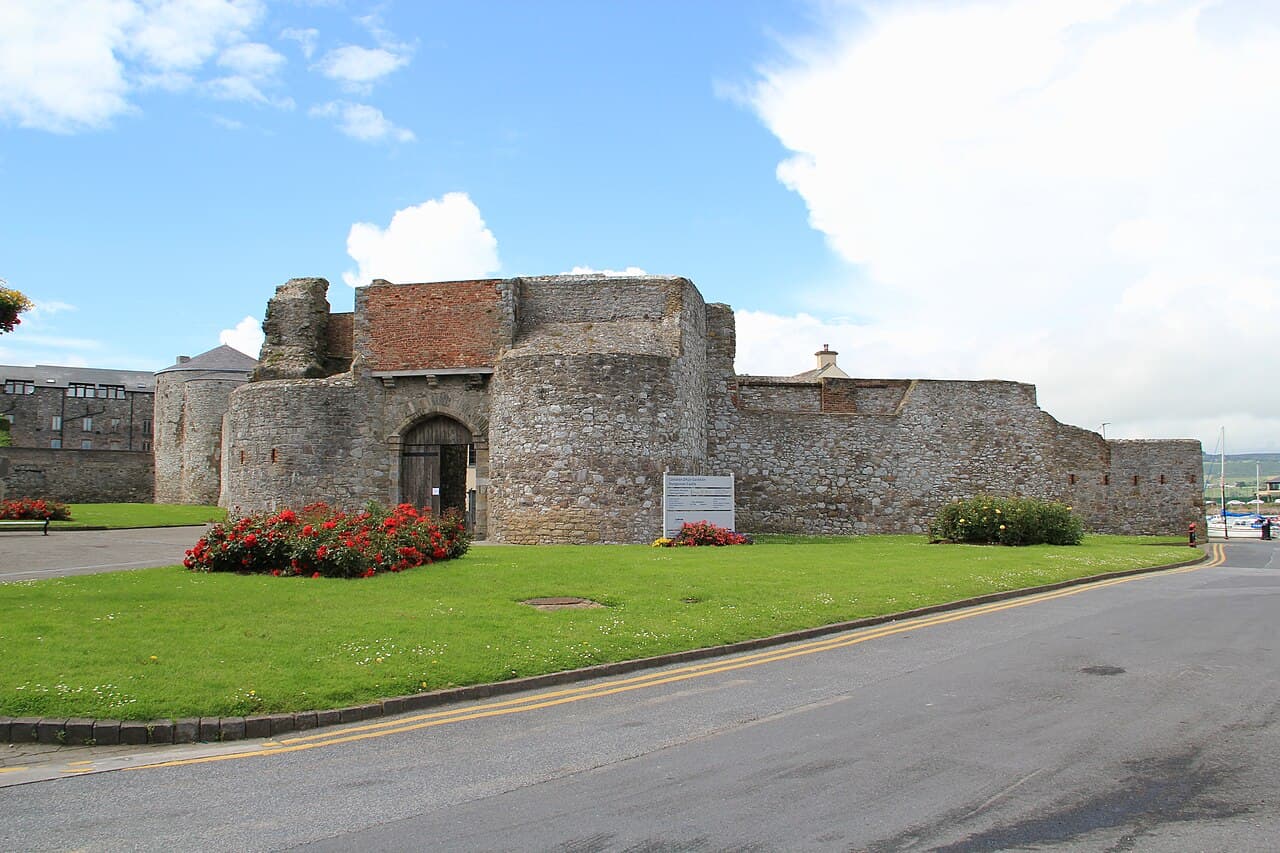
Dungarvan Castle
Dungarvan Castle, also known as King John's Norman Castle, is a prominent 12th-century hill castle located in Dungarvan, County Waterford, Ireland. This castle stands as a significant example of High Medieval military architecture introduced by the Normans following their invasion of Ireland. Recognized today as a National Monument, Dungarvan Castle offers valuable insights into the medieval defensive strategies and the Norman influence on Irish fortifications.
Historical context and origins
The castle was constructed in the 12th century during the period of Norman expansion into Ireland. It was commissioned by the Anglo-Norman rulers to establish control over the region and secure strategic points along the southeastern coast. The castle’s association with King John stems from historical records indicating royal involvement or enhancements during his reign in the early 13th century, although the original structure predates his rule.
Dungarvan Castle played an important role in the consolidation of Norman power in County Waterford. Its location on a hill provided a commanding view of the surrounding landscape and the nearby harbor, enabling effective surveillance and defense against potential invaders or rebellious Irish clans.
Architectural features and design
Dungarvan Castle is a classic example of a hill castle, built to exploit natural elevation for defensive advantage. The castle’s layout includes a robust curtain wall enclosing an inner courtyard, with towers positioned at key points to provide flanking fire and observation posts.
The castle’s walls are constructed from local stone, thick and high enough to withstand siege weaponry of the medieval period. The entrance is fortified with a gatehouse designed to control access and defend against attackers. Inside the courtyard, remnants of residential buildings, storage facilities, and possibly a chapel indicate the castle’s dual role as a military stronghold and a noble residence.
The defensive design incorporates battlements and arrow slits, which allowed defenders to launch projectiles while remaining protected. The castle’s elevated position also meant that attackers faced considerable difficulties in mounting an assault uphill.
Construction techniques
The masonry work reflects Norman building techniques, characterized by well-cut stone blocks and mortar binding. The castle’s walls have endured centuries of weathering, a testament to the quality of craftsmanship and materials used during the High Medieval period.
Role in Irish history
Throughout its history, Dungarvan Castle witnessed various phases of conflict and change. It was a strategic military site during the medieval period and later saw use in subsequent centuries as political power shifted in Ireland.
The castle’s control was often contested during local skirmishes and larger conflicts, including the Irish Confederate Wars in the 17th century. Its fortifications were adapted and repaired over time to meet evolving military needs.
Preservation and current status
Today, Dungarvan Castle is well preserved and accessible to the public as a historic site. Conservation efforts have maintained the structural integrity of the walls and towers, allowing visitors to explore the medieval architecture firsthand.
The castle serves as an educational resource, illustrating Norman military architecture and the historical significance of the Norman conquest in Ireland. Its status as a National Monument ensures ongoing protection and recognition of its cultural heritage.
Visiting information
Visitors to Dungarvan Castle can explore the castle grounds and enjoy views of the surrounding town and coastline. Informational signage provides context about the castle’s history and architectural features.
The site is open during daylight hours, and guided tours may be available seasonally. It is recommended to check local visitor information for opening times and any special events hosted at the castle.
Frequently asked questions (FAQ)
- What is the historical significance of Dungarvan Castle?
- Dungarvan Castle, built in the 13th century, is a significant medieval fortress that played a vital role in the defense of the town against invasions. It showcases the architectural style of the period and reflects the turbulent history of Ireland under Norman influence.
- When was Dungarvan Castle constructed?
- Dungarvan Castle was constructed in 1185 by the Anglo-Normans as part of their efforts to establish control over Ireland. Its strategic location along the coast served to protect the surrounding area and has made it a pivotal site throughout its history.
- What are the opening hours for visiting Dungarvan Castle?
- Dungarvan Castle is open to visitors year-round, with varying hours depending on the season. Generally, it is open from 10 AM to 5 PM, but it is advisable to check the official website for any seasonal changes or special events.
- Can I access Dungarvan Castle with a wheelchair?
- Yes, Dungarvan Castle is accessible to visitors with mobility challenges. The site has made efforts to provide ramps and pathways to ensure that all guests can enjoy the castle and its historic surroundings.
- Is there an admission fee to enter Dungarvan Castle?
- Yes, there is a small admission fee to enter Dungarvan Castle, which helps with the maintenance and preservation of the site. Discounts may be available for children, seniors, and groups, so it's worth checking at the entrance.
- What is the best time to visit Dungarvan Castle?
- The best time to visit Dungarvan Castle is during the late spring and early autumn months when the weather is milder and more conducive to outdoor exploration. Additionally, these seasons often feature fewer crowds, allowing for a more enjoyable experience.
- Are there any nearby attractions to visit while in Dungarvan?
- Yes, while visiting Dungarvan Castle, you can explore several nearby attractions, including the scenic Dungarvan Bay and the beautiful Waterford Greenway, which is perfect for walking and cycling. The town also offers a variety of shops, cafes, and restaurants to enhance your visit.
Photo gallery

Information
Loading map...
Visitor reviews
No reviews yet. Been here? Write the first review and help other travelers!
Write the first reviewVisited this castle? Share your experience
Your review helps other travelers and adds first-hand knowledge to our encyclopedia.



