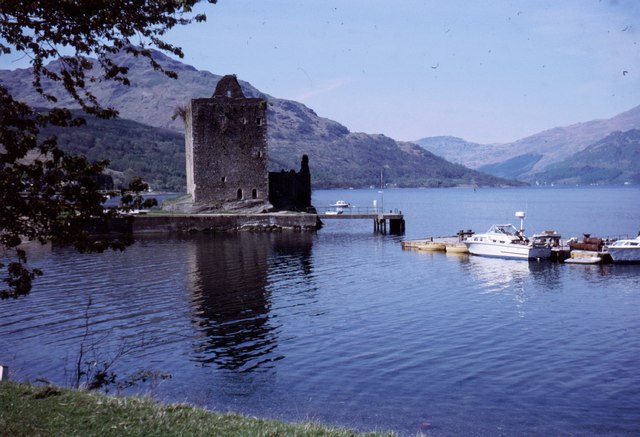
Dunderave Castle
Dunderave Castle is a notable example of a 16th-century Scottish Renaissance castle located on a small promontory overlooking the northern shores of Loch Fyne in Argyll and Bute, Scotland. Built around 1500, it served as the principal seat of the MacNaughton clan, a prominent Scottish family with deep historical roots in the region. The castle's L-plan design is characteristic of Scottish tower houses of the period, combining defensive features with domestic comfort.
Historical background and clan significance
The current structure of Dunderave Castle was erected after the destruction of the clan's earlier residence due to a plague outbreak. The MacNaughtons had occupied the area for centuries, and their original stronghold was located near the Dubh Loch at the head of Glen Shira. Remnants of this earlier castle and associated crannógs—ancient artificial islands used for habitation—can still be found, providing archaeological insight into the clan's early settlement patterns.
Serving as a symbol of the MacNaughtons' territorial control and social status, the castle was central to their governance and defense in the volatile political climate of Renaissance Scotland. Its position on the loch afforded strategic oversight of the surrounding waters and lands, important for both protection and trade.
Architectural features and layout
Dunderave Castle's L-plan layout features a main rectangular block with a wing projecting at right angles, a common design that allowed for better defense and more efficient use of space. The castle's thick stone walls, narrow windows, and battlemented parapets reflect its dual role as a fortified residence. The entrance is typically protected by a gatehouse or fortified doorway, which would have included defensive measures such as a yett (iron grille) or murder holes.
Inside, the castle would have contained a great hall for communal gatherings and feasts, private chambers for the laird and family, and service rooms including kitchens and storage areas. The L-plan also allowed for better lighting and ventilation in the living quarters compared to earlier tower houses.
Defensive elements
The castle's location on a promontory naturally enhanced its defenses, with steep slopes on several sides limiting access. The presence of a surrounding barmkin wall or courtyard would have provided an additional layer of protection for livestock and retainers during times of conflict. Arrow slits and gun loops incorporated into the walls indicate adaptation to evolving military technology during the Renaissance period.
The castle in modern times
Dunderave Castle remains in use as a private residence, preserving much of its historical character while adapting to contemporary living standards. Its well-preserved state offers a glimpse into Scottish Renaissance architecture and the lifestyle of the MacNaughton clan. The castle is not generally open to the public, but its picturesque setting on Loch Fyne makes it a subject of interest for historians and visitors exploring the region's rich heritage.
Nearby, the ruins of the earlier castle and the crannógs at Dubh Loch provide valuable archaeological sites that contribute to understanding the area's medieval history and clan dynamics.
Cultural and architectural significance
Dunderave Castle exemplifies the transition in Scottish castle design during the Renaissance, blending fortified elements with more comfortable residential features. It reflects the social and political changes of the time, where clans sought to demonstrate power through imposing yet habitable structures. Its preservation offers insight into the architectural evolution and clan history of Argyll and Bute.
Frequently asked questions (FAQ)
- What is the historical significance of Dunderave Castle?
- Dunderave Castle, built in the 19th century, is an exemplary piece of Scottish architectural heritage. It reflects the romantic style of the period and is set amidst stunning natural landscapes, showcasing the grandeur of Victorian design while being rooted in the rich history of Argyll.
- When was Dunderave Castle constructed?
- Dunderave Castle was constructed between 1857 and 1859. The castle was designed by the architect David Bryce and serves as a fine example of Scottish baronial architecture.
- What are the opening hours for Dunderave Castle?
- Dunderave Castle is typically open to visitors from April to October, with specific hours varying by day. It is recommended to check the castle's official website for the most up-to-date information on visiting hours before planning your visit.
- Can I access Dunderave Castle by public transport?
- Yes, Dunderave Castle can be accessed by public transport, though options may be limited. Visitors can take a train or bus to nearby towns and then use local taxis or walking routes to reach the castle.
- Is it possible to tour the interior of Dunderave Castle?
- Interior tours of Dunderave Castle are not typically available as it is a private residence. However, the grounds and exterior can be enjoyed, and special events may occasionally offer limited access.
- What is the best time to visit Dunderave Castle?
- The best time to visit Dunderave Castle is during the summer months, from June to August, when the weather is generally pleasant and the gardens are in full bloom. Early spring and autumn can also be beautiful, offering fewer crowds and stunning fall colors.
- Are there any nearby attractions to visit while at Dunderave Castle?
- Yes, nearby attractions include the picturesque village of Inveraray and the scenic Loch Fyne. Visitors can also explore the Argyll Forest Park and various walking trails in the area for a delightful day out.
- What are the ticket prices for Dunderave Castle?
- As Dunderave Castle is primarily a private residence, there is generally no admission fee for visiting the grounds. However, any special events or guided tours may have associated costs, so checking the official website for details is advisable.
- How do I get to Dunderave Castle from Glasgow?
- To reach Dunderave Castle from Glasgow, you can take the A82 and then the A83 through scenic routes that lead to Argyll. The journey takes approximately 2 to 2.5 hours by car, making it a perfect day trip destination.
Loading map...
Visitor reviews
No reviews yet. Been here? Write the first review and help other travelers!
Write the first reviewVisited this castle? Share your experience
Your review helps other travelers and adds first-hand knowledge to our encyclopedia.