Carrick Castle
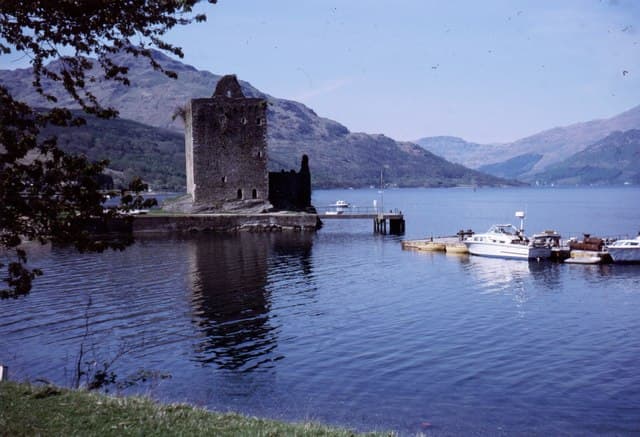
Carrick Castle is a prominent late medieval tower house located on the west shore of Loch Goil on the Cowal Peninsula in Argyll and Bute, Scotland. The castle occupies a strategic position on a rocky peninsula, which provided natural defenses enhanced by a man-made ditch and drawbridge to the landward side. This site has a layered history, with the present structure likely being the third castle built here, reflecting centuries of Scottish history and clan power struggles.
Early history and origins
The earliest known fortification on the site may have been a Viking fort, indicating the location's long-standing strategic importance. The first true castle is believed to have been constructed in the 12th century, serving as a stronghold for the Lamont clan. It was possibly used as a hunting seat by the Scottish kings, underscoring its significance in medieval Scotland.
During the turbulent early 14th century, Robert the Bruce played a key role in the castle's history. In the spring of 1307, Bruce drove the English noble Henry Percy from Carrick Castle. Percy had been granted the castle by Edward I of England, who had confiscated it from Robert. This event was part of Bruce's guerrilla campaign against English occupation during the Wars of Scottish Independence.
The 15th-century reconstruction and Campbell ownership
The current castle dates mainly from the late 15th century, representing the third major construction phase at the site. It was built as a rectangular tower house, a common form of Scottish castle architecture in the late medieval period, combining defensive features with residential comfort. The castle was a royal stronghold held by the Earls of Argyll, members of the powerful Campbell clan, who were hereditary keepers of the fortress.
Carrick Castle was one of the three chief castles of the Campbells in the region, alongside Duart Castle and Fincharn Castle. It symbolized the Campbells' authority and power in South Argyll and served as a key administrative and military center.
Architectural features
The castle measures approximately 66 feet in length and 38 feet in width, with walls about 7 feet thick, rising to a height of 64 feet. It consists of two floors above a central great hall. The thick walls and elevated position provided strong defensive capabilities.
A unique architectural feature is a small chimney built into a window recess, an unusual design choice that adds to the castle's character. Attached to the original tower house is a smaller 17th-century appendage, reflecting later modifications and continued use.
17th-century conflict and damage
In 1685, during the rebellion led by Archibald Campbell, 9th Earl of Argyll, against King James VII, the castle suffered significant damage. The Royal Navy ship HMS Kingfisher bombarded Carrick Castle, severely damaging the keep and causing the roof to collapse. This event marked a turning point in the castle's military importance and physical condition.
Later history and preservation
Following the rebellion, the castle was intermittently occupied and eventually sold to the Murray family, the Earls of Dunmore. For many years, the keep remained a ruin, reflecting the decline of traditional Scottish tower houses as military residences.
Today, Carrick Castle is privately owned and undergoing restoration efforts to preserve its historic fabric. It has been designated both a scheduled monument and a Category A listed building by Historic Environment Scotland, recognizing its national significance.
Location and surroundings
The castle is situated between the small settlements of Cuilmuich and Carrick, approximately 4 miles south of Lochgoilhead. The surrounding area includes modern houses that have adopted the castle's name, indicating its continued cultural influence on the local community.
Access and setting
Standing on a rocky peninsula, the castle's location offers commanding views over Loch Goil and the surrounding landscape. The natural defensive advantages of the site were enhanced by a ditch and drawbridge, features typical of hill castles designed to repel attackers from the landward side.
Frequently asked questions (FAQ)
- When was Carrick Castle originally built?
- Carrick Castle's earliest known fortification dates back to possibly a Viking fort, with the first true castle built in the 12th century. The current structure mainly dates from the late 15th century.
- What architectural style characterizes Carrick Castle?
- Carrick Castle is a late medieval tower house featuring a rectangular tower design typical of Scottish castles from the 15th century, with thick defensive walls and a central great hall.
- Who owned Carrick Castle historically?
- Originally a Lamont stronghold, Carrick Castle passed to Robert the Bruce, then to Henry Percy by Edward I, and later to the Campbell Earls of Argyll in 1368, who held it as a hereditary stronghold.
- Is Carrick Castle open to the public?
- Carrick Castle is privately owned and undergoing restoration, so public access may be limited or restricted. Visitors should check local sources for current visiting information.
- What damage did Carrick Castle sustain during the 1685 rebellion?
- During Archibald Campbell's 1685 rebellion against King James VII, the castle was bombarded by HMS Kingfisher, badly damaging the keep and causing the roof to collapse.
Photo gallery

Information
Current owner
Private owner
Loading map...
Visitor reviews
No reviews yet. Been here? Write the first review and help other travelers!
Write the first reviewVisited this castle? Share your experience
Your review helps other travelers and adds first-hand knowledge to our encyclopedia.