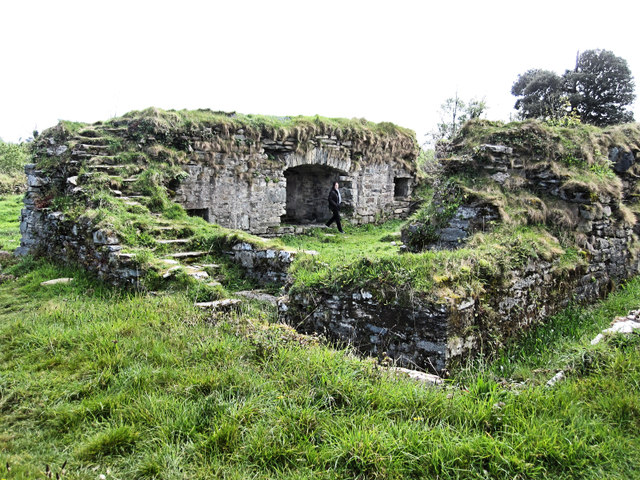
Dunboy Castle
Dunboy Castle, also known as O'Sullivan Beara Castle, is a significant late medieval fortress located on a rocky promontory overlooking Bear Island Sound near the bay shore west of Castletownbere in County Cork, Ireland. Built in the 15th century by Donal O'Sullivan Bere, the castle was strategically positioned to guard and defend the harbor of Berehaven, a vital maritime area. Its primary purpose was to control the rich sea fisheries and to collect taxes from both Irish and continental European fishing vessels that sought shelter in the harbor.
Architectural features and strategic location
The castle's location on a rocky promontory provided natural defenses on several sides, making it a formidable stronghold. The structure was typical of late medieval Irish castles, featuring thick stone walls and defensive battlements designed to withstand assaults. Dunboy Castle's placement allowed it to monitor and control maritime traffic effectively, a crucial factor in the economic and military strength of the O'Sullivan Bere clan.
Historical significance and the siege of 1602
During the Nine Years' War (1594–1603), Dunboy Castle gained historical prominence as the site of the Siege of Dunboy in 1602. At this time, it was the stronghold of Donal Cam O'Sullivan Beare, the Gaelic clan leader and recognized Chief of Dunboy. O'Sullivan was a key figure in the confederation of Gaelic leaders who rebelled against the English Crown, seeking to preserve Irish autonomy. The rebellion was supported by the King of Spain, who stationed Spanish troops at Dunboy Castle as part of their alliance against English rule.
Following the surrender of the Spanish leadership to the English, O'Sullivan took control of the castle, expelling the Spanish garrison. He then fortified the castle further and left to seek reinforcements, entrusting its defense to a garrison of 143 men. The English response was swift and overwhelming. Commanded by Sir George Carew, an English force of approximately 4,500 men laid siege to the castle. Over ten days, the castle was subjected to heavy bombardment, reducing it to ruins.
The defenders, refusing to surrender, sent a messenger to negotiate terms. The English, however, hanged the messenger in full view of the defenders, demonstrating their intent to crush the rebellion decisively. When the English stormed the ruined castle the following day, the defenders had barricaded themselves in the cellar with gunpowder, attempting to detonate it rather than be captured. This was prevented by an English captain, and the surviving defenders were taken prisoner and subsequently executed by hanging.
Post-siege developments and later history
In the 1650s, during the Cromwellian conquest of Ireland, the site of Dunboy Castle was refortified by the Cromwellian government. They constructed an earth rampart around the remains of the ruined tower, adapting the site to contemporary military needs. Despite these efforts, the castle never regained its former prominence and fell into ruin.
Current condition and visitor information
Today, Dunboy Castle stands as a ruined late medieval fortress accessible to the public without charge. While the ruins are not extensive or visually spectacular, the site holds considerable historical interest due to its dramatic past and strategic coastal location. Visitors can explore the remains of the castle and appreciate its commanding views over Berehaven harbor and Bear Island Sound.
Nearby, the abandoned 19th-century Puxley Mansion adds to the historical landscape of the area, offering additional context to the region's architectural and social history.
The enduring legacy of dunboy castle
Dunboy Castle remains a poignant symbol of Gaelic resistance during a turbulent period in Irish history. Its story reflects the broader conflicts of the late medieval and early modern eras, illustrating the clash between native Irish clans, English forces, and international powers such as Spain. The castle's ruins continue to attract historians, archaeologists, and visitors interested in Ireland's complex past and coastal defenses.
Frequently asked questions (FAQ)
- How do I get to Dunboy Castle?
- Dunboy Castle is located near Castletownbere in County Cork, Ireland, accessible via local roads off the R-572. Visitors typically reach it by car or local transport from Castletownbere.
- What is the historical significance of Dunboy Castle?
- Dunboy Castle was a key stronghold for the O'Sullivan Bere clan during the late medieval period and played a pivotal role in the 1602 siege during the Nine Years' War against English forces.
- Can I visit Dunboy Castle for free?
- Yes, Dunboy Castle is freely accessible to the public. There is no entrance fee to explore the castle ruins and the surrounding area.
- What remains of Dunboy Castle can I see today?
- Visitors can see the ruins of the castle's stone walls and the rocky promontory on which it stands. While the structure is largely ruined, the site offers impressive views over Bear Island Sound and Berehaven harbor.
- Is Dunboy Castle suitable for families and children?
- The site is open and accessible, but visitors should be cautious around the ruins and rocky terrain. It is suitable for families who are able to navigate uneven ground and supervise children closely.
Information
Loading map...
Visitor reviews
No reviews yet. Been here? Write the first review and help other travelers!
Write the first reviewVisited this castle? Share your experience
Your review helps other travelers and adds first-hand knowledge to our encyclopedia.