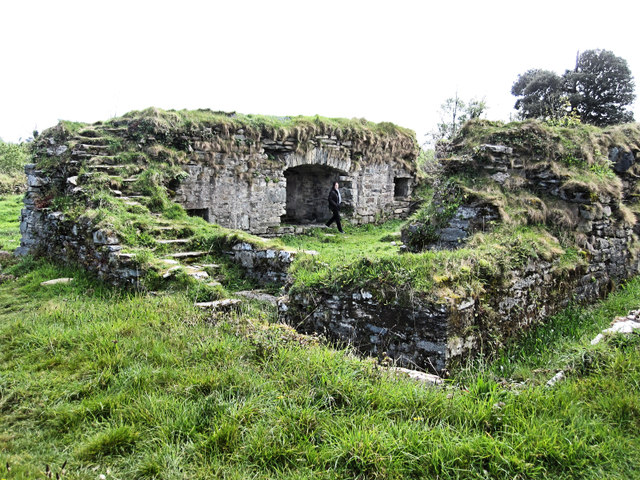
Black Ball Head Signal Tower
Black Ball Head Signal Tower is a historic coastal defense structure located on a prominent headland south of the hamlet of Lower Reen in County Cork, Ireland. Constructed in the early 19th century, this tower was part of a nationwide network of signal towers built in response to the threat of a French invasion during the Napoleonic Wars.
Historical context and purpose
In 1803, the Irish government initiated a strategic plan to erect a series of signal towers around the entire Irish coastline. The primary purpose of these towers was to provide an early warning system against a possible French naval invasion. By 1805, a total of 81 towers were completed, each positioned on elevated, often remote coastal sites with clear lines of sight to neighboring towers. This allowed for rapid communication through visual signals such as flags and black balls hoisted on masts.
Architectural features and design
The Black Ball Head Signal Tower exemplifies the typical design of these early 19th-century signal towers. It is a square, two-story structure with a flat roof and parapet. The entrance is located on the first floor, usually on the seaward side, accessed by ladder or removable stairs to enhance defense. The towers featured machicolations above the entrance and on the landward side, allowing defenders to repel small-scale attacks.
Inside, the tower was equipped with fireplaces to provide warmth for the signaling crew, which typically consisted of 8 to 12 men. The exterior was weather-proofed with either render or slate to withstand the harsh coastal climate. Some towers also included smaller ancillary buildings and were surrounded by protective walls or sloping banks to improve defensibility.
Signaling methods
The communication system relied on visual signals. The most distinctive feature was the use of a black ball hoisted on a mast during daylight hours, which gave the tower its name. At night, different signaling methods such as fires or lanterns were likely used. These signals conveyed messages about the presence and size of enemy fleets, allowing the government in Dublin to prepare defenses accordingly.
Operational history and decline
The network of signal towers, including Black Ball Head, was actively used during the Napoleonic Wars but became obsolete after the defeat of Napoleon at the Battle of Waterloo in 1815. With the diminished threat of invasion and the high costs of maintenance, many towers were abandoned or fell into disrepair. Black Ball Head Signal Tower remains as a partially preserved ruin, offering insight into early 19th-century military communication and coastal defense strategies.
Current status and accessibility
Today, the Black Ball Head Signal Tower stands as a weathered ruin in a scenic and rugged coastal setting. It is freely accessible to visitors, though reaching it requires a steep hike as there are no direct roads or paths leading to the site. Its remote location and exposed position provide a tangible connection to its original role as a sentinel against invasion.
Visitor experience
Visitors to the tower can explore the remains of the structure and appreciate the strategic vantage point it occupies. The surrounding landscape offers impressive views of the coastline and the Atlantic Ocean. The tower's simple yet functional design reflects the practical military architecture of the early 1800s, emphasizing visibility, defense, and communication.
Significance in Irish coastal defense heritage
The Black Ball Head Signal Tower is part of a broader historical narrative involving Ireland's preparedness during a turbulent period in European history. These towers represent an early form of rapid communication and coastal surveillance, predating modern technologies. Their remains are valuable cultural heritage sites that illustrate the intersection of military strategy, architecture, and geography in Ireland's past.
Frequently asked questions (FAQ)
- How do I reach Black Ball Head Signal Tower?
- The tower is located on a remote headland south of Lower Reen and can be reached by hiking up a steep hill. There are no direct roads or paths, so visitors should prepare for a challenging walk.
- What was the purpose of the Black Ball Head Signal Tower?
- Built in the early 19th century, the tower was part of a network designed to spot and signal the approach of enemy fleets, especially during the Napoleonic Wars, to warn the government in Dublin.
- Can I enter the Black Ball Head Signal Tower?
- As a partially preserved ruin, the tower is accessible to visitors. However, caution is advised due to its condition and the rugged terrain surrounding it.
- When was the Black Ball Head Signal Tower built?
- The tower was constructed between 1804 and 1805 as part of a coastal defense initiative during the Napoleonic Wars.
- Why are the signal towers called 'Black Ball' towers?
- They were named after the black balls hoisted on masts to send visual signals during the day, which were a key part of the communication system between towers.
Information
Loading map...
Visitor reviews
No reviews yet. Been here? Write the first review and help other travelers!
Write the first reviewVisited this castle? Share your experience
Your review helps other travelers and adds first-hand knowledge to our encyclopedia.