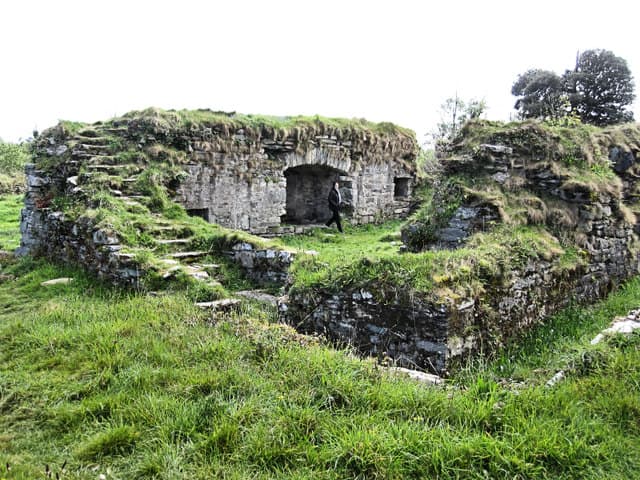
Dunboy Castle
Dunboy Castle (Irish: Caisleán Dhún Baoi) stands as a significant late-medieval fortress located on the Beara Peninsula in south-west Ireland, near the town of Castletownbere. Constructed in the 15th century, this castle was originally built as a tower house with an adjoining bawn—a fortified courtyard typical of Irish defensive architecture of the period. The castle served as a stronghold for the O'Sullivan Beare clan, a powerful Gaelic family who controlled much of the Beara region during the late medieval period.
Architectural design and features
The castle was designed primarily for defense and residence. The tower house was a multi-storey stone structure, featuring thick walls and narrow slit windows that provided protection while allowing archers to defend the castle effectively. The bawn enclosed the tower, offering an additional layer of security and space for livestock and supplies during sieges. The castle's location on a rocky promontory overlooking the sea allowed for strategic control of maritime routes and early warning of approaching enemies.
Defensive elements
Dunboy Castle's defensive design included battlements and a gatehouse, which would have been heavily fortified to resist attack. The castle's position on elevated ground and its thick stone walls made it a formidable fortress in its time. The surrounding landscape, with steep cliffs and rough terrain, further enhanced its natural defenses.
Historical significance and the 1602 siege
The castle is most famously known for its role in the Siege of Dunboy in 1602, a key event during the Nine Years' War (1594–1603), which was fought between Gaelic Irish chieftains and English forces attempting to consolidate control over Ireland. The castle was held by the O'Sullivan Beare clan, who resisted the English Crown's attempts to subdue the region.
During the siege, English forces under Sir George Carew laid siege to Dunboy Castle to break the resistance. Despite the castle's strong defenses, the English army eventually captured it after a fierce assault. The destruction of the tower house and bawn marked the end of the castle's military significance.
Aftermath and legacy
The fall of Dunboy Castle had a profound impact on the O'Sullivan Beare clan and the Beara Peninsula. Following the siege, the clan's power was significantly diminished, and many of its members were forced to flee the region. The castle ruins remain a poignant reminder of this turbulent period in Irish history.
19th-century manor house: Puxley Mansion
In the 19th century, a manor house known as Puxley Mansion was constructed near the castle ruins. Sometimes also referred to as Dunboy Castle, this later building reflects the changing architectural tastes and domestic needs of the period, contrasting sharply with the medieval fortress. While the original castle remains in ruins, the manor house adds another layer to the historical narrative of the site.
Visiting dunboy castle today
Today, Dunboy Castle's ruins are accessible to the public and serve as a cultural and historical attraction. Visitors can explore the remains of the tower house and bawn, gaining insight into medieval Irish fortifications and the dramatic events of the early 17th century. The castle's location offers scenic views of the surrounding coastline and the Atlantic Ocean, making it a popular destination for history enthusiasts and tourists alike.
Interpretive signage and local guides often provide additional context about the castle's history, architecture, and the significant Siege of Dunboy. The site is an important part of the heritage of the Beara Peninsula and contributes to understanding Ireland's medieval past.
Frequently asked questions (FAQ)
- How do I get to Dunboy Castle?
- Dunboy Castle is located near Castletownbere on the Beara Peninsula in south-west Ireland. It is accessible by car via local roads from Castletownbere town center, with parking available nearby.
- What is the historical significance of Dunboy Castle?
- Dunboy Castle was a key stronghold of the O'Sullivan Beare clan and played a pivotal role in the 1602 Siege of Dunboy during the Nine Years' War, marking the decline of Gaelic resistance in the region.
- Can I explore the castle ruins?
- Yes, the ruins of Dunboy Castle are open to the public. Visitors can walk around the remains of the tower house and bawn, experiencing the medieval defensive architecture firsthand.
- When is the best time to visit Dunboy Castle?
- The best time to visit Dunboy Castle is during the late spring to early autumn months when the weather is milder and the surrounding landscape is at its most vibrant.
- Is there an entry fee to visit Dunboy Castle?
- Visiting the ruins of Dunboy Castle is generally free of charge, making it an accessible historical site for all visitors.
- What nearby attractions can I visit after Dunboy Castle?
- After visiting Dunboy Castle, you can explore the scenic Beara Peninsula, including the nearby town of Castletownbere, local hiking trails, and other historical sites such as the Bere Island and the Ring of Beara drive.
Photo gallery

Information
Current owner
State
Loading map...
Visitor reviews
No reviews yet. Been here? Write the first review and help other travelers!
Write the first reviewVisited this castle? Share your experience
Your review helps other travelers and adds first-hand knowledge to our encyclopedia.



