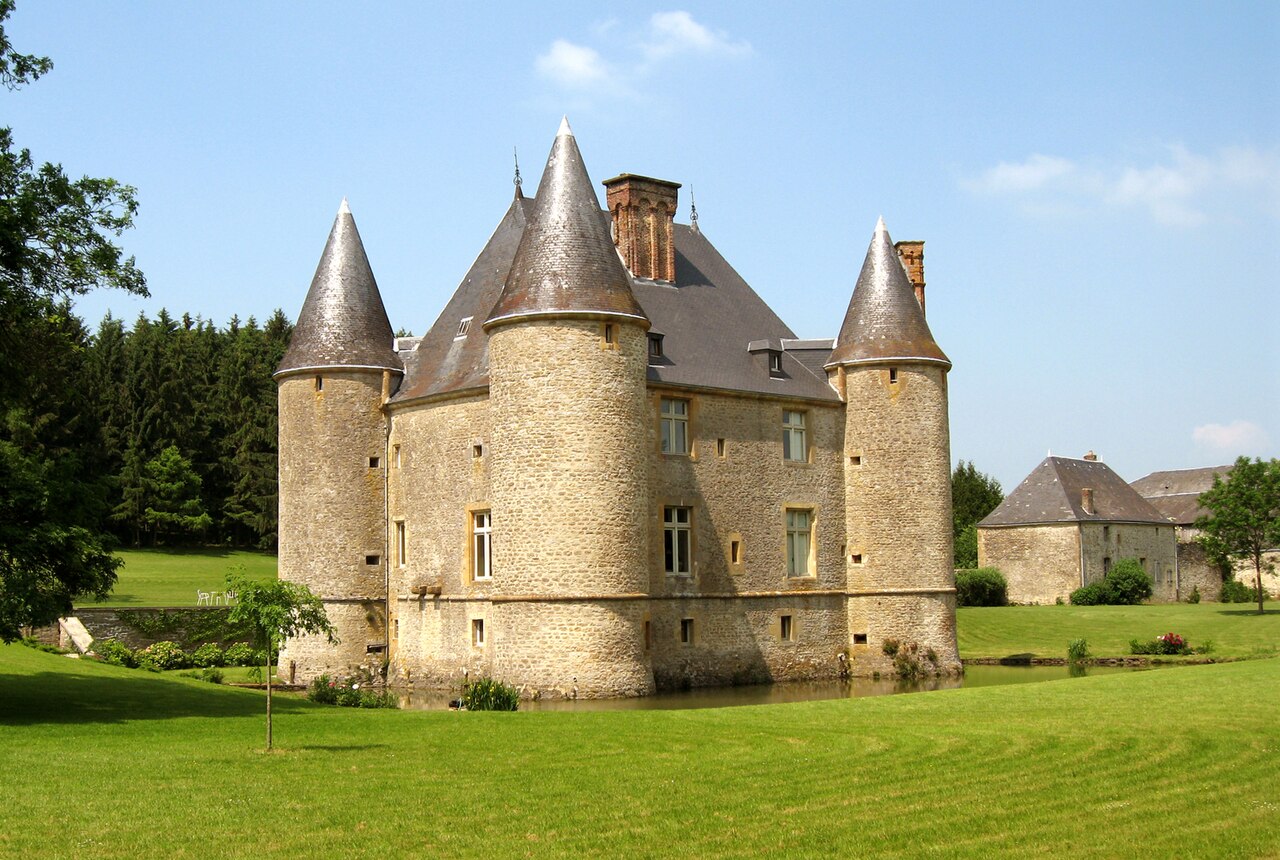
Dun-sur-Meuse Castle
Dun-sur-Meuse Castle, also known locally as Château de Dun-le-Chastel, is situated on an 80-meter high hill overlooking the Meuse river in the village of Dun-sur-Meuse, within the Meuse department of France. This castle's origins trace back to a strategic hill fortification, which was transformed into a medieval stronghold in the mid-11th century. The castle's elevated position provided commanding views of the river valley, making it a significant defensive site throughout its history.
Early history and medieval fortifications
The initial castle was constructed in 1053 by Godfrey III, Duke of Lower Lorraine. This early medieval fortress was built to secure control over the surrounding territory and the vital river route. The castle's design likely included a keep and defensive walls adapted to the hilltop terrain, typical of hill castles of the high medieval period.
In 1402, the castle underwent significant modernization and strengthening under the Lords of Aspremont. These enhancements probably included reinforcing the curtain walls, adding towers, and improving the gatehouse defenses. The fortifications extended to encompass the upper village, effectively transforming Dun-sur-Meuse into a castral village closely linked to the castle's military function.
Conflicts and political changes
During the turbulent period of the French Wars of Religion in the late 16th century, Dun-sur-Meuse Castle was a contested site. In 1592, it was seized by Henri de La Tour d'Auvergne, Duke of Bouillon, acting on behalf of Henry IV of France. At that time, the castle was part of the Duchy of Lorraine, which was a semi-independent territory.
The castle and its surrounding lands were definitively annexed to France in 1641. Following this, Louis XIII of France ordered the systematic dismantling of the fortifications of the upper village between 1641 and 1650. This strategic demolition aimed to reduce the military threat posed by fortified localities. The fortifications of the lower village were not dismantled until 1790, marking the end of the medieval defensive structures in the area.
Modern history and wartime impact
In the 20th century, Dun-sur-Meuse experienced further military significance during World War I. The upper village was occupied by German forces, and notably visited by the German Crown Prince Wilhelm. The area suffered extensive damage during an American offensive in 1918, which led to the near-total destruction of the upper village and any remaining castle structures.
Architectural remains and present-day site
Today, Dun-sur-Meuse Castle survives primarily as archaeological remains, with only some foundations visible. The medieval village walls, however, have endured better and still outline the historic upper village area. The site is freely accessible to visitors, offering panoramic views over the Meuse river valley and the surrounding countryside.
The castle's hilltop location and the remnants of its fortifications provide valuable insight into medieval defensive architecture and the strategic importance of river valleys in the region. While the castle itself is largely lost, the surviving walls and the village layout reflect the historical relationship between the fortress and its community.
Frequently asked questions (FAQ)
- How do I get to Dun-sur-Meuse Castle?
- Dun-sur-Meuse Castle is easily accessible by car, located just off the D964 road in the scenic region of Grand Est, France. If you're using public transport, the nearest train station is in Bar-le-Duc, from which you can take a taxi or local bus to reach the castle.
- What is the historical significance of Dun-sur-Meuse Castle?
- Dun-sur-Meuse Castle dates back to the 13th century and played a vital role in the defense of the region during various conflicts, including the Hundred Years' War. Its strategic location allowed it to serve as a stronghold for local lords and a point of interest for military history enthusiasts.
- When was Dun-sur-Meuse Castle built?
- Construction of Dun-sur-Meuse Castle began in the early 1200s and was completed over several decades. The castle has undergone various renovations and restorations throughout its history, reflecting different architectural styles from medieval to Renaissance.
- Can I visit Dun-sur-Meuse Castle year-round?
- Yes, Dun-sur-Meuse Castle is open to visitors throughout the year, although specific opening hours may vary by season. It’s advisable to check the official website or contact local tourism offices for the most accurate visiting information.
- Why is Dun-sur-Meuse Castle a popular tourist attraction?
- Dun-sur-Meuse Castle attracts visitors due to its rich history, stunning architecture, and picturesque setting overlooking the Meuse River. The castle also hosts various events and exhibitions that showcase its historical significance, making it a cultural hub in the region.
- Is it possible to take guided tours of the castle?
- Yes, guided tours of Dun-sur-Meuse Castle are available and highly recommended for a deeper understanding of its history and architecture. These tours are typically conducted by knowledgeable guides who can provide fascinating insights into the castle's past.
- What are the ticket prices for entering Dun-sur-Meuse Castle?
- Ticket prices for Dun-sur-Meuse Castle vary depending on age and group size, with discounts available for students and seniors. Children under a certain age may enter for free, making it an affordable family outing.
- What are the opening hours for Dun-sur-Meuse Castle?
- Dun-sur-Meuse Castle generally opens at 10 AM and closes at 6 PM during the peak tourist season, with shorter hours in the off-season. It's best to verify the exact hours on the official website, as they may change for holidays or special events.
- What nearby attractions should I visit when at Dun-sur-Meuse Castle?
- While visiting Dun-sur-Meuse Castle, consider exploring the charming town of Dun-sur-Meuse itself, which features several historical sites and beautiful scenery. Additionally, the nearby Verdun Memorial and the Meuse-Argonne American Cemetery are significant locations that commemorate World War I events.
Information
Address
Rue de l'Église, Dun-sur-Meuse, France
Loading map...
Visitor reviews
No reviews yet. Been here? Write the first review and help other travelers!
Write the first reviewVisited this castle? Share your experience
Your review helps other travelers and adds first-hand knowledge to our encyclopedia.