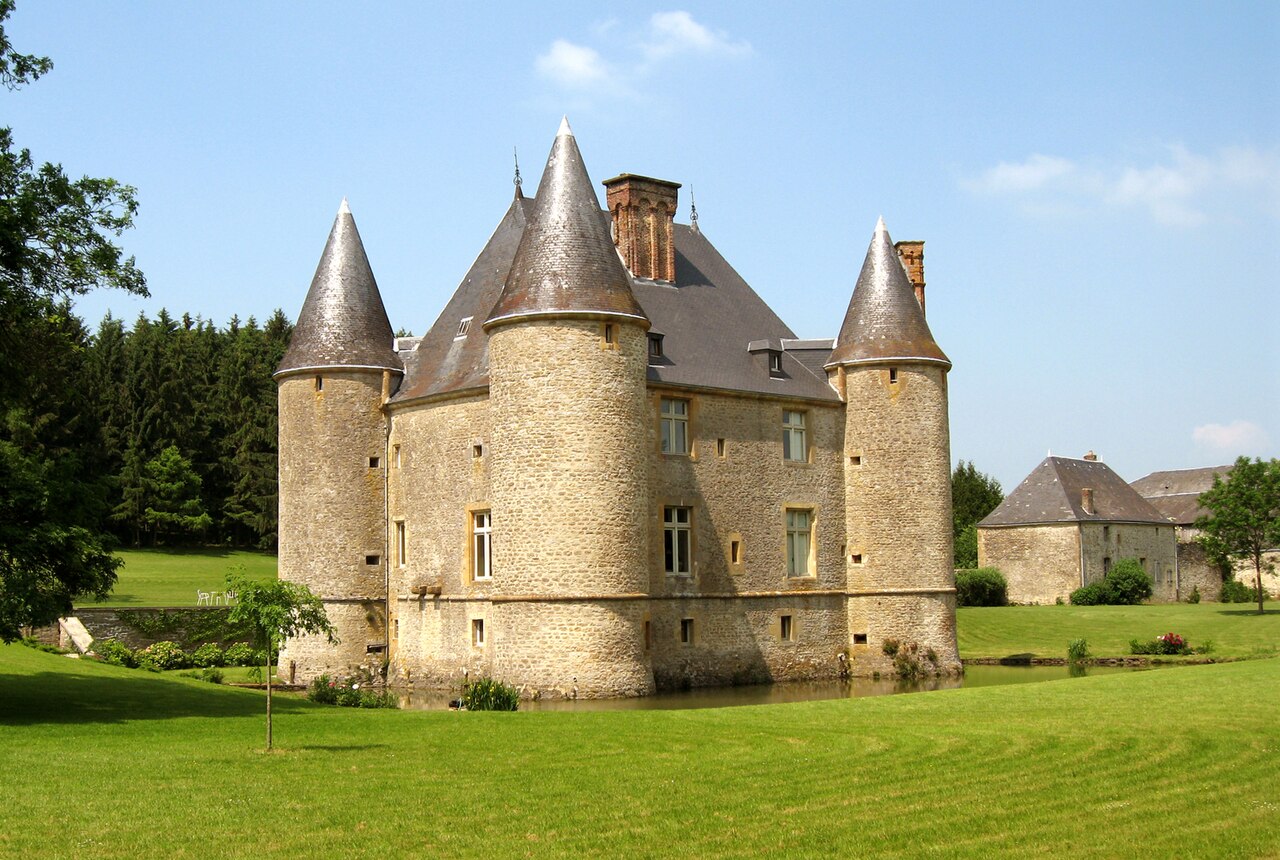
Bolandre Tower
Bolandre Tower, locally known as Tour du Château de Bolandre, is a historic medieval structure situated on the south side of the village of Bantheville in the Meuse department of northeastern France. This tower is the sole surviving remnant of what was once a larger fortified noble residence dating back to the 13th century, reflecting the turbulent feudal era of the region.
The historical context and origins
The High Medieval period in this part of France was marked by the fragmentation of feudal authority and the emergence of numerous small seigneurial domains. During the 13th century, many rural noble families established fortified residences to assert control and provide defense amid frequent conflicts and shifting allegiances. Bolandre Castle was likely constructed in this context, serving as the fortified home of the local lord of the Bolandre family, whose fief was first recorded in the 14th century.
The castle's strategic location near Bantheville allowed it to oversee the surrounding agricultural lands and protect the interests of its noble owners. The design of the castle, with its rectangular plan and multiple towers, was typical of fortified manor houses of the period, combining residential comfort with defensive features.
Architectural features and layout
Historical descriptions from the late 18th century depict Bolandre Castle as a rectangular fortified mansion featuring two round towers positioned at the corners of one of the long facades and a third round tower centrally located on the opposite facade. This arrangement provided overlapping fields of defense and enhanced the castle's ability to withstand attacks. The towers likely housed defensive positions such as arrow slits and battlements.
Similarities have been noted between Bolandre Castle and the nearby Villette Castle, suggesting common architectural influences or regional styles during the medieval period. The masonry would have been robust, constructed from local stone, with thick walls designed to resist siege engines and small arms fire.
Damage, restoration, and decline
Bolandre Castle suffered significant damage during the Thirty Years' War (1618–1648), a devastating conflict that affected much of central Europe, including northeastern France. The castle was later repaired in the latter part of the 17th century, reflecting its continued importance as a noble residence and defensive structure.
During the French Revolution, many properties belonging to the clergy and nobility were confiscated as Bien Nationaux. Bolandre Castle was likely owned by the church at that time and was seized and sold off in 1794. By this period, the castle was described as a fortified mansion, but its military significance had diminished.
In 1869, the castle was repurposed as a quarry, an act that led to the near-total destruction of the original structure. The stone was extracted for other building projects, leaving only the present Bolandre Tower standing as a solitary reminder of the castle's former grandeur. This quarrying activity effectively erased much of the castle's physical history.
Current status and accessibility
Today, Bolandre Tower stands isolated on private farmland and is not open to the public. Its solitary presence amid the fields evokes the medieval past of the region and the once-prevalent feudal landscape. The tower is a valuable historical monument, though its condition is that of a ruin, reflecting centuries of conflict, neglect, and stone removal.
While visitors cannot access the site, Bolandre Tower remains an important subject for historians and enthusiasts interested in medieval architecture and the feudal history of the Meuse region.
Architectural and historical significance
The surviving tower of Bolandre Castle provides insight into the typical fortified residences of rural noble families during the High Medieval period in northeastern France. Its layout with multiple towers is representative of defensive strategies employed in small castles and manors designed to protect against local conflicts and raids.
The castle's history, spanning from its 13th-century origins through damage in the 17th century and decline in the 19th century, illustrates the broader historical forces that shaped the region, including feudal fragmentation, religious ownership, wartime destruction, and revolutionary confiscation.
Bolandre Tower's endurance as a ruin highlights the challenges of preserving medieval structures that have lost their strategic importance and faced economic pressures such as quarrying. It stands as a testament to the layered history of the Meuse countryside and the architectural heritage of medieval France.
Frequently asked questions (FAQ)
- How do I get to Bolandre Tower?
- Bolandre Tower is located in Bantheville, France, and can be accessed by car or public transport. The nearest train station is a short bus ride away, making it convenient for visitors traveling from larger cities. Parking is available near the castle for those driving.
- What is the historical significance of Bolandre Tower?
- Bolandre Tower dates back to the 12th century and served as a fortified structure during the medieval period. It played a crucial role in the defense of the region against invaders and has fascinating tales of nobility and siege. Today, it stands as a testament to the architectural prowess of its time.
- When was Bolandre Tower last renovated?
- Bolandre Tower underwent significant renovations in the early 21st century to preserve its historical integrity and enhance visitor experience. These restorations focused on stabilizing the structure and restoring its original features. The tower now offers guided tours that highlight its rich history.
- Can I take photographs inside Bolandre Tower?
- Yes, photography is allowed inside Bolandre Tower, but visitors are encouraged to be respectful of the exhibits and other guests. Some areas may have restrictions, so it’s best to check with the staff upon arrival. Capturing the stunning architecture and views from the tower is a must!
- Why is Bolandre Tower considered an architectural masterpiece?
- Bolandre Tower showcases a blend of Romanesque and Gothic architectural styles, with intricate stonework and towering spires that captivate visitors. Its design reflects the defensive needs of the time while also incorporating aesthetic elements that highlight the skill of the builders. The attention to detail in its construction makes it a fascinating study for architecture enthusiasts.
- Is it possible to visit Bolandre Tower year-round?
- Yes, Bolandre Tower is open to visitors year-round, although opening hours may vary by season. It is recommended to check the official website for the most current hours and any special events. Visiting during the off-peak season can also provide a quieter experience.
- What are the ticket prices for Bolandre Tower?
- Tickets to Bolandre Tower are reasonably priced, with discounts available for children, students, and seniors. Family packages are also offered, making it an affordable outing for everyone. Be sure to check for any special promotions or events that may include free entry.
- What is the best time to visit Bolandre Tower?
- The best time to visit Bolandre Tower is during the spring and early fall when the weather is pleasant and the gardens surrounding the tower are in bloom. Summer can be busy with tourists, while winter may present colder conditions. Visiting on weekdays often results in fewer crowds.
- Are there any nearby attractions to Bolandre Tower?
- Yes, there are several attractions near Bolandre Tower, including the historic village of Bantheville and picturesque walking trails in the surrounding countryside. Local museums and artisan shops offer a glimpse into the region's culture. Plan your visit to include some time exploring these nearby sites for a full experience.
Information
Loading map...
Visitor reviews
No reviews yet. Been here? Write the first review and help other travelers!
Write the first reviewVisited this castle? Share your experience
Your review helps other travelers and adds first-hand knowledge to our encyclopedia.