Dún Ailinne — Ireland castle

Dún Ailinne

Dún ailinne: ancient ceremonial hilltop enclosure in ireland
Early Medieval (5th–10th c.)
Ruins

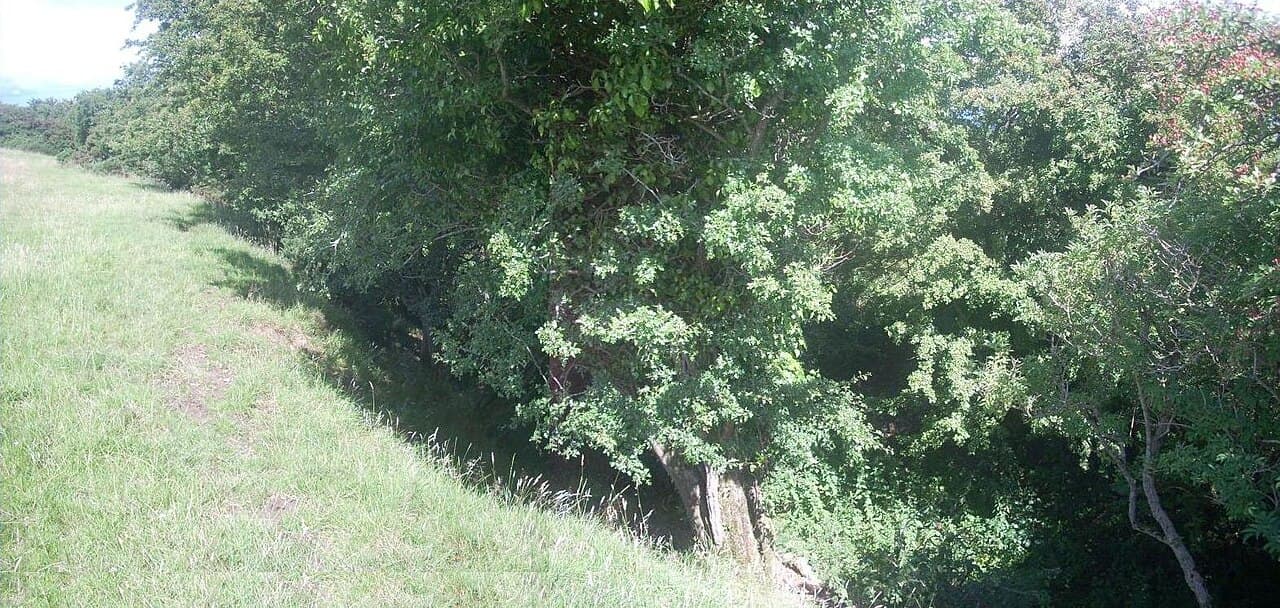
Dún Ailinne is a significant ancient ceremonial site located on the hill of Cnoc Ailinne (Knockaulin) in County Kildare, Ireland. This site, also known by its anglicized name Dun Aulin, occupies a large circular enclosure covering approximately 13 hectares on the hilltop, which rises to 183 metres (600 feet) above sea level. Although no visible structures remain on the surface, detailed archaeological excavations have revealed the presence of circular timber structures or rings of upright timbers dating back to the Irish Iron Age (circa 400 BCE – 400 CE). These findings indicate that Dún Ailinne was a place of considerable importance during this period.

Historical significance and royal connections

Dún Ailinne holds a prominent place in early Gaelic Ireland's mythology and historical tradition. It was regarded as one of the great royal sites where the Kings of Leinster were inaugurated, positioning it alongside other major royal sites such as Tara (for the Kings of Meath), Navan Fort (for the Kings of Ulster), and Rathcroghan (for the Kings of Connacht). These royal associations are documented in early medieval texts, though these were composed long after the site's primary period of use. Consequently, the precise relationship between Dún Ailinne and early medieval kingship remains a subject of scholarly debate.

Archaeological features and excavations

The site is characterized by a large circular earthwork enclosure that once surrounded the hilltop. Archaeological investigations have uncovered evidence of multiple phases of construction and use, including timber structures arranged in concentric circles. These timber rings likely served ceremonial or ritual purposes, possibly related to kingship rites or seasonal festivals. The presence of postholes and other features suggests a complex layout that evolved over several centuries during the Iron Age.

Despite the lack of standing structures today, the archaeological record at Dún Ailinne provides valuable insight into prehistoric ceremonial practices in Ireland. The site exemplifies the use of timber architecture in ritual contexts, contrasting with the stone-built monuments more commonly associated with later periods.

Location and accessibility

Dún Ailinne is situated southwest of Kilcullen, near the R418 road leading to Athy. The hill's elevation affords visibility across the surrounding landscape, making it a prominent landmark. However, the site itself lies on private property and is not accessible to the public. Visitors interested in viewing the location can do so from the nearby Old Kilcullen churchyard, which features a historic round tower and offers free public access with clear views of the hilltop enclosure.

It is important to distinguish Dún Ailinne from the nearby Hill of Allen (Cnoc Alúine), located to the northwest, as the two are separate sites with distinct historical and archaeological identities.

Cultural heritage and preservation status

Today, Dún Ailinne is classified as an archaeological ruin, with its physical remains largely subsumed by the landscape. The site has been the focus of various archaeological studies aimed at understanding Ireland's prehistoric ceremonial traditions and royal inauguration practices. Its preservation as a protected archaeological site ensures that this important piece of Irish heritage remains recognized, even though it is not developed as a tourist destination.

The absence of visible ruins underscores the challenges of preserving timber-based prehistoric monuments, which often leave minimal traces above ground. Nonetheless, Dún Ailinne's significance lies in its role as a key site for understanding the social and political structures of Iron Age Ireland.

Frequently asked questions (FAQ)

What is dún ailinne and why is it important?
Dún Ailinne is an ancient ceremonial site in County Kildare, Ireland, linked to the kingship and inauguration of Leinster's early rulers. It is important for understanding Ireland's Iron Age and early medieval history.
Can I visit dún ailinne?
Dún Ailinne is on private land and is not open to the public. However, visitors can view the site from the nearby Old Kilcullen churchyard, which is freely accessible and offers good views of the hill.
When was dún ailinne constructed?
Archaeological evidence dates Dún Ailinne's timber structures to the Irish Iron Age, approximately 400 BCE to 400 CE.
What kind of structures were found at dún ailinne?
Excavations revealed circular timber rings and earthwork enclosures indicating ceremonial use, but no standing stone structures remain today.
Is dún ailinne related to other royal sites in Ireland?
Yes, it is considered one of the four great royal sites of early Gaelic Ireland, alongside Tara, Navan Fort, and Rathcroghan, associated with regional kingship.

Photo gallery

Dún Ailinne
Click to view

Photo by Frankysandwich•CC BY-SA 3.0

1 photo • Click any image to view in full screen

Information

Archaeological Site / Ruins

Loading map...

Visitor reviews

No reviews yet. Been here? Write the first review and help other travelers!

Write the first review

Visited this castle? Share your experience

Your review helps other travelers and adds first-hand knowledge to our encyclopedia.

Write a review

(5/5)

0/2000 characters

Your review will be visible after admin approval

Nearby castles

19.7 km

Kilkea Castle

Kilkea, United Kingdom

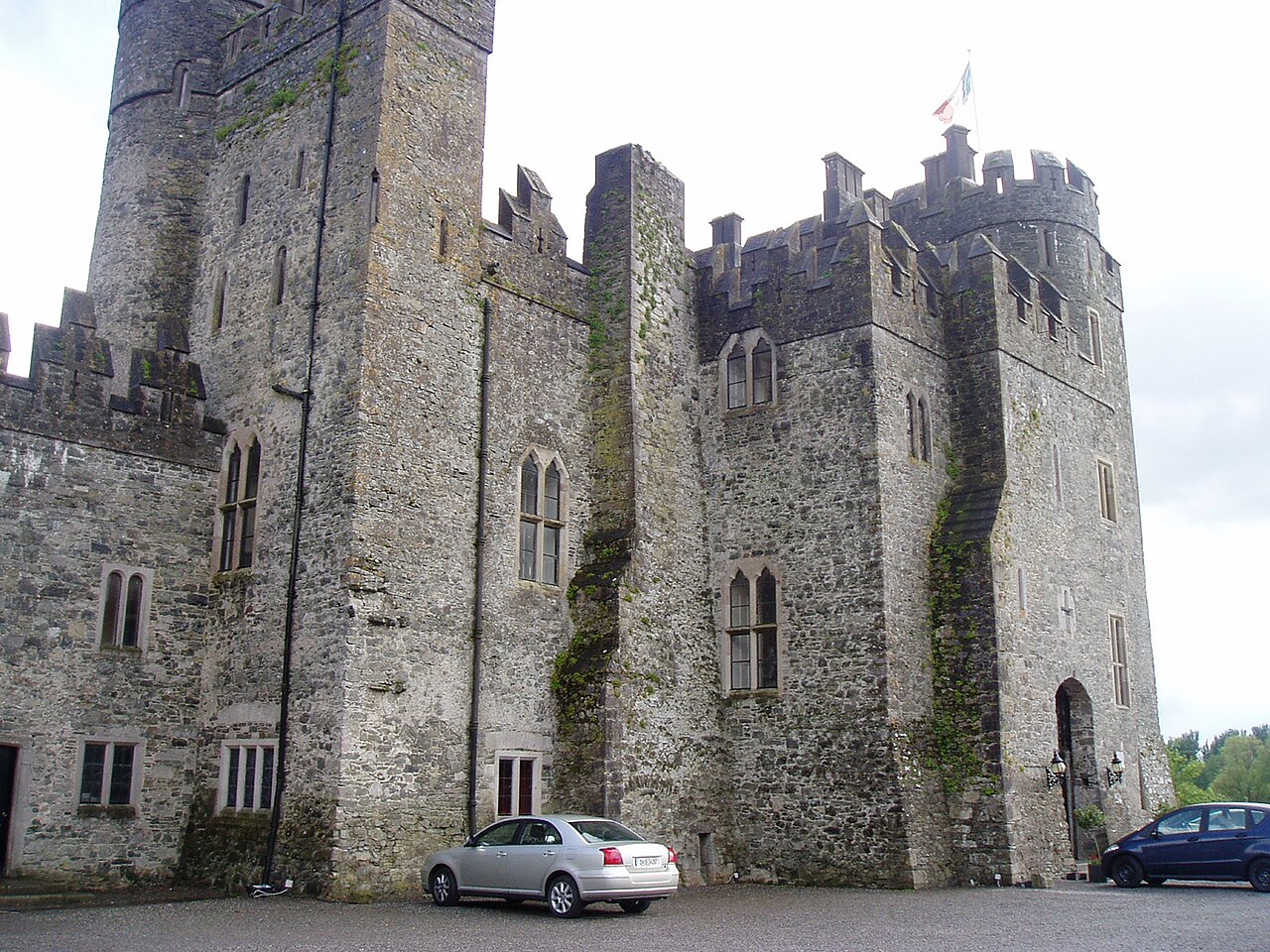
Kilkea Castle stands as a remarkable testament to the turbulent and rich history of Norman Ireland. Located near the village of Kilkea in County Kildare, Ireland, this castle originated in the late 12th century as a motte-and-bailey fortification, a common Norman military design featuring a wooden stronghold atop an artificial mound. Founded in 1180 by Sir Walter de Riddlesford, a Norman knight, Kilkea Castle was initially constructed to secure Norman control during their expansion into Irish territories. The castle's historical significance is deeply intertwined with the Fitzgerald family, one of the most powerful Anglo-Irish dynasties. The estate passed into Fitzgerald hands through marriage, when de Riddlesford's granddaughter wed Maurice Fitzgerald, 3rd Baron of Offaly. This family maintained possession of Kilkea Castle for over seven centuries, shaping its evolution from a wooden fortress into a substantial stone castle. Medieval origins and architectural evolution The original motte-and-bailey design of Kilkea Castle reflects the typical Norman approach to fortification during the High medieval period. The motte, an artificial mound, provided a vantage point for surveillance and defense, while the bailey enclosed a courtyard protected by wooden palisades. Over time, the wooden structures were replaced with stone, marking a transition to a more permanent and defensible residence. In the early 15th century, significant reconstruction transformed Kilkea Castle under the direction of John FitzGerald, 6th Earl of Kildare. This rebuilding phase, around 1426, strengthened the castle's defenses and enhanced its residential capabilities. The stone walls, towers, and gatehouses from this period exemplify medieval military architecture adapted to the needs of a powerful noble family. Defensive features and layout The castle's layout includes robust curtain walls and fortified towers that provided defensive positions against attackers. While specific details of the original bailey and motte structures have been obscured by later modifications, the surviving stonework reveals a complex designed for both defense and habitation. The castle's hilltop location further enhanced its strategic advantage, allowing control over the surrounding countryside. The wizard earl and cultural legacy The 16th century brought one of Kilkea Castle's most colorful historical figures, Gerald FitzGerald, 11th Earl of Kildare, known as the "Wizard Earl." Following the tragic execution of his half-brother "Silken Thomas" and other family members during the Tudor suppression of Irish nobility, Gerald became the head of the Fitzgeralds. He was reputed to practice alchemy and magic, contributing to local legends that he would return to Kilkea Castle every seven years riding a silver-shod white horse. These stories have become an integral part of the castle's folklore, enriching its cultural heritage. Religious significance and later history In the 17th century, Kilkea Castle served a religious role when the widow of the 14th Earl of Kildare leased it to the Jesuit Order. The Jesuits used the castle as a residence from 1634 until 1646, during which time it also provided refuge to Archbishop Rinuccini, the papal nuncio to the Irish Confederation. This period highlights the castle's strategic and ecclesiastical importance amid the Irish Confederate Wars. The 18th century saw the Fitzgerald family relocate their main seat to Carton House, leasing Kilkea Castle to tenants such as Thomas Reynolds, a silk merchant and informer during the 1798 United Irishmen rebellion. The castle was sacked by military forces during this uprising, reflecting the unrest in Ireland at the time. 19th-century restoration and modern use After suffering fire damage in 1849, Kilkea Castle was restored under the care of Lord Walter, 3rd Duke of Leinster, who resided there and founded the Kildare Archaeological Society in 1891. This restoration preserved the castle into the modern era and demonstrated a commitment to heritage conservation. Following the sale of Carton House in 1949, Kilkea became the residence of the 8th Duke of Leinster. The Fitzgerald family eventually sold the castle in 1960, after which it was converted into a hotel. Despite financial challenges leading to its closure, the castle was later acquired by an American businessman who invested in renovations and reopened it as a resort, blending historic charm with modern hospitality. Architectural significance and cultural context Kilkea Castle's architecture encapsulates the evolution of Norman military design into a fortified noble residence. Its initial motte-and-bailey form gave way to a substantial stone castle with curtain walls, towers, and residential quarters reflecting medieval and post-medieval architectural trends. The castle's position near the R418 regional road and its commanding hilltop site underscore its strategic importance throughout history. The castle also holds a place in broader cultural history due to its proximity to the birthplace of Sir Ernest Shackleton, the renowned polar explorer born nearby in 1874. This connection adds an additional layer of historical interest to the site. Archaeological and preservation status While no extensive archaeological discoveries such as inscriptions or mosaics have been documented at Kilkea Castle, the surviving structures reveal a palimpsest of architectural adaptations spanning centuries. The castle remains well preserved thanks to restoration efforts, allowing visitors to appreciate its layered history and architectural complexity. Visiting kilkea castle today Today, Kilkea Castle functions as a luxury resort and hotel, offering guests the opportunity to experience a historic castle setting with modern amenities. Its rich history, architectural features, and legendary associations make it a compelling destination for visitors interested in Irish history, Norman architecture, and folklore. Visitors can explore the castle's grounds, appreciate its medieval and Victorian architectural elements, and learn about the Fitzgerald family's enduring legacy. The castle's blend of historical authenticity and contemporary hospitality ensures its continued relevance as a cultural landmark in County Kildare.

High Medieval (11th–13th c.)
Details
19.7 km
Kilkea Castle — Ireland castle

Kilkea Castle

Castledermot, Ireland

Kilkea Castle is a prominent medieval hill castle situated approximately 5 km northwest of Castledermot in County Kildare, Ireland. Positioned near the village of Kilkea on the R418 regional road connecting Athy to Tullow, this castle served as the ancestral seat of the Fitzgerald family, Earls of Kildare, for over seven centuries. Its strategic location on elevated ground provided both defensive advantage and control over the surrounding lands, a common feature of hill castles constructed during the medieval period. Historical background and significance The origins of Kilkea Castle trace back to the late 12th century, shortly after the Norman invasion of Ireland. The Fitzgeralds, a powerful Anglo-Norman dynasty, established the castle as a stronghold to consolidate their influence in the region. Over the centuries, Kilkea Castle became a symbol of the family's power and prestige, witnessing numerous historical events tied to the turbulent history of Ireland. Throughout its history, the castle played a key role during the medieval and early modern periods, including involvement in various conflicts such as the Wars of the Roses and the Irish Confederate Wars. The Fitzgeralds' loyalty and political alliances shifted over time, reflecting the complex dynamics between English rule and Irish interests. Architectural features and development Original medieval construction The castle's earliest structures were typical of Norman fortifications, featuring a rectangular keep with thick stone walls designed for defense. The initial construction included a moat and curtain walls enclosing a courtyard, with towers positioned at strategic points to maximize surveillance and protection. Later modifications and expansions Over the centuries, Kilkea Castle underwent several phases of enlargement and remodeling. In the 16th and 17th centuries, Renaissance influences began to appear, with the addition of more comfortable living quarters, larger windows, and decorative elements reflecting changing tastes and the castle's transition from purely military use to a noble residence. Despite these updates, many medieval defensive features remained intact, including battlements and arrow slits. The castle's walls were reinforced to withstand artillery, a necessity during the evolving warfare of the period. The castle's decline and restoration efforts Following the decline of the Fitzgerald family's fortunes and the political upheavals of the 17th and 18th centuries, Kilkea Castle gradually fell into disrepair. Parts of the structure were abandoned, and the castle ceased to function as a primary residence. In the 20th century, restoration efforts began to preserve the castle's historical fabric. These initiatives aimed to stabilize the ruins and adapt sections of the castle for modern use, including hospitality purposes. Today, Kilkea Castle operates as a hotel and golf resort, blending its rich heritage with contemporary amenities. Cultural and heritage importance Kilkea Castle stands as a significant monument to Ireland's medieval past and the legacy of the Fitzgerald dynasty. Its long history reflects the broader narrative of Anglo-Norman influence, Irish nobility, and the changing political landscape over several centuries. The castle attracts visitors interested in medieval architecture, Irish history, and heritage tourism. Its preservation provides valuable insights into castle construction techniques, defensive strategies, and noble life in Ireland from the medieval period onward.

Late Medieval (14th–15th c.)
Details
20.9 km
Threecastles Castle — Ireland castle

Threecastles Castle

Blessington, Ireland

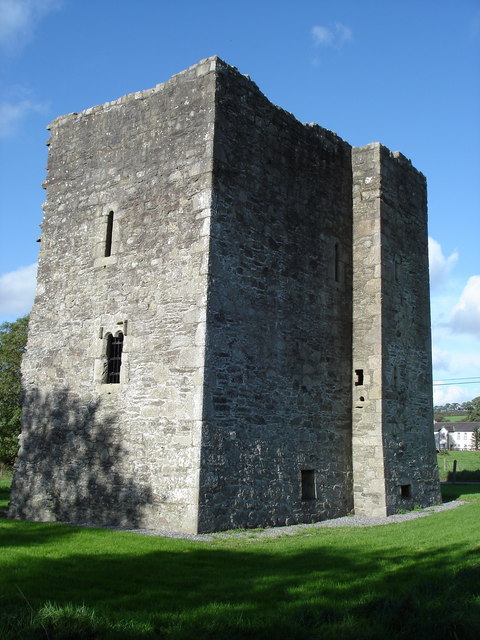
Threecastles Castle is a notable example of a three-storey tower house located near Blessington in County Wicklow, Ireland. This hill castle stands prominently on elevated ground, a strategic choice typical of medieval defensive architecture. Recognized as a national monument, it reflects the historical and architectural heritage of the region. Architectural features and structure The castle is primarily constructed as a tower house, a common type of fortified residence built in Ireland during the late medieval period. Tower houses were typically built between the 15th and 17th centuries, serving both as defensive structures and comfortable homes for the local gentry. Threecastles Castle rises three storeys high, with thick stone walls designed to withstand attacks and sieges. Its vertical design includes narrow windows and arrow slits, which provided both light and defensive capabilities. The castle likely features a vaulted ground floor used for storage and service functions, with living quarters on the upper floors. The entrance would have been secured with a heavy wooden door, possibly reinforced with iron. The castle's elevated position on a hill offers commanding views of the surrounding landscape, an important defensive advantage in medieval times. This location helped monitor and control movement through the area, deterring potential attackers. Historical context and significance While specific historical records about Threecastles Castle are limited, tower houses like this one were integral to the social and military fabric of medieval Ireland. They were often built by local lords or wealthy families to assert control over their lands and protect against rival clans or invaders. County Wicklow, with its rugged terrain and strategic location near Dublin, was a region of frequent conflict during the medieval period. Castles such as Threecastles played a role in regional defense and administration. Preservation and current status Today, Threecastles Castle is well preserved and protected under Irish heritage laws as a national monument. Its condition allows visitors to appreciate the typical features of a medieval Irish tower house. Conservation efforts have ensured the stability of the structure while maintaining its historical integrity. Access to the castle may be subject to local regulations, but it remains an important cultural landmark in County Wicklow, attracting those interested in medieval architecture and Irish history. Visiting information and nearby attractions Visitors to Threecastles Castle can explore the surrounding area of Blessington, which offers scenic views and other historical sites. The castle's hilltop location provides a unique vantage point over the Wicklow countryside. Nearby attractions include the Blessington Lakes and the Wicklow Mountains National Park, both popular destinations for outdoor activities and sightseeing.

Late Medieval (14th–15th c.)
Details