Dudley Castle
Dudley Castle is a prominent ruined fortification located on Castle Hill, a limestone outcrop in Dudley, West Midlands, England. This historic site began as a wooden motte and bailey castle constructed shortly after the Norman Conquest around 1070 by Ansculf de Picquigny or his son William Fitz-Ansculf. It is recorded in the Domesday Book of 1086, confirming its early importance as a Norman stronghold in the region.
The castle underwent significant transformation during the High Medieval period, initially rebuilt in stone by the Paganel family in the early 12th century. This stone fortification endured a siege in 1138 during the reign of King Stephen. However, after Gervase Paganel rebelled in 1173, King Henry II ordered the castle's partial demolition, a process known as slighting, which removed much of the stonework to prevent its military use.
Medieval reconstruction and architectural development
From 1262 onwards, the Somery family initiated an extensive rebuilding program that extended into the 14th century. This phase introduced the 13th-century stone keep and the main gatehouse, which remain key features of the castle ruins. The keep is situated atop the motte, an oval-shaped mound about 9 meters high, and is notable for its slightly rectangular plan measuring approximately 15 by 22 meters. It is fortified by four large drum towers at each corner, each about 9.8 meters in diameter. Following the castle's slighting during the English Civil War, only the northern side and parts of two drum towers remain visible today.
The main gatehouse, located east of the keep, primarily dates from the post-1262 rebuilding by the Somerys but incorporates earlier Norman architectural elements from the Paganell period. Originally, it featured a double gateway with two portcullises, three floors housing portcullis machinery and a guardroom, and battlements above for defense. Later, a barbican known as the ‘Triple Gate’ was added to enhance security. A thick curtain wall once connected the gatehouse to the keep, enclosing the bailey.
Tudor enhancements and residential expansions
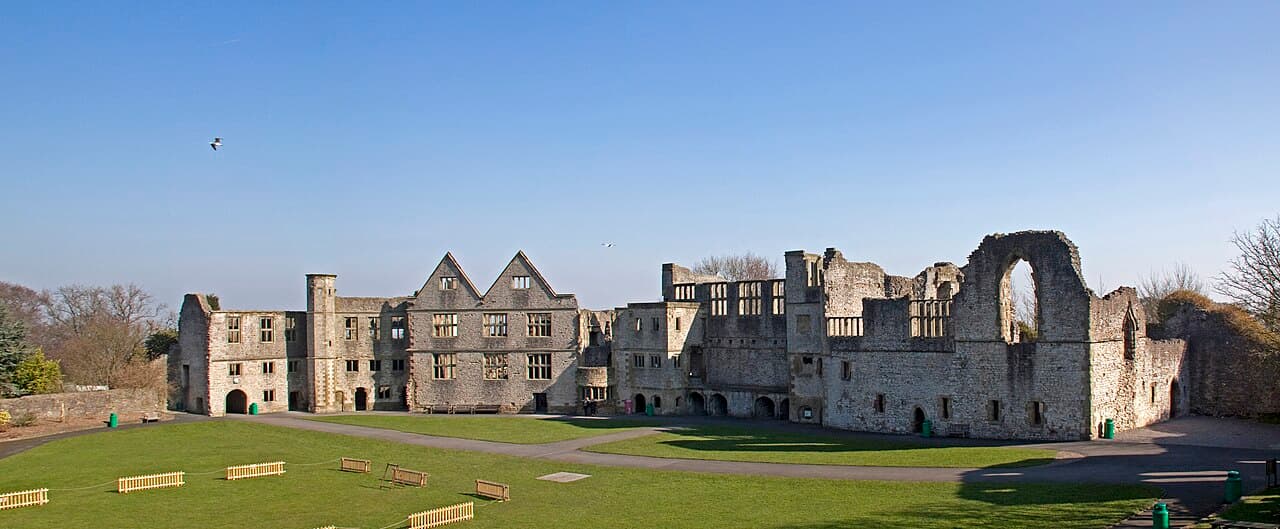
Ownership of Dudley Castle passed through several noble families, including the Suttons and notably John Dudley, Duke of Northumberland. Around 1540, Dudley commissioned the construction of the Sharington Range, a three-storey complex designed by architect William Sharington. This range reflected early Italian Renaissance architectural influences and included a great hall, kitchen, servery, buttery, cellars, and bedrooms, emphasizing the castle's evolution from a purely military fortress to a noble residence.
Additional residential and religious buildings were added under John Sutton II, including a chapel and a great chamber, which enhanced the castle's status as a noble household. These Tudor-period structures were mostly destroyed by a fire in 1750, leaving only ruins.
Role in the english civil war and later history
During the First English Civil War, Dudley Castle was a significant Royalist stronghold. It endured a siege in 1644 and ultimately surrendered in 1646. Following the war, Parliament ordered the castle to be partially demolished or “slighted” to prevent future military use, which significantly damaged its fortifications.
After the Civil War, some buildings remained habitable but were gradually abandoned. The devastating fire of 1750 destroyed most of the remaining residential buildings. In the 19th and early 20th centuries, the castle grounds became a venue for public fêtes and pageants, reflecting its cultural importance in the local community.
In 1937, Dudley Zoo was established within the castle grounds, adding a new dimension to the site’s use and attracting visitors interested in both history and wildlife. The castle itself is a Grade I listed building and a scheduled monument, recognized for its historical and architectural significance. Despite its ruined condition, Dudley Castle remains a key heritage site, though it was added to Historic England’s Heritage at Risk register in 2020.
Architectural features and castle layout
Dudley Castle occupies an oval-shaped site approximately 100 meters north to south and 80 meters east to west, typical of Norman motte and bailey castles. The motte is an artificial mound about 9 meters high, constructed with a core of limestone rubble covered in clay, originally surrounded by a moat that may have been wet or dry. The bailey is enclosed by a dry moat, providing an additional layer of defense.
The 13th-century keep atop the motte is the most prominent surviving structure, with its four drum towers designed for both defense and imposing presence. The main gatehouse to the east, with its double gateway and portcullises, exemplifies medieval military architecture, while the later added barbican enhanced its defensive capabilities.
To the east of the keep and gatehouse stood the great chamber and chapel block, built under John Sutton II and remodeled during the Tudor period. Although these buildings were ruined by the 1750 fire, their foundations and partial walls provide insight into the castle’s residential and religious functions.
The Sharington Range, constructed around 1540, was a notable Tudor addition reflecting Renaissance influences. Unfortunately, it was also destroyed by fire, but historical records and archaeological remains help reconstruct its significance.
A stable block dating from before 1700 lies between the main gate and the motte base. Initially mistaken for lodgings, it is now identified as stables and represents the last significant building phase at the castle.
Downhill from the main gate are an Elizabethan gatehouse and a round east watch tower, connected by a defensive wall. These structures date from the Elizabethan era and served surveillance and defense purposes during a time of evolving military technology.
In 1857, two Russian cannons captured during the Crimean War were installed on the remains of the two south-facing drum towers, adding a Victorian-era historical layer to the site.
Visitor experience and modern significance
Today, Dudley Castle is a popular heritage site attracting visitors interested in medieval and Tudor history, military architecture, and English heritage. The castle grounds include a visitor centre opened in 1994 that features a computer-generated reconstruction of the castle as it appeared around 1550, offering an immersive educational experience. This virtual tour was among the early uses of digital technology to enhance historical interpretation.
The castle’s dramatic ruins, combined with the adjacent Dudley Zoo, make it a unique destination blending history and wildlife. The site’s status as a Grade I listed building and a scheduled monument ensures ongoing conservation efforts to preserve its legacy for future generations.
Despite its ruined condition, Dudley Castle remains a testament to the architectural evolution from Norman military fortification to Tudor noble residence, reflecting centuries of English history and heritage.
Frequently asked questions (FAQ)
- How do I get to Dudley Castle?
- Dudley Castle is easily accessible by public transport, with regular bus services from Birmingham and surrounding areas. If you are driving, there is parking available nearby, but it is advisable to check for any parking fees or restrictions.
- What is the historical significance of Dudley Castle?
- Dudley Castle has a rich history dating back to the 11th century and played a crucial role in the defense of the region during the medieval period. It has witnessed many significant events, including the English Civil War, and is a symbol of Dudley's heritage.
- When was Dudley Castle built?
- Dudley Castle was originally constructed in the 11th century by the Norman lord, Dudley. Over the centuries, it has undergone various modifications and expansions, reflecting the architectural styles of different periods.
- Can I take guided tours of Dudley Castle?
- Yes, guided tours are available at Dudley Castle, providing visitors with insights into its fascinating history and architecture. These tours are led by knowledgeable guides who can answer questions and share stories about the castle's past.
- Why is Dudley Castle popular among tourists?
- Dudley Castle attracts visitors due to its stunning architecture, historical significance, and picturesque views of the surrounding area. Additionally, it offers engaging activities and events throughout the year, making it a great destination for families and history enthusiasts.
- Is it possible to host events at Dudley Castle?
- Yes, Dudley Castle offers facilities for hosting various events, including weddings, corporate events, and private functions. The unique setting and historical ambiance make it a memorable choice for special occasions.
- What are the opening hours of Dudley Castle?
- Dudley Castle is typically open to the public from 10 AM to 5 PM, but hours may vary depending on the season or special events. It is recommended to check the official website for the most current information before planning your visit.
- What are the ticket prices for Dudley Castle?
- Ticket prices for Dudley Castle vary based on age and whether you purchase them in advance or on the day of your visit. Discounts may be available for families, groups, or local residents, so be sure to check for any promotions.
- When is the best time to visit Dudley Castle?
- The best time to visit Dudley Castle is during the spring and summer months when the weather is generally mild and pleasant. Additionally, special events and activities are often held during these seasons, enhancing the visitor experience.
- Are there any nearby attractions to Dudley Castle?
- Yes, Dudley Castle is close to several attractions, including the Black Country Living Museum and Dudley Zoo. These nearby sites offer additional opportunities to explore the rich history and culture of the region.
Photo gallery

Information
Website
Visit websiteSources & official resources
Verify the information above using these authoritative references.
Loading map...
Visitor reviews
No reviews yet. Been here? Write the first review and help other travelers!
Write the first reviewVisited this castle? Share your experience
Your review helps other travelers and adds first-hand knowledge to our encyclopedia.