Dudhope Castle
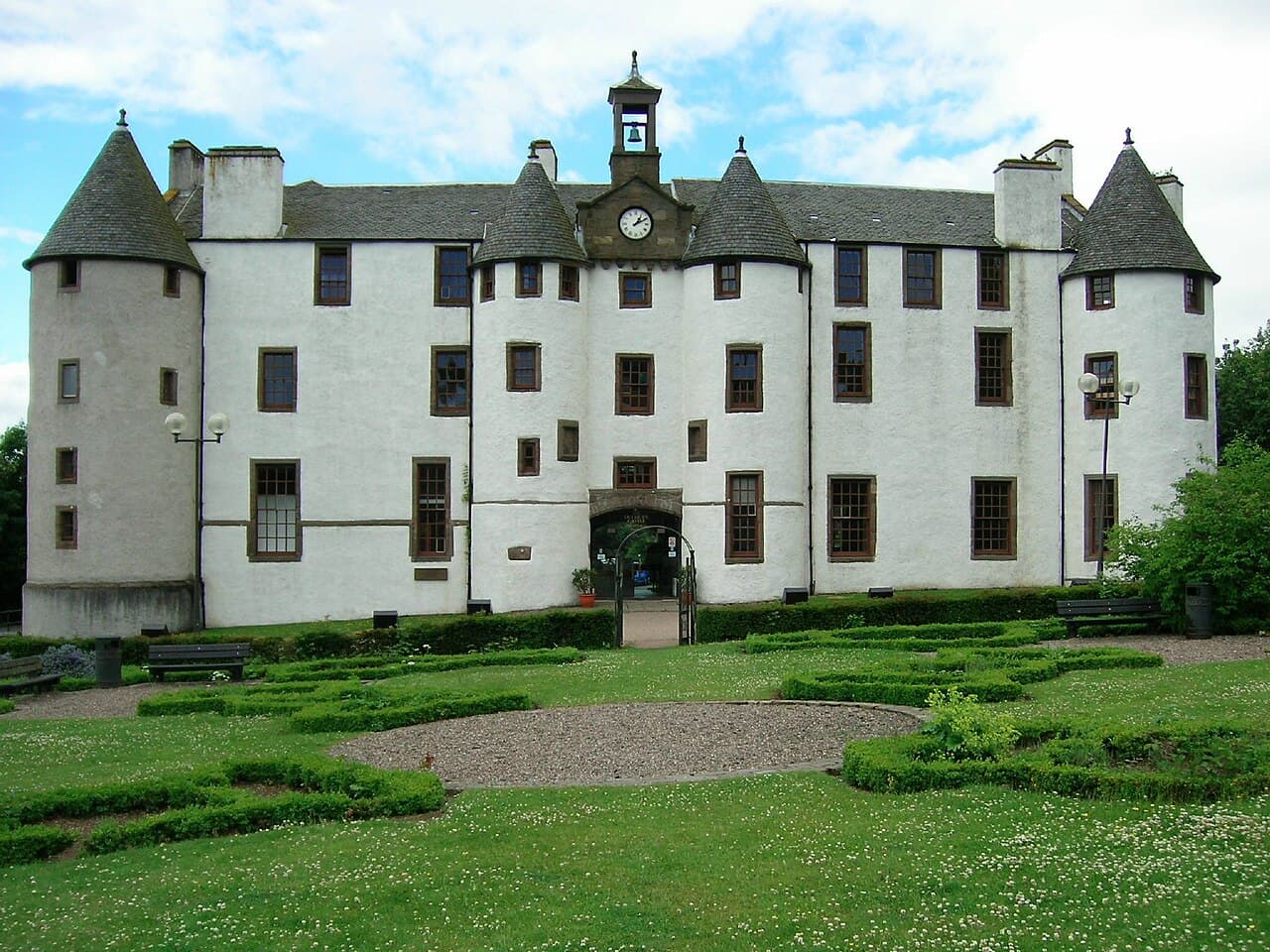
Dudhope Castle stands prominently on Dundee Law in Scotland, a testament to centuries of Scottish history and architectural evolution. Originally constructed in the late 13th century, the castle began as a modest tower house built by the influential Scrymgeour family. This early medieval structure was strategically positioned to oversee the surrounding lands and assert control over the region.
The castle underwent significant transformation around 1460, replacing the original tower house with a more substantial fortified residence. This development reflected the changing needs of its owners and advancements in defensive architecture during the High Medieval period. The most notable expansion occurred in 1580 when the castle was extended into its characteristic L-plan structure. This design included the addition of circular angle towers, which enhanced both the defensive capabilities and aesthetic appeal of the castle. Unfortunately, these towers were demolished in the 18th century, altering the castle's silhouette but not diminishing its historical significance.
The Scrymgeour family and royal connections
The Scrymgeours held Dudhope Castle for approximately 370 years, a period marked by both stability and prominence in Scottish noble society. The castle was not only a family seat but also a symbol of their enduring influence. In April 1540, the castle hosted King James V of Scotland, underscoring its importance as a noble residence and royal stopover. The marriage of James Scrimgeour to Magdalen Livingstone in the late 16th century coincided with the castle's expansion, reflecting the union of powerful Scottish families and the cultural significance of Dudhope as a noble estate.
Architectural features and modifications
L-plan layout and defensive elements
The L-plan design adopted in the 1580 extension was a popular architectural form in Scotland, combining a main rectangular block with a wing projecting at right angles. This layout allowed for better defense and more complex internal arrangements. The inclusion of circular angle towers provided vantage points for surveillance and crossfire, which were critical for withstanding attacks during turbulent periods.
18th-century changes and loss of towers
While the castle's original defensive features were gradually reduced in the peaceful 18th century, the demolition of the circular towers marked a significant alteration. These changes reflected shifting architectural tastes and the castle's evolving role from a fortress to a more residential and administrative function.
Military use and adaptations
In 1795, the castle grounds were leased to the Board of Ordnance, marking a new chapter in Dudhope's history as a military installation. From 1796 to 1879, Dudhope Castle served as a barracks, accommodating up to 400 soldiers. To support this role, several ancillary buildings were constructed, including a hospital, officers' quarters, stables, and guard-rooms. These additions transformed the castle from a noble residence into a functional military complex.
The castle's military significance continued into the 20th century when it was used as a barracks during both the First World War (1914–18) and Second World War (1939–45). The presence of a time gun in the castle grounds, which fired daily at 1 pm, was a notable feature until 1916, when it was discontinued to avoid disturbing patients at the nearby Dundee Royal Infirmary suffering from shell shock.
Preservation, restoration, and modern use
After the military vacated Dudhope Castle in 1881, the building faced potential demolition in 1958 when the corporation of Dundee considered tearing it down. Fortunately, the castle was preserved and underwent significant redevelopment between 1985 and 1988. Today, Dudhope Castle is well-preserved and repurposed for contemporary use.
The castle now houses offices, a conference centre, and facilities for the University of Abertay Dundee, including the Dundee Business School. During restoration, a prominent room was dedicated as the Scrimgeour room, furnished with wall hangings and drapes made from the Scrimgeour tartan, honoring the castle's original noble family and their legacy.
Architectural significance and cultural heritage
Dudhope Castle exemplifies the evolution of Scottish castle architecture from a medieval tower house to a multi-purpose complex adapted for military and educational functions. Its High Medieval origins and subsequent expansions reflect broader historical trends in Scotland, including noble family power, royal patronage, and military strategy.
The castle's location on Dundee Law provides commanding views of the city and surrounding landscape, emphasizing its strategic importance. Despite the loss of some original defensive features, Dudhope remains a significant cultural landmark, embodying centuries of Scottish history and architectural development.
Visitor experience and accessibility
While Dudhope Castle primarily functions as an institutional building today, its historical significance and preserved architecture offer valuable insights into Scotland's medieval and military past. Visitors interested in Scottish history and castle architecture can appreciate the blend of medieval, Renaissance, and later adaptations present in the structure.
The castle's integration into modern urban Dundee also highlights the challenges and successes of preserving heritage sites within growing cities. Its continued use and maintenance ensure that Dudhope Castle remains a vibrant part of Dundee's cultural fabric.
Frequently asked questions (FAQ)
- What is the historical significance of Dudhope Castle?
- Dudhope Castle has a rich history dating back to the 15th century and is a key landmark in Dundee. Originally built as a fortress, it has served various purposes over the years, including as a residence and a military stronghold, reflecting the political and social changes in Scotland.
- When was Dudhope Castle built?
- Dudhope Castle was constructed in the late 15th century, with its earliest records dating back to 1490. The castle has undergone numerous renovations and restorations, preserving its historical essence while adapting to modern uses.
- Can I visit Dudhope Castle?
- Yes, Dudhope Castle is open to visitors. Guests can explore its impressive architecture and learn about its history, although some areas may have restricted access due to ongoing preservation efforts.
- What are the opening hours for Dudhope Castle?
- Dudhope Castle typically opens its doors to the public from 10 AM to 4 PM, Tuesday through Saturday. It is advisable to check the castle's official website for any seasonal changes or special events that may affect these hours.
- Is it possible to take guided tours of Dudhope Castle?
- Yes, guided tours are available at Dudhope Castle, providing visitors with in-depth knowledge about its history and architecture. These tours are often led by knowledgeable guides who can answer questions and share fascinating stories about the castle.
- What are the ticket prices for Dudhope Castle?
- Ticket prices for Dudhope Castle are generally affordable, with discounts available for students, seniors, and families. It's best to visit the official website for the most current pricing and any special offers that may be available.
- When is the best time to visit Dudhope Castle?
- The best time to visit Dudhope Castle is during the spring and summer months, when the weather is milder and the gardens are in full bloom. Additionally, many special events and activities occur during this time, enhancing the visitor experience.
- Are there any nearby attractions to Dudhope Castle?
- Yes, Dudhope Castle is conveniently located near several attractions in Dundee, including the V&A Dundee Museum and the Dundee Contemporary Arts Centre. Visitors can easily spend a full day exploring the rich cultural offerings of the city surrounding the castle.
- How do I get to Dudhope Castle?
- Dudhope Castle is easily accessible by public transport, with several bus routes serving the area. For those driving, there is parking available nearby, making it convenient for visitors traveling from different locations.
Photo gallery

Information
Website
Visit websiteSources & official resources
Verify the information above using these authoritative references.
Loading map...
Visitor reviews
No reviews yet. Been here? Write the first review and help other travelers!
Write the first reviewVisited this castle? Share your experience
Your review helps other travelers and adds first-hand knowledge to our encyclopedia.