Dublin's Ashtown Castle Was Forgotten For Centuries
Ashtown Castle in Dublin is a remarkable example of a 15th-century medieval tower house that was long concealed within the walls of an 18th-century Georgian mansion. Its rediscovery in 1978 during the demolition of the Under Secretary's Lodge revealed a compact but historically significant fortified residence that embodies the layered history of Ireland's architectural and political evolution.
The castle's origins date back to the 1430s, built by Anglo-Norman settlers during the medieval period when tower houses were common defensive homes across Ireland. Ashtown Castle's dimensions align with a royal building grant policy under King Henry VI, which rewarded the construction of fortified residences designed to provide personal security. This policy highlights the castle's original purpose as a secure dwelling for local lords amidst the turbulent political landscape of the time.
Architectural features and medieval design
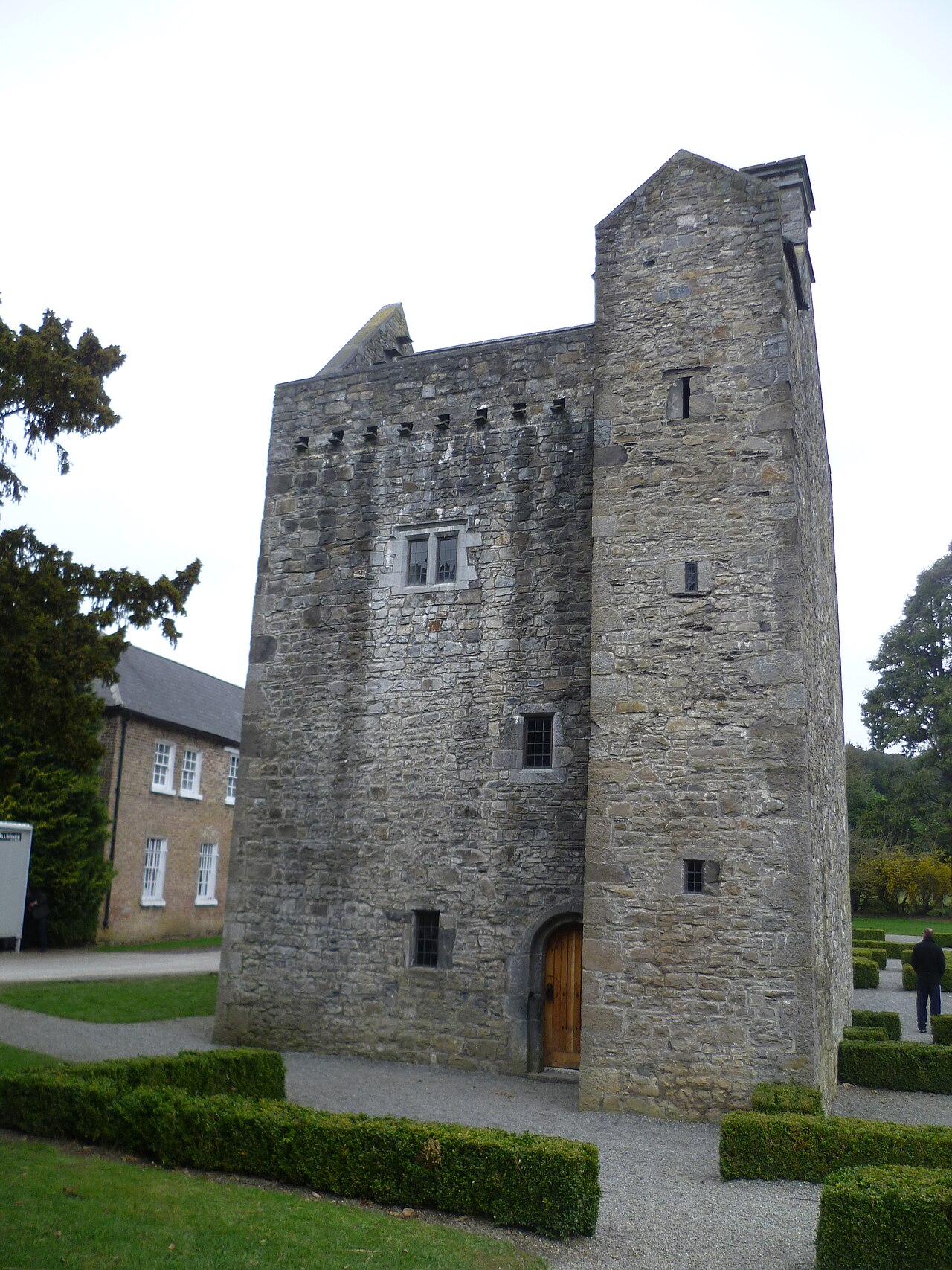
The castle is a rectangular four-story stone tower house measuring approximately 6 by 9 meters. Its design is typical of Irish tower houses, combining compactness with defensive features. A notable element is the projecting turret at the southeast corner housing a spiral staircase, which provided both access to upper floors and an additional defensive advantage.
The ground floor likely served as a kitchen and storage area, common in tower houses where the lowest level supported domestic service functions. Above it, the first floor was the lord's private living quarters, offering a secure and comfortable space. The second floor contained the great hall, a formal room used for dining, gatherings, and administrative activities, reflecting the social status of the castle's occupants.
The roof was reconstructed with a pitched saddle design during restoration to reflect the castle's original appearance. The thick stone walls and narrow window openings further emphasize the defensive nature of the structure, typical of the medieval architectural style.
Historical context and ownership
By the early 1600s, Ashtown Castle had become an established residence and underwent alterations to its roofline. In 1641, it passed into the hands of John Connell, known as John of Ashtown, who managed an estate of 200 acres valued at approximately £200. This period reflects the castle's role within a landed estate system bridging medieval and early modern Ireland.
The surrounding land saw significant development in the mid-18th century with the construction of Ashtown Lodge adjacent to the castle in 1751. This Georgian mansion was expanded and modernized from 1774 onward, eventually becoming the official residence of the Under Secretary for Ireland by 1782. This transition marked the site's shift from a fortified medieval dwelling to an administrative center within British governance.
20th-century diplomatic use and rediscovery
Following Irish independence in 1922, the undersecretary position was abolished, and the property was repurposed. Between 1922 and 1929, the site housed the United States embassy, before its relocation to Deerfield. Subsequently, the Apostolic Nuncio, the Vatican's diplomatic office, occupied the mansion until 1978.
During this time, the medieval tower house remained hidden within the Georgian structure, its historical significance obscured. The lodge's poor condition eventually led to its demolition in 1989, uncovering the medieval castle for the first time in centuries. Restoration efforts removed later additions, revealing the tower house's original 15th-century form and preserving it as a heritage landmark.
Preservation and current status
Today, Ashtown Castle is part of the Phoenix Park Visitor Centre complex, where visitors can explore its restored medieval character. The site includes gardens that trace the footprint of the former Georgian lodge, offering a visual narrative of the castle's layered history from medieval fortress to diplomatic residence.
The castle's robust stone walls, spiral staircase turret, and reconstructed pitched roof exemplify the defensive and domestic architectural features of Irish tower houses. Its preservation provides valuable insight into Ireland's medieval social structure, Anglo-Norman influence, and the evolution of its built heritage through centuries of political change.
Architectural significance of irish tower houses
Ashtown Castle is a prime example of the Irish tower house typology, a widespread form of fortified residence built by Anglo-Norman settlers and native Irish lords from the late medieval period onward. These structures were designed to balance defense with domestic comfort, featuring thick stone walls, narrow windows, and vertical layouts with multiple floors serving distinct functions.
The spiral staircase turret is a characteristic defensive element, allowing defenders to control access between floors. The great hall served as the social and administrative heart of the castle, where lords conducted business and hosted guests. Ashtown Castle's modest size contrasts with larger castles but reflects the typical scale of such tower houses, which were often the centers of rural estates.
Historical layers and cultural heritage
The castle's history encapsulates Ireland's complex past, from its medieval Anglo-Norman roots through the Georgian era's administrative transformations to 20th-century diplomatic uses. Its concealment within a later mansion and subsequent rediscovery highlight challenges in heritage preservation and the evolving appreciation of Ireland's medieval architecture.
Ashtown Castle stands as a testament to the resilience of historical structures and the importance of careful restoration in revealing Ireland's architectural lineage. It offers visitors a tangible connection to the country's medieval past and its journey through political and social change.
Frequently asked questions (FAQ)
- What is the historical significance of Ashtown Castle?
- Ashtown Castle is a significant example of medieval architecture, dating back to the 15th century. It is one of the few surviving medieval structures in Dublin and offers insights into the city's rich history, including its role in the defense and governance of the area.
- When was Ashtown Castle built?
- Ashtown Castle was constructed in the late 15th century, around 1430. It was originally built as a fortified house and has undergone several renovations throughout its history, reflecting various architectural styles.
- How do I visit Ashtown Castle?
- Ashtown Castle is located within the Phoenix Park, Dublin, and is open to the public for visits. You can reach it via public transport or by car, with parking available nearby.
- What are the opening hours for Ashtown Castle?
- Ashtown Castle typically opens from 10 AM to 5 PM daily, but it's advisable to check the official website for any seasonal changes or special events that may affect these hours.
- Can I access Ashtown Castle with a wheelchair?
- Ashtown Castle is partially accessible, but some areas may present challenges for wheelchair users due to the historic nature of the site. It is recommended to contact the venue in advance for specific accessibility information and assistance.
- Is there a ticket price to enter Ashtown Castle?
- There is no admission fee to visit Ashtown Castle, making it an excellent option for budget-friendly outings. However, donations are appreciated to help maintain the site.
- What is the best time to visit Ashtown Castle?
- The best time to visit Ashtown Castle is during the spring and summer months when the weather is more pleasant, and the gardens are in full bloom. This also coincides with longer daylight hours, allowing visitors to enjoy the surrounding Phoenix Park.
- What nearby attractions can I visit while at Ashtown Castle?
- While visiting Ashtown Castle, you can explore the vast Phoenix Park, which is home to Dublin Zoo and beautiful walking trails. Additionally, other attractions in the area include the Victorian People's Flower Gardens and the Papal Cross.
Information
Website
Visit websiteSources & official resources
Verify the information above using these authoritative references.
Loading map...
Visitor reviews
No reviews yet. Been here? Write the first review and help other travelers!
Write the first reviewVisited this castle? Share your experience
Your review helps other travelers and adds first-hand knowledge to our encyclopedia.