Drummond Castle
Drummond Castle stands as a prominent example of a late medieval hill castle located in Perthshire, Scotland, specifically within the parish of Muthill, approximately 4 kilometres south of Crieff. This historic castle is distinguished not only by its architectural heritage but also by its formal terraced gardens, which are acclaimed as the best example of such gardens in Scotland by Historic Environment Scotland. The castle complex includes a tower house originally constructed in the late 15th century and a 17th-century mansion, both of which underwent significant Victorian-era renovations.
Historical background and ownership lineage
The lands of Drummond have been associated with the Drummond family since the 14th century. The original tower house was built over several years beginning around 1490 by John Drummond, 1st Lord Drummond of Cargill. The 4th Lord Drummond, elevated to the Earl of Perth in 1605, expanded the castle. The estate experienced turmoil during the mid-17th century when it was sacked by Oliver Cromwell's forces in 1653 amid the Wars of the Three Kingdoms.
The 4th Earl of Perth, who served as Lord Chancellor of Scotland under King James VII, initiated the construction of the mansion house in 1689. However, his political allegiance to the deposed King James led to his imprisonment and eventual exile to the Jacobite court in France. The Drummond family remained staunch supporters of the Jacobite cause during the uprisings of 1715 and 1745. Following the defeat of the Jacobites, the Drummond estates were forfeited to the state in 1750 and managed by the Commissioners for Forfeited Estates until 1784.
In 1784, the estate was purchased by Captain James Drummond, later created the 1st Baron Perth. Subsequent improvements were made by his daughter Sarah and her husband, the 22nd Baron Willoughby de Eresby, including the enhancement of the formal gardens and terraces during the 1830s. The gardens attracted royal attention when Queen Victoria visited in 1842.
Architectural evolution and features
The tower house and gatehouse
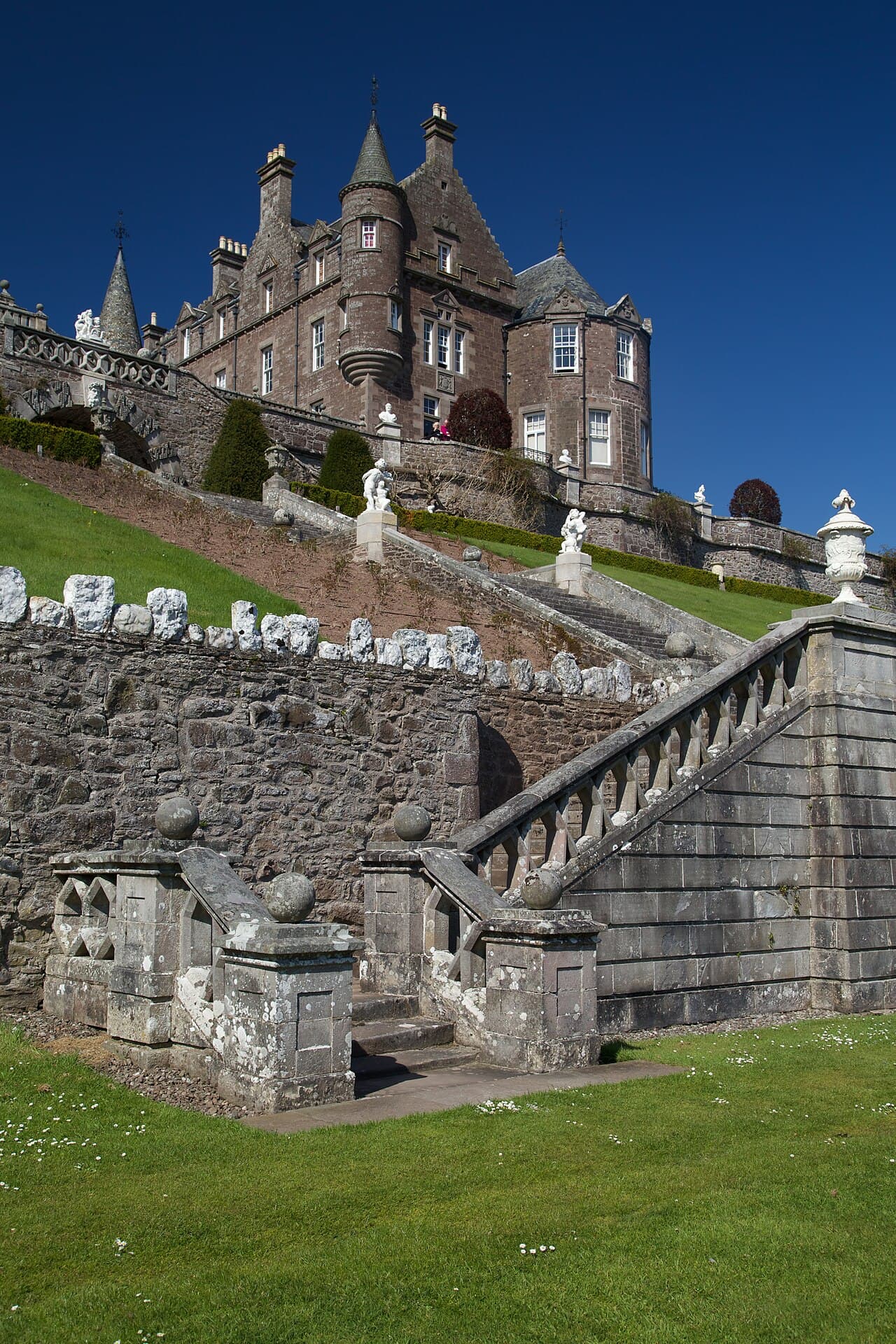
The tower house at Drummond Castle, originally constructed in the late 15th century, was rebuilt and heightened in a pseudo-medieval style between 1842 and 1853. This reconstruction aimed to restore and enhance the castle's medieval character. The tower house is no longer used as a residence but remains a significant architectural feature.
Adjacent to the tower house is a well-preserved gatehouse built between 1629 and 1630. This gatehouse was designed to control access to the courtyard, which overlooks the formal gardens. The castle is situated on a distinctive rocky outcrop known as the Gask Ridge, a geological feature that provides a natural defensive advantage with its steep sides and prominence.
The 17th-century mansion and Victorian renovations
The mansion house, begun in 1689 by the 4th Earl of Perth, was extensively renovated in 1878 under the direction of architect George Turnbull Ewing. These renovations reflect Victorian tastes and improved the comfort and style of the residence while respecting its historic character.
The formal gardens of drummond castle
The formal terraced gardens at Drummond Castle date originally from the 1630s, with significant restructuring occurring in the 19th century. These gardens are laid out on terraces that descend the rocky hillside, featuring geometric patterns, clipped hedges, and ornamental flower beds typical of formal garden design.
The gardens are protected as a category A listed building and are included on the Inventory of Gardens and Designed Landscapes in Scotland. Their design and preservation make them a key attraction, drawing visitors interested in horticulture and historic landscape architecture.
Cultural significance and current status
Drummond Castle remains the seat of the 28th Baroness Willoughby de Eresby, the daughter and heir of the 3rd Lord Ancaster. The estate continues to be privately owned and maintained, with the castle and gardens accessible to the public during certain times.
The castle's location on the Gask Ridge provides commanding views of the surrounding Perthshire countryside, emphasizing its strategic and aesthetic placement. The combination of medieval architecture, Victorian restoration, and exceptional gardens establishes Drummond Castle as a site of historical and cultural importance in Scotland.
Visiting drummond castle
Visitors to Drummond Castle can explore the extensive formal gardens, which are open seasonally and offer a glimpse into both 17th-century and Victorian garden design. The castle itself, while primarily a private residence, can be viewed from the exterior, including the tower house and gatehouse. The site provides opportunities for photography, historical study, and appreciation of Scottish heritage.
The gardens’ layout on the steep Gask Ridge makes for a unique walking experience, combining natural topography with human-crafted elegance. The castle and gardens are important for understanding the evolution of Scottish aristocratic residences and their landscapes over several centuries.
Frequently asked questions (FAQ)
- What is the historical significance of Drummond Castle?
- Drummond Castle is renowned for its stunning gardens and rich history, dating back to the 15th century. It has been the seat of the Drummond family for centuries and played a role in Scotland's royal history, including connections to Mary, Queen of Scots.
- When was Drummond Castle built?
- Drummond Castle was originally constructed in the 15th century, with significant renovations and expansions occurring in the 17th and 19th centuries. The castle showcases a blend of architectural styles, reflecting its long history and the evolving tastes of its inhabitants.
- Can I visit Drummond Castle?
- Yes, Drummond Castle is open to the public during specific months of the year. Visitors can explore the beautiful gardens and some areas of the castle, but it’s advisable to check the official website for the latest information on visiting hours and restrictions.
- What are the opening hours for Drummond Castle?
- Drummond Castle typically opens to visitors from April to October, with varying hours depending on the month. It is best to consult the official website for the most accurate and up-to-date information regarding opening hours.
- Is it possible to access Drummond Castle with mobility aids?
- Drummond Castle has made efforts to improve accessibility for visitors with mobility challenges. However, due to the historic nature of the site, some areas may have limitations, so it's recommended to contact the castle in advance for specific accessibility options.
- What are ticket prices for Drummond Castle?
- Ticket prices for Drummond Castle vary depending on age and group size, with discounts often available for children and seniors. For the latest ticket pricing and any special offers, please visit the official website before planning your visit.
- When is the best time to visit Drummond Castle?
- The best time to visit Drummond Castle is during the spring and summer months when the gardens are in full bloom. This period offers the most pleasant weather for exploring the grounds and enjoying the stunning landscape.
- Are there nearby attractions to visit while at Drummond Castle?
- Yes, there are several nearby attractions, including the picturesque village of Muthill and the historic sites in the surrounding Perthshire area. Visitors can also enjoy outdoor activities such as hiking and exploring the scenic countryside.
Photo gallery

Information
Loading map...
Visitor reviews
No reviews yet. Been here? Write the first review and help other travelers!
Write the first reviewVisited this castle? Share your experience
Your review helps other travelers and adds first-hand knowledge to our encyclopedia.