Drohiczyn Castle
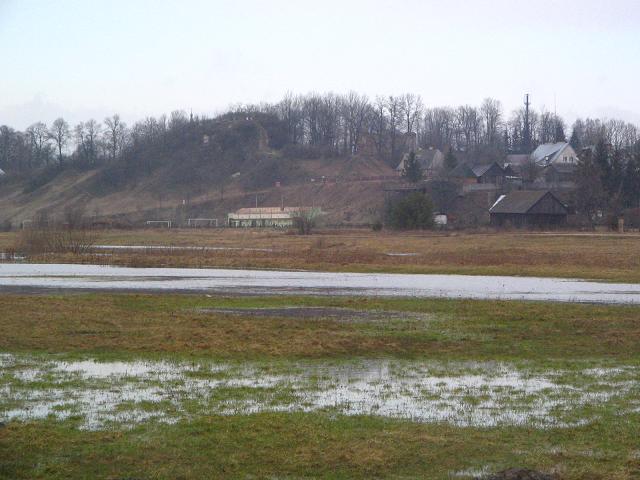
Zamek w Drohiczynie is a historic hill castle located on Góra Zamkowa, a prominent hill overlooking the Bug River in the municipality of Drohiczyn, Poland. The castle's origins trace back to the medieval period, initially constructed as a wooden fortress to protect the local settlement. Over the centuries, it evolved from a simple defensive stronghold into a center of regional administration and justice, reflecting the shifting political and military landscape of the region.
Early medieval origins and wooden fortress
The earliest form of the castle was a wooden fortress strategically positioned within a defensive area to safeguard the inhabitants of the settlement. This initial structure was typical of early medieval fortifications in the region, relying on timber palisades and earthworks for protection. For several centuries, leading up to the 14th century, the wooden castle experienced repeated cycles of destruction and rebuilding, a testament to the turbulent history of the area.
Conflicts and destruction in the 14th century
In 1382, the castle was destroyed by Duke Janusz of Mazovia, a significant regional power. The following year, in 1383, Jogaila—a prominent ruler associated with the Polish-Lithuanian union—captured the site during a period of intense conflict. During this siege, the defenders of Rusyn origin, allied with Mazovia, set fire to the wooden structures before retreating toward Lithuania. This act of scorched earth was likely intended to deny the enemy the use of the fortress.
Reconstruction and administrative role under the jagiellonian dynasty
Following these conflicts, under the rule of the Jagiellonian dynasty in the 14th and 15th centuries, the castle was reconstructed and adapted. It transitioned from a purely military stronghold into a center for regional administration and justice. The castle likely housed a local court and served as the residence of the royal starosta, the official responsible for district governance. This shift reflected broader changes in castle functions during the late medieval period, where many fortresses became administrative hubs.
The castle in the early modern period
By the early 17th century, visitors associated with the nearby Franciscan monastery described the town of Drohiczyn as primarily wooden, with no defensive walls apart from the castle itself. The fortress retained its judicial role, probably continuing to contain the district’s court functions. However, its military significance was waning as the nature of warfare and political control evolved.
Destruction during the swedish deluge and subsequent decline
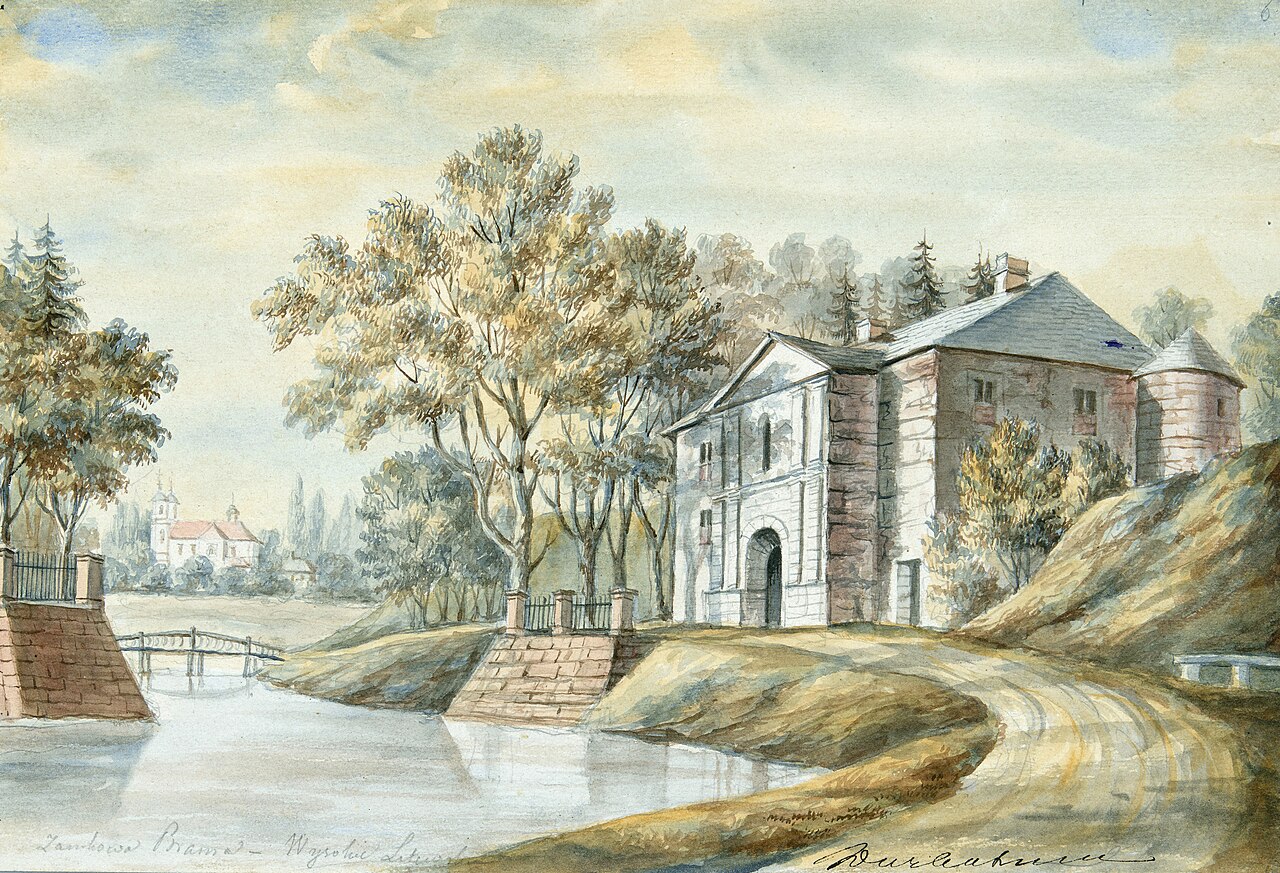
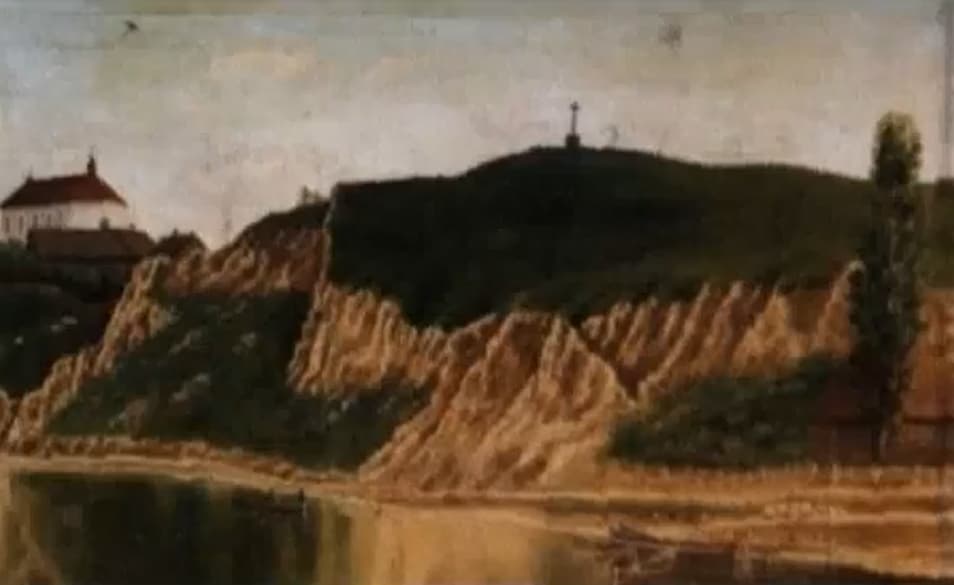
The castle's military and administrative importance ended during the mid-17th century amid the Swedish Deluge, a period marked by widespread warfare and devastation across Poland. The castle was destroyed during this conflict, and natural erosion of the castle hill by the Bug River further contributed to the loss of the site’s structural integrity. Today, only fragments of a small, square building remain, which once featured upper and lower towers used as civil and criminal prisons primarily for members of the nobility. These towers were dismantled by 1788.
Unique underground dungeon and local legends
Until the 20th century, a narrow entrance to an underground dungeon carved into the clayey rock of the hill could still be seen. The Polish historian Zygmunt Gloger described this subterranean corridor as resembling a small church interior, with niches along a straight passage. This space likely served practical purposes such as a prison or treasury rather than any religious function. Local tradition holds that the castle hill was artificially constructed by war prisoners and contained secret underground passages connecting the castle to the nearby Franciscan monastery. While these tales add to the castle’s mystique, they remain part of local lore without archaeological confirmation.
Archaeological research and preservation efforts
Archaeological excavations have been conducted at the site periodically, including work by Nikołaj Pietrowicz Avenarius between 1886 and 1888, Krystyna Musianowicz in 1955, and Mieczysław Bienia in 2011. These investigations have uncovered worked stone blocks believed to be remnants of the castle’s later masonry, which replaced earlier wooden elements during reconstruction phases. The hill’s composition of hard, clayey opoka rock has been gradually eroded by the river’s current, leading to partial loss of the castle’s foundation and structural stability.
In 1928, a stone obelisk was erected atop the castle hill to commemorate the tenth anniversary of Poland’s regained independence, marking a more recent cultural significance of the site. Today, no above-ground structures from the original castle survive, and the memory of the fortress is preserved primarily through this monument and the name of Zamkowa Street in Drohiczyn.
Architectural features and strategic location
The castle’s location on a steep hill provided a natural defensive advantage, overseeing the surrounding settlement and the Bug River valley. Originally constructed using primarily wooden materials, the castle incorporated Gothic and Renaissance architectural elements during its later masonry phases. The surviving stone blocks found in the moat area illustrate the transition from timber to stone construction, a common evolution in castle architecture to improve durability and defense.
The castle’s layout included a small, square building with upper and lower towers that served various functions including imprisonment of nobles. The presence of an underground dungeon carved into the rock further highlights the castle’s complex defensive and administrative roles.
Cultural significance and legacy
Zamek w Drohiczynie holds an important place in the regional history of Podlaskie Voivodeship and Poland. Despite its ruinous state, the site offers valuable insights into medieval and early modern fortifications, administrative practices, and local legends. The castle hill remains a symbol of the area's historical resilience and cultural heritage, attracting interest from historians, archaeologists, and visitors alike.
The combination of tangible archaeological remains, historical documentation, and enduring folklore contributes to the castle’s lasting legacy. Its story reflects broader themes of conflict, adaptation, and cultural identity in Polish history.
Frequently asked questions (FAQ)
- How do I get to Zamek w Drohiczynie?
- Zamek w Drohiczynie is located on Góra Zamkowa hill in the town of Drohiczyn, Podlaskie Voivodeship, Poland. It is accessible by local roads and is a short walk from the town center.
- What remains can I see at Zamek w Drohiczynie?
- Visitors can see the castle hill, remnants of stone blocks from the castle's masonry, and a commemorative obelisk. No above-ground castle structures survive, but the underground dungeon entrance was visible until the 20th century.
- When was Zamek w Drohiczynie built?
- The castle originated in the medieval period, with the earliest wooden fortress dating back to before the 14th century. It was reconstructed in the 14th and 15th centuries under the Jagiellonian dynasty.
- Is there any archaeological research at the site?
- Yes, archaeological excavations have been conducted periodically since the late 19th century, with significant work by Nikołaj Pietrowicz Avenarius, Krystyna Musianowicz, and Mieczysław Bienia.
- Can I visit the underground dungeon today?
- The underground dungeon entrance was visible until the 20th century, but it is no longer accessible to visitors due to safety and preservation concerns.
Photo gallery

Photo by autorzy fotografii są nieznani•Public domain
Information
Sources & official resources
Verify the information above using these authoritative references.
Loading map...
Visitor reviews
No reviews yet. Been here? Write the first review and help other travelers!
Write the first reviewVisited this castle? Share your experience
Your review helps other travelers and adds first-hand knowledge to our encyclopedia.