Dover Western Heights
The Dover Western Heights is a complex of 18th-century bastioned fortifications located in Dover, Kent, England. This extensive defensive system was constructed primarily in the late 18th and early 19th centuries to strengthen the protection of the vital port of Dover, a strategic gateway between England and continental Europe. The fortifications were designed to defend against both seaward assaults and landward invasions, reflecting the military concerns of the post-Renaissance period when artillery and siege warfare had evolved significantly.
Historical context and strategic importance
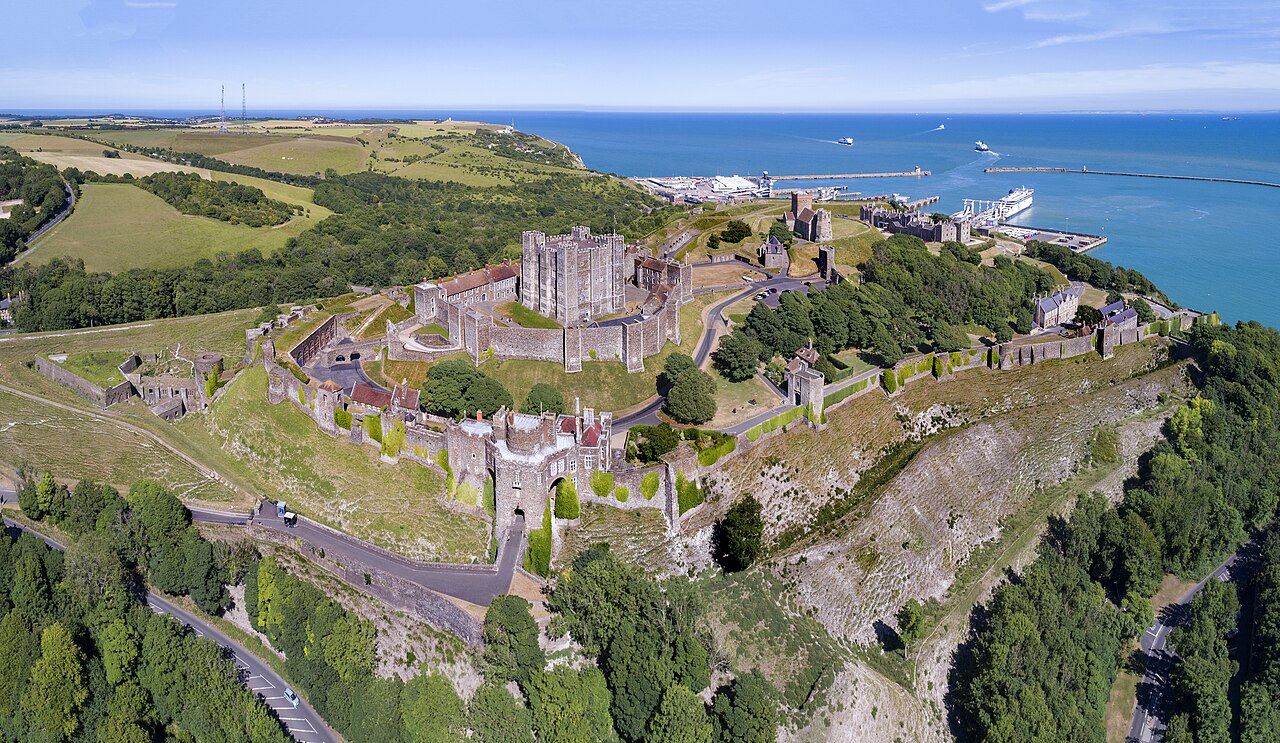
During the late 18th century, Britain faced potential threats from France, particularly during the Napoleonic Wars. The existing medieval Dover Castle was supplemented by new fortifications on the Western Heights to create a formidable defensive line. The location overlooks the English Channel and the town of Dover, making it a critical point for controlling maritime access and defending against invasion forces landing on the Kent coast.
The fortifications were part of a broader program of coastal defenses initiated by the British government to secure key ports and naval bases. The Western Heights were constructed to work in conjunction with the medieval castle and the town's harbor defenses.
Architectural features and layout
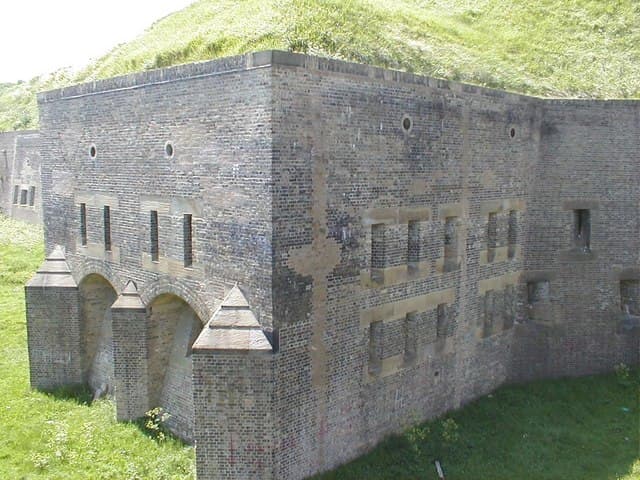
The Western Heights comprise a series of bastioned forts, extensive ditches, ramparts, and gates arranged to maximize defensive coverage. The bastioned design features angular walls that allowed defenders to cover adjacent walls with overlapping fields of fire, a hallmark of star fort or bastioned fortress architecture developed in the early modern period.
Key elements include the Drop Redoubt, a large bastioned fortification with deep ditches and multiple defensive layers, and the Citadel, which served as a stronghold within the complex. The fortifications also include the Drop Battery and the Grand Shaft, a triple staircase cut into the chalk cliffs that allowed rapid movement of troops between the heights and the town below.
The defensive ditches and ramparts were designed to impede enemy advances and provide elevated firing positions for artillery and muskets. The fortifications were constructed primarily from local chalk and brick, materials typical of the period, with some later modifications incorporating concrete and iron elements.
Military use and evolution
Throughout the 19th century, the Dover Western Heights were upgraded to keep pace with advances in artillery technology. The forts were equipped with heavy guns intended to repel naval bombardments and land assaults. By the early 20th century, the complex was considered one of the most elaborate and strongest fortifications in Britain.
During both World Wars, the Western Heights retained military significance, serving as a defensive position and observation post. However, after World War II, changes in military strategy and technology rendered such fixed fortifications less critical. The British Army withdrew from the site between 1956 and 1961.
Current condition and public access
Today, the Dover Western Heights are largely preserved as a historic site and local nature reserve. Visitors can explore the surviving bastions, ditches, and ramparts, many of which remain in well-preserved or partially restored condition. The site offers a unique combination of military heritage and natural landscape, with walking trails and interpretive signage explaining the historical significance of the fortifications.
The Western Heights provide insight into the evolution of British coastal defenses from the post-Renaissance period through the 19th and early 20th centuries, illustrating changing military architecture and strategic priorities.
Notable architectural and engineering features
The design of the Western Heights reflects the principles of bastioned fortification developed in continental Europe during the 16th and 17th centuries, adapted to the English landscape and military needs. The angular bastions allowed defenders to cover all approaches with overlapping fields of fire, minimizing blind spots.
The Grand Shaft is a particularly notable engineering feat, consisting of three parallel staircases cut into the chalk cliff face, enabling rapid troop movement between the heights and the town below. This feature was essential for the rapid deployment of soldiers during an attack.
The extensive defensive ditches and glacis were designed to slow and expose attackers, while the high ramparts provided commanding views over the surrounding area and the Channel.
Visitor information and cultural significance
The site is open to the public and managed as a heritage and nature reserve, attracting visitors interested in military history, architecture, and natural scenery. Educational programs and guided tours are sometimes available, enhancing understanding of the site's historical context.
The Dover Western Heights are an important part of England's coastal defense heritage and provide a tangible connection to the military history of the 18th and 19th centuries. Their preservation allows for ongoing study and appreciation of bastioned fortress design and the strategic importance of Dover as a maritime gateway.
Frequently asked questions (FAQ)
- How do I get to Dover Western Heights?
- Dover Western Heights is easily accessible by public transport, with regular bus services from Dover town center. If you prefer to drive, there are parking facilities available nearby, but be sure to check local parking regulations.
- What is the historical significance of Dover Western Heights?
- Dover Western Heights is a key historical site, built in the 19th century as part of a defensive strategy against potential invasions. The fortifications played a crucial role during the Napoleonic Wars and later in World War II, reflecting the strategic importance of Dover's location.
- When was Dover Western Heights constructed?
- Construction of Dover Western Heights began in the early 1800s, with significant developments continuing throughout the century. The site was designed to be a stronghold and was integral to the defense of the port of Dover.
- Can I explore Dover Western Heights on my own?
- Yes, visitors can explore Dover Western Heights independently, but guided tours may also be available for those interested in a deeper understanding of the site's history and architecture. It's recommended to check the official website for any tour schedules and special events.
- Why is the architecture of Dover Western Heights unique?
- The architecture of Dover Western Heights is notable for its extensive use of earthworks and stone, designed to withstand bombardment. The fortifications and structures showcase military architecture from the Victorian era, featuring impressive bastions and a series of tunnels.
- Is it possible to visit Dover Western Heights year-round?
- Visiting hours can vary seasonally, so it's best to check the official website for the most current opening times. While the site is generally open throughout the year, some areas may have restricted access during certain times for preservation purposes.
- What are the ticket prices for Dover Western Heights?
- Admission to Dover Western Heights is often free, but some guided tours or special events may have associated costs. Always check the official site for the latest pricing information and any available discounts.
- What is the best time to visit Dover Western Heights?
- The best time to visit Dover Western Heights is during the spring and summer months when the weather is typically pleasant, and the grounds are in full bloom. This season allows for the best outdoor exploration and scenic views of the surrounding area.
- Are there any nearby attractions to visit?
- Yes, Dover Western Heights is close to several attractions, including the iconic Dover Castle, the White Cliffs of Dover, and the Dover Museum. These sites provide additional historical context and beautiful landscapes, making for a full day of exploration.
Photo gallery

Information
Loading map...
Visitor reviews
No reviews yet. Been here? Write the first review and help other travelers!
Write the first reviewVisited this castle? Share your experience
Your review helps other travelers and adds first-hand knowledge to our encyclopedia.